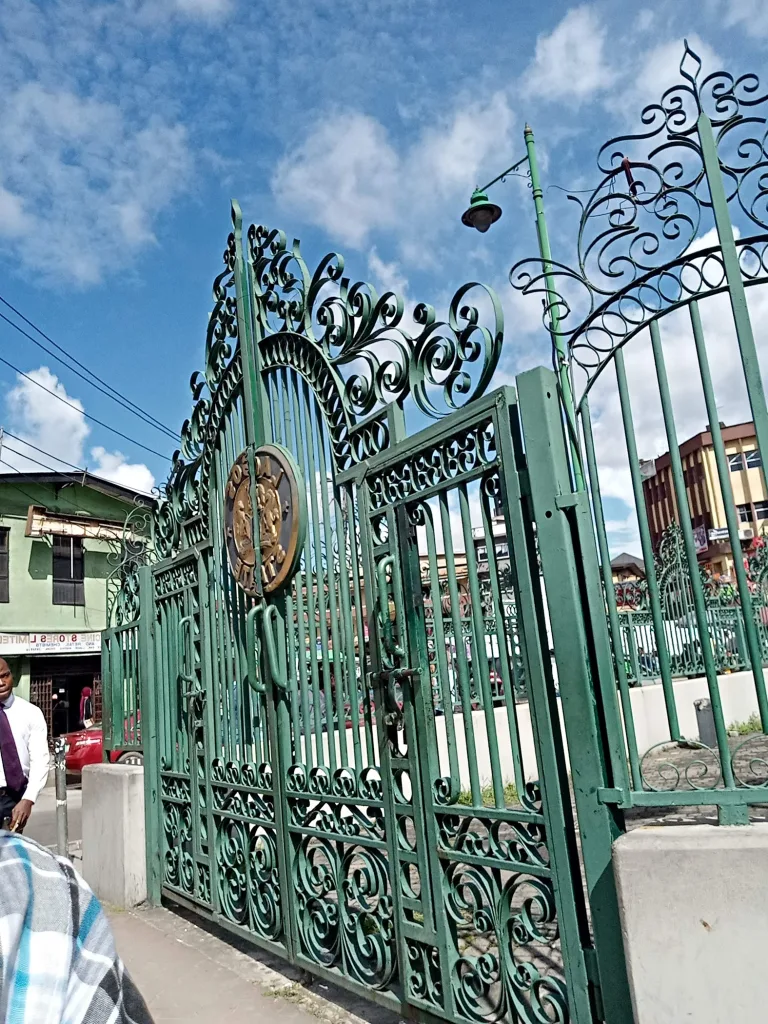
A Journey Through Tinubu Square
Tinubu Square, a place that has seen the rise and fall of many stories, is more than just a crossroads in Lagos. It is a symbol of history, struggle, and transformation. Stretching along Broad Street, it is a place where the past meets the present, and where the energy of the city pulses through its narrow alleys.
The Good: Memories of Friendship
I remember Tinubu Square as a place that once brought me closer to friends. A decade after high school, I met Taiwo Sontan there, and we embraced like old friends. Though we never saw each other again, the memory of that encounter remains vivid. It was a time when the square was alive with the rhythm of the city, and every corner held a story waiting to be told.
The Bad: Lessons from Misfortune
Not all experiences at Tinubu Square were positive. There was the time my friend from Orile Agege mistakenly boarded a bus heading to Orile Iganmu. The confusion was not uncommon in Lagos, where multiple places share similar names. Another incident involved a hawker who tried to sell my friend a gold wristwatch for N2,000. The watch turned out to be a stone wrapped in colorful paper, a lesson in deception that left my friend heartbroken.
The Ugly: A Place of Struggle
Tinubu Square has also been a place of hardship. During the 1980s and 1990s, it was a desolate spot under military rule, filled with poverty and neglect. But with the arrival of Bola Ahmed Tinubu, things began to change. His leadership marked a turning point, bringing new life to the square and transforming it into a hub of activity.
The History of Tinubu Square
Tinubu Square has a rich history that dates back to the 19th century. It was once known as Ita Tinubu, a court of the powerful Amazon, Efúnpòróyè Òsuntinúbú. This influential figure, a merchant and politician, played a significant role in the region’s history. After colonial rule, the square was renamed Independence Square, honoring the nation’s freedom.
The name “Tinubu” itself means “Out of the deep,” reflecting the journey of Bola Ahmed Tinubu, who rose from obscurity to become a prominent leader. His legacy is intertwined with the square, which has become a symbol of his influence and impact on Lagos.
The Legacy of Bola Ahmed Tinubu
Bola Ahmed Tinubu, the son of Abibatu Mogaji, is remembered as a leader who brought change to Lagos. His efforts to transform the city have left a lasting mark on Tinubu Square. The square, once a place of struggle, now stands as a testament to his vision and determination.
As a father figure, Tinubu is known for his kindness, mercy, and fairness. His conscience guided him in making difficult decisions, including a notable act of clemency for 175 convicts. This gesture, while controversial, highlighted his belief in justice and redemption.
The Future of Tinubu Square
Today, Tinubu Square continues to evolve. It is a place where the past and present converge, and where the future is shaped by the lessons of history. As the city grows, so does the significance of this iconic location. It remains a symbol of resilience, a reminder of the journey taken and the path ahead.


