The Pentagon Pizza Index: A Unique Indicator of Global Events
The United States has an unusual, unofficial indicator known as the “Pentagon Pizza Index.” This peculiar metric suggests that before urgent situations—such as the start of a war or overseas operations by the Pentagon (U.S. Department of Defense)—pizza delivery orders from Defense Department employees working late shifts flood local pizzerias. This phenomenon allows for early prediction of emergencies.
The Pentagon Pizza Index gained attention after the Trump administration’s June of last year strike on Iran’s nuclear facilities, codenamed “Operation Rising Lion.” It has once again become a topic of discussion following “Operation Absolute Resolve,” in which U.S. special forces Delta Force arrested Venezuelan President Nicolás Maduro on the early morning of the 3rd. On the 5th, this newspaper visited a pizzeria identified online as one of the bases for the Pentagon Pizza Index.
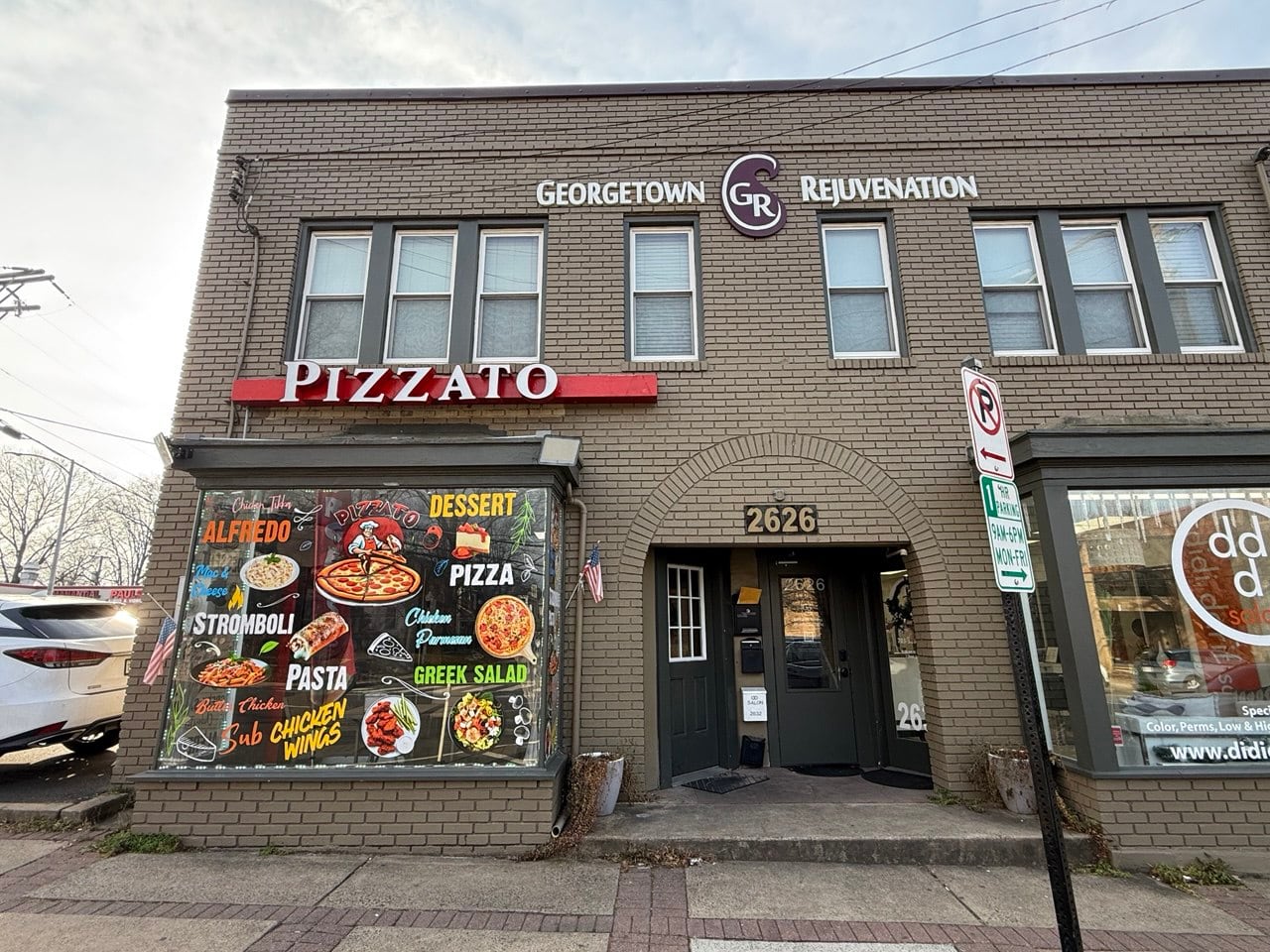
Located in a residential area about 3.5 kilometers from the Pentagon in Arlington, Virginia, “Pizzato Pizza” is a 4-minute drive from the Pentagon. It is an ordinary neighborhood pizzeria with a hair salon attached. Online reviews already praised it as a place “good for late-night pizza delivery until late at night in the area.” It operates until 3 a.m. on weekdays and 4 a.m. on Fridays and Saturdays.
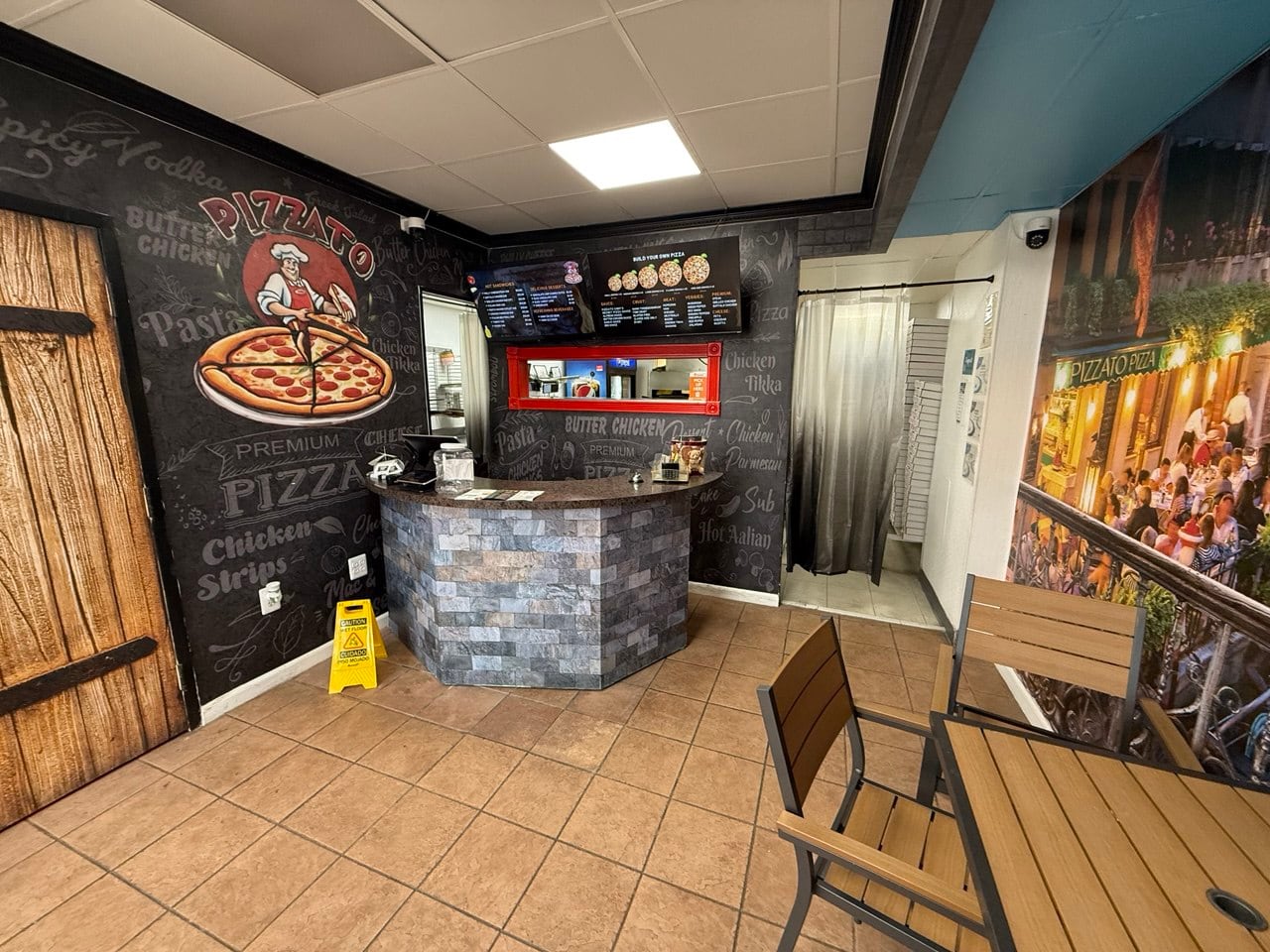
Inside the store, which opened at 11 a.m. that day, there were only two small tables. Fidel, a Guatemalan employee, was alone taking orders, making pizzas, and serving. Deliveries were handled through services like Uber Eats or DoorDash. On a Monday morning, during the approximately 30 minutes spent at the store, there were no customers coming in for meals or phone orders.
However, Fidel, who has worked at the store for seven months, remembered the Saturday night two days before the Trump administration’s Venezuela raid. Trump finalized the order to strike Venezuela at 10:46 p.m. Eastern Time on the 2nd. The operation began at 1 a.m. on the 3rd, and by around 2 a.m., over 150 U.S. aircraft, including fighters and bombers, appeared over Venezuela, with reports of explosions echoing.
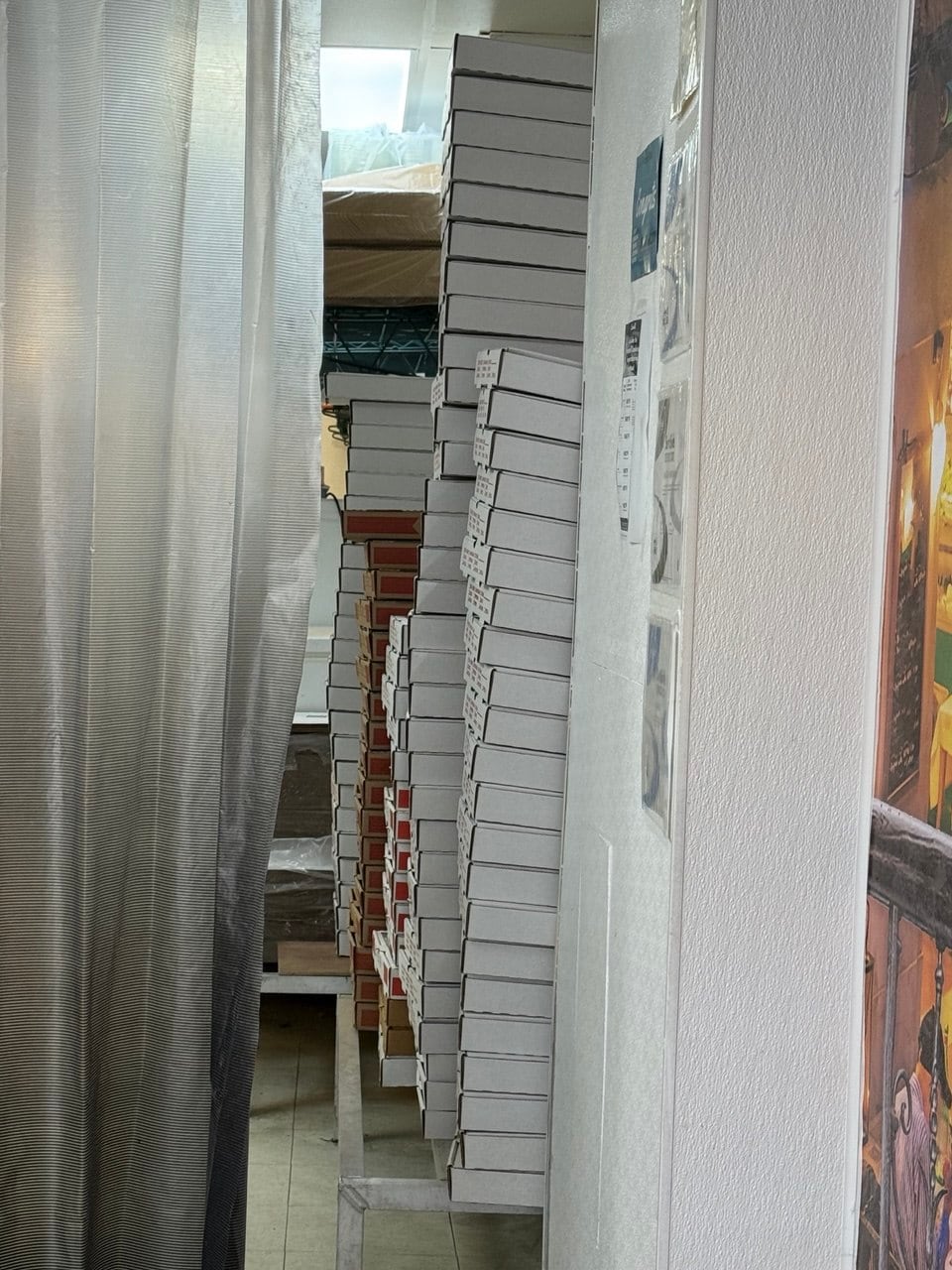
Fidel said, “We were unusually busy starting that evening as orders poured in from the Pentagon,” and added, “We kept working until 5 a.m., later than usual, as we continued making pizzas.” When asked how many pizzas were made that day, he replied, “About 300,” and explained, “Five employees were in the kitchen, focused solely on baking pizzas.” About 100 pizza boxes were still piled in one corner of the kitchen. Even if some regular orders were mixed in, the surge was far beyond usual.
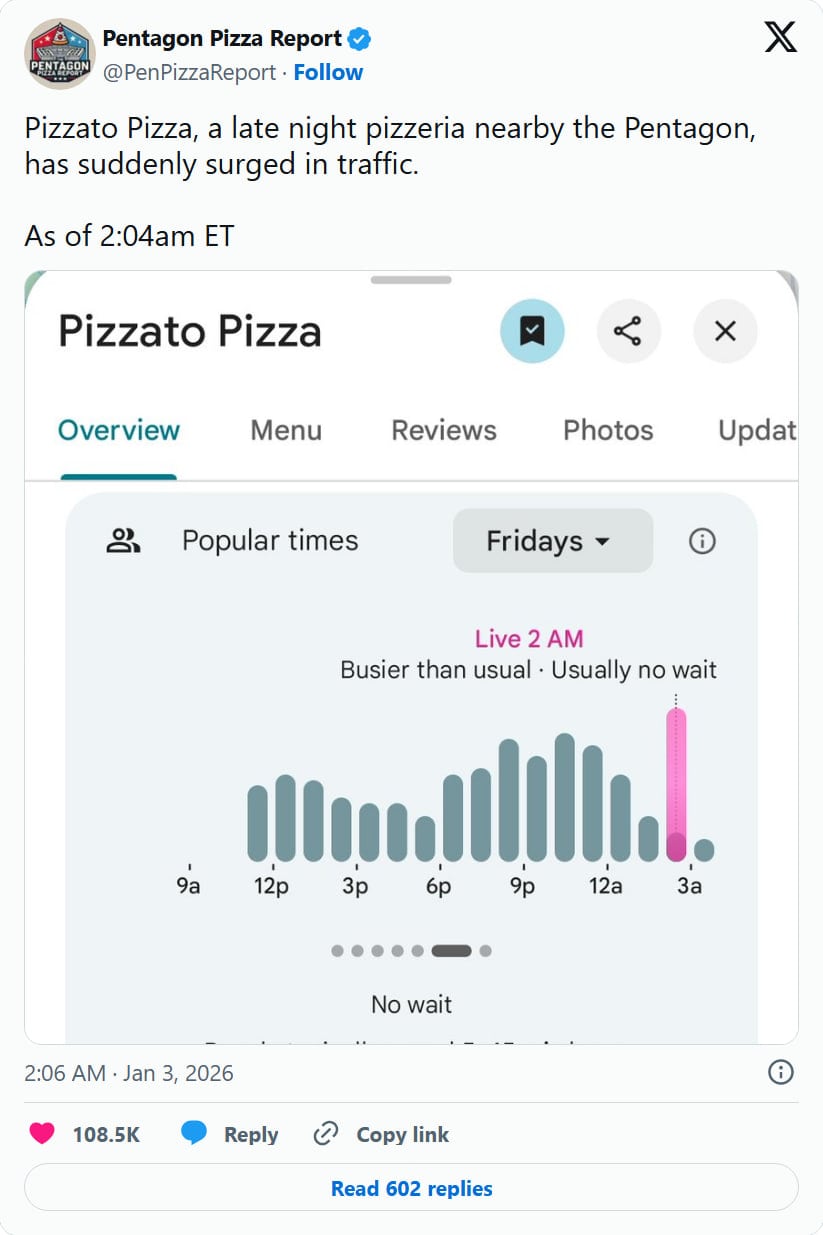
The Pentagon Pizza Index is created by aggregating publicly available online information from social media accounts made by anonymous engineers. A key source is the visitor congestion graph on Google Maps. The principle is that when the number of Android or Google Maps app users inside the store increases beyond usual, the algorithm detects their smartphone signals, causing the congestion graph to spike. This is a mechanical phenomenon that occurs when delivery drivers or customers picking up pizzas temporarily gather at the store.
In particular, if the pizzeria’s graph shows unusual congestion between 2–3 a.m., when orders are typically scarce, it is argued that this cannot be explained by regular late-night demand. It is claimed that such a surge only occurs when Pentagon employees work late in large numbers, flooding nearby pizzerias with orders. Coincidentally, during the June of last year strike on Iran’s nuclear facilities and the April of this year drone attack between Israel and Iran, the congestion graphs of Pizza Hut and Domino’s near the Pentagon showed “very busy” during late-night hours when they would usually be quiet, and soon after, news of the strikes broke.
Conversely, there are claims that when nearby bars frequented by Pentagon employees appear unusually quiet, it indicates an emergency, as staff are working late instead of going out for drinks. The Pentagon has denied the Pentagon Pizza Index, countering, “There are several cafeterias inside the building where employees can get late-night meals.”
However, the origins of the Pentagon Pizza Index date back to the early 1990s during the Gulf War, before Google algorithms could track smartphone data. Frank Mix, who operated several Domino’s Pizza stores in Washington, D.C., during the Gulf War, told the media in an interview, “Pizza delivery orders surged after the war began.” He added, “The White House used to order about 50 pizzas a day, but now it’s 125. We used to stop deliveries after 9 p.m., but now we have to maintain extra staff to handle the White House’s late-night orders.” He also said, “The Pentagon used to order about 50 pizzas a day, but now it’s about 300, with a significant portion during late-night hours.”
From then on, U.S. media began saying, “To quickly grasp global affairs, just look at the pizza orders delivered to the Pentagon.”


