The Gen Z Movement and the Call for Political Stability in Nepal
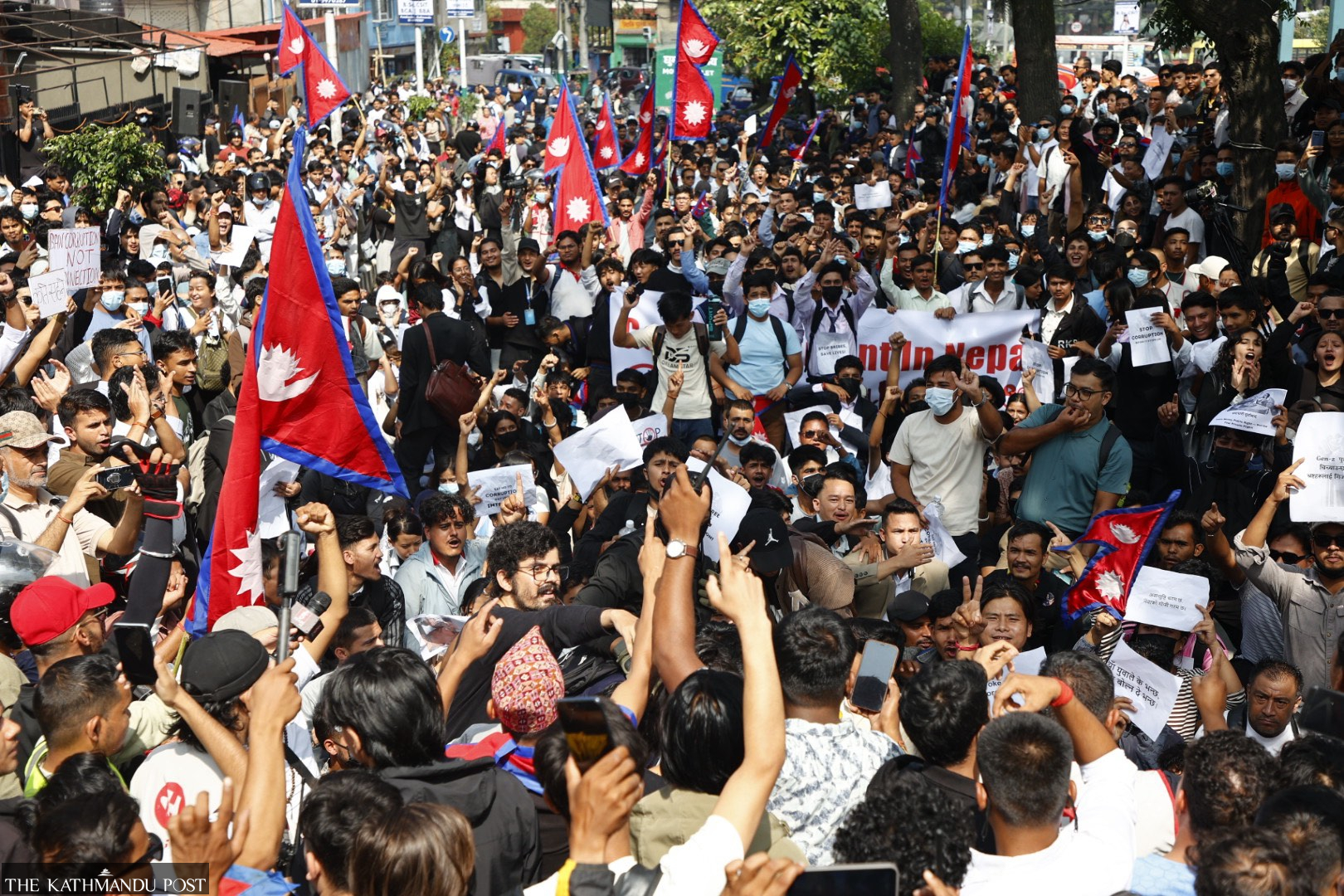
Nepal is witnessing a unique shift in its political landscape, driven by the Gen Z movement. This generation is bringing a rare sense of moral clarity to the country’s politics, pushing for accountability and transparency in governance. As the upcoming election approaches, it is not just about leadership turnover but also about a critical choice: whether Nepal will maintain political continuity to support long-term economic progress.
Stability is more than just a political concept; it is a foundational element that affects investment, employment, and overall economic growth. When businesses operate in an environment with stable rules, they are more likely to invest. However, frequent changes in government increase the risk of policy reversals, regulatory uncertainty, and delays in approvals. These factors raise the cost of capital and discourage investment, ultimately slowing down economic growth.
The Cost of Uncertainty
Foreign Direct Investment (FDI) serves as a clear example of how political instability affects economic development. Despite Nepal’s efforts to attract external capital to accelerate industrialization and job creation, FDI inflows remain modest. According to the Nepal Rastra Bank’s survey for FY 2023/24, net FDI stood at just Rs8.4 billion (approximately $63 million). Out of the Rs69.83 billion in committed investments, only 12 percent was actually realized.
Nepal’s domestic market is small, but this alone does not explain the lack of investor confidence. Political volatility compounds structural constraints. When ministerial leadership changes frequently and policy direction shifts with coalition dynamics, long-term investors tend to adopt a wait-and-see approach.
Reform Cannot Be Reset Annually
Government tenure in Nepal has averaged just nine months during the multiparty democratic periods. Since 2015, only one government, Oli’s second term, lasted longer than two years. Structural reforms such as tax administration, energy restructuring, and federal fiscal coordination require time to mature. They need inter-ministerial coordination, administrative learning, political capital, and evaluation and course correction. Frequent changes erode institutional memory, making economic transformation episodic rather than cumulative.
Reform, by definition, is a long game. A system that resets every year cannot play it well. Short-lived governments often prioritize populist spending and constituency appeasement, leading to fragmented capital projects that turn public investments into political optics rather than long-term economic infrastructure.
Fiscal Discipline Needs Continuity
The trajectory of old age allowances illustrates the challenges of short-lived governance. What began as Rs100 per month in 1994 reached Rs4,000 by 2021, a 3,900 percent increase. The allowance doubled from Rs1,000 to Rs2,000 in just one year (2014-2015) due to shifting coalition dynamics. In 2018, the eligibility age dropped from 70 to 65, just before local elections. In 2021, the left alliance promised Rs5,000 per month during the campaigns, but the eventual government delivered Rs4,000.
Social security spending surged from Rs26 billion in FY 2010/11 to Rs258 billion in FY 2024/25, now consuming 14.8 percent of the national budget. Social protection is essential, but design matters. For instance, a 75-year-old from a wealthy Kathmandu family receives the same allowance as an elderly Dalit widow in rural Karnali.
Stable governments can reform these programs by introducing means testing, linking benefits to verifiable needs, and creating automatic adjustment mechanisms. Short-lived governments cannot.
Building Capacity Through Consistency
Institutions strengthen when leadership remains long enough to professionalize the bureaucracy, align incentives, and improve procurement systems. Constant political reshuffling leads to administrative paralysis and blurs lines of responsibility. When ministers and senior officials rotate frequently, no one remains in office long enough to be held accountable for outcomes.
Policies fail, projects stall, and responsibility becomes diffused. The Melamchi Water Supply Project exemplifies this dysfunction. Initiated in 1998 to solve Kathmandu’s water crisis, it was supposed to be completed by 2006. Instead, it took 23 years to first deliver water. A simple example: In FY 2022/23, the government dissolved the Melamchi Water Supply Development Board, the implementing agency, through a budget speech, then reinstated it months later via Cabinet decision. For nine months, no work occurred at all.
This pattern repeats across Nepal’s infrastructure. Projects begin with ambition, slow under administrative uncertainty, pause during political transitions, and restart under new leadership with revised priorities.
What Voters Should Demand
Nepal’s instability is structural. The proportional representation system, designed to ensure inclusivity, has made coalition governments the norm. Without a single-party majority, no government can claim a clear mandate or resist coalition bargaining. This is a constitutional reality.
But voters can change what they reward. The Gen Z movement has shown that public pressure matters. What voters demand from coalitions shapes how those coalitions behave. If the electorate continues to reward short-term promises over long-term credibility, parties will continue to treat governance as a bargaining chip.
Are key economic positions going to technocrats or party loyalists? The central bank’s governorship should signal seriousness. When these positions rotate with coalition shifts or go to political appointees with no relevant expertise, economic policy becomes transactional.
This election, voters should ask harder questions. Not “When will you fix the pipe in front of my house?” but “How will you ensure that projects are completed on time and within budget?” Not “What will you give me this year?” but “How will you build institutions that outlast your term?”
A country that wants prosperity must first choose stability, and this election presents that choice.