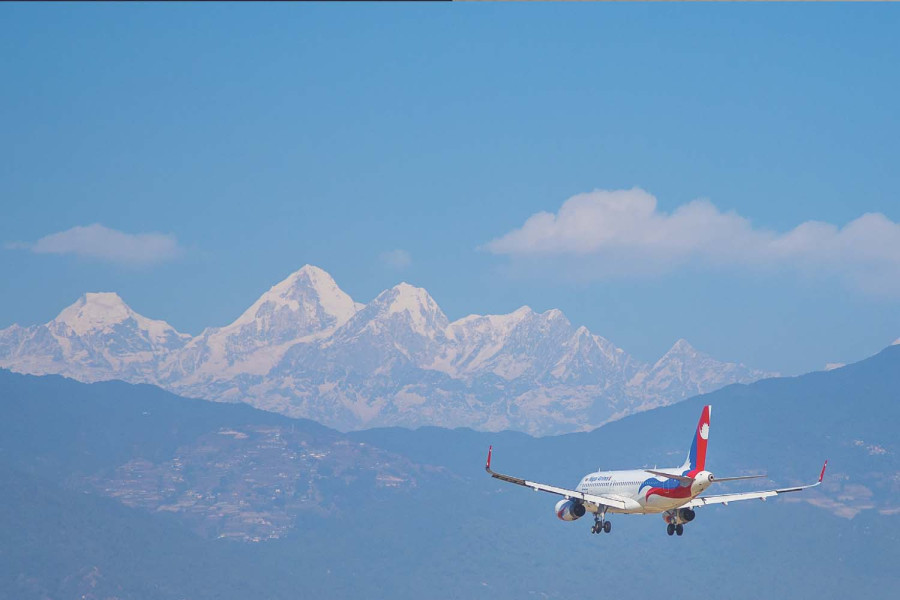
The Struggles of Nepal Airlines
Nepal Airlines, the state-owned flag carrier, has faced a series of challenges that have significantly impacted its operations and reputation. With Rs50 billion in debt, on the verge of bankruptcy, eroding public trust, corruption scandals, overstaffing, and chronic mismanagement, the airline has become a symbol of financial instability.
Despite these issues, the position of chief executive remains financially appealing. Sixteen individuals have applied to lead the debt-ridden company as the government attempts to select a new leader through open competition.
The report highlights that Nepal Airlines is approaching insolvency, a situation where a debtor cannot pay their liabilities. A recent government report warns that without immediate corrective measures, the situation may worsen to a point where the two largest public saving institutions could be adversely affected.
Financial Indicators and Governance Challenges
According to data from the Office of the Auditor General, the corporation’s financial indicators have plummeted far below acceptable thresholds. A comprehensive evaluation of Nepal’s aviation sector, led by former Supreme Court Justice Anil Kumar Sinha, paints a bleak picture.
The current ratio, which measures current assets relative to current liabilities, stands at 0.60. This indicates that Nepal Airlines’ current assets can cover only 60 percent of its immediate obligations, revealing a dangerously fragile working capital position.
The debt-to-equity ratio is a staggering negative 12.33, indicating that the corporation’s paid-up capital has turned fully negative and its liabilities vastly exceed its assets. The report concludes that the corporation is heading towards bankruptcy.
Nepal Airlines’ outstanding loan liability stands at Rs34.83 billion. When capitalised interest and penal interest are included, the total liability reaches Rs50 billion. The interest coverage ratio is only 0.66, meaning its operating income covers just 66 percent of its interest payments.
Impact on Public Savings
The debt-to-total-assets ratio has reached 1.09, showing liabilities now exceed the total value of the corporation’s assets. Under normal circumstances, institutions such as the Employees Provident Fund and Citizen Investment Trust invest long-term capital as equity. However, Nepal Airlines’ balance sheet tells a different story: the corporation has received direct credit flows from capital funds that should have come in the form of equity.
While this may not be illegal, the report says it represents poor financial judgment. Had these funds been invested as equity rather than loans, the corporation’s financial position might have been far healthier.
This imbalance between equity and debt underscores a broader lack of managerial competence and corporate governance. Because these loans come from citizens’ long-term savings, Nepal Airlines’ failure to service them poses a direct threat to the financial security of those savings.
Strategic Vision and Political Interference
Nepal Airlines, despite being fully state-owned, has not taken adequate steps to address its worsening financial distress. Given its precarious state-and the direct link to public capital-the report warns that continued government control may no longer be justifiable under the existing structure.
The airline also lacks a clear strategic vision. Tourism entrepreneur and former Nepal Airlines board member Ashok Pokharel questions why all private airlines connecting Nepal are making healthy profits despite rising fuel and airport fees, while Nepal Airlines consistently fails.
Pokharel points to Nepal’s air cargo market as an example. Qatar Airways alone flies four wide-body Boeing 787s daily from Kathmandu and carries over 20 tonnes of cargo each day; several other carriers operate similarly.
“That’s a huge business Nepal Airlines has gifted to foreign airlines,” says Pokharel. He estimates that foreign airlines repatriate around $2 billion annually from Nepal-$1 billion by low-cost carriers, $580 million by IATA-member airlines, and the rest through cargo earnings.
Recommendations for Reform
The Sinha report echoes this sentiment, identifying persistent political meddling as a major cause of the carrier’s deterioration. Frequent changes in ministry leadership lead to pressure to replace Nepal Airlines’ executive leadership. “This environment has made long-term planning impossible,” the report says.
One glaring example is the controversial procurement of Chinese-made planes-four Y12e aircraft and two MA60s-purchased between 2014 and 2018 through a mix of grants and loans totaling Rs6.66 billion. One aircraft crashed in Nepalgunj; five others have been grounded since 2020 and are now visibly rusting away at Tribhuvan International Airport.
The report further states that the corporation’s current organisational structure and operational model are unsustainable. Chronic political interference, weak governance, and lack of financial planning have prevented Nepal Airlines from functioning as a modern airline.
Still, the report says the corporation can be rebuilt if essential reforms are adopted. Corruption, however, remains the primary obstacle.
Future Prospects
Recently, Buddha Air founder Birendra Bahadur Basnet argued that reviving Nepal Airlines could significantly benefit the nation’s economy. Basnet, now in politics, proposes expanding the airline’s fleet to 50 aircraft-including Airbus A350-1000s-through a public-private partnership in which the government would retain a 30 percent stake.
To attract five million tourists annually, Basnet suggests adding five aircraft each year. “This is not fantasy,” he says. “We have a clear business plan based on study and analysis.” If political will exists, he claims, Nepal Airlines could be reformed within three to six months.
The Sinha report recommends a sweeping restructuring of Nepal Airlines, including amending the Nepal Airlines Corporation Act and reorganising government-owned capital, investments, and institutional loans. It proposes splitting the corporation into three entities: Nepal Airlines Company Limited (international services), Nepal Aviation Service Company Limited (ground handling), and Nepal Airlines Corporation (domestic services).
The first two should become public companies listed on the Nepal Stock Exchange, with executives hired through competitive and performance-based processes. Domestic operations would remain under a state-backed structure with equity-based public ownership and targeted subsidies for remote-area flights.
The report also stresses the need for 18-seater aircraft to serve STOL (short takeoff and landing) airfields in hilly and mountainous regions. However, debt allocation remains a major hurdle. Nearly Rs50 billion in liabilities-mostly tied to international aircraft procurement-would fall on the new international carrier alone, threatening to pull the new entity back into crisis.
Nepal Airlines also lacks a competency-based management system. Executives lack authority to run operations or make business decisions. Political changes result in frequent leadership turnover, fuelling mistrust and enabling disruptive behaviour from politically affiliated unions.
Nepal Airlines, originally founded as Royal Nepal Airlines Corporation in 1958, began with a single Douglas DC-3 and expanded into international operations over the decades with Boeing 727s and 757s. In recent years, it has operated Airbus A320s and A330s on international routes.


