Key Developments in the Investigation into Nakkhu Prison Break
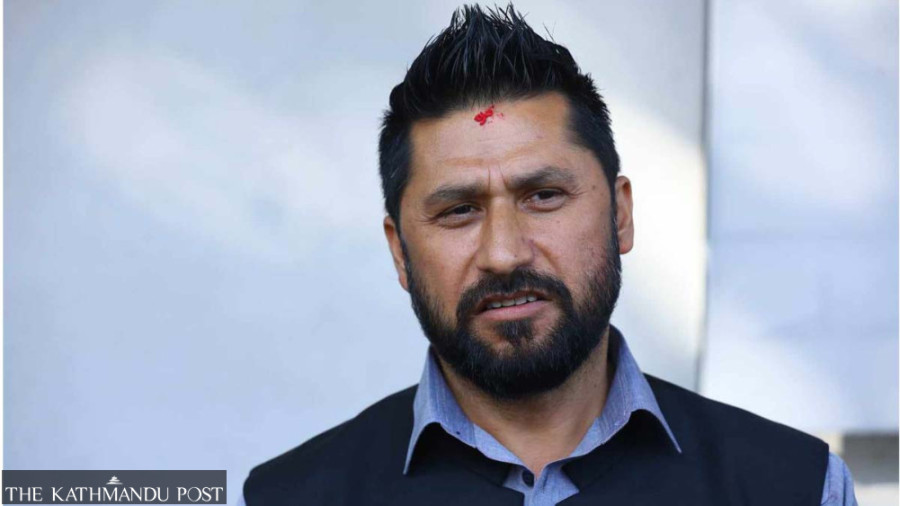
Kathmandu, Nov. 5 — Rabi Lamichhane, the leader of the Rastriya Swatantra Party (RSP), has provided testimony to an investigation commission regarding his release from Nakkhu Prison during the Gen Z protests in September. He denied fleeing the prison and stated that his release was done with the knowledge and cooperation of the police.
The commission, led by former Special Court chair Gauri Bahadur Karki, is examining the events surrounding the nationwide protests on September 8-9, which involved widespread vandalism and unrest. Lamichhane’s statement was recorded on Wednesday, focusing on how he left the prison on September 9.
According to a source familiar with the process, Lamichhane and Satyaraj Joshi, the former jailer of Nakkhu Prison, gave similar accounts to the commission. The commission is currently verifying these statements and preparing for further actions.
On September 21, the interim government formed after the Gen Z protests under the leadership of former chief justice Sushila Karki established a three-member inquiry commission under Karki. The commission has three months to submit its report.
Lamichhane, who was in judicial custody over allegations of cooperative fund embezzlement, left the prison on September 9 citing security concerns, along with hundreds of other inmates during the unrest. Later, questions were raised about the authenticity of a letter supposedly issued by the prison administration authorizing his release. Lamichhane returned to the prison after a few days.
The commission began its Kathmandu-centred investigation on November 2 by recording the statement of Joshi, the former chief of Nakkhu prison, who was summoned to the commission’s office at Singha Durbar. Earlier, the commission team had visited Nakkhu prison on Tuesday to gather details about the prison break, vandalism, and arson during the protests.
During the anti-corruption Gen Z movement, 76 people, mostly youths, were killed in brutal suppression by authorities. Government, private, and commercial property were vandalised, looted, and set on fire. The Cabinet meeting on Monday declared 45 of the deceased as martyrs.
Testimonies and Claims from the Commission
The commission questioned Joshi about the vandalism, arson, and Nakkhu prison break of September 9, as well as the overall situation surrounding the incident. According to one commission member, Joshi gave a nearly two-hour-long statement, explaining that attempts at vandalism and arson had started early that morning.
Despite efforts to maintain restraint, the situation spiraled out of control, a commission member quoted Joshi as saying. Joshi reportedly said that protests had erupted outside the prison from early morning, fuelled by social media discussions about RSP chief Lamichhane. He added that although security inside the prison had been tightened due to the presence of inmates convicted of serious crimes, the situation could not be brought under control.
Joshi claimed that when it became apparent that the violence and arson could cause casualties, the prison administration began the process of handing over prisoners to their families. During this time, when Lamichhane was being handed over to his family, Joshi said he was pressured to sign a letter that had been brought to him, the commission member told the Post.
“I was compelled to sign the letter even without reading its contents, as I feared my own life,” the commission member quoted Joshi.
Joshi admitted that he signed the document under pressure from then Home Secretary Gokarna Mani Duwadi. Joshi told the commission that he signed the document about an hour after Lamichhane had been released, according to the commission member.
Following Joshi’s statement, members of the investigation commission visited Nakkhu Prison on November 2 to meet Lamichhane. During the meeting, Lamichhane claimed that he had not escaped but had been released with the cooperation of the home administration and the police leadership.
Lamichhane reportedly told the commission officials during the interrogation that he was ready to have his conversation recorded as an official legal statement. He appeared before the commission’s secretariat at Singha Durbar on Wednesday to provide his testimony. His wife, Nikita Poudel, also accompanied him, carrying original documents to substantiate his claims.
Ongoing Challenges and Disputes
Meanwhile, the commission has accused the police administration of not cooperating. Although the commission source said that Lamichhane’s recorded statement is largely consistent with Joshi’s, the source declined to disclose all the details saying they would appear in the final report.
One of the commission members, however, said that while some parts of Lamichhane and Joshi’s statements appear similar, there is no complete consistency between them. Another member of the commission, BP Bhandari, said, “All details from the statements will be included in the investigation report. We cannot disclose anything at this stage.”
Although RSP spokesman Manish Jha and leaders Hari Dhakal and Bipin Acharya are accused of inciting the crowd outside the prison to release Lamichhane on September 9, the commission has not yet summoned or interrogated them. “Since allegations have been made against us, we are ready to record our statements, but we have not received any notice or summons from the commission so far,” Jha said.
A member of the commission, however, said they could be summoned for questioning if necessary.
Tensions Between the Commission and Police
Meanwhile, the differences between the commission and Nepal Police Headquarters have widened over the course of the investigation. Former additional inspector general (AIG) Bigyan Raj Sharma, who is also a member of the commission, said that they had requested details of police personnel deployed at various sites across the country on the days of the protests.
Sharma added that so far only information from Kathmandu has been received, while details from outside the Valley are pending. The commission had written to the secretariat of the inspector general of Nepal Police requesting details of the police personnel deployed at key locations on September 8 and 9.
Initially the Secretariat was reluctant to provide the information but later said that everyone from the inspector general to constables had been deployed. Inspector General of Nepal Police Chandrakuber Khapung, however, rejected allegations of non-cooperation with the commission.
“We have provided the necessary police personnel to assist the commission,” Khapung told the Post. “As for the details of officers deployed at the incident sites, the delay occurred due to a lack of coordination between the commission and the police offices, and that issue is now being resolved.”

Related posts:

Fiction park: He was the best in class. He still wasn’t good enough

Gagan Thapa takes oath as Congress president, vows to regain public trust

Inside knowledge that has locals gripped by fear after gran’s body found decomposing in cattle dip

New property purchase disclosure rule in Japan sparks fears it may curb foreign investment

Dino-mite treasures: inside Singapore’s Fort Knox storing playthings of ultra-rich