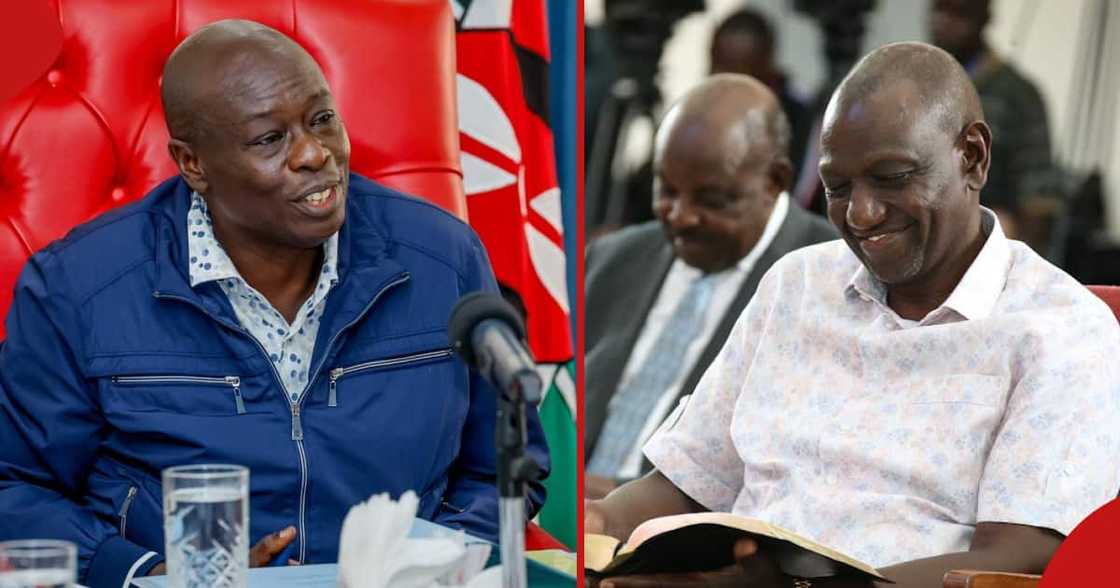
President Ruto’s Development Tour Across Kenya
President William Ruto has been actively engaging with communities across Kenya, launching various development initiatives and infrastructure projects in the Rift Valley and Western regions. This week-long tour has highlighted the government’s commitment to improving livelihoods, enhancing infrastructure, and promoting sustainable development.
October 27: Nakuru and Kuresoi North
The President began his tour in Nakuru County, where he unveiled the Mau Forest Complex Integrated Conservation and Livelihood Improvement Programme. This initiative aims to restore Kenya’s largest water tower, which is crucial for the country’s ecological balance and agricultural productivity. The project is expected to support over 5 million livelihoods and boost river water levels.
Ruto emphasized a whole-of-society approach to conservation, involving government, private sector, and local communities. He also announced the launch of the 12km Kinamba–Murinduku Road, which will facilitate the movement of agricultural produce and improve farm-gate incomes.
At Sirikwa in Kuresoi North, the President launched a community livelihood programme that includes distributing tree seedlings, pyrethrum splits, tea seedlings, milk coolers, beehives, and last-mile electricity connections. These efforts are designed to integrate community livelihoods into forest restoration, ensuring that communities become conservation partners.
The President also presided over the handover of 220 housing units at the Elburgon Affordable Housing Estate and laid the foundation stone for the Sh4.2 billion Michinda Social Housing Project. This project is set to deliver 2,680 units and generate thousands of jobs.
Later, at Molo Technical & Vocational College, Ruto addressed a public forum on the government’s long-term development agenda, emphasizing the need to move Kenya from the ordinary to the extraordinary.
October 28: Nakuru and Baringo
In Nakuru, the President hosted grassroots leaders for consultations on the county’s development progress and national economic agenda. He highlighted ongoing investments, including Sh40 billion for 21,000 affordable housing units and Sh3.5 billion for 25 modern markets.
He also announced a Sh20 billion partnership with Afri-Exim Bank to develop essential infrastructure at the Naivasha Special Economic Zone, aimed at accelerating industrial growth and job creation.
In Baringo, Ruto laid the foundation stone for the 382-unit Marigat Affordable Housing Project, which is expected to transform the town into a modern urban hub. He also inspected the ongoing works on a 100km road network, which is expected to ease the movement of farm produce and boost tourism.
In Kabarnet Town, the President engaged residents on the government’s development priorities, reaffirming commitment to peace and security in the region. He announced the recovery of over 600 illegal firearms as part of ongoing disarmament efforts.
October 29: Nakuru and Gilgil
Returning to Nakuru, Ruto commissioned a Sh130 million CT-scan unit at the Nakuru County Referral and Teaching Hospital. This AI-enabled equipment will double imaging capacity and include a heart treatment kit.
He also broke ground for the Susan Kihika Primary and Junior School and launched the Nakuru East Last-Mile Electricity Connectivity Programme. The President laid the foundation stone for the 2,100-unit Lanet B Affordable Housing Project, which will employ more than 3,000 young people.
In Kiptangwany, he inspected the modern market under construction and issued 2,727 title deeds, ending a 53-year land ownership stalemate for residents. He also launched several access roads and committed to building the 26th modern market in Nakuru.
October 30: Western Kenya
In Western Kenya, the President opened the 124-bed Butere County Hospital and announced reforms at KEMSA to increase drug availability. He also opened the Malava KMTC campus and announced Sh1 billion for the completion of the Kakamega County Teaching and Referral Hospital.
He launched the 22-km Malava–Samitsi–Navakholo road, supporting sugarcane transport and regional agribusiness growth. In Lugari, he launched the 34-km Turbo–Sikhendu road and commissioned the Kakamega Airstrip–Shinyalu–Chepsonoi road.
October 31: Busia and Teso
In Busia, the President laid the foundation for a 340-bed hostel at Bumbe National Polytechnic and inspected the 955-unit Funyula Affordable Housing Project. He committed Sh30 million to complete pending works at the polytechnic and announced a 340-bed hostel for Amukura TTC.
The President launched the Sh350 million Malaba County Strategic Market and inspected the Sh1.17 billion Alupe University hostel project. He also launched the 1,025-unit Busia ATC Affordable Housing Project.
November 1: Vihiga County
Met grassroot leaders from Kakamega County before embarking on an inspection of projects in Vihiga County. He also launched several other projects, including Ebukanga Technical Institute and the last-mile connectivity project.
The tour concluded with a church service at Gamalenga grounds in Vihiga County.

Related posts:

Fiction park: He was the best in class. He still wasn’t good enough

Gagan Thapa takes oath as Congress president, vows to regain public trust

Inside knowledge that has locals gripped by fear after gran’s body found decomposing in cattle dip

New property purchase disclosure rule in Japan sparks fears it may curb foreign investment

Dino-mite treasures: inside Singapore’s Fort Knox storing playthings of ultra-rich