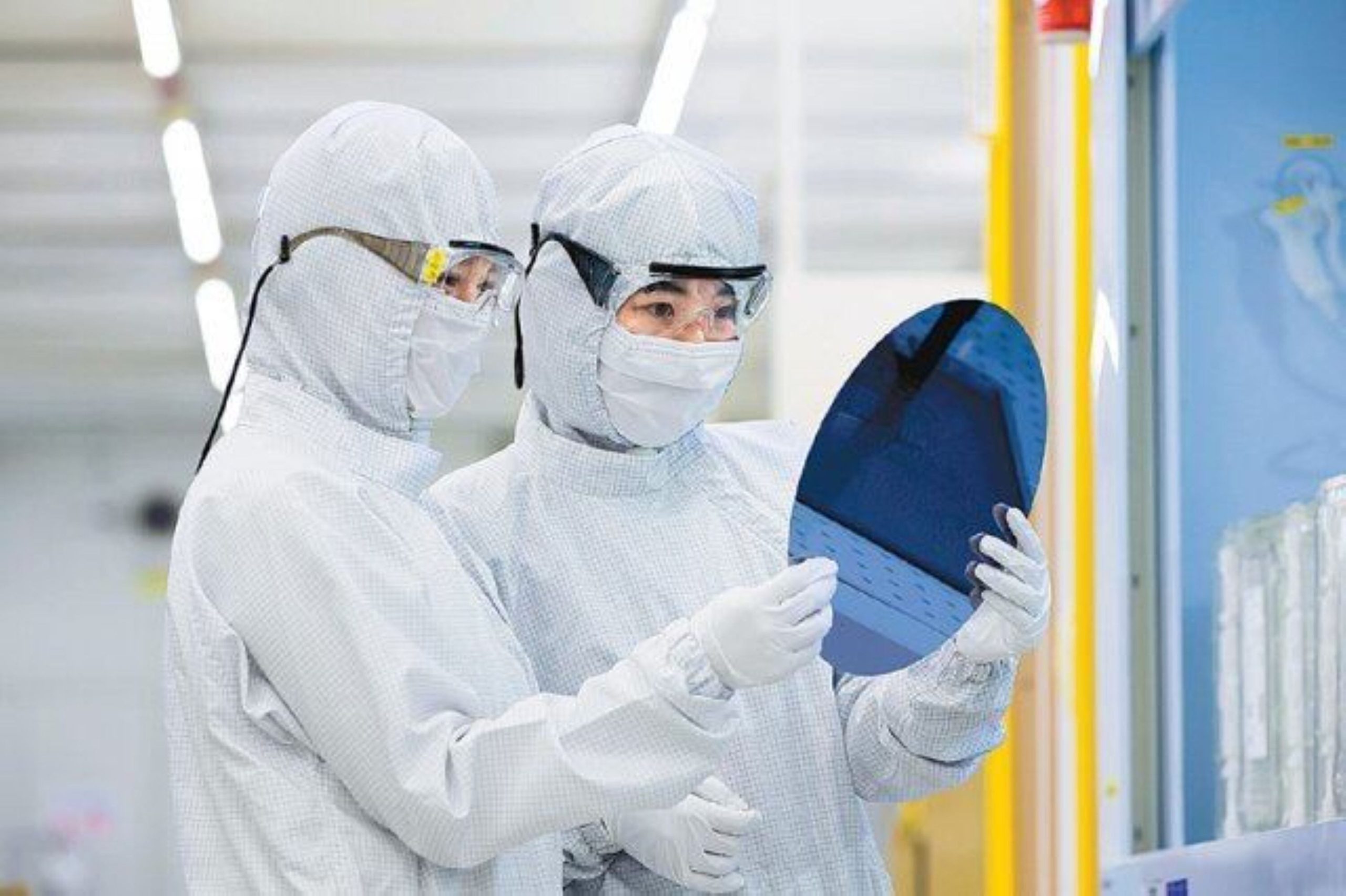
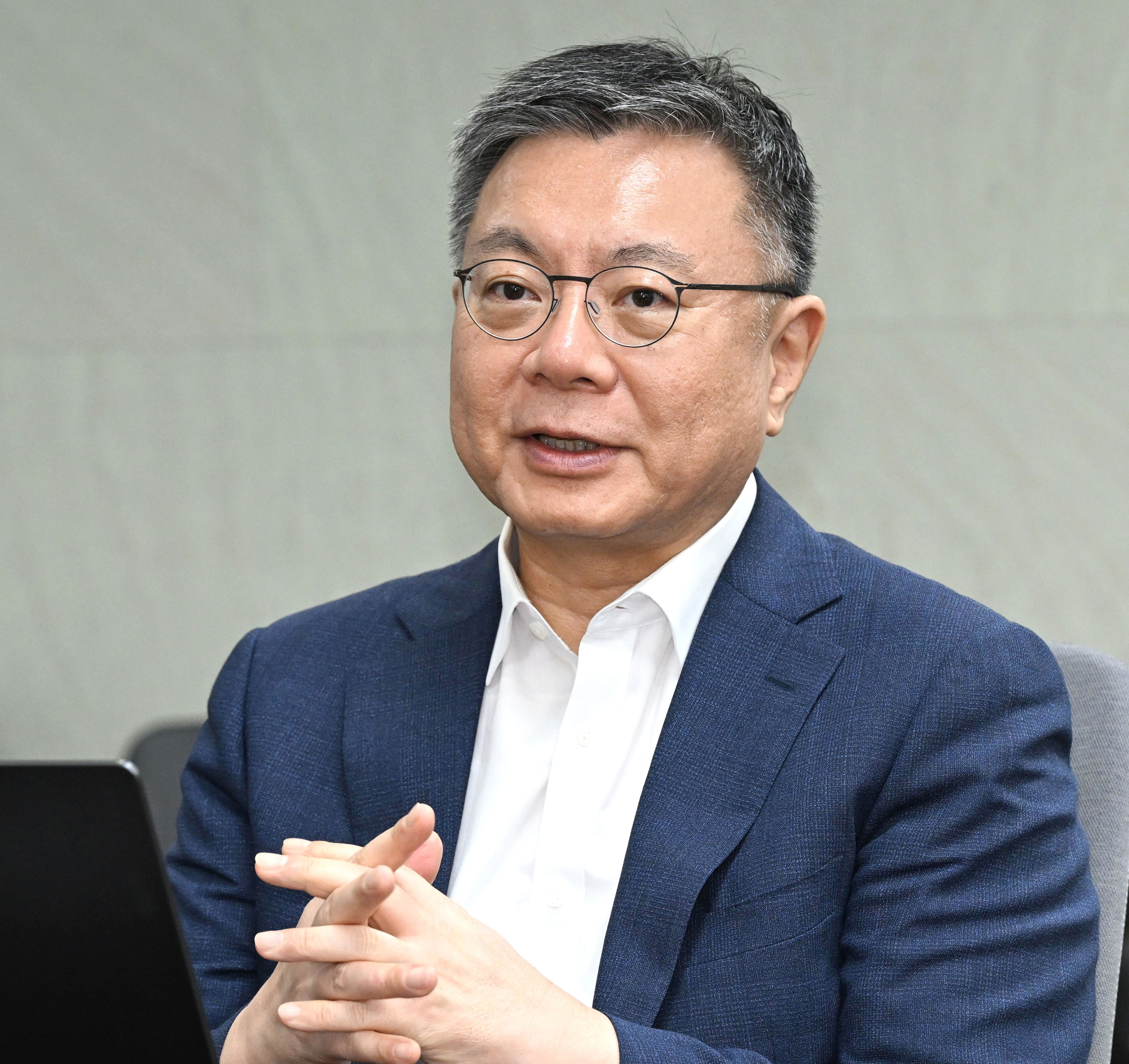
Prospects for the South Korean economy are increasingly positive. Driven by the AI (artificial intelligence) boom, semiconductor exports have continued to hit record highs, while other sectors such as electric appliances and cosmetics are also showing strong growth. Thanks to this export momentum, there are growing expectations that the Korean economy will emerge from its prolonged slump and enter a recovery phase this year. Where does the Korean economy stand now? Will it achieve a full-fledged recovery this year? We spoke with Professor Kim Hyun-wook, a macroeconomic expert at the Korea Development Institute (KDI) Graduate School of International Policy.
Professor Kim earned his bachelor’s in economics from Seoul National University and a master’s and Ph.D. in economics from Columbia University in the U.S. He has worked for many years at the Bank of Korea and KDI. As the longtime head of KDI’s macroeconomic outlook team, he is a leading economist specializing in macroeconomics and finance. He currently teaches macroeconomics and international finance at the graduate school while researching the impact of changes in the economic security environment on the economy.
Divergence Between Semiconductors and Non-Semiconductors
―What is the current state of the Korean economy?
“Due to the rapid expansion of the global AI market, the economy is experiencing unexpectedly high growth rates. Memory semiconductor exports have surged, and equipment investment, led by semiconductor companies, continues to rise sharply. With semiconductor export prices skyrocketing, the terms of trade have significantly improved, leading gross domestic income (GDI) to grow faster than gross domestic product (GDP). From a macroeconomic perspective, the Korean economy can be considered to have entered a boom phase.”
―Many people still do not feel the boom.
“The issue is the significant disparity in how the boom is perceived across production sectors and domestic demand categories like consumption and investment. In terms of production, the semiconductor industry, which is driving GDP growth, is overheated—this is not an overstatement. However, other industries rarely show vitality. This sectoral gap reflects overseas demand but was also somewhat predictable due to long-standing disparities in manufacturing production capacity across industries.”
―What is the gap in production capacity across industries?
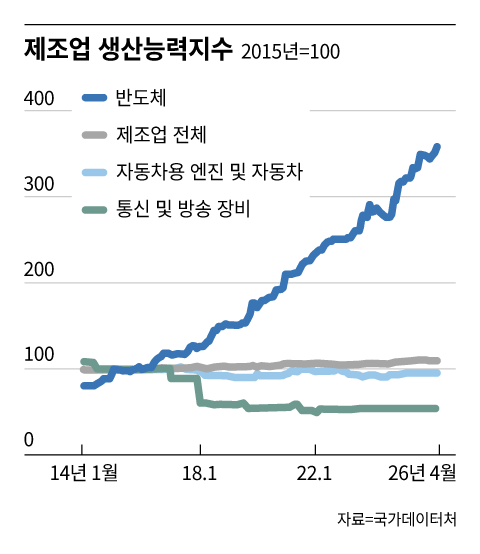
“The Ministry of Data and Statistics publishes an industrial manufacturing production capacity index. This index indicates the maximum production capacity based on a manufacturer’s facilities and workforce. It is normalized to a monthly average of 100 in 2015 to compare trends.
Since the mid-2010s, Korea’s manufacturing production capacity index has shown significant changes. For semiconductors, production capacity has grown 3.5 times over the past decade, while communication and broadcasting equipment (including mobile phones) has nearly halved. The automotive engine and vehicle sector has seen a slight decline, which is relatively fortunate, while many other industries have experienced more significant reductions. A similar trend is observed in the industrial export volume index published by the Ministry of Data and Statistics, where semiconductors dominate.”
―What problems arise from the widening production capacity gap between semiconductors and non-semiconductors?
“It becomes difficult for economic booms to translate into improved employment. While the semiconductor industry, which has low employment-generating effects, is leading production growth, the trickle-down effects on domestic demand through employment and wages are hard to perceive. This explains why most citizens feel their lives have not improved despite daily news of semiconductor booms.
Indeed, excluding semiconductor-related equipment investments, other domestic demand categories show no clear growth. Private consumption, which had benefited from stimulus policies, is already slowing. Recently, service consumption has driven private consumption more than goods consumption, but this is not robust given the surge in financial services consumption due to sharp stock price fluctuations.”
―What is financial services consumption?
“When consumers purchase financial products or trade financial assets through financial institutions like banks, insurance companies, and securities firms, these institutions provide services and earn fees. This collective spending on such services is termed ‘financial services consumption.’ Over the past year, stock trading, fund subscriptions, credit transactions, and credit loans have increased significantly due to soaring stock prices, leading to rapid growth in financial services consumption.”
Strong Sectors in the Korean Economy
―What are the positive aspects of the Korean economy?
“First, the semiconductor industry cannot be overlooked. Despite ongoing uncertainties from the Trump administration’s tariff policies and geopolitical tensions due to the Middle East war, the global economy is showing relatively robust growth. Much of this growth is supported by the expansion of AI services and infrastructure like data centers. In this context, South Korea, home to the world’s top two memory semiconductor companies, has not been left behind in the global economic expansion but has instead contributed to its acceleration.”
―Other sectors?
“The government’s tax revenue. Due to the soaring profits of semiconductor-related companies, record tax revenues are expected this year. This is a good opportunity to alleviate some of the concerns about fiscal soundness that have persisted for the past two decades. The key policy challenge is how to use these record revenues—balancing debt repayment with cautious fiscal support to enhance industrial competitiveness.”
Weak Sectors in the Korean Economy
―What sectors are underperforming?
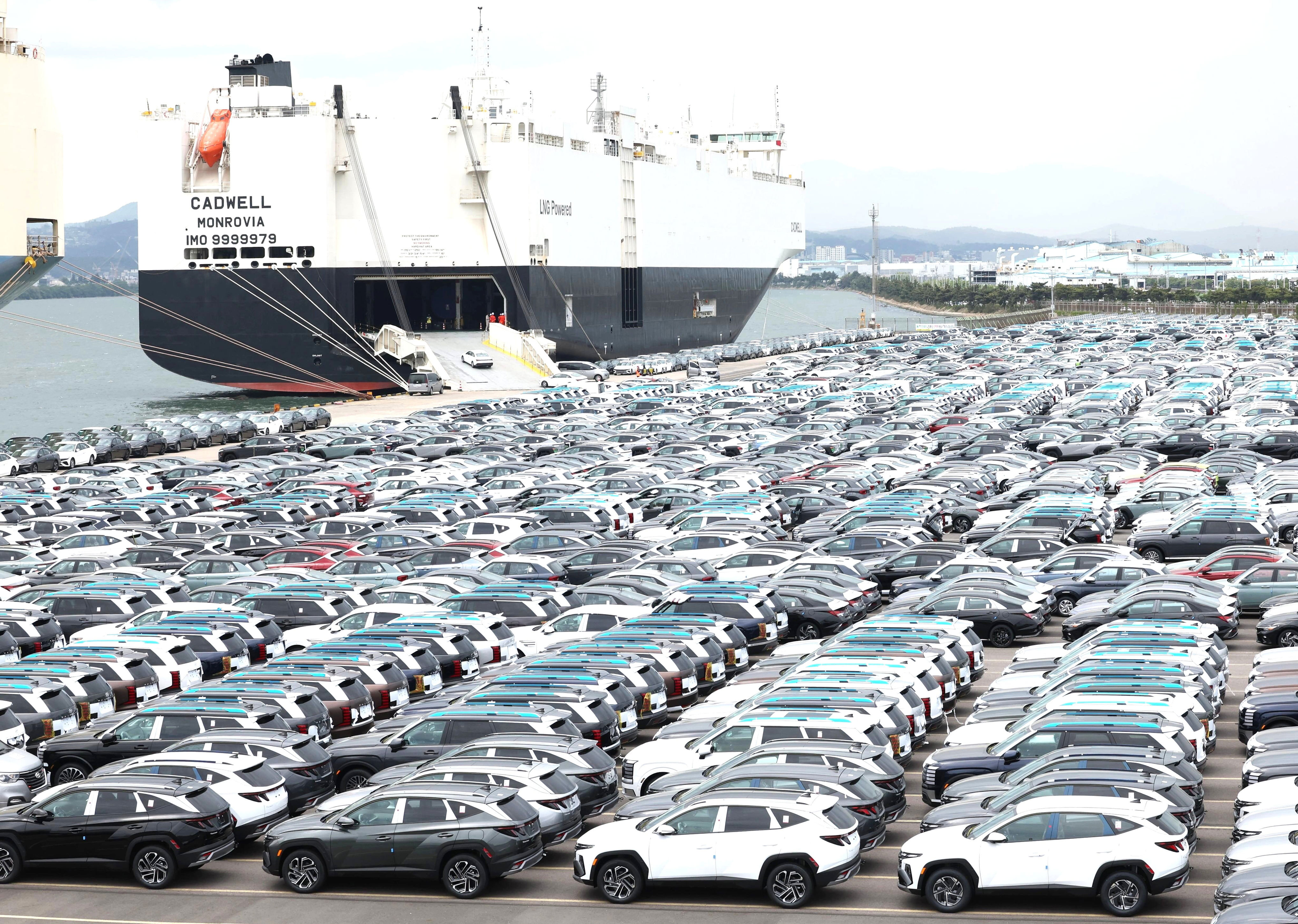
“Apart from semiconductor-related industries, it is difficult to find companies showing notable performance. While the automotive, shipbuilding, and defense sectors are relatively stable, they pale in comparison to semiconductors.”
―Why?
“Since the mid-2010s, the Korean economy has experienced a typical ‘structural long-term stagnation’ with rapidly declining economic vitality in production. However, corporate strategies and policies to address this have been insufficient. Industrial competitiveness-enhancing policies, or ‘new industry policies,’ were needed, but fiscal capacity was limited. Moreover, prioritizing funds for low birth rates, aging populations, and social safety nets made it difficult to aggressively pursue new industry policies.”
―Other issues besides fiscal constraints?
“Policy errors stemming from confusing ‘cyclical expansion’ with ‘growth’ also played a role. Political considerations prioritizing short-term policy outcomes led to a focus on boosting GDP growth through domestic demand, especially consumption. Consequently, the government’s role in enhancing industrial competitiveness has been insufficient.”
☞ Continued in Part ②
- 월 5900원 멤버십, 신문 독자에게는 2900원, 조선멤버십
- 55000원 상당의 신문-잡지 8종 마음껏 보기, 조선멤버십
- 현금처럼 쓸 7000포인트 받아 알뜰한 쇼핑, 조선멤버십

Related posts:

Artists protest National Theater for Young Audiences’ non-specialist appointment

Booker-winning translator Deepa Bhasthi on why she has ‘nothing kind to say about AI’

Beijing signals support for rebuilding flood-ravaged Rasuwagadhi route

Infrastructure Minister Sunil Lamsal on rebuilding after the Bhotekoshi floods

Why Nepal’s climate crisis is also a public-health emergency