Nigeria’s $200 Billion Energy Transition Opportunity
Nigeria is presenting a compelling case to global investors, showcasing its vast economic potential and the opportunities that come with it. The country is leveraging its position as a key player in Africa’s economic landscape, highlighting the multi-billion-dollar investment opportunities across various sectors. This initiative is part of a broader effort to attract international partnerships and foster sustainable growth.
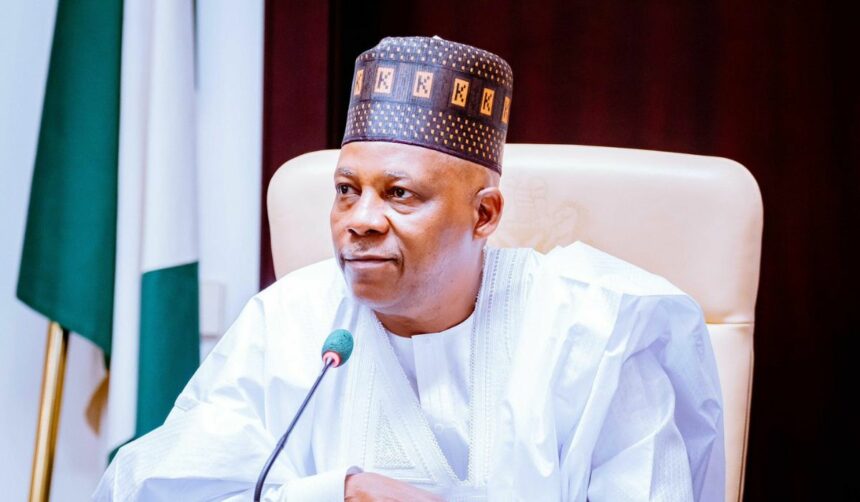
The Vice President, Kashim Shettima, emphasized that Nigeria’s sovereign rating by platforms like Fitch and Moody’s positions the country as a natural hub for the African Continental Free Trade Area (AfCFTA) market, which is valued at $3.4 trillion. This recognition underscores Nigeria’s strategic importance in the region and its potential to serve as a gateway for trade between Africa, the Americas, and Asia.
Shettima highlighted that Nigeria is not only the largest economy in West Africa but also the continent’s largest consumer market, with a population of 236 million people expected to grow to 320 million by 2040. The country’s youthful demographic, with over 58% of the population under 30, presents a significant talent pool. This demographic advantage, combined with Nigeria’s geographic location and abundant natural resources, makes it an attractive destination for investment.
Economic Reforms and Investment Opportunities
Under the Renewed Hope Agenda led by President Bola Ahmed Tinubu, Nigeria has embarked on one of the boldest economic resets in its history. Key reforms include the unification of exchange rates, removal of fuel subsidies, modernization of tax and customs regimes, and strengthened fiscal oversight. These measures have contributed to improved GDP growth, stronger external reserves, and moderated inflation.
The implementation of the AfCFTA, along with the rollout of a National Single Window for trade, a new Investment and Securities Act, and an upgraded Public-Private Partnership (PPP) framework, has further enhanced Nigeria’s investment climate. These reforms are designed to attract both domestic and foreign investments, creating a more favorable environment for business operations.
Nigeria has also introduced a four-pillar incentives framework aimed at reducing investor risk and accelerating returns. This includes a simpler, predictable tax regime with clear capital allowances, research and development deductions, and export-linked rebates. Investors in priority sectors can benefit from five percent annual tax credits on qualifying capital expenditure, making Nigeria a competitive destination for capital in the Global South.
Special Economic Zones and Infrastructure Development
Special Economic Zones (SEZs) in Nigeria offer duty-free imports, rent concessions, and rebates on non-oil export proceeds, providing significant advantages to investors. These zones are equipped with integrated logistics platforms that unlock working capital for exporters, enhancing their competitiveness in the global market.
Cross-border protections, including updated bilateral investment treaties and investor promotion and protection agreements, ensure that investors’ capital and profits are safeguarded. Streamlined foreign exchange access further boosts investor confidence.
In the agricultural sector, Special Agro-Industrial Zones are reducing post-harvest losses by up to forty percent and linking farmers directly to processing and export hubs. This transformation is turning Nigeria into a continent-scale food system that serves millions across West Africa.
Energy Transition and Natural Resources
Nigeria’s energy transition opportunity is estimated at $200 billion, driven by its 210 trillion cubic feet of proven gas reserves and high solar irradiation levels. Fiscal incentives and VAT waivers are de-risking investments in both traditional and renewable power assets, including gas-fired independent power plants, off-grid solar, and clean hydrogen pilots.
Despite a one-billion-dollar annual gap in transport, ports, and power infrastructure, the government is blending sovereign and private finance through InfraCorp and the Nigeria Sovereign Investment Authority. This approach is funding metro lines, dry ports, and industrial corridors, building the backbone of West African trade and creating long-term revenue streams for investors.
Minerals, Digital Economy, and Creative Sector
Nigeria hosts forty-four commercially viable minerals worth over seven hundred billion dollars under a new beneficiation and security regime. Investors can secure early positions in critical minerals such as lithium, gold, bitumen, and rare earths, which are essential for the global green transition.
The digital economy in Nigeria is rapidly expanding, with the country accounting for twenty-nine percent of Africa’s internet usage. Over two billion dollars in venture funding has been raised, and three million new tech talents are being trained. This growth is positioning Nigeria as Africa’s fastest-scaling digital hub, with fintech, AI, cloud services, and broadband rollout at continental scale.
The creative economy, valued at fifteen billion dollars, is projected to reach one hundred billion dollars by 2030. Nigeria’s entertainment hubs, including Nollywood, Afrobeats, gaming, animation, and fashion, are expanding under incentives for intellectual property protection and creative hubs. These efforts consolidate Nigeria’s place as the cultural superpower of the Global South.
Healthcare and Investment Interest
The healthcare sector, currently valued at eighteen billion dollars, is being strengthened by Executive Orders on local manufacturing and a 1.57-billion-dollar World Bank primary health care programme. Specialist centers built by the Nigeria Sovereign Investment Authority further enhance the sector’s capabilities.
Since May 2023, under the Renewed Hope Agenda, Nigeria has seen significant reforms that have already yielded positive results. With about 50 billion dollars in investment interest, the country is attracting attention across key sectors, signaling a promising future for investors.

Related posts:

Fiction park: He was the best in class. He still wasn’t good enough

Gagan Thapa takes oath as Congress president, vows to regain public trust

Inside knowledge that has locals gripped by fear after gran’s body found decomposing in cattle dip

New property purchase disclosure rule in Japan sparks fears it may curb foreign investment

Dino-mite treasures: inside Singapore’s Fort Knox storing playthings of ultra-rich