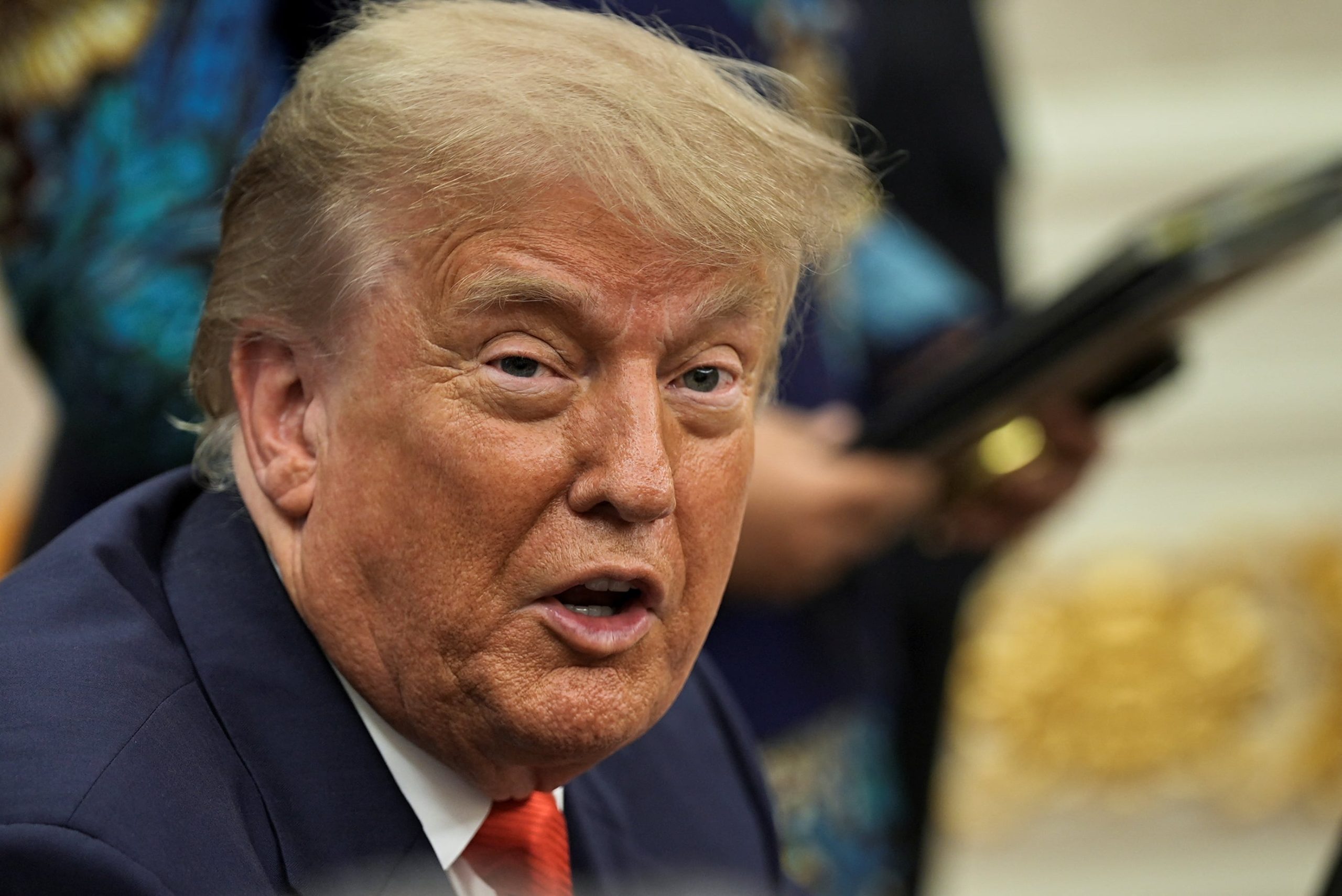
U.S. President Donald Trump has said he will not extend the grace period for reciprocal tariffs imposed on 57 countries and indicated that his administration will soon send formal letters notifying each country of its assigned rate. In a Fox News interview released on June 29, Trump said he does not believe an extension is necessary for the reciprocal tariff moratorium, which is set to expire on July 8. He added that the United States intends to send letters to each country outlining the new tariff terms. While U.S. Secretary of the Treasury Scott Bessent had previously suggested the deadline might be pushed to September 1, Trump dismissed the possibility of any further delay. He said the United States cannot negotiate with 200 countries and that the letters would mark the conclusion of trade negotiations.
According to Trump, the letters will inform each country that, having been allowed to trade with the United States, they will now be subject to tariffs of 10 percent, 25 percent, 35 percent, or up to 50 percent, depending on each case. His remarks suggest that the United States will impose country-specific reciprocal tariffs based on its internal assessment of trade imbalances, with rates ranging from a minimum of 10 percent to a maximum of 50 percent.
When asked about concerns that the United States might agree to trade deals offering lower tariffs for Japanese and South Korean automakers than for American manufacturers, Trump said U.S. automakers need not worry, as such an outcome would not happen.
His remarks are interpreted as a clear indication that Washington will not lower tariffs on automobiles imported from Japan and South Korea. Under Section 232 of the Trade Expansion Act, the United States is currently imposing a 25 percent item-specific tariff on imported vehicles and auto parts. Reducing this tariff has been a top priority for both Japan and South Korea in their trade talks with Washington. Recently, the United States agreed to impose only a 10 percent tariff on up to 100,000 British vehicles per year under a new quota. However, it remains unclear whether similar terms will be offered to Japan and South Korea, which export significantly higher volumes of automobiles to the U.S. market. Both Japan and South Korea currently impose zero tariffs on American cars. This undermines the concern raised by the Fox News host that U.S. automakers might be disadvantaged—prompting some analysts to suggest that Trump may hold a misinformed view of bilateral auto trade relations and that this perception may need to be corrected.
Trump also referenced Japan, where trade negotiations have stalled, and suggested that a letter could be sent. He noted that Japan imports relatively few American vehicles, while the United States imports millions of Japanese cars, calling the imbalance unfair. He added that the U.S. trade deficit with Japan is substantial and that Japanese officials are aware of it. Given that South Korea is in a similar position, many expect that it, too, will receive a tariff notification letter.
Trump first introduced the country-specific reciprocal tariff policy on April 2 and postponed its implementation for 90 days beginning April 9. During the moratorium, the United States has held individual trade talks with affected countries.
However, a senior South Korean government official said during a recent press briefing with correspondents in Washington, D.C., that Seoul has not yet received any official communication from the United States regarding the tariffs.
Japan and the United States have held seven rounds of ministerial-level discussions, but significant differences remain unresolved. With Canada, the U.S. declared a halt to all trade negotiations on June 27, citing objections to Ottawa’s digital services tax.
Still, Bloomberg has reported, citing sources familiar with the matter, that the United States is nearing trade agreements with several countries, including Taiwan and Indonesia, and that a deal with South Korea may also be within reach.


