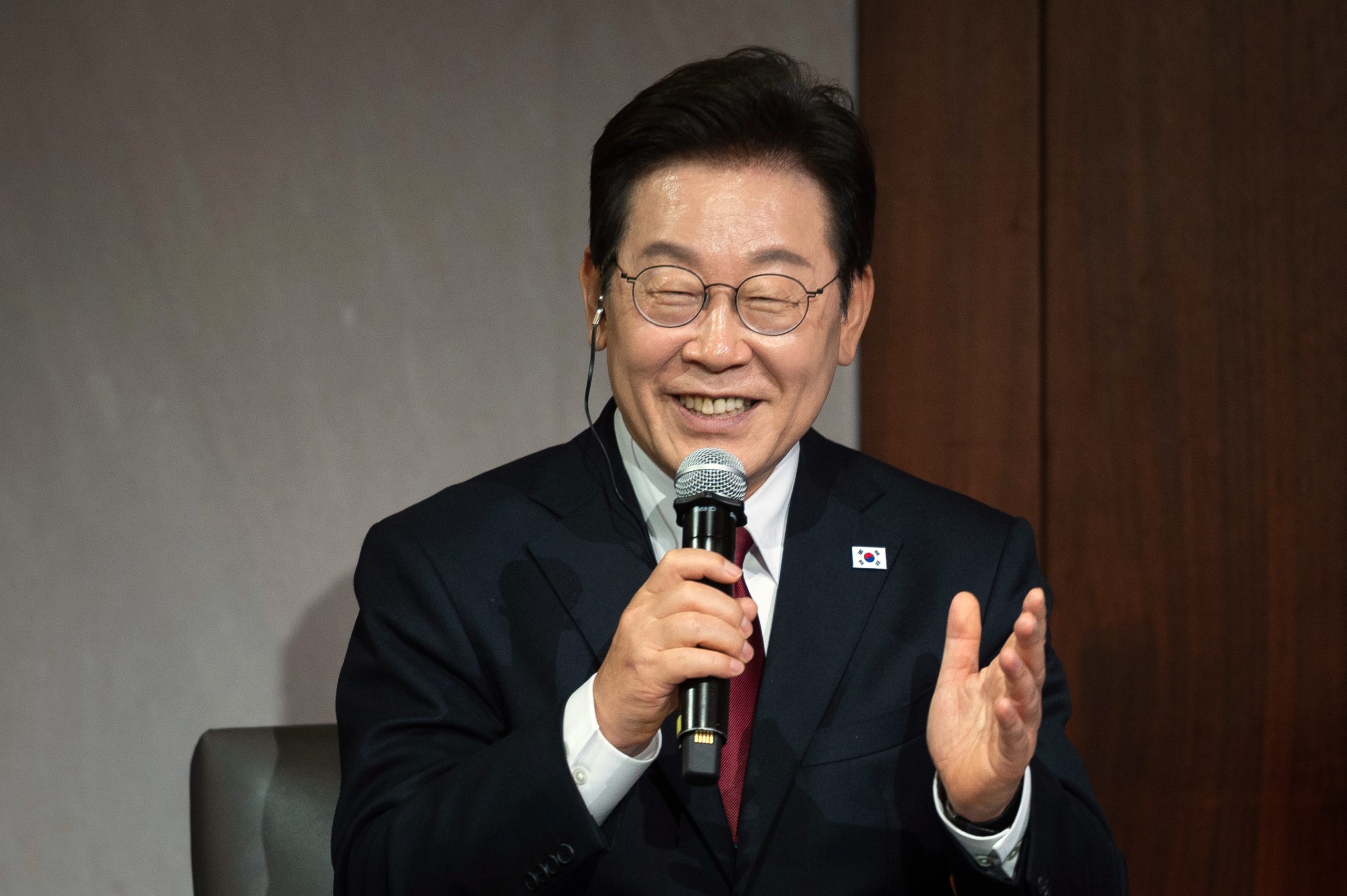
South Korean President Navigates Complex Relations with U.S. and China
South Korean President Lee Jae Myung shared insights during a recent speech in Washington, D.C., about his first meeting with former U.S. President Donald Trump at the White House. He revealed that his team had concerns about facing a “Zelenskyy moment” during the encounter, referencing the tense exchange between Ukrainian President Volodymyr Zelenskyy and Trump earlier this year.
Despite these apprehensions, Lee described the meeting as exceeding his expectations. He emphasized that the conversation focused on strengthening economic ties between the U.S. and South Korea while also discussing how to modernize their bilateral alliance. The discussion aligned with the evolving security landscape and aimed to make the relationship more reciprocal and forward-thinking.
Lee mentioned that he felt confident entering the meeting, having read Trump’s book, “The Art of the Deal.” This, he believed, helped him navigate the interaction effectively. However, the tension was heightened when Trump posted on Truth Social, questioning the political situation in South Korea and expressing concerns about potential instability affecting business relations.
During the meeting, the two leaders discussed ways to enhance economic cooperation. Lee highlighted the verbal trade agreement he reached with Trump last month, which involves a 15 percent tariff on South Korean goods in exchange for over $350 billion in investments and an additional $100 billion in energy purchases. While details remain vague, the agreement has sparked significant interest from South Korean companies looking to invest in the U.S.
Trump indicated that South Korea had expressed some reservations about the terms of the trade deal. However, he remained firm, stating that the U.S. would not change its position. “We are going to, they’re going to make the deal that they agreed to make,” Trump said.
Throughout the day, news emerged about major investment pledges from South Korean companies. Amazon announced a partnership with South Korean firms to launch small nuclear reactors across the U.S. with startup X-energy, involving a $50 billion investment. Additionally, Boeing and GE Aerospace signed a $50 billion deal with Korean Air to purchase 103 Boeing aircraft.
These investments come alongside Lee’s planned visit to a shipyard in Philadelphia, recently purchased by a South Korean firm. The administration is hopeful that South Korean investment will help revitalize the U.S. shipbuilding industry, which has lagged behind global standards. Lee expressed optimism about the potential impact of the K-shipbuilding industry, stating it could bring about a renaissance in U.S. shipbuilding and create new opportunities for mutual prosperity.
In addition to economic discussions, Lee emphasized the importance of the U.S.-South Korea military alliance in addressing the growing nuclear threat from North Korea. He reiterated that South Korea has no plans to develop its own nuclear deterrent but warned that Pyongyang’s advancements in nuclear technology pose a significant international risk. “There is a balance of fear on the Korean peninsula, but the situation is deteriorating,” Lee stated.
Despite his efforts to build a strong relationship with Trump, Lee did not address the issue of decoupling from China. He acknowledged South Korea’s close geographical proximity to China and stressed the importance of maintaining relationships with the world’s second-largest economy. “Korea is currently kind of distanced from America’s export controls and supply chain controls regarding China,” Lee said. “But because we are geographically very closely located to China, we are maintaining our relationship with China.”
Overall, Lee’s visit underscored the complex dynamics of South Korea’s foreign policy, balancing relationships with both the U.S. and China while navigating the challenges posed by regional security issues.


