The Divided Future of Surrey: A Growing Social Divide
Residents of Surrey are increasingly concerned about the proposed restructuring of their local government, which will split the county into two distinct regions. This move has sparked a wave of anger and uncertainty among locals, who believe it will deepen existing social and economic divides.
The new structure, under the leadership of Angela Rayner, aims to streamline local governance by merging 11 district councils into two larger unitary authorities—East Surrey and West Surrey. However, this change is seen as a step backward by many, particularly those in areas like Spelthorne, where residents feel they will be left behind.
Spelthorne: A Town on the Edge
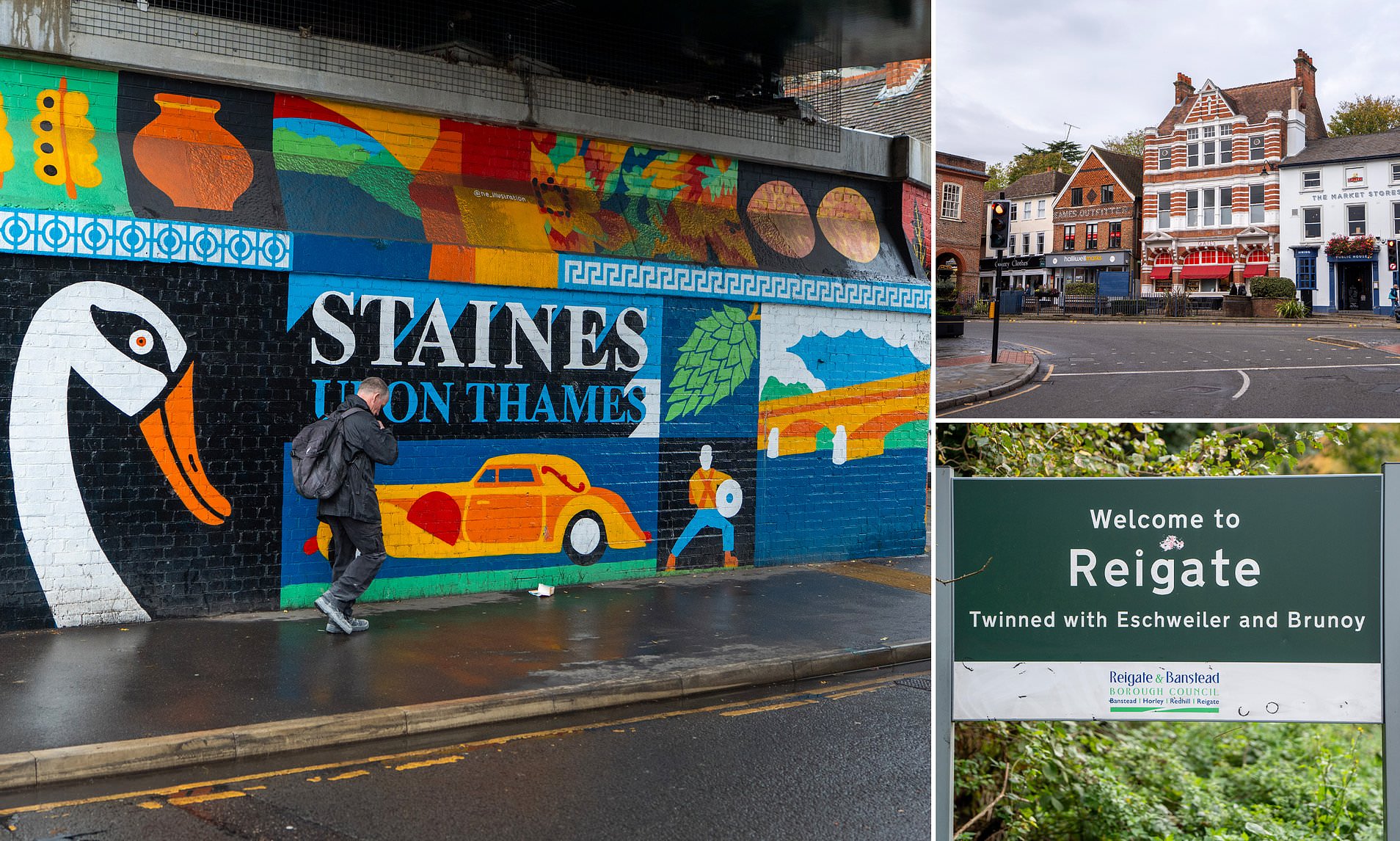
Spelthorne, home to the famous Staines-upon-Thames, is now part of the West Surrey region. This area has struggled with lower employment rates compared to the rest of the South East. In the year ending December 2023, only 74.3% of people aged 16 to 64 were employed, a drop from 79.9% in the previous year. The average house price in Spelthorne was £450,000 in August 2025, significantly lower than the £587,000 average for Surrey as a whole.
Despite these challenges, the community remains resilient. Margaret Davison, a long-time resident, expressed frustration over the changes. “Why not focus on the issues we have at the moment, like the need for more affordable housing or improving transport networks?” she asked.
Reigate: A Wealthier Region
On the other side of the divide lies Reigate, a town known for its affluent lifestyle and high property values. Average household incomes reached up to £47,500 in 2023, and the average house price for the area was £656,141. Detached properties in Reigate can even reach as high as £1,156,638, making it one of the most expensive towns in the region.
Jack Bell, a young resident of nearby Banstead, questioned why Reigate would be grouped with other areas when it seems to be doing better. “Reigate is a really nice town. I think it’s one of the nicest left in the area,” he said.
Concerns Over Council Tax and Debt
Sarah, a recent move to Reigate from Croydon, raised concerns about potential increases in council tax due to the financial burden of other areas. “I fear there may be council tax hikes as a result and that would be really frustrating for me,” she said.
The government confirmed that the Treasury would cover the majority of Woking’s debt, which had been declared bankrupt two years ago. Woking’s debt pile, exceeding £2 billion, equates to over £20,000 per person, highlighting the financial challenges faced by some areas.
Impact on Local Businesses
Business owners in both regions are worried about the implications of the restructuring. Emilia Hunt, owner of an independent homeware store in Reigate, fears that the new council will be less responsive to local needs. “The proposals for the council seem like a money thing, but I feel like I will get less from my council because of it,” she said.
David Hoare, owner of Attic, an independent shop in Reigate, noted that the town is becoming quieter, with fewer customers. “All the shopkeepers are saying there are less customers than there has been for a while,” he added.
Political Tensions and Public Sentiment
Political leaders in Reigate have criticized the plan, calling it “absolutely unfair.” Richard Biggs, Conservative leader of Reigate and Banstead Council, argued that residents should not suffer for the mistakes of others.
Local elections for the new East Surrey authority will take place next May, with the new council becoming operational in 2027. However, many residents remain skeptical about the benefits of the restructure.
Final Thoughts
As the debate continues, one thing is clear: the proposed changes have created a deep sense of unease among Surrey’s residents. Whether this division will lead to greater equity or further inequality remains to be seen. For now, the people of Surrey are watching closely, hoping for a future that serves all communities fairly.


