Commitment to Gender Equality and Women’s Empowerment in Nigeria
The Swiss Government, in collaboration with the Shehu Musa Yar’Adua Foundation, has reaffirmed its dedication to advancing gender equality through sustained advocacy. This initiative aims to address gender-based violence and promote women’s inclusion in governance and decision-making across Nigeria.
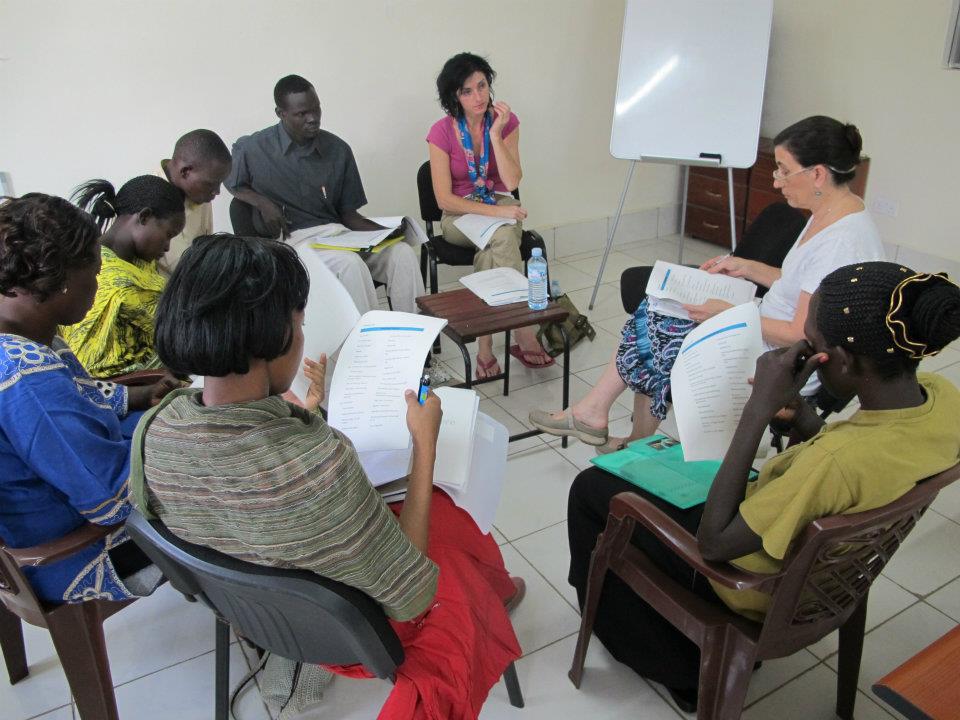
This commitment was highlighted during a Roundtable on Promoting Effective Participation of Women in Governance and Combating Gender-Based Violence held in Abuja. The event brought together various stakeholders to discuss strategies for improving women’s roles in political and social structures.
According to the 2025 Global Gender Gap Report by the World Economic Forum, Nigeria ranks 124th out of 148 countries overall, and 143rd in women’s political empowerment. The country scored just 0.036, marking its lowest score in five years. These figures underscore the urgent need for action.
Currently, women hold only 4 of the 109 Senate seats and 16 of the 360 seats in the House of Representatives. This represents a mere 4.3% of Nigeria’s parliamentary positions, far below the Sub-Saharan African average of 27% and placing the country 178th out of 182 globally.
Addressing Obstacles to Women’s Leadership
In his opening remarks, the Deputy Ambassador of Switzerland to Nigeria, Siamak Rouhani, expressed concern over the major obstacles Nigerian women still face in attaining leadership positions and participating fully in governance. He emphasized that the Swiss-funded project has tackled women’s underrepresentation in governance and gender-based violence across sectors and states over the past three years.
Rouhani stated, “Despite constitutional guarantees and international commitments, including the Convention on the Elimination of All Forms of Discrimination Against Women, the 35% affirmative action for women in governance as contained in Nigeria’s Gender Policy, and which has been affirmed by the Nigerian judiciary, remains unfulfilled. These realities are sobering.”
He added, “It is our hope that advocacy efforts focused on the Reserved Seat for Women Bill, which the Swiss Embassy has also supported through a civil society partner, will ultimately result in the passage of this most important bill. The inclusion of women in governance is not a favour – it is a necessity.”
Switzerland’s foreign policy prioritises human rights, inclusive governance, and the empowerment and protection of women and girls. The country views these efforts not just as moral duties but as vital foundations for sustainable development and democratic strength.
Transformative Initiatives and Achievements
The Shehu Musa Yar’Adua Foundation, in partnership with Partners West Africa Nigeria, implemented a transformative initiative in Kano State to enhance women’s participation in governance and leadership while addressing the deep-rooted barriers that sustain gender-based violence.
Through strategic capacity building, advocacy, and media engagement, the project mobilised key duty-bearers, government officials, traditional leaders, and law enforcement agencies to champion inclusion and accountability. Women have been positioned as effective leaders in governance, peacebuilding, and the fight against gender-based violence, reshaping perceptions and inspiring change at every level.
The Let Her Speak campaign reached over 500,000 people, amplifying women’s voices and visibility. The project also contributed to historic milestones in Kano State, including the election of Hajiya Sa’adatu Salisu as the first female local government chairperson, the appointment of Hon. Justice Dije Abdu Aboki as the state’s first female Chief Judge, and a measurable rise in women’s representation across government institutions.
Lessons Learned and Future Pathways
The Director General of the Shehu Musa Yar’Adua Foundation, Amara Nwankpa, noted that the project has shown that, despite the complexity of society and the seeming difficulty of certain challenges, meaningful change is achievable. This was evident in Kano, where the state witnessed the election of its first-ever female chairman.
Nwankpa stated, “And the experience has taught us several things. One of the things it has taught us is that you have to translate some of these objectives through the moral economy of the communities where you are trying to enter. So, you have to negotiate within that moral economy.”
He continued, “The other thing that we’ve learned is that women are capable of negotiating space for themselves within society. And so, they are not waiting for saviours. But you have to create the room for negotiation to happen. Our role as men is to create that platform and establish the process for that negotiation.”
A Call to Action
Today’s roundtable is not the end; it is a new beginning. It serves as a platform to share best practices and lessons learned, celebrate achievements, and amplify successful models. It also identifies pathways for scaling impact and charts a path forward. It is a call to action to ensure that the gains made are sustained, deepened, institutionalised, and that the momentum continues.
Let us keep working to ensure that the voices of women are not only heard but are central to decision-making at all levels.


