The Taliban’s Ideological Threat: A Global Challenge
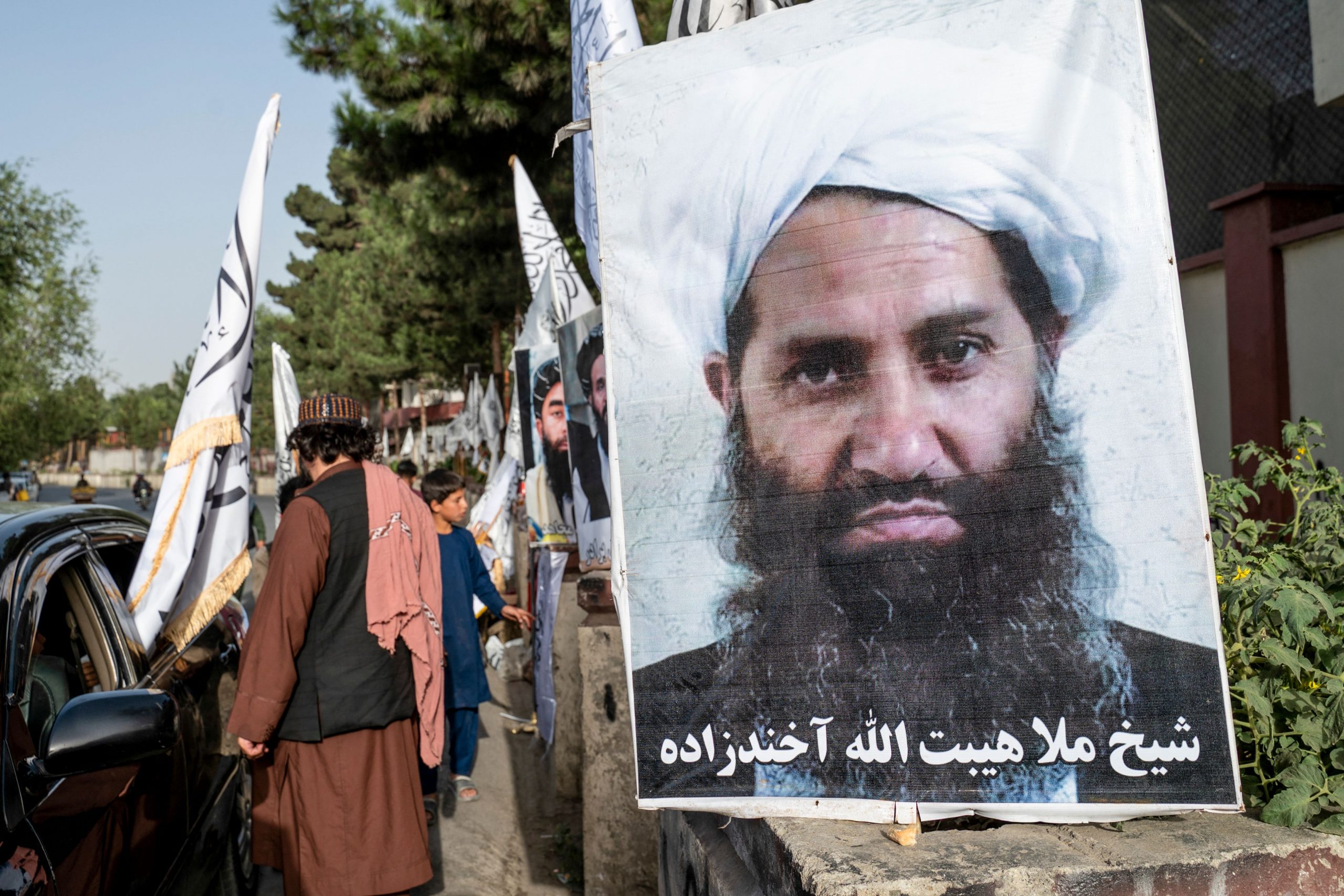
In the post-9/11 era, Afghanistan has remained a focal point for violent extremism. However, the danger posed by the Taliban regime today extends beyond military conflict. It lies in their ideology—a rigid worldview that denies gender equality, distorts Islamic teachings, and threatens to spread across borders. This is not just a military threat but a doctrinal contagion that undermines the moral fabric of Islam, disrupts social harmony, and destabilizes neighboring regions.
The Holy Qur’an emphasizes human equality:
“O mankind! Indeed, We have created you from a male and a female and made you into nations and tribes that you may know one another. Verily, the most honoured of you in the sight of Allah is the most righteous of you.” (Al-Hujurat 49:13)
Nowhere does Islam sanction the subjugation of women. The Prophet Muhammad (peace be upon him) elevated their status in a society that once buried daughters alive. In his Farewell Sermon, he declared: “Fear Allah in respect of women and treat them well.”
Women were integral to early Islamic civilization—engaged in commerce, scholarship, and public life. Khadijah bint Khuwaylid (RA), the Prophet’s first wife, was a successful merchant and financier of the early Islamic mission. Aisha bint Abu Bakr (RA) became one of the most learned scholars of Hadith and an adviser in public affairs after the Prophet’s demise. The Taliban’s denial of women’s right to education and participation violates these foundational Islamic principles. Their worldview is not Islam’s revelation but a rigid tribal patriarchy masquerading as faith.
Civilisational Regression and the Loss of Enlightenment
By banning girls’ education, restricting women’s movement, and outlawing art, music, and intellectual expression, the Taliban have committed an act of civilisational regression. Their model negates the Prophet’s command to “seek knowledge even if it be in China.” This is not the Islam that produced philosophers like Ibn Sina, scientists like Al-Khwarizmi, or scholars like Fatima al-Fihri (founder of the world’s first university in Fez). Instead, the Taliban’s version converts Islam’s golden heritage of enlightenment into obscurantist dogma. Such distortion projects a false image of Islam to the world—emboldening Islamophobes and undermining the moral authority of Muslim societies that promote moderation and compassion.
Historically, Afghanistan was a mosaic of ethnic coexistence—Pashtuns, Tajiks, Uzbeks, and Hazaras lived under tribal codes of consultation (jirga). The Taliban’s monopolisation of power shattered this equilibrium. Shia Hazaras, Tajiks, and Uzbeks have been marginalised, excluded from decision-making, and deprived of basic representation. By enforcing a monolithic identity, the Taliban replaced coexistence with conformity, and governance with coercion. This suppression of pluralism threatens to permanently fracture Afghan society.
The Roots of Pakistan’s Ideological Vulnerabilities
The roots of Pakistan’s current ideological vulnerabilities trace back to the 1979 Soviet-Afghan War. Under military ruler General Zia-ul-Haq, Pakistan aligned with the United States and the Gulf monarchies to train and arm Afghan Mujahideen in a campaign framed as jihad against Soviet occupation. While the geopolitical objective succeeded, the unintended consequence was the Islamisation of Pakistan’s state structure. During the 1980s, thousands of madrassas and mosques mushroomed, often funded by external actors. Religious seminaries became ideological incubators rather than centres of balanced scholarship. The narrative of jihad, once limited to Afghanistan, seeped into Pakistan’s domestic discourse.
Groups such as Jaish-e-Muhammad, Lashkar-e-Taiba, and Jamaat-ul-Furqan emerged from this ecosystem, blending religious zeal with political violence. Even decades later, Pakistan continues to experience the aftershocks of this state-sponsored radicalisation. Recently, the Tehreek-e-Labbaik Pakistan (TLP) resorted to street violence in Lahore—a stark reminder of how extremist religio-political factions have learned to weaponise faith for political leverage. The Taliban’s ideological resurgence has further emboldened such movements, creating a feedback loop of militancy between Kabul and Pakistani urban centres.
The Taliban’s Influence Across Eurasia
The Taliban’s influence now radiates across Eurasia.
Xinjiang (Western China): In Xinjiang, home to millions of Uyghur Muslims, Beijing fears the revival of transnational jihadist networks such as the East Turkestan Islamic Movement (ETIM). The Taliban’s ambiguous stance towards ETIM—alternating between denial and silent tolerance—risks inspiring extremist cells that idolise the Afghan ‘Islamic Emirate’ as a symbol of defiance against secular governance.
Central Asia: The Central Asian republics—Uzbekistan, Tajikistan, Turkmenistan, and Kyrgyzstan—face renewed ideological threats. Dormant groups like the Islamic Movement of Uzbekistan (IMU) and Jamaat Ansarullah draw moral encouragement from the Taliban’s success. Socio-economic frustrations and porous borders make Central Asian youth susceptible to such narratives, risking renewed militancy in the Fergana Valley and beyond.
Strategic Anxiety: Russia, China, and Iran now pursue a dual approach: maintaining diplomatic ties with Kabul while reinforcing borders. The Shanghai Cooperation Organisation (SCO) once again focuses on counter-extremism—underscoring that the Taliban’s ideology has become a pan-regional destabiliser.
A Call for National and Regional Action
Given its historical and geographical proximity, Pakistan bears a special responsibility to break the cycle of ideological radicalisation. This requires a national, institutionalised response—not reactive policing.
Policy Recommendations:
* Registration and Oversight of Madrassas: All religious seminaries must be registered under provincial academic boards to ensure transparency, modern curriculum integration, and state supervision.
* Standardised Certification for Imams and Religious Teachers: A mandatory qualification exam should be introduced for anyone serving as an imam or religious instructor to prevent extremists from influencing young minds.
* Ban on Political Sermons: The use of mosques for partisan or inflammatory political discourse should be legally prohibited. Friday sermons should focus on Qur’anic ethics, social welfare, and national unity.
* Educational Reform: Incorporate civic education, ethics, and comparative religion studies in madrassas to cultivate tolerance and critical thinking.
* Media Literacy and Youth Engagement: Launch nationwide campaigns against hate speech and online radicalisation, especially targeting social media platforms.
* Rehabilitation Programmes: Create deradicalisation centres that combine psychological counselling, vocational training, and theological re-education.
Reclaiming the Soul of Islam
Confronting the Taliban and their ideological offshoots requires a pan-Islamic strategic communication framework. Muslim nations must collaborate to promote authentic Islamic scholarship emphasizing justice, mercy, and equality; amplify stories of women in Islamic history; coordinate regional ulema councils to counter extremist propaganda; and use digital media to project Islam’s humane and progressive dimensions.
The Taliban’s most potent weapon is not the rifle but the rhetoric that distorts Islam’s essence—turning its mercy into misogyny and its wisdom into ignorance. The Qur’an reminds: “Allah does not change the condition of a people until they change what is in themselves.” (13:11)
The Muslim world must therefore reclaim Islam’s moral and intellectual heritage—the Islam of justice, compassion, and equality. If left unchallenged, the Taliban’s ideology will metastasise across Asia, corrupting faith and fueling endless cycles of extremism. The struggle ahead is not for Afghanistan alone; it is for the soul of Islam and the security of humanity.

Related posts:
Fiction park: He was the best in class. He still wasn’t good enough
Gagan Thapa takes oath as Congress president, vows to regain public trust

Inside knowledge that has locals gripped by fear after gran’s body found decomposing in cattle dip

New property purchase disclosure rule in Japan sparks fears it may curb foreign investment

Dino-mite treasures: inside Singapore’s Fort Knox storing playthings of ultra-rich