From the lecture entitled ‘Socialism In The Service of Nigeria’‘ delivered by Chief Obafemi Awolowo, Chancellor of the University of Ife, at the University of Ife, Ile-Ife, on 9th April, 1970.
The thirty-months’ civil war which has just ended had witnessed and produced many tragedies, including unproductive expenditure of vast sums of money, enormous destruction of property, considerable slowing down of progress, and incalculable sufferings and deprivations.
It is our fervent and declared aim to erase the physical and psychological effects of these tragedies as quickly as human ingenuity can contrive to repair the damage, to retrieve lost ground, and to promote concord and unity in place of bitterness and enmity. Whether or not we succeed in achieving our aim depends wholly and solely on the thoroughness ‘with which we are able to remove the basic causes of our national ills, and the extent to which we are resolved; from now on, to steer clear of those causes, and tread a new path of national sanity and rationality.
I have said it before, and I want to say it again, that the causes of our national maladies are essentially economic. It is important, therefore, for us to bear it in mind that if we failed to find the right solutions to our economic problems, we would not succeed in solv.ing our political and social problems.
About 2,400 years ago, Plato, the master-mind, said in THE REPUBLIC as follows:
‘A State … arises out of the needs of mankind; no one is self-sufficing, but all of us have many wants…
‘Then as we have many wants, and many persons are needed to supply them, one takes a helper for one purpose and another for another, and when the helpers and partners are gathered together in one habitation the body of inhabitants is termed a State.
‘And they exchange with one another, and one gives, and another receives, under the idea that the exchange will be for their good.’
He then declared, rightly and unassailably in my view, that: the true creator of a State is necessity which is the mother of our invention. The first and greatest of necessities is food … the second is dwelling, and the third clothing and that sort of thing. ‘
It is clear, therefore, that the sole justification of a State is the economic advantages which division of labour, and exchange can confer on the inhabitants of the State. Groups of families, or of individuals if you like, do not aggregate and unite in one community just for the love of one another. The compelling motivation is economic; and political arrangements are necessary only in order to lay a firm and stable base for economic growth and prosperity, and regulate economic relations and intercourse between the inhabitants of the State. Take away economic motivation, and the natural legitimacy or justification, as well as the automatic and self-sustaining cohesion of the State disappears.
It is imperative that we should keep this cardinal point vividly in our minds as we venture forward to re-create Nigeria. It is not in dispute that we had fought ‘to keep Nigeria one’ partly because of our strong patriotic sentiments for a united Nigeria. But whether we are conscious of it or not, it is also true that the overriding motivation for fighting ‘to keep Nigeria one’ is economic. We all have a vision – never mind the degree of clarity in every individual case – of a country with enormous material and manpower resources, and a large, viable, and self-contained market, capable of being transformed into a modern economy within a comparatively short time, and of enhancing the prosperity and social well-being of all its citizens without discrimination. We also have a vision of a potentially economic, and hence political, giant in Africa, in every sense of the word. A diminution of the Nigerian territory would falsify our vision, dash our hopes, and specifically deprive us of the unlimited economic advantages derivable from a united Nigeria. Hence we felt ourselves compelled to fight – and to do so valiantly – ‘to keep Nigeria one’. Similarly, the hope of an assured greater economic prosperity and social well-being in a united Nigeria, in contradistinction to the comparative niggardliness of a fragmented portion of the country, is the mainspring for the smoothness with which the process of reintegration is now taking place.
I would like to emphasise that, if all these economic hopes were falsified, though dedicated leaders in the country for the time-being, by whipping up patriotic sentiments, would still no doubt succeed in keeping the country united, yet they would only do so at great cost to social progress, and to the well-being of the individual Nigerian citizens.
My case then is that, in order to keep Nigeria harmoniously united, and, at the same time, fulfil the natural, ultimate, supreme, and inalienable purpose of that unity, the present and future rulers ‘of this country must place the most crucial emphasis on, and attach the utmost importance to, the advancement of the economic prosperity and social well-being of the entire people of Nigeria without exception or discrimination.
If this is our aim – and I am sure that all of us will readily declare and proclaim that it is – then there is only one path of socio-economic policy open to us: it is socialism. In Nigeria, however, like in other parts of the world, socialism is a much misunderstood, much misrepresented, and much dreaded socio-economic philosophy.
We have heard it said in responsible and weighty quarters that socialism is a dangerous and pernicious foreign doctrine and ideology which must not be allowed entry into, let alone foothold in Nigeria, or in any part of Africa for that matter. Many professed Nigerian socialists have made the issue worse confounded, by regarding hatred of the affluent, expropriation of the rich, violence, extreme sourness in social life, eccentricity in dress and appearance, and authoritarianism in government as inseparable to the introduction and practice of socialism. Others who have deep-seated prejudices against socialism, but who cannot afford to ignore public demand for it, have adopted the ambivalent approach that whilst what they call the European type of socialism is a foreign philosophy, there is a kind of socialism which is native and indigenous to Africa.
This is the so-called African socialism which, according to them, is more suited to Africa than the so-called Russian or Chinese socialism. There are those who dread socialism because they equate it with chaos, widespread killings, collapse of the major and strategic sectors of the economy, economic retrogression and stagnation, and general poverty.
When a term becomes so misunderstood, so deliberately misrepresented, confused, and confounded, and so ignorantly dreaded as socialism is, there is an urgent need, in the face of the declaration that it is the only path to the prosperity and social well-being of the entire people of Nigeria without discrimination, for a clear theoretical definition of the term, as well as of an equally clear description and explanation of its practical contents.
Socialism is a normative social science. It sets the standards of human ends and social objectives which economic forces must serve, and prescribes the methods by which these forces may be controlled, directed, and channeled for the attainment of the declared ends and objectives. It is unlike economics which, inspite of the long and strenuous advocacy of A.C. Pigou, does not concern itself with social norms or human welfare. According to Lord Robbins, in a famous definition which is now generally regarded as the most scientific, ‘economics is the science which studies human behaviour as a relationship between ends and scarce means which have alternative uses’. Hence prostitution, burglary, unemployment, warfare, for instance, are proper subjects for economic study.
In other words, in an effort to satisfy infinite ends with scarce means which have alternative uses, no morality or sense of justice or equity is allowed to enter into consideration. The overriding aim is to secure the best possible means and to maximise the utility of such means for the immediate and pressing wants. In the process of doing this, two distinct groups of agents are to be discerned: the producers and the consumers. In a planned economy and as a matter of common sense, the interests of these two should harmonise and be absolutely complementary. But in an unplanned capitalist economy, their interests are always at wide variance and in violent conflict. The consumer cannot always get what he wants in the right quantity or quality, simply because the producer is not always producing what the former wants in the proper quantity or quality.
Besides, there is a constant fluctuation in the marginal utility of available goods both to the consumer and the producer, who very often interchange positions during the conduct of a variety of transactions which take place in a modem economy. Furthermore, the conflict between the producer and consumer is often intensified by the fact that the consumer is always anxious to buy from the cheapest possible market, whilst the producer is always keen on selling in the dearest possible market – the aim in the one case being to maximise the utility of the chosen means for the satisfaction of given wants, and in the other to maximise the utility of the chosen factors of production for the purpose of earning the largest possible profit.
The umpire who presides over and adjudicates in this perpetual conflict is the price mechanism, otherwise known as the forces of supply and demand. We all know that this umpire has no regard for justice or equity, nor consideration for the social well-being of the individual members of society. Under its auspices, abundance is punished; scarcity is rewarded; all agents of production are treated with equal difference or indifference as the case may be, even though some are human beings and others are just gross material resources; and those who contribute very little to the aggregate national wealth more often than not get the lion’s share in the course of distribution, whilst those who contribute the most may get nothing at all or comparatively very little for their efforts. Again, under its auspices, greed and naked self-interest are allowed to flourish, breeding in their wake permanent unemployment, or what is euphemistically called ‘minimum reserve of labour’, as well as the co-existence of extremes of wealth and poverty which, in their turn, breed discord, strife, violence and revolution.
It is these blind and impersonal forces of supply and demand and of the margin that socialism seeks to humanise by controlling, regulating, and directing them for just and equitable social ends. In other words, the aims, of socialism are:
1) to harmonise the activities and interests of the producers and consumers, and establish an absolute and permanent complementariness among them;
2) to ensure that each of the agents of production is given equal opportunity to give of the best that it is capable of, and that it is rewarded in accordance with its contribution to the aggregate national product;
3) to replace the blind forces of supply and demand with a conscious and scientific referee who, among other things, will see to it that there is premium on abundance rather than on scarcity; and
4) to cater to the needs of those members of society who, for reasons of age or infirmity or unemployment, are unable to participate in the acts of production, and are therefore unable to fend for themselves.
In the light of all the foregoing considerations, we can now define SOCIALISM AS THE SCIENCE WHICH STUDIES ECONOMIC FORCES WITH A VIEW TO CONTROLLING, REGULATING, AND DIRECTING THEM FOR THE ATTAINMENT AND CONTINUOUS ENHANCEMENT OF THE ECONOMIC PROSPERITY AND SOCIAL WELL-BEING OF ALL THE CITIZENS IN A STATE, WITHOUT EXCEPTION OR DISCRIMINATION.
The following quotation from Engels is, I think apposite here. Says he in SOCIALISM, UTOPIAN AND SCIENTIFIC:
‘The forces operating in society work exactly like the forces operating in nature: blindly, violently, destructively, so long as we do not understand them and fail to take them into account. But when once we recognise them, and understand how they work, their direction and their effects, the gradual subjection of them to our will, and the use of them for the attainment of our aims, depends entirely on ourselves … As long as we’ obstinately refuse to understand the nature and the character of these forces, so long they remain at work in spite of us, in opposition to us, and so long they master us …’
It ‘is not difficult to see from our definition and the quotation from Engels that two approaches to the attainment of socialism are dictated:
1) the study of economic forces, or of what Engels terms ‘the forces operating in society’; and
2) the control, regulation, and direction of these forces or, as Engels put it, ‘the subjection of these forces to our will and the use of them for the attainment of our aims’.
From what we have said in the early part of this lecture, it is obvious that the supreme aim of socialism is social harmony via social justice or, to use a popular expression, ‘equality of opportunity for all’.
There is a popular misconception that socialism advocates equality among all men anti women: Nothing could be further from the truth. Educated and responsible socialists will never subscribe to such arrant nonsense. The science of genetics is now conclusive on the point that, because of hereditary and environmental factors, human beings differ very widely in natural physical and mental endowments. Socialism, therefore, recognises inequality in natural physical and mental endowments as between one man and another. But socialism insists that inequality among men and women should be such as is inevitably and unavoidably imposed by genetic and environmental limitations which cannot at present be overcome. No more, no less. Consequently, socialism is strongly and implacably opposed to such inequality as arises from the provision of opportunity to some and the denial of it to others. In this connection, it is necessary to, bear in mind that inequality of opportunity, in matters of employment, education, health, good food, etc., leads automatically to inequality of income which in turn, more often than not, leads to inequality of political and social status. It will, I am sure, be of interest to hear what Engels has to say in this regard in ORIGIN OF THE FAMILY:
‘The most powerful, economically dominant class … becomes also the politically dominant class, and thus acquires new means of holding down and exploiting the oppressed class.’
Hence, under socialism, every citizen, whatever his natal, tribal, ethnic, or social origin or connection, is guaranteed equal opportunity to develop his natural physical and mental endowments.
So that whatever residual inequality there is would be purely genetic and environmental. Even here, it is well known that through education of the right type and through selective development programme, by the Government, the handicaps of environment can be overcome. Also, through education and under the guidance of experts, adverse and detrimental hereditary traits can be eliminated.
The point, I think, is worth mentioning, at this juncture, that the best and the most fruitful period for providing the citizens with equal opportunity is their formative and most educable years, from the age of 5 to 6 to 21 or thereabout. This is the time when the Government must seek persistently and conscientiously to develop such natural physical and mental talents as each citizens has. If this is done, the instances, where children, with less natural endowments but with easy access to education, good health, and gainful employment, do better economically and hence also politically and socially than others with far greater natural endowments but who, for natal and other causes, have no access at all or have very constricted access to education, good health, and gainful’ employment, would completely disappear.
I have so far spoken of inter-personal inequality, artificially imposed by acts of commission or omission on the part of society, which it is the aim of socialism to eliminate. But in Nigeria today, apart from glaring inter-personal inequality, there is also inter-regional or inter-state inequality which cries loud for extermination. There is no doubt that a good deal of what we know as inter-state inequality would disappear as soon as we eliminate inter-personal inequality. But I am convinced that no amount of equality of opportunity for the individuals would eradicate the inequality which now exists among Nigerian States as geographical entities, in the matter of economic and social development. We all know that Nigeria as a whole is an economically underdeveloped country. But we also know too well that some States in Nigeria are more underdeveloped than others, and that some geographical areas within a State are comparatively much more developed than others within the same State. It is the aim of socialism to eliminate inter-state and intra-state inequality as well as inter-personal inequality. Some of the ways by which equality of opportunity for all can be achieved may now be stated in more concrete terms.
Under socialism, every citizen in Nigeria would have equal access:
1) to gainful employment;
2) to education to the limit of his natural capacity; and to health, including good food, good water, good
3) dwelling, decent clothing, etc.
Similarly, every State in Nigeria and every section of a State would have equal access to economic development in every sense of the term, to enable it to keep the bulk of its citizens, other than a few professionals, to civil servants, and high business executives, gainfully employed within its territory.
After all these have been done, some inter-personal and inter-state as well as intra-state inequalities are bound to remain. But they will be inequalities which arise, pure and simple, from genetic and geographical limitations which, for the time being, neither science nor technology can overcome. In this circumstance, and if the experiences of socialist countries and of everyday life are anything to go by, there can be no doubt that even the persons, the states, and the areas concerned would readily appreciate and understand the causes of the residual and irremovable inequalities, more especially as all the citizens of Nigeria, regardless of their birth and place of origin, would continue to enjoy equality of opportunity as we have described it.
From its definition and description, it is obvious that the attainment of socialist ideals demands intensive study of the economic forces at work, and rigorous and scientific planning for controlling, regulating, and directing them for just and equitable social ends. It must be emphasised, however, that the control, regulation, and direction of economic forces inescapably implies the introduction of certain far-reaching measures, some of which should be mentioned.
It is now common knowledge that you cannot harmonise the divergent and conflicting interests of the consumer and the producer, unless the means of production and the power of regulating consumption are under the same conscious control and direction. Also, production will always be in danger of painful spasms and paroxysms, unless the means of exchange as well as of production are concentrated in the same hands. Furthermore, the same agencies which control and direct the means of production and exchange must consciously control and direct the forces of supply and demand, with a view to ensuring the just and equitable distribution of the results of productive efforts among the agents of production. From these considerations, it will be seen that public ownership, nationalisation, or socialisation of the means of production, exchange, and distribution is inevitable in a socialist economy.
In this connection, it is necessary to point out that some eminent economists even hold the view that public ownership, nationalisation, or socialisation of certain sectors of the economy is indispensable to the success of national economic planning under any economic system, including the mixed one under which we now operate.
In the eleventh lecture in the series of lectures delivered under the auspices of the NISER, and published in his book entitled LECTURES ON THE THEORY OF SOCIALIST PLANNING, Mr. J.G. Zielinski discusses the general principles of efficient planning, under any economic system, be it capitalist or socialist. In the introductory part of this lecture he poses and answers an important question as follows:
‘Are there principles of efficient planning general enough to be valid in any country engaged in national economic planning, irrespective of vast differences in socio-political setting and in level of economic development attained? My answer to this question is “yes”.’
In the course of this eleventh lecture, Mr. Zielinski enunciates four observations and four conclusions. It is the first observation and the first conclusion that are pertinent here.
‘First observation. There is a certain critical size and composition of the public sector, below which effective planning is impossible.
‘The “critical size” of the public sector necessary for effective planning is usually defined as a requirement of concentrating in the government’s hands so-called “commanding heights” of the economy. In a recent article Professor V. B. Singh of India formulates this requirement as follows: “The history of planned economic development reveals that planning cannot be successful unless and until the ‘commanding heights’ (that is, basic industries, transport, communications, banking and finance.) are in the public hands.’
‘Conclusion: If a developing country wants to engage in effective economic planning, its public sector has to embrace certain strategic spheres of economic activity. Otherwise there is a serious danger that its planning remain mainly on paper.’
The message in these quotations for Nigeria, planning big for reconstruction and development, is eloquent and indubitable. We cannot leave what Professor Singh graphically terms the ‘commanding heights’ in the exclusive control of alien private sector, and hope for satisfying success in our development plan, let alone for such success as will benefit all Nigerians without exception or discrimination. It will be seen from all that we have said that socialism is a socio-economic philosophy which aims at promoting the prosperity and social well-being of all the citizens of Nigeria without discrimination. In this sense, it is a grave error for anyone in Nigeria, or in any other part of Africa for that matter, to regard socialism as an alien or evil doctrine; or for any professed Nigerian socialist to insist that the introduction of socialism necessarily imports hatred of the affluent, forcible expropriation of a certain class of people, or violence. It is also a gross misconception or ignorance or both, on the pan of any well-to-do or socially-well-placed Nigerian to dread socialism.
It is important for such people to realise, before it is too late, that danger to their person and property is more present and much graver in a society where extremes of wealth and property coexist, than in a society where such extremes do not exist, and where in any case, the children of those in the upper income brackets as well as of those in the lower income groups have equal access, without discrimination, to education, good health, and gainful employment.
It will be seen further that by definition and description, socialism is a socio-economic philosophy which is universal in its aims and applicability. It is as much Nigerian or African as it is Russian or Chinese in its aims and applicability. Those who, therefore, speak of African socialism as distinct from Russian or Chinese socialism, as well as those who regard the current advocacy for the introduction of socialism to Nigeria as premature, do so in utter ignorance and misunderstanding of what socialism connotes and stands for.
If socialism is as we have defined and described it, then it must be admitted that its role in the re-creation of Nigeria is indispensable. Before the civil war, or indeed before the military take-over in 1966, Nigeria had many economic and social problems of stupendous and frightening proportions. Unemployment was already rife and becoming secular. Behind and beyond the false facades of a few urban areas, there was extreme poverty amongst more than 95 per cent of our people; preventable diseases had become endemic; and illiteracy and ignorance were the order of the day. There was acute shortage of the senior category of indigenous high-level manpower in every sphere of our governmental and scholastic activities; with the result that where national interests and pride dictated complete Nigerianisation, there was considerable lowering of efficiency. The gap in economic and social developments between the northern and southern parts of the country remained dangerously wide; so much so that it had begun to undermine and threaten national concord and sense of oneness.
Apart from helping in a small way to reduce the large population in our unemployment market, the civil war has only succeeded in complicating and aggravating these pre-war problems. Today, most of our hospitals, as well as many homes are filled with the wounded and the maimed of the war. Several tens of thousands of soldiers are waiting to be absorbed into gainful civil employment; and, in the meantime, that is whilst they wait, the nation is properly called upon to maintain them in reasonable comfort with funds which could have been used for economically and socially productive purposes. Orphans and widows abound; and there is silent grief in many hearts for the loss of those able-bodied bread-winners who had been killed in the war. Public over-head capital, like roads, bridges, railways, schools, etc., which was acquired at enormous costs and which had been damaged during the war, is waiting to be restored and reconstructed at higher costs than before. Those Nigerians who lost their properties during the war are waiting forlornly for the wherewithal to replace them. As if these complications and aggravations were not enough, the demons of unemployment, poverty, ignorance, and disease continue, as ever before, to ravage our land.
These and more are the problems with which we are now confronted; and we will do well to realise that they are far worse and more deadly, far more subtle and much more insidious and therefore much more dangerous enemies and evils than the rebellion which we have just crushed. In this regard, we don’t, I think, need to be told that unemployment breeds frustration, resentment, and anti-social tendencies; that poverty breeds envy and hatred of the affluent, antagonism to society at large, and rebellion; that disease breeds inertia, complete lack of enthusiasm and dynamism, and fatalism; that ignorance breeds misunderstanding, promotes oppression and exploitation (because, as it has been wisely said, there would be no oppressors and exploiters if there were no oppressables and exploitables), and eventually provokes violent social clashes and collisions; and that the aftermath of civil war, with all its bitter poignant memories, and lingering sufferings, tends to poison motives, distort and warp thinking processes, and pollute emotions.
A careful examination of all our post-war problems, varied as they look, will reveal that they are all basically economic in nature and character. Even education and health services for the eradication of ignorance and disease are indispensable parts of the infrastructure which an underdeveloped country, and particularly Nigeria after the civil war, needs to transform itself rapidly into a modem economy.
In a broad Sense, the. world-now offers two kinds of solution for all economic problems. They are the capitalist and the socialist solution.
In the three companion books which I have written since 1966 namely: Thoughts on Nigerian Constitution. The People’s So Republic and The Strategy and Tactics of the People s Republic of Nigeria, I have had a good deal of hard things to say about capitalism. The settled view to which my study of the subject leads me is that the quintessence, the soul, and the main driving force of capitalism is a compound of greed, naked self-interest, utter disregard for the interests and rights of others, destructive competition, opposition to any form of innovation, control, or planning, etc. It goes without saying that a-system, which possesses these ugly characteristics, can only further complicate our already complex post-war problems.
At pages 161 and 162 of Thoughts on Nigerian Constitution, I have written on this subject as follows:
‘For Nigeria, there is even one other danger in capitalism. It breeds tribalism. It is generally agreed, even by its most faithful advocates and devotees, that the one and only motive force of capitalism is naked self-interest; and that one of its essential characteristics is impersonal group loyalty. Wherever there is capitalism then, naked self-interest and unabashed group loyalty reign supreme; greed dominates the hearts of men; whilst mutual and destructive antagonisms put on the cloak of orthodox business competition. Portrayed in this way- and it is by no means an inaccurate or exaggerated portrayal- it should be easy for anyone to perceive the nexus between capitalism and tribalism in the Nigerian context. In its evil connotation, tribalism also represents unabashed group loyalty, or, to put it in another way, tribalism, in the derogatory sense, is the combined manifestation of the naked self-interests of a number of individuals who are bound together by some cultural ties such as language, ethnic affinity, and religion.
‘If we are really sincere in our desire to stamp out tribalism, we must put an end to, at least, most of the manifold evils which abound and proliferate, with general approval, in a capitalist economy. Try as we may, we will not succeed otherwise.
I still stand firmly by the views expressed in this quotation. I only wish to add that the capitalist system also encourages and extols the law of the jungle. We have all learnt that in the jungle only the most cunning, the most brutal, and the most ruthless can exercise unfettered freedom, and flourish. Also in the jungle, every beast is a law unto itself; and the only orderly association there consists of an accord among the predatory carnivores to hunt together in packs, and of agreement among the herbivores to go about in herds as a means of protecting themselves against wanton and easy destruction by the predatory carnivores. It only remains for me to liken the capitalists to the carnivores and the workers and peasant farmers to the herbivores, in order to draw an analogy which is not easy to dispute.
Furthermore, in all its history, the capitalist system has never consistently redounded to the benefit of the common man. And in countries where it is still practised, faithfully and almost in its pure orthodox form, it continues to generate political instability, economic crisis, and social upheaval, and to promote the coexistence of extremes of affluence and poverty with all their attendant ugly repercussions. A system, which has all these built-in and incurable evils, is too bad and too dangerous for Nigeria at any time, and certainly does not deserve to be accommodated after the civil war.
If I like, I could now, quite rightly, take the validly logical position that, by the elimination of the capitalist system, we are now inescapably left with the socialist type of solution. But it will be seen that I do not intend in this lecture to rely on this dialectical device alone. On the contrary, I have gone to a considerable length to show that, on its own intrinsic merits, socialism is the only safe and beneficial path which Nigeria should tread in tackling and solving its post-war problems.
As we have noted before, socialisation, or the public control of ‘the commanding heights’ of the economy, is a sine qua non of socialism, and of planning even under the capitalist system. But there are a number of practical problems of a technical and political nature which will beset socialisation in Nigeria. I shall confine myself in this lecture to only two of the technical problems. The first is the mobilisation of sufficient foreign exchange to pay the compensation which will be due to foreign investors in Nigeria, on the socialisation of their enterprises; and the second is the efficient management of the socialised enterprises.
With regard to the first problem, we shall need something in the neighbourhood of £500 million to compensate foreigners, for taking over their investments in Nigeria- T-o those who may be nursing the idea of forcibly expropriating foreign investors, I would like to say that we would only be inviting economic chaos and disaster if we did. The countries affected would not take the confiscation of the investments of their nationals lying low. They would retaliate fiercely, and their retaliation might take many forms, most of which will assuredly hurt us very badly and painfully. The speed at which we socialise, therefore, must depend on the rate at which we mobilise enough foreign exchange to pay this huge amount of compensation to foreign investors. It is my considered view, however, that if we manage our fiscal and monetary affairs with prudence, honesty, and due sense of patriotism, we can raise this amount of money within a reasonable period of time.
As regards the second problem, it must be our resolve, before or on socialising any enterprise, to Nigerianise such enterprise completely, and at the same time to maintain, and If possible improve upon the existing standard of management and control. This is essential if .we’ are to avoid the gross inefficiency which now characterises and plagues our statutory corporations and state-owned companies. In this regard, the first thing to do is to endeavour to ascertain the causes of failure in our public enterprises and remove them. In my view, there are five causes for the notorious performances of our public enterprises, all of which, fortunately, are curable and preventable.
FIRST: In public enterprises, the ratio of senior category of high-level employees to intermediate category is much less than in private enterprises. This is amply borne out by Table 3at page 27 of Manpower Study No .2 published by the National Manpower Board in 1964, where the ratios of senior category to intermediate category in the private and public sectors respectively are 6:11 and 11 :32. The position is much worse in the civil service which is the supervisory organ of public corporations and state-owned companies. The ratio of senior category to intermediate category in the civil service, according to the same source, is 3: 11. This factor deserves special attention; because it explains, in a substantial sense, the common phenomenon whereby Nigerian workers, under alien private enterprises, perform much better than under indigenous private, or Nigerian-owned public enterprises.
SECOND: It is common knowledge that, as a result of nepotism, favouritism, extreme partisan politics, bribery, and other forms of corruption, a good number of those who are’ appointed into the senior category of high-level employment in public enterprises and in the civil service have neither the academic nor professional qualifications, nor the experience, nor the qualities, requisite for their assignments. It is well-known that many of these people would not have been appointed into equivalent posts’ under alien private management.
THIRD: The same evil factors which were responsible for wrong appointments into the senior category of high-level posts, were also responsible for deliberate over-capitalisation of our public enterprises, and the purchase, at inflated prices, of inferior goods and services for the use of these enterprises.
FOURTH: As compared with the private sector, there is a measure of disincentive for high-level officials in the public service generally. But I would like to point out, in this connection, that incentive is, to not a little extent, a matter of relativity. If A who works for X earns more than B who works for Y, for doing the same kind of work within the same economy, the tendency would be for B, unless he is specially dedicated, to want to exert himself less than A, or at any rate not to give of his best.
FIFTH: The old attitude of mind is still lingering that, in the service of the Government, one does not need to exert oneself to the utmost. It was an attitude of mind which was cultivated, and which prevailed under the British Colonial Administration. As I have said, these defects can be cured and prevented. To this end, there is urgent need for the proper training of Nigerians, to fit them for their respective appointments in the public service. There is need for radical reorganisation and improvement in our existing public corporations and state-owned companies, to ensure that their executives are men with the requisite qualifications and expertise. There is also need for re-education and reorientation of all our public servants.
BRIGADIER MOHAMMED AND HIS TEAM MUST ENTERTAIN NO ILLUSIONS AS TO THEIR INSTANT AND TRANSITIONAL ROLE IN THE AFFAIRS OF OUR GREAT COUNTRY
From a press statement issued by Chief Obafemi Awolowo on
18th August 1975
‘There is an urgent and crying need to recognise certain factors which … have not hitherto been given the due recognition, emphasis, and weight that they deserve…
‘… Because of its youth as an independent sovereign State,… and because of the strains and stresses inherent in it as a multi-national State, Nigeria cannot afford an unduly protracted political and economic illness. The pressing danger involved in the present illness of our country is that it might kill more by its sheer protraction than by its severity.
‘… Our Military Administration must be recognised for what it was originally intended and proclaimed to be: an essentially corrective regime, and not a reconstructing Administration with ready and lasting answers to all our political and economic ills.
‘In my view, the main task of the military regime is to perform a quick and successful surgical operation … It would be too much of a risk for it to attempt to undertake the massive and never-ending task of rebuilding or reconstructing our body-politic. It would be too much of a risk, because the Army would then be embarking on a venture for which it is not by tradition and training equipped, and which by its very nature is an ever-recurring phenomenon in any healthy progressive State.
‘… As there are good soldiers, so there are good politicians. Not all soldiers are saints, and not all politicians are devils…
I have no doubt in my mind that if the corrective measures, Which our Military leaders have in mind, are prosecuted with fearlessness, impartiality, and despatch, a new breed of politicians would emerge which would make the welfare of the people the sole object of their public career and pursuit.’
The above quotations are extracts from the speech which I delivered on the occasion of my installation as Chancellor of Ife University on 15th May, 1967, eight years ago. I consider it appropriate to open this statement with them, and to commend them to our present Military Rulers, in the ardent hope that they, unlike their predecessors, will not completely ignore the thought and message contained in them.
I cannot claim to know the new Head of State, Brigadier Murtala Mohammed intimately. But since 1967, and by virtue of my one-time position in the Federal Military Government and the War Cabinet, I had had enough glimpses of, and reports about him, and some of the members of his team (particularly the Chief of Staff, Supreme Headquarters, Brigadier Obasanjo, the Chief of staff Army, Brigadier Danjuma, the Inspector-General of Police, Alhaji Yusuf and the Commissioner for Establishments, Brigadier Oluleye) to enable me to form the opinion that they would succeed where others before them had failed.
But to succeed, Brigadier Mohammed and his team must entertain no illusions as to their instant and transitional role in the affairs of our great country: it is to get us quickly through the long, dark, and dreary tunnel in which we had trudged, doubtfully, painfully, but with recurring faith in an ultimate relief, during the past nine years.
Time was when it had been hoped that we would emerge from this depressing and stifling tunnel, not later than two years after the end .of the Civil War. Indeed, advice, indicating November 1972 as the latest and most suitable time for ‘handing over of Government to civilians’, was tendered to the Head of State. The advice was neither acknowledged nor discussed. Then hopes were raised for 1976. But these were dashed in October 1974, without shame and with total disregard for the deep feelings and yearnings of our people.
Nigerians have never minced words in characterising military rule as a political aberration and abnormality. The most urgent tasks which confront our Military Rulers, therefore, are to terminate this abnormality, and to get us out of the dismal tunnel in an orderly manner, in the shortest time possible. But in tackling these tasks both the Military and the civilians have important parts to play.
It will be recalled that about midway through the tunnel, that is on 1st October, 1970, the Military formulated in precise terms, the hurdles which they unilaterally thought remained to be cleared before we could again emerge into light, freedom and democracy. There were nine of them; but a tenth – ‘The Future of Lagos as Federal Capital’ – has been added by our present Military Rulers.
They are:
the reorganisation of the Armed Forces;
the implementation of the National Development Plan and the repair of the damage and neglect of the War;
iii) the eradication of corruption in our national life;
iv) the settlement of the question of the creation of more States;
v) the preparation and adoption of a new Constitution;
vi) the introduction of a new Revenue Allocation Formula;
vii) conducting a national population census;
viii) the organisation of genuinely national political parties;
ix) the organisation of elections and installation of popularly elected governments in the States and in the centre;
x) Federal Capital.
For the benefit of all concerned, I would like to comment on these ten items of programme. Before doing so, however, there is one point which I would like to clear. The question may be asked, quite naturally and justifiably, why I had not publicly dealt with the first nine topics since 1970 when they were handed down to us’. The answer is simple and brief.
About seven days before the broadcast of 1st October, 1970, I was casually told by the then Head of State of the Military’s time-table for return to civilian rule. A special meeting of the civilian members of the Federal Executive Council was to be convened. At the meeting, these members would be informed – only informed – of a Nine-Point Programme. They would not be called upon to comment on the Programme, because they were interested parties: they had vested interest in return to civilian rule. The Nine-Point Programme was then outlined to me for my information. The special Council meeting was never held; and, as far as I know, the only other civilian member of the Council who knew anything about the Nine- Point Programme, before it was broadcast to the nation and the world, was Dr. Okoi Arikpo. He was casually informed at the airport, on the eve of the broadcast.
‘Giving advice,’ says Lord Avebury, ‘is a thankless job.
Thankless, that is, even when asked. But when you are told to your face that your advice on a particular matter is not required, because you have vested interest in that matter, you would be inviting insult to yourself and doing damage to your self-respect to offer one then or at any time thereafter.
But time has changed, and the leadership of the Federal Military Government with it. It is, therefore, only fair that I should now, at this stage, make my candid views known on the above Ten- Point Programme, in the hope that what I have to say may shed some light on the ‘strait, narrow, hard pathway’ on which our young Rulers, under the leadership of Brigadier Mohammed, have, of their free calculated choice, elected to tread.
THE STRENGTH OF AN ARMY IS NOT IN ITS
NUMBER BUT IN ITS DISCIPLINE
Chief Obafemi Awolowo’s opinion on the Reorganisation of the Nigerian Armed Forces as contained in his press statement of 18th August 1975.
The effectiveness of an Anny, as an offensive and defensive force, does not necessarily consist in the number of troops nor even essentially in superior weapons: it consists basically in its discipline, morale, and efficiency. If number were the decisive factor, Wellington would not have won the battle of Waterloo. Again, if number and superiority of weapons were the decisive factors, the State of Israel would never have come into being in 1948.
Nigeria now has the largest Army in Africa, South of the Sahara; and we spent 40 per cent of our total recurrent expenditure for 1975/76 on 270,000 men and women in army uniform. One question which must be asked, and asked persistently until a satisfactory answer is given is this: Against whom are we maintaining these large forces? It cannot be against our African neighbours: they have no aggressive designs against us, and they are not likely to have any against us in the future. It cannot be against any of the big powers or super-powers; against whom for sheer excellence in discipline, morale and efficiency coupled with infinite superiority in sophisticated weapons, we cannot have even the ghost of a chance in any military confrontation. As for the suppression of internal disorder, the ratio of ONE soldier to TWO HUNDRED AND FORTY Nigerians is much too much.
The reorganisation of the Army, as I understand it, must be a multi-faceted problem of discipline, morale and efficiency. Promotions, increases in pay, and the provision of decent barracks and modern weapons are certainly parts of the solution to the problem. But a drastic reduction in the number of our troops as well as the strengthening, retraining, and re-equipping of the remaining troops is also an essential part of reorganisation, and evidently more in keeping with our overall and long-term national interests.
Nobody advocates indiscriminate or hasty demobilisation or social redeployment of the members of the armed forces. Such redeployment must be well-planned, organised and phased. And no soldier must be made to leave the army until an alternative gainful employment of equivalent earning is found for him. The solution proposed here, therefore, is bound to take time. And, in my judgment, only a beginning can and ought to be made in the time at our disposal between now and the return to Civil Rule.
In 1970, after the declaration of the Nine-Point Programme, we had six clear years within which to initiate and accomplish the kind of rational reorganisation here suggested. But we stalled and procrastinated. However, it is never too late to do what is right and sensible; and, fortunately, the reorganisation of the Army is a job for military experts, and can be carried out under civilian auspices.
We were once told and I trust no one in the present ruling hierarchy ever shares that thoughtlessness, that the existing inordinate size of our Army was a guarantee against future coups.
Now, if the last coup in Nigeria and the one in Egypt in 1952 are anything to go by, then it can be said that the larger the Army, the neater, more classic, and more bloodless the coup. Provided the two indispensable antecedent ingredients of neat, bloodless coup are present: an utterly discredited leadership or regime, and a small cohesive group of officers dedicated to the national cause and general well-being.
THE ARMY CANNOT MOBILISE THE PEOPLE FOR THE IMPLEMENTATION OF NATIONAL DEVELOPMENT PLANS
From Chief Obafemi Awolowo’s Press Statement of 18th August 1975
Two things puzzled Alhaji Yahaya Gusau and myself about the Second National Development Plan: why was four-year period chosen for the Plan, and why the attempt to push it through the Federal Executive Council, with what appeared to us as indecent haste.
Alhaji Gusau was the Commissioner in charge of Economic Development. But the memoranda on the Plan were issued and circulated behind his back under his initials. Besides, the first set of memoranda that were Circulated for consideration at a particular meeting of the Executive Council, were not only not in numerical sequence, but also even the first two chapters were not yet ready for circulation.
We knew later, as we had all along suspected, that the reason for the attempted rush was the desire to get the Plan ready for launching on 1st October, 1970, so as to give supporting pretext for prolonging army rule till 1976.
But, thanks to the resignation of Alhaji Yahaya Gusau, and the acceptance by General Gowon of my strenuous advice not to consider the plan piecemeal and in the irregular order in which the chapters had been issued, it was not possible to launch the Plan in October 1970.
The same sort of tactics is apparent from the timing of the pre-launching of the Third National Development Plan. It would appear that the preparation of the Plan had been deliberately delayed so that the launching of it might provide the needed pretext for prolonging army rule for an indefinite period. The long, boring dawn broadcast of 1st October, 1974, giving an elaborate but ill-digested outline of the Plan, six months before it was ready, was designed to achieve this end.
I have made these observations in order to show that the current Third National Development Plan, like its predecessor, had been conceived in deceit and launched in bad faith.
Apart from this, there are many other things which are wrong with the Plan. But this is not the place to detail and discuss such defects. It is enough, in the context of this statement to emphasise that it is none of the business of soldiers to assume the responsibility for formulating Development Plans for the people, and trying to implement them before handing power back to them.
One of the crucial factors for the success of a Development Plan is the conscientious and active involvement of the masses of the people, for whose benefit the Pan is made, at two decisive stages – the stage of formulation, and the level of implementation.
The Military, by their training, have neither the temper nor the organisation for mobilising the people with a view to evoking from them the required voluntary involvement. It is not even good, for their proficiency fwd the security of the fatherland, that they should have the temper and organisation requisite for this purpose.
What is expected of our present Military Rulers, therefore, is that during the comparatively short time that they will be in the governmental saddle, they should do all they can to implement such portions of our ill-conceived Third National Development Plan as fall within their tenure of office.
It is, decidedly, not in the national interest that they should regard the full implementation of the Plan as part of the conditions precedent to handing over power to civilians.
The truth is that in this type of matters, the politicians, whatever their faults may be, are, other things being equal, better qualified than any other professional groups or classes of people in the country to ensure the voluntary involvement of our people wherever they may live, and whatever their individual status in life.
HOW THE MILITARY REGIME FAILED TO ERADICATE
CORRUPTION IN OUR NATIONAL LIFE
The Third Chapter of a press release issued by Chief Obafemi
Awolowo on 18th August 1975
When this subject was mentioned to me by General Yakubu Gowon, I immediately thought that the Military regime which he represented was not being honest with itself let alone with the people of Nigeria on whom it planned to impose ‘eradication of corruption’ as a condition precedent to the restoration of their political birthright.
It will, I believe, be generally agreed that ERADICATION OF CORRUPTION from any society is not just a difficult task: it is, without dispute, an impossible objective. I, therefore, concluded in my mind, there and then, that the Nigerian Military had no intention of ever handing over power to the civilians.
I must confess that, at the time, I entertained the impression that, whilst General Gowon might be willing to hand over power to civilians, there were powerful elements within and outside the Army who were striving their utmost to persuade him to remain indefinitely at the helm.
Having said this much, I hope that our present rulers will remove ‘ERADICATION OF CORRUPTION IN OUR NATIONAL LIFE’ from whatever conditions precedent they may wish to impose for return to civilian rule.
As far as we all know, it was within the power of the last Military regime to reduce considerably the scale and demonstration effect of corruption as it existed under the previous civilian administration. As a matter of fact, they appeared to have started well: various Tribunals of Inquiry were set up. These Tribunals did their work with competence, thoroughness and despatch. Their Reports were submitted and received with fanfare and publicity. Then there was a long lull. The prevailing Civil War was used as a pretext for the undue delay in considering the Reports and taking decisions on them.
Anyway, in the end the Reports were considered by the Federal Executive Council, and White Papers, setting out Government’s decisions, were published. But there the journey ended. Up till today, none of the courses of action ‘contained in the White Papers has been followed. And because of the notorious and unabashed inaction of the Federal Military Government in applying the various salutary, corrective, and deterrent sanctions recommended by the Tribunals and accepted by the ‘Government, corruption had not only flourished, but also had almost become an accepted way of life in our society. Indeed, our country reached a pass, in recent months, when the brazenly corrupt went scot-free and were extolled for their virtue, whilst those who attempted to expose them were ruthlessly suppressed and punished.
There are two things, therefore, which the present Military regime must aim to do with speed, thoroughness and firmness before it hands over power to the civilian in the near future.
Firstly, it must very quickly repair the enormous damage which the Military regime under its former leadership had done to its own image by appearing openly to condone corruption in high and medium places. It can do this easily by executing the decisions in the various White Papers already referred to.
Secondly, it can and must do all in its power to reduce the present scale and brazenness of corruption by means of exemplary deterrents. This also is not going to be a very difficult undertaking.
For, fortunately for our present Rulers, during the past four years or so, corruption had been indulged in with such openness and undisguised shamelessness that the perpetrators as well as their loots can be easily identified.
A quick look at the Victoria Island; and examination of the processes by which certain Government industrial and commercial projects were negotiated, established or operated; an investigation into the structure of shareholdings in contracting, construction, architectural, engineering and other companies or firms owned by aliens before indigenisation; another quick look at the contracts awarded or in the process of being awarded in connection with the postponed Second World Black Festival of the Arts, especially those concerning the supply of furniture and of victuals said to be worth £N90 million and £N40 million respectively; a hard look at the various activities and operations of the Petroleum and Energy Departments, Divisions, or Corporations of the Government; and an equally hard look at the farms, plantations, poultries. piggries, and other ventures said to have been developed with government resources for the benefit of certain individuals; all these alone, without more, may yield valuable results which will serve as pointers to the manner in which this social malady should be dealt with in the present and effectively deterred in the future.
If the present Military regime can do these exercises with despatch, and relieve anyone, who may be found to have abused and misused his office, of his ill-gotten wealth and property, it would have done well for the improvement of its image, and for creating an atmosphere conducive to public probity in the next civilian administration.
TO RETURN NIGERIA TO A HAPPY AND
PEACEFUL CIVILIAN RULE
Part of Chief Obafemi Awolowo;’s press release of 18th August 1975
Alhaji Aminu Kano struck the nail right on the head in his recent statement on the programme and time-table for return to civilian rule. I am in substantial agreement with him, except for one point of departure which I will mention under Section IX below.
If we are to do better than our old colonial masters, we must regard the making of a new Constitution as the exclusive and sacred preserve of a Constituent Assembly duly and freely elected by the people of this country under a system of universal adult suffrage.
It would be a deprivation of the people’s legitimate right, if the members of the Assembly were nominated by the Governors or the Supreme Military Council. And the Constitution produced by such a hand-picked body will decidedly not be the people’s constitution. Even under our colonial masters, the Constitutions of 1950, 1954, 1957 and 1958 were made largely by the duly elected representatives of the people of Nigeria. The same thing goes for the 1963 Republican Constitution.
The sum and substance of all this is that the Supreme Military Council will be acting wisely and in the long-term interest of our fatherland, if it entrusts the making of our new Constitution to a duly elected Constituent Assembly.
As a helpful preliminary step, the Supreme Military Council should set up a Basic Principles Committee whose duty would be to formulate basic principles for our future Constitution. The basic principles so formulated would then go to the Federal Ministry of Justice for translation into the language of a Bill. Both the Basic Principles and the Draft Bill would eventually go to the Constituent Assembly for consideration. The Constituent Assembly should be given adequate but limited time within which to complete its work on the new Constitution. Six months should be quite ample.
After its election, the Constituent Assembly would perform all the functions of the Federal Parliament. The leader of the majority party would form a Government which would administer the affairs of the Federation. For the duration of Constitution-making, however, it would be prudent for whoever is the Prime Minister to give representation in his Cabinet to all the parties who have seats in the Federal Parliament.
After the promulgation of the Constitution, the Prime Minister should be free to reconstitute his Cabinet. Within three months after the enactment of the new Constitution, elections into the Houses of Assembly in the States should be held. In the interim before State elections, each State would be administered by a civilian Governor and a Cabinet of Civilian Ministers who would be appointed by the Military Head of State on the advice of the Federal Council of Ministers.
The Constituent Assembly does not need to dissolve itself after concluding its work on the Constitution. But if the Constitution makes provision for an elected executive President, then his election should also take place within three months of the promulgation of the new Constitution. The Military Head of State would be functus officio on the promulgation of the new Constitution.
There are unique advantages in holding elections into the Constituent Assembly before State elections. For one thing this arrangement would contribute towards the emergence of truly nationwide parties: every newly-formed political party would concentrate its energy on securing seats in the Federal Parliament, instead of striving to limit its sway to State Assemblies. For another, and as a result, the best men and women in the country who want to take part in politics would be obliged to vie for participation at the Federal level. It is only the dropouts among them who, unwilling to wait for the next round of bout at the Federal elections, might want to have another try at the subsequent State elections.
In other words, this arrangement would redound to the strength of the Federal Government, and enable it to hold its own as the First or Number One Government in the land.
IX. ELECTIONS AND INSTALLATION OF, etc, etc.
This item in Gowon’s Nine-Point Programme envisages the simultaneous holding of elections into Federal and State Parliaments, and the preparation of the new Constitution by a nominated ‘Constituent Assembly’. It will be seen from my remarks under Item V, however, that Alhaji Aminu Kano’s point of view and mine do not favour these kinds of arrangement.
Under Section V above, I gave a hint of one point of departure from Alhaji Aminu’s timetable. With due deference to him, I prefer February or March 1977 to October 1976 for the transfer of power to the newly elected Constituent Assembly, for two reasons.
In the first place, registration of voters is an elaborate, difficult and time-consuming process. You begin by actual registration of voters, followed by the printing and display of Preliminary Voters’ List, followed again by Claims and Objections, followed yet again by the printing and publication of the Final Voters’ List. If we do not give ourselves ample time for these exercises, there are chances of regrettable failure somewhere along the line. And if such failure occurred, it is the political parties who alone would bear the chagrin, not the Military.
In the second place, past experiences have shown that the most effective time for electioneering campaign in this country is the dry season which is at its best throughout the country in the months of December to March.
If this is agreed, then, having regard to the time needed for registration of voters etc., the earliest time when elections could be held is the months of December 1976 and January to March 1977.
On purely religious grounds; many people would not be keen on a December election; but any time from the middle of January to the last week of February 1977 would be ideal. The ceremony for the inauguration of the Constituent Assembly and the formal transfer of power to civilians can then take place in March 1977.
A date longer than this would arouse deep suspicion, and detract from the goodwill which the Military now enjoy among our people.
In closing this press statement, I want to address my final remarks to two classes of Nigerians.
The first are those who desire to participate in the politics of the future.
Whatever the differences of opinion on ideological or other grounds, I feel sure that it is common ground that the return to civilian rule as well as the conduct of that rule should take place and be carried on in circumstances and atmosphere in which democracy will have a good chance of firmly entrenching itself, and enduring in a United Nigeria free from inter-party, inter-ethnic and inter-personal bitterness, under a Constitution which provides for a peaceful change of government, and for safeguards against the abuse of power.
Before ban on political activities is lifted, aspiring politicians must realise one thing, and do so vividly. After nine years of military rule, it is natural for some Army Officers to have developed such a fondness for public offices as to stimulate in them a nostalgia and animus revertendi for these offices, after return to civilian rule has taken place.
It will be the bounden duty of all aspiring politicians, therefore, before and after actual return to civilian rule, to conduct their electioneering and governmental affairs in such a manner as to help such Officers to throttle their natural but socially dangerous inclination to regain political power.
To this end, politicians must regard the time before the actual handing over of power, and FIVE YEARS thereafter as a POLITICO-PROBATIONARY PERIOD.
Immediately ban on political activities is lifted, those who aspire to organise political parties must meet to draw up a comprehensive Code of Conduct for Electioneering. The overriding aim should be to eliminate vulgarity, bitterness, and hooliganism of any kind from political campaigning.
They should also jointly formulate, for submission to the Supreme Military Council, proposals for providing funds and controlling expenditure during electioneering campaigns and after. In this connection, I would like to think aloud for the benefit of those who may wish to give this particular issue some thoughts between now and the lifting of ban on political activities.
It is my considered view that Nigeria should invest heavily in democracy. If this is agreed – and here comes the thinking aloud – it is my suggestion that in the matter of provision of funds for electioneering and for running the affairs of a party generally, the Federal Government should be prepared to give generous subventions to political parties. This is the practice in Western Germany, and I commend it to the serious study of all concerned.
What they do in Western Germany is this. At the close of elections, so much Deutsch Mark per vote is paid by the Government to every political party for the total number of votes cast for that party. Before electioneering, an estimated amount is paid to each party, subject to a refund being made to Government in the event of a party not scoring enough votes to earn the advance given to it.
In the Nigerian context, it may be desirable-to modify the German model somewhat. Giving advance to a party may encourage fraud and a frightful multitude of mushroom parties. It may be advisable, therefore, not to give any advance; and even after elections, only a party which has scored 10 PER CENT OR MORE OF THE TOTAL VOTES CAST AT FEDERAL OR STATE ELECTIONS SHOULD QUALIFY FOR SUBVENTION. A formula such as this will decidedly discourage ethnic or tribal parties, and positively encourage country-wide parties.
I am still thinking aloud; and another thought which I would like to leave with aspiring politicians is this.
Professor Arthur Lewis, the eminent economist, has said that one of the things that bedevil African politics is the practice of the ‘WINNER TAKES ALL’. He is quite correct in his diagnosis; but I do not share his sweeping remedy which amounts to the adoption of one-party system or the formation of a National Government at all times.
I favour the multi-party system, and the formation of the Government by the victorious party or alliance of parties. But I think that it is in the national interest or in the interest of whichever party may be in power that, DURING THE FIRST FIVE YEARS OF POLITICO-PROBATIONARY PERIOD AFTER RETURN TO CIVIL RULE, ALL THE POLITICAL PARTIES WHO HAVE SEATS IN THE FEDERAL PARLIAMENT OR HOUSES OF ASSEMBLY SHOULD BE INVOLVED IN THE EXTRA-CABINET ACTIVITIES OF OUR GOVERNMENTS.
By this I mean, in more specific terms, that every party with seats in the Houses of Parliament and Assembly should be represented on every Organ of Government, including Governing Boards, Corporations, State-owned Companies, Parliamentary Committees, Government-sponsored Delegations, etc., in proportion to the number of votes scored by such party at the immediately preceding election; The Chairman of the Public Accounts Committee should be a nominee of the Party in Opposition.
Those who care to give this formula any thought would see the tremendous advantages it has in the elimination post-election rancour and in fostering the spirit of healthy co-operation between Government and Opposition.
The second class of people to which I want to address the concluding, part of these final remarks are our Military Rulers.
At these initial stages of their accession to power, I would urge them to bear in mind, constantly and scrupulously, that there is such a cancerous and fatal disease in public life known as TENACITY OF OFFICE. I had defined this malady in my speech at Ife on 6th July, 1974, as follows:
‘TENACITY OF OFFICE IS A POLITICAL MONSTROSITY WHOSE CHARACTERISTICS ARE AN INORDINATE AND SHAMELESS LOVE OF POWER FOR ITS OWN SAKE, AND A MORBID TENACITY FOR PUBLIC OFFICE EVEN WHEN ALL THE LEGITIMACY FOR CONTINUING IN SUCH PUBLIC OFFICE HAS COMPLETELY DISAPPEARED.’
I have tried, over the years, to identity the viruses which induce the affliction of this disease, and also favour its rapid growth. I itemise my results so far, as follows:
1) the assumption by office holders of superiority over the rest of the populace whom they serve, including their compeers and betters in every respect, by the use of police or military outriders as well as the blowing of sirens to the further disruption of an already disorganised traffic, and to the inconvenience of road users;
2) the description of a Governor as ‘his excellency’ or ‘H.E.’ in and out of season, quite outside the bounds of strictly formal occasions; the wife is even sometimes addressed as ‘Her Excellency’ in public, and as ‘Mrs H.E.’ in private conversations; in the United States, the Americans address Mr. Ford either as ‘Mr. President’ or as ‘President Ford’;
3) the description of a woman who yesterday was a humble and dutiful housewife, and co-breadwinner with her husband, as FIRST LADY, simply because as a result of the changing and impermanent vicissitudes of public life, the husband happens, today, to be Head of State or Governor; the younger the woman, the more easily she and her husband succumb to the attack of this virus;
4) moving in a heady sort of flight from the unostentatious dwelling of an Officer in the Armed Forces or of a private citizen to a State House luxuriously furnished and located in the most exclusive part of the Government reservation – a reservation which, be it remembered, came into being as a result of colour and racial discrimination, by our former Colonial Masters, towards their oppressed and derided subjects; a State House should be reserved for an elected President or Governor who knows, from the very beginning of his assumption of office, that his days are numbered;
5) the provision of official quarters and of official vehicles for personal use for Ministers or civilian Commissioners, and the description of a Minister or Commissioner or Member of the Federal Parliament or House of Assembly as ‘HONOURABLE’, even though, well-known to the people, he is very ‘DISHONOURABLE’ by every objective standard;
6) the constant use by a Head of Government as distinct from a Head of State of the phrase ‘MY GOVERNMENT’, as if the ‘GOVERNMENT’ is his private property.
All these things, among others, must be scrupulously eschewed: they are poisonous, dangerous, and induce the fell and fatal political disease of TENACITY OF OFFICE. Where possible, they should be removed from our body politic by means of Government Proclamations and Enactments.
CASE FOR THE CREATION OF STATES ON
LINGUISTIC BASES
Chapter Four of Chief Obafemi Awolowo S press release of 18th
August, 1975
IV. CREATION OF MORE STATES
It would appear that the majority of our leaders and opinion-makers now agree – at any rate they pay eloquent lip-service to the concept – that the ideal Constitution for Nigeria is a Federal Constitution. But not all those who advocate a Federal Constitution for Nigeria know or even care to know the meaning and full implications of Federalism, both in theory and practice.
It is not my intention here to embark on the old but persistent, though not now often articulated, points of controversy on this subject. But there are certain issues of basic principles which must be mentioned here for the benefit of all of us including, especially, the Irikefe Committee on New States, and the Supreme Military Council which, for the time being, is the final arbiter of this vexed problem.
The first point to bear in mind is that a Federal State is a Composite State in which the supreme legislative power or functions are divided between the Central Authority on the one hand, and the Regional (State) Authorities on the other, in such a manner as to make the Central and State Authorities co-ordinate with and independent of one another in the discharge of their respective functions.
In this connection, our present Constitution is, in principle, an ideal Federal Constitution. It sets out a list of subjects which are exclusively reserved for the Central Authority, and leaves all other residual subjects not contained in the Federal list as matters within the exclusive competence of the States.
Under the military dispensation, however, apart from significant increase in the list of exclusive Federal subjects and of matters on the concurrent list, it is difficult to say that, in practice, the Central and State Authorities in Nigeria are independent of and co-ordinate with one another in the discharge of their respective functions.
Indeed, it appears to me that the system we are now operating is a Unitary Constitution with heavy devolution of functions to the so-called State Authorities which are becoming more and more Provincial Authorities, with Governors a little higher in administrative status than the French Prefects. In the context of Nigeria, this kind of arrangement has very little chance of success under a civilian setting. With politics at its best, it would groan poignantly; and, at its worst, it would suffer nervous breakdown.
The second point to bear in mind is that there are fundamental principles which are deducible from the empirical processes and attendant turmoil of constitution-making all over the world.
I state them in the following tenus:
1) If a country is uni-lingual and uni-national, the constitution must be Unitary.
2) If a country is uni-lingual or bi-lingual or multi-lingual, and also consists of communities which, though belonging to the same nation, have, over a period of years, developed some important cultural divergences as well as autonomous geographical and political separateness, the constitution must be Federal, and the constituent States must be organised on the dual basis of language and geographical separateness.
3) If a country is bi-lingual or multi-lingual, the constitution must be Federal, and the constituent States must be organised on a linguistic basis.
4) Any experiment with a Unitary constitution in a bi-lingual or multi-lingual or multi-national country must fail, in the long run.
I vouch for the soundness and universal applicability of these principles. But a good deal of study and investigation is required in applying any of the first three in tackling the constitutional problem of any given country.
I do make the claim that, after a long and sustained study and research, I know Nigeria and its peoples fairly intimately; and the conclusion to which this knowledge leads me is that of the four constitutional principles enunciated above, it is the third one that is applicable to Nigeria.
I believe we all know and’ agree, for instance, that the Ibo, Hausa, Yoruba, Edo or Kanuri is a uni-lingual group with many dialects. If this is so, then each of these linguistic groups should be constituted into one State; unless, of course, it can be objectively established that, over the years, the Yoruba or Ibo or any of them has developed IMPORTANT CULTURAL DIVERGENCES AS WELL AS AUTONOMOUS POLITICAL AND GEOGRAPHICAL SEPARATENESS. In other words, if these divergences and separateness do in fact exist among any linguistic group, then a good case will have been made out for the breaking up of such linguistic group along THE ASCERTAINED LINES OF CULTURAL DIVERGENCES AND AUTONOMOUS POLITICAL AND GEOGRAPHICAL SEPARATENESS.
I have never claimed and do not now claim anything more than scientific validity for the linguistic principle applied to the creation of States. The principle has tremendous merits: it enjoys empirical vindication and approval (Vide the USSR, Switzerland, India, Yugoslavia, and Czechoslovakia where the principle has been applied; and Spain, the United Kingdom, and Belgium where failure to apply the principle has led to much violence and turmoil); it is certain in its application and predictable in its results; it alone is capable of eliminating agitation for the creation of a new State on purely subjective and rationalised personal grounds; and above all, it makes for permanency in the number as well as in the boundaries of States in any given country.
It has been suggested of late that if this principle were accepted, Nigeria would be landed with 200 States. I do not know how this figure is arrived at. If it is supposed to represent the number of tribal or dialect groups in Nigeria, then it is grossly understated. If, in the other hand, it is meant to give the number of linguistic groups In the country, then it is grossly exaggerated.
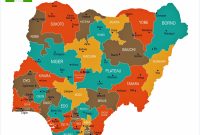
In this connection, I would like to invite attention to the 1952 Census Report which gives the number and identity of FIFTY-ONE linguistic groups in the country as follows:
MAJOR LINGUISTIC GROUPS:
1) Hausa/Fulani
2) Yoruba
3) Ibo
4) Efik/lbibiol Annang
5) Kanuri
6) Tiv
7) Ijaw
8) Edo
9) Urhobo
10) Nupe
OTHER LINGUISTIC GROUPS: PROVINCE:
11) Boki Ogoja
12) Ekri- Yakurr “
13) Nbembe “
14) Obanliks “
15) Ukelle “
16) Yala “
17) Abuah Rivers
18) Ngenni “
19) Ogoni “
20) Bassa Benue
21) Egedde “
22) Gwari “
23) Idoma “
24) Kutev “
25) Babur Bornu
26) Beddawa “
27) Bura “
28) Shuwa Arab “
29) Borgawa Ilorin
30) Bussawa “
31) Bassa-Komo Kabba
32) Gwari “
33) Igala “
34) Igbirra “
35) Karnberi “
36) Owe “
37) Magazawa Kano
38) Dak-Akerri Niger
39) Dukawa “
40) Gwari “
41) Kamberi “
42) Kamuka “
43) Angas Plateau
44) Birom “
45) Eggon “
46) Sura “
47) Yergum “
48) Adarawa Sokoto
49) Arawa “
50) Zabirma “
51) Gwari “
52) Jaba “
53) Kadara Zaria
54) Kaje “
55) Kataba “
(NOTE:) The Gwaris are minorities in four States, and the Kamberis in two; the Ijaws are a minority only in the Midwest State).
This is the list of the 51 linguistic groups about which I have written in some of my books and statements, NOT of tribal or dialect groups. I am sure it will interest many people including myself to have a list of the 200 ethnic or linguistic groups about which we have, again and again, been told, and the parts of the country in which they live.
It is clear, therefore, that under the linguistic principle, the number of States in the country cannot in the long run exceed 51. Having regard to the size and wealth of the country, this should not, by any manner of means be a worrying prospect. In the meantime, however, I have advocated eighteen States, simply because, from my knowledge of the minorities, I had thought that most of them would not be viable. And viability, in my considered view, is a matter of administrative relativity. Consequently, I have grouped together minorities which are geographically contiguous, and which, I believe, being together, would be administratively viable, and free from the fear of majority ethnic domination.
Those who advocate the creation of States only on the ‘principles’ of GEOGRAPHICAL CONTIGUITY, ECONOMIC VIABILITY and the like, are risking uncontrollable proliferation of States in the country. In the long-run we might find ourselves having to cope with well over 200 States. Perhaps this large number wouldn’t matter now since States are, in any case, fast becoming Provincial Units or inflated Local Councils.
When all these have been said, however, the STARK REALITY remains that on this issue of new States, many Nigerians just cannot be bothered about scientific principles. ‘Politics’ they contend, and quite rightly, ‘is the art of the possible’. So that whilst political ideals must remain the goal of action for those who believe in them, the reality of every situation and epoch must, in practical terms, be given due recognition when absolutely necessary.
The naked truth about the position in Nigeria now is that, because of a number of factors mainly subjective and emotional, partly environmental and historical, and to not a little extent personal, many leaders in Nigeria are implacably bent on having the territories of their birth carved out as separate States.
From purely pragmatic and realistic points of view, therefore, and because I believe that disillusionment awaits the protagonists in the not distant future, I THINK THAT EVERY GROUP WHICH ASKS FOR A STATE SHOULD BE GIVEN. SO FAR AS CAN BE JUDGED FROM THE MEMORANDA WHICH HAVE REACHED MY HANDS, MANY OF WHICH HAVE BEEN PUBLISHED, NO ONE HAS UNREASONABLY ASKED.
To give to some, and deny to others, on grounds which are not
dictated by objective and generally accepted principles; to approve the creation of Kanuri State and deny that of Kwararafa; to approve Yoruba Eastern, and deny Wawa; to approve Bauchi State and deny Calabar-Ogoja-Ikom State; to do any of these and, withal, to refuse to merge the Ijaws of the Midwest with those of the Rivers as well as leave the Gwaris and Kamberis scattered in four States and two States respectively, would be to give gratuitous and unmerited joy to some, and cause avoidable grief to others who are equally deserving. In any case, it must be borne in mind that the creation of new States now, will only serve as an invitation and encouragement to others to demand their own separate States in the very near future.
In closing my observations on this topic, I would like to make two brief points.
Firstly, I would like to invite the close attention of the Irikefe Committee and the Supreme Military Council to the memorandum of the Itsekiri Community, published in the Daily Times, asking for Itsekiriland to be made an Autonomous Province within the Midwest State. Short of a full-fledged State for every minority group, and short of grouping such minorities together into separate States of their own, the Itsekiri formula is, in my view, the answer to the fears of linguistic minorities throughout the country. All those concerned should carefully study this formula as well as the Constitutions of the USSR and Yugoslavia with special reference to the provisions for minorities.
Secondly, the present Federal Military Government should not allow itself to be bogged down by any controversy or problems arising from the immediate creation of States, to the extent that such controversy or problems would be used as a pretext for delaying the return to civilian rule. To do this would not be in the national interest, and would surely and totally destroy the raison d’etre of the last coup as our people see it.
THE NEW FEDERAL CAPITAL IN ABUJAAND
THE OLD CITY OF LAGOS
From Chief Obafemi Awolowo s press release of 18th August, 1975
The deficiencies of Lagos as Federal Capital have been stated and commented upon in the newspapers almost ad nauseam, and I do not want to repeat or contradict them. But there are some salient points to which I wish to direct my observations, partly as a contribution to the general debate on the subject; and partly for the consideration of the Aguda Committee and the Supreme Military Council.
Firstly, it must be borne in mind that the type of modern Capital we have been talking about takes a long time to plan and construct. There must be detailed survey of the area chosen; layout, designs and models must be prepared for exhaustive discussions at technical and political levels. After all the spade work has been done, tender documents must be prepared for the various segments of the Capital, and invitation to tender must be extended to contractors all over the world. I reckon that the planning of the new Capital up to the awards of contracts would take between FIVE to SEVEN years, unless of course we want to make a hash of what is conceived as a lofty project. The actual construction would take another FIVE to SEVEN years.
In any case, whatever we do about this question of new Capital, we must not encourage the Military to embark on any aspect of its planning. We should seek to limit their participation in this matter to a quick decision on the Aguda Committee’s Report. The actual implementation of that Report should be left to a future civilian Administration.
Secondly, whilst the planning as well as the construction of a new Capital is in progress, it will be our duty to make Lagos more habitable and presentable. In ten or more years from now, and taking into account the rate at which Lagos roads are being improved and at which modern buildings and industries are springing up all over the place, we might find ourselves completely frustrated at the end of the journey. We would have the new Capital of our dreams: ultramodern, superlatively prestigious, and all the rest of it; but the old Capital would have been transformed and would be pulsating with more liveliness, gaiety and business-as-usual than the new.
Someone has referred to the prevalence of immorality in Lagos as one of the factors which disqualify it from continuing as the country’s Capital. He did not elaborate. But I have no doubt that what he had in mind was the existence of Night Clubs, Gaming and Pools Houses, Brothels, and the comparative super-abundance of prostitutes and women of easy virtue in Lagos.
If one may be brutally frank without being offensive, the truth is that, from the beginning of time, it is these things which, abhorrent as they have always been to the Saints, make life worth living for the vast majority of human beings. They constitute e socio-gravitational pull even to those who live outside the borders of where they abound. Hence the annual pilgrimage, by many who an afford it, to London, Paris, Tokyo, Madrid, Monte Carlo and Las Palmas, to mention a few cities where these things exist in bounteous plentitude.
For almost a century, Lagos has developed this pull. And in the future, because of its position as a major port, and of the concentration of industries, commerce, and comparatively affluent population in and around it, its socio-gravitational pull will increase rather than diminish.
There are only two ways of reducing this pull: to canalise the Atlantic Ocean to the new Capital wherever it is situated, and to move the industries, Night Clubs, the entire population of prostitutes, etc., to the new site; or as an alternative to the latter, to create new brands of these factors in the new Capital. The one is impossible; the other would be almost insuperably obstructed by all the known factors of immobility of human beings and of industries and commerce. In any event, it will take many years to develop new brands, especially in the face of the constant pull of Lagos.
The result, therefore, will be that, when we move our Capital to the new site, the majority of our Ministers, Civil Servants in the senior and intermediate categories, and top employees of businesses and services established in the new Capital, will see to it that they spend their weekends and holidays in Lagos. Those in the junior categories will be unhappy because they cannot afford the expense of imitating their more prosperous fellow-workers.
There is a further complication. Ecologically, it will take some years for all those, other than the natives of the area, who are moved to the new site, to settle down and adjust themselves to their new environment.
The net result of all these is that, during the first few years in the new Capital, general efficiency would decline.
Thirdly, moving the entire government personnel from the old to the new Capital would involve logistics problems of tremendous and complex magnitude which would take months to surmount. The longer the distance of the new Capital from the old, the greater the magnitude. Conversely, the shorter the distance, the less. In addition, the transfer to the new site is sure to involve extensive disclocation of governmental activities.
Chief Kola Balogun has suggested nearness to a port as one of the factors to be considered in locating a new site. I agree with him; and merely want to add that, having regard to all the factors which I have discussed above, and, in particular, in order to minimise dislocation of governmental business, the new Capital should be as near to the Lagos port as possible.
Fourthly, the conclusion to which my reasoning leads me is that Lagos should be allowed to continue to be the Federal Capital. I Conjecture, and insist on being proved wrong, that the cost of removing the alleged deficiencies of Lagos – clearing the slums and widening the roads – will be far less than the cost of building a new Capital and overcoming the concomitant problems. In this connection, it is suggested that the Lagos State Government should move its Capital out of Lagos to Ikorodu and seek to establish a greater Lagos there.
Alternatively, the new Capital should be located as near to Lagos as possible. A maximum distance of 25 miles will be ideal. And in order to facilitate response to the socio-gravitational pull of Lagos, and minimise the logistics problem of moving to the new site, the new Capital should be linked with Lagos by a first-class express highway of not less than SIX LANES.
The site I have in mind is between Agege and Ifo. Those who advocate Kafanchan or Kaduna should remember that there are many areas between Lagos and Kafanchan or Kaduna which are equally suitable, and which, because they are nearer to Lagos present less intractable problems.
SEPARATION OF POWERS AMONG THE
THREE ARMS OF GOVERNMENT
From the address delivered by Chief Obafemi Awolowo, leader of
the Unity Party of Nigeria to the Second Annual Conference of the
Oyo State Branch of the UPN on Saturday, 8th November, 1980
Since 1st October, 1979, an unsavoury situation has emerged.
The relationship between the Legislature and the Executive, at the Federal level and in most States has, at the worst, been embittered, and, at the very least, not as cordial as it should be.
Under our Constitution the three organs of Government are separate and distinct both in respect of the functions which they perform, and of the functionaries who are entrusted with the performance of those functions. In other words, under our Constitution, no government functionary belongs to more than one organ, and none performs the functions of more than one organ. This is one of the three well-known forms of separation of powers, and, functionally, the neatest of them all.
The other two may be mentioned in passing. Though a set of public functionaries are members both of the Legislature and the Executive, yet there is separation of powers, as long as neither the Legislature nor the Executive performs the functions of the other. This is the form of separation of powers under the so-called parliamentary system of Government. There is also separation of powers in the solitary British instance of one functionary (the Lord Chancellor) belonging to all the three organs of Government, and at the same time remaining independent and separate in the exercise of each of his triunal functions. Ironically enough, Montesquieu, the first political philosopher to propound the principle of separation of powers, and to classify governmental powers into Legislative, executive, an judicial, drew inspiration for his famous theory from Britain’s unique parliamentary system.
Our own form of separation of powers is fashioned after the American system. The ideal of this system is the provision of effective checks and balances in the governmental structure itself. By the adoption of this form, absolutism or oligarchy of any kind is outlawed; true democracy is entrenched and manifestly seen to be entrenched in the Constitution. In other words, each of the three organs is obligated to keep within and guard its bounds of authority. In this kind of arrangement or its agence. In its role as outlined, the Judiciary is not abused, or excessive or arbitrary use of power by anyone organ.
But does this all mean that each must operate in a water-right compartment regardless of consideration for each of the other two? This is the big question. And the exhibition which we have witnessed since October 1979 clearly suggests that the answer which most legislators appear to give to the question is in the affirmative. At this threshold of our second year of the new democratic experiment, it is essential for the survival of the new system and of democracy that we should examine carefully, and pronounce wisely on, what should be the proper relationship between the Legislature and the Executive. Otherwise, if the present trend persisted, the Legislature and the Executive would sooner than later grind to a miserable disarray in their disparate and antithetic activities, with disastrous consequences to the trusting masses whom we vow to serve.
We must get it quite clear in our minds that, of the three organs, the Judiciary is sui generis. In a democratic society, the Judiciary is the fountain from which the preservation of law and order flows: for wherever there is no justice, anarchy and self-redress tend to prevail. The Judiciary is the adjudicator in all matters that may be brought before it, be they between individuals, between individual and Government at any level, or between Government and Government. It has a bounded duty, if so called upon, to declare, in no uncertain or ambiguous terms, against any legislative or executive abuse, misuse, or excessive use of power, and also against any violation of the law by any individual or Government or organ of Government or its agency. In its role as outlined, the Judiciary is not expected, under the Constitution, to collaborate with any of the other two organs. Indeed, it is expected to be detached, independent, impartial, honest, and absolutely fearless in the discharge of its duties which are universally held to be grave and sacred. Whether the Judiciary in Nigeria, with particular reference to the Supreme Court as at present composed, can be said to be or capable of being independent, honest, impartial and fearless in the discharge of its sacred and hollowed duties is another matter on which I propose to speak at some length next December. IN THE MEANTIME, HOWEVER, I MUST SAY THAT, SO FAR, ITWOULD APPEAR THAT THE VAST MAJORITY OF THE MEMBERS OF THE BENCH BELOW THE SUPREME COURT ARE UPHOLDING THE BEST JUDICIAL TRADITIONS, WITH CREDIT TO THEIR SECTION OF THE BENCH, AND CONSEQUENTIAL CONTRIBUTION TO PEACE AND ORDER IN OUR SOCIETY.
Whilst the Judiciary must be detached and independent from the other two organs, and be manifestly seen to be so, the Legislature and the Executive must work in close and harmonious collaboration with each other, if the welfare of the people is to be truly and effectively served.
It is the sole responsibility of the Executive to govern and administer the territory under its charge for the benefit of the people therein. To this end, it must initiate policies and programmes, and mobilise all the means at its disposal for their implementation and execution. In discharging its responsibilities, the Executive acts in its unfettered discretion, but within the bounds circumscribed by the Constitution. If it exceeds those bounds or infringes the law, and there is complaint to that effect, the Judiciary must so pronounce with a view to curbing the excess or infraction complained of.
On the other hand, it is the responsibility of the Legislature to give legally-binding effect and authority to the policies and programmes of the Executive, whenever called upon to do so by the latter. In the exercise of this function, the Legislature has to satisfy itself, in its own independent judgement, that any given policy or programme is in the best interests of the people, and intra vires its constitutional powers. Once in a while, on the motion of one or more of its Members, the Legislature may make laws which will have the effect of laying down policies and programmes which the Executive would be bound to implement and execute. In the discharge of its duties, if the Legislature exceeds its bounds, the judiciary may be called upon to adjudicate.
It is quite clear that the objective of the legislature and the Executive are one and the same – to promote and serve the best interests of the people. If they work at cross-purposes, or refuse to co-operate and collaborate with each other, the interests of the people would be seriously endangered. This point is reinforced or; the ground of plain common sense. When two persons or agencies are charged with joint responsibility to achieve a common objective, the two of them must co-operate harmoniously with each other. In the pursuit of their common objective, the two of them must constantly seek a consensus; or, in the event of disagreement, one of the two must be allowed to have the last say. If each of the two, in the absence of consensus, claims the right of last say, then, the common objective will either be unattainable, or be very slow of attainment.
ON THE SUPREMACY OF THE PARTY OVER
ITS MEMBERS
From the address delivered by Chief Obafemi Awolowo to the-
Oyo State Conference of the Unity Party of Nigeria on Saturday,
8th November, 1980
The questions now are: On what forum do the Legislature and the Executive conduct their debate with a view to arriving at a consensus? And, in the event of an unresolvable disagreement between the two, which must have the final say? We must appeal to the Constitution for answers to these questions.
The first point to note is that, under our Constitution, the Legislature has the final say in the making of laws, By its enactments, it can, as the dictum goes, make A WOMAN, MAN, and vice-versa. Indeed, in the language of the Statutes MASCULINE GENDER always includes the FEMININE, unless the contrary is expressly stated. It can be seen that subject to judicial intervention, the Legislature is absolute” within its domain.
The second point to note is that, under the Constitution, the Executive has the final say in the implementation and execution of policies and programmes. To these ends, it has absolute charge over all the Government’s administrative and executive personnel. It controls all the law-enforcement agencies as well as all the actual and potential instruments for demanding obeisance and for compelling compliance with any law. The Legislature has none of these things. It follows that, unless there is a meeting of minds at some stage between both the Legislature and the Executive, the former may make laws which are veritable dead letters from the moment of enactment, whilst the latter may find it almost impossible to give legal effect to its policies and programmes.
The third point to note is that our Constitution lays down ‘Fundamental Objectives and Directive Principles of State Policy’ which both the Legislature and the Executive are called upon strictly to observe in the exercise of their respective functions. It follows that, though each of the Legislature and the Executive has the final say in its allotted separate domain of powers, yet both are enjoined to pursue common goals in the best interest of the people they serve. As to social goals, therefore, there can be no disparate legislative or executive viewpoints. The touchstones for social objectives are already indisputably and inexorably laid down in Chapter 11 of our Constitution. But as to methods of attaining the common goals, there is plenty of room to manoeuvre, and hence for operational conflict and antithesis.
The fourth and final point to note is that, as regards the Legislature and the Executive, our Constitution recognises only a Registered Political Party, and not the individual members of the Party. Members of the Legislature and the Chief Executive of any Government are, in the first place, candidates of the Registered Political Parties; and, in the second place, in the case of those elected into the Legislature, enjoined by the Constitution, under pain of severe sanction, to remain loyal to the registered Party which sponsored their election. It is the Registered Political Party alone which has authority to canvass for them to be elected. And any member of the Legislature who changes his party allegiance, ipso facto, loses his seat in the Legislature.
At this juncture, it is apposite to observe that the new FEDECO whose activities, from its incipient ill-digested utterances, must be closely watched and quickly curbed where necessary, has called our attention to Section 3 7(b) of the Constitution. This Section recognises, by clear implication, an independent candidate. But the Section is otiose; because, in my considered view, it is cancelled out by Section 20 I, 202, and 209 of the Constitution.
Furthermore, one fundamental condition for the registration of a Political Party is that its:
‘programme as well as aims and objects … shall conform
with the provisions of Chapter II of the Constitution .. .’
that is, the ‘Fundamental Objectives and Directive Principles of State Policy’. In other words, all Political Parties undertake to pursue aims identical to those in Chapter II of our Constitution, if elected into office. Whether or not all the five Registered Political Parties are doing so now or not, is another matter. Because Chapter II is not enforceable in a Court of Law; the NPN, as chief defaulters, appear to be getting away with their blatant breach of faith with the electorate. It is comforting, however, that their fraudulent manipulations can only last till the next elections.
Be that as it may. The important point to stress here is that our Constitution clearly makes a Registered Political Party the cornerstone of the activities of all the members of that Party, including those of them in the Legislature and the Executive, as well as those of them operating outside these two organs of Government. Indeed, the Registered Political Party is the sole source from which candidates for election, and elected members of the Legislature and Executive, derive their life-blood for acceptability, public status, and legitimacy. Any elected member or group of elected members of a Political Party who refuse to toe the Party line – that is, choose to break their link with the Party Source – must, of a necessity, either quickly affiliate with another Political Party for a link with another party source, or be doomed to political dehydration or anaemia. In other words, by express provisions as well as necessary implications in the Constitution, the Registered Political Party is supreme and absolutely decisive in the conduct of our public affairs.
If the Party is supreme, then it is simple logic that in all matters of dispute, conflict, or antithesis between the Legislature and the Executive, the Party in Power should have the last say whenever a consensus cannot be reached between them.
In those circumstances, the Party in Power must provide forums and avenues for regular consultations designed to forestall or nib in the bud acrimonious disputes between the Legislature and the Executive, to promote a consensus between the two organs, to correct deviation from the Party line on the part of Members of the Legislature or of the Chief Executive, and to take a firm and final decision one way or the other, whenever necessary. This should be the case wherever the Party controls both the Legislature and the Executive. Accordingly, this should be the case in the five States controlled by the UPN. More so as our Party Constitution makes sufficient provisions for forums of consultation between those elected into public offices on the one hand, and Party leaders on the other, at every level of governmental activities – from Local Government right up to Federal Government.
Two problems of peculiar dimensions, however, arise; firstly, when the Party in control of the Legislature is different from the Party in control of the Executive; and secondly, when a party is a minority in a Legislature controlled by another Party which also controls the Executive and is, therefore, the Party in Power.
In the first case, since the Members in the Legislature and those in the Executive must regard their respective parties as supreme, then there has to be constant occasions for operational conflict or even irreconcilability. The same thing goes for the second case. Nevertheless, I do once again affirm, most emphatically, that the Party is supreme, and that the Party is the political cornerstone in all conduct and direction of public life. At the same time, the Constitution has stipulated for all Political Parties, regardless of their methodological diverseness, common social objectives which they are all enjoined to pursue at all times. The Constitution has also provided identical touchstones by means of which genuine conformity with the ‘Fundamental Objectives and Directive Principles of State Policy’, can be assayed.
As a result, there need be no permanent operational irreconcilability or antithesis between the Legislature and the Executive,’ such as obtains in Kaduna State. It is clear that the PRP Government under Balarabe Musa is conscientiously and diligently making efforts to promote the welfare of the people of the State, as enjoined by Chapter II of our Constitution. It, therefore, deserves the support of the Legislature. But it is also clear from all accounts that he is being insensately hindered, at every turn, by an extremely narrow-minded and anti-social NPN majority in the Kaduna Legislature. In this connection, I invite the NPN to reflect upon and learn from the UPN approach to every issue in the National Assembly, and transmit the lessons derived to their fellow-party men in the Kaduna State Assembly.
For instance, of the multitude of Ministers appointed by Alhaji Shehu Shagari, only two were strenuously and implacably opposed by the UPN Members of Senate. Of these two, one has resigned his appointment under disgraceful circumstances. The other one is still holding shamelessly and precariously to office, even though a Committee, of which the Minister is not a member, has recently been set up by Alhaji Shehu Shagari to advise him on matters within the portfolio of the said Minister.
But in Kaduna, lists of Commissioners have been wholly rejected on two occasions. Among those in the lists are men of fine qualities and high qualifications, who are, in many respects, superior to many of those in Alhaji Shehu Shagari’s list supported by the UPN and PRP Members of Senate. What we are witnessing in Kaduna, therefore, IS NAKED TYRANNY OF THE LEGISLATURE AT ITS VERY UGLIEST.
THE BLESSINGS OF COURAGE
Full text of Chief Obafemi Awolowo s speech to Oyo State Houseof Assembly in Ibadan on Wednesday,’ 16th January, 1980. This is the speech in which Chief Awolowo listed his main achievements as Premier of Western Region of Nigeria from January, 1952, o
December, 1959.
The last time I was here in this august Chamber was 25th May, 1962, when I sat in the official box as a very important guest. That same day, two meetings of the Western Region House of Assembly were held: one in the morning, and the other in the afternoon.
Each meeting ended in fiasco – a fiasco deliberately engineered by the powers-that-beat the federal level as an initial process in a well-calculated plan to annihilate the Action Group of Nigeria, and to destroy its leader politically and (as we have now been reliably informed) physically as well. It had been thought by the arch planners that, on the accomplishment of these diabolical ends, they would thenceforth remain in power for ever, and that all those who believed in the ideals of the Action Group either would totally surrender their ideological identity, or would never, NEVER, taste of power again.
The last time I spoke in this Chamber was on the 3rd November, 1959, when I delivered my valedictory address to the House of Assembly. I did not imagine then that I would one day, like this, be accorded the honour and privilege of ever again addressing Hon. Members of the House of Assembly in this same Chamber.
It is, therefore, most gratifying for me to be here again in this Chamber and to have this unique honour of addressing you on this occasion of the twenty-fifth anniversary of the introduction of Free Universal Primary Education in the old Western Region out of which five virile States – Lagos, Ogun, Oyo, Ondo and Bendel – have been carved.
I have pleasant and proud memories of my association with the Western Region, and of the role which I had had the honour to play as the leader of its government for eight full years from January 1952 to December 1959.
During this period, the Western Region earned the nick-name of pace-setter in all that is good and worthy of report. Some of the pace-setting achievements can be recalled:
1) Voting by symbol was introduced into Nigeria by the Action Group and was first practised at the Local Government Elections in Ijebu-Remo in 1953.
2) Steel ballot boxes and security-printed ballot papers were first used in the Western Region in 1956, at the instance and insistence of the Action Group Government.
3) The first motion ever for the creation of a new Region – in this case for the creation of a Midwestern Region now known as Bendel State – was moved in the Western Region House of Assembly by an Action Group Member of the House.
4) It was only in the Western Region that the Leader of Opposition was elected Deputy Speaker of the House of Assembly.
5) It was also in the Western Region that Ministers of Finance and of Works were withdrawn from the Tenders Board, and the membership of the Board was restricted to Officials headed by the Permanent Secretary, Ministry of Finance, together with known members of the Action Group and of the NCNC chosen, from time to time in equal numbers, by the said Permanent Secretary, Ministry of Finance.
6) Agricultural Settlements and Institutes were first established in the Western Region.
7) It was in the Western Region that a minimum living wage was first introduced in Nigeria, and paid to workers in the Region.
8) The first-ever industrial estate and housing estate in Nigeria were established in the Western Region.
9) The first television service in Nigeria, indeed in the whole of Africa, was established in the Western Region.
10) The very famous Liberty Stadium was the first and the best of its kind in Nigeria when it was built in 1959. In terms of elegance and comfort, it still remains the best in the country.
11) Before 1952, the Nigerian Government had never awarded as many as twenty university scholarships a year to Nigerian students. In that year (1952), the Western Region Government became the first ever to award 200 university scholarships in one year to students of Western Region origin.
12) It was in the Western Region, twenty-five years ago, that Free Universal Primary Education, and Free health Services for children up to the age of 18, were first introduced in any part of Nigeria. It was also in the Western Region that a six-year primary course, instead of the then existing eight-year primary course, was first introduced.
Some people have disrespectfully and insultingly described the Western Region as ‘the wild wild West’. No people with predominant wild inclinations such as are implicit in the description can record in a short period of EIGHT YEARS the supremely impressive, epoch-making, and pace-setting innovations and achievements which have been itemised above. The truth about the people of the Western Region is that they are sufficiently enlightened and bold to refuse to be led by the nose by any person or group however sophisticated such person or group may appear. They are slow to anger; robust in contentions; alert to their rights, and will fearlessly resist and combat evil whenever and wherever they discern it, with all their might and resources. To the people of the Western Region A LEADER IS MADE, NOT BORN. He is expected to justify his leadership by his personal attributes, and by his works for the good of the people. Whereas in some other parts of the country A LEADER IS BORN; and it is the followership that are expected to justify their worthiness to follow by the extremity of their obedience and subservience.
When the decision was taken in 1952 to introduce free universal education and free health services for children up to the age of 18, in the Western Region, it became necessary, in order to finance the schemes, immediately to impose an Education and Health Levy of TEN SHILLINGS per male adult taxpayers in Ijebu Province only. The collection of the levy commenced two years before the introduction of the schemes. This time-lag led to a lot of misrepresentations, which were heightened by the novelty of the schemes and the incredulity of the people towards them.
There was widespread resistance to the schemes, partly spontaneous and mainly instigated by the Opposition. But the Action Group Government had no iota of doubt in its mind that the schemes would fructify and mature in due time to the delight and gratitude of the vast majority of our people.
In concluding my speech on the motion for Education and Health Levy in the Western House of Assembly on 2Jrd January, 1953, I said something which now appears prophetic but which in actual fact exemplifies the clear vision and profound faith of the Action Group Government about the eventual and abiding success of the two epoch-making schemes. This is what I said:
‘Finally, Mr. President, we of the Action Group will press forward and I make this solemn promise with a due sense of responsibility and resolution, we of the Action Group will press forward in the execution of the laudable projects which this House has unanimously approved and accepted, believing as we do, being Christians and good Mohammedans on this side, believing as we do that God Almighty, who sees our hearts and knows we are doing all these things to better the lot of our people, is on our side, and confident also that our beloved and trusting masses, when they begin to enjoy the delectable fruits of the education and health levy which they are now being called upon to pay, will now and in future years remember us with gratitude and adoration as their faithful and devoted servants, and as their only true friends and benefactors.’
But incredulity and hostility towards the free education scheme were not confined to the Opposition and a good number of our people. All the senior Opposition and a good number of our people. All the senior Government Officials – both Black and White – and all the Nigerian intellectuals outside the fold of the Action Group were solidly opposed to the scheme. The then Director of Education in the Western Region declared that he did not believe that the Region was ripe for extension of primary education, let alone for free universal primary education. He thought it was a futile venture to embark on the latter. The Financial Secretary, for his part, thought that the whole business amounted to no more than an academic exercise; as, according to him, we needed to impose at least £5 not 10/- per capita to implement the free education scheme alone.
Because of official attitude to the scheme, Chief S.O. Awokoya, now Professor of Education at the University of Ife, had to prepare his White paper on the scheme, based on the Action Group Policy Paper previously prepared by Chief M.A. Ajasin, now Governor of On do State, and adopted at the inaugural Conference of the Party at Owo. Later, I had to prepare the Exco Memoranda on the implementation of the scheme as it related to education and Health Levy, and the construction of low-cost classrooms.
Now, the offsprings of the old Western Region – Lagos, Ogun, Oyo, Ondo and Bendel States – are at it again. But this time on a much grander scale than we dared to essay in 1955. For, today in these five dynamic States, education is free not only at primary level, but also at secondary and tertiary levels as well. As we all know, by free education at these levels is meant non-payment of fees by whatever name called, together with free supply of textbooks t pupils and students.
Those who protested vehemently some six months ago that the introduction of this laudable scheme from 1st October, 1979, could not be accomplished because of non-existent difficulties which they imagined in their heads can now see how very wrong they were, and how muddled their thought-processes had been. For the scheme is now more than three months old; and, in about five months from now, it would have completed one full academic session.
Here then in the five UPN-controlled States, a new historic pace has been set; a new revolutionary impulse has been generated; and, by God’s Grace, this new dialectical progression will not only endure as its predecessor, but will also pervade the entire Federation of Nigeria.
It is not given to many a thinker or theoretician to see his ideas or theories practicalised in his lifetime; nor to more than a few pioneers to witness the fructification’ and ripening of their endeavours, and take part in the glorious harvest. Today, it was exactly twenty- five years ago when I had the honour to launch the Free Universal Primary Education Scheme for the Western Region of Nigeria here in Ibadan on 17th January, 1955. Tomorrow will be the beginning of another natal cycle for the Scheme. The youngest of the founding pupils of the Scheme are now 31 years of age. It stands to reason, therefore, to say that many of them now occupy important positions in all the spheres of useful activities throughout the Federal Republic of Nigeria. Indeed a good number of our legislators in, the five. UPN-controlled States are products of that Scheme which was launched twenty-five years ago. As a matter of fact, the planners of these silver jubilee celebrations are products of the Scheme, and are mostly self-employed professionals and businessmen.
Today, my joy knows no bounds, as one of the planners and executants of the old Scheme, and as one of the planners of the new Scheme which is now unfolding before us with unparalled speed. I seize this opportunity to congratulate, with all my heart, three classes of people: first, those products of the old Scheme who are alive today to witness these silver jubilee celebrations; second, our five Governors – Chief M.A. Ajasin, Chief Bola Ige, Chief Bisi Onabanjo, Professor Ambrose Ali, and Alhaji L.K. Jakande – for the excellent manner and adorable despatch with which they have set about the execution of the UPN’s four cardinal programmes, with special reference to free education at all levels; and, third, the lucky children of the five UPN-controlled States who are now benefiting and who, from generation to generation in the years to come, will benefit from the new education programme. After launching the free primary education programme in the morning twenty-five years ago, I also did a radio broadcast to the people of the Western Region, on the night of the same day. I concluded the broadcast in the following words:
‘ … The opportunity which the Government of this Region’ offers to all of us in the way of education of our children is far-reaching. I appeal to all of you to seize this opportunity in real earnest. I do not at all minimise the problems that are bound to confront us as we proceed with the execution of all our educational schemes.
‘But if all of you will co-operate, in a spirit of willingness and loyalty, with the Government, the task of tackling and solving any problems that may arise will, God being our helper, be considerably lightened.’
This appeal which was made twenty-five years ago inures today for each of our five States, and for any State in the Federation which may wish to embark on the Scheme of free education at all levels.
As the Scheme unfolds and progresses, difficulties of various kinds will be encountered. There will be administrative, executive, and financial difficulties, among others. But the knottiest of them al is the financial difficulty. Even this, like the other two can and ought to be tackled vigorously and solved.
The country has enough manpower and financial resources to cope with its social and economic problems including in particular the introduction of free education at all levels. But of course it all depends on what we regard as national priorities, and on how our resources are husbanded and deployed for the greatest good of all our people without any discrimination whatsoever.
In this connection, it is imperative that all the relevant arguments should be mustered and directed, with unrelenting and unabating persistence, at the ‘densely-compacted intellect’ of the Federal Government to the end that it may awaken to the very urgent need for promoting the immediate introduction of free education at all levels, free health care, integrated rural development, and full employment of our human resources throughout the country.
There is one and only one primary and overriding objective which all the twenty Governments in our Federation, and all the leaders in the country must recognise: it is the full development and full employment of every Nigerian citizen. This objective, to the exclusion of any other, deserves to be given FIRST PRIORITY in all our national endeavours. Any policy or programme which relegates this objective to the second place is sure to come to grief, and to fail woefully in its bid to advance our economic development, and to promote social justice and political stability.
No one in his senses has ever denied and can ever deny that man is the Alpha and Omega of all activities. And in all these economy and at any stage of human advancement. He is the producer of all raw materials and secondary goods; he is the distributor, exchanger and final consumer of everything that is ever produced by man. In the Church, in the Mosque, in politics, in the State, in the family, and in society generally, man is the Alpha and Omega of all activities. An in all these activities, he alone has the capacity to make or mar: nothing else on earth has. Man is ordained to have dominion and be monarch over the earth. The vagaries of nature and the acts of God which now and again affect him adversely, do so because of his ignorance of their causes, and of his lack of sufficient knowledge to eliminate such causes when he ascertains them or to cope successfully with their effects.’
The point in controversy as far as some people are concerned is whether man’s development should have or should not have priority over the development of natural resources into raw materials and then into secondary goods for man’s final consumption.
In this regard, there is a feudalist-capitalist veil which has, for centuries, and until recently, obscured the prime-importance of the developed man in the economic development process, or in any kind of development process, for that matter. The Japanese are the first to peep seriously behind the veil; and the USSR is the first to tear the veil asunder; the prime dynamic of all development or advancement – be it economic, social or political – is the developed man. Accordingly, they have both given the prime of place to the development – that is the education and health – of everyone of their respective citizens.
Look in whichever direction you like, and you will see for yourselves that in the long saga of man’s multifarious adventures, nothing worthwhile has been initiated and achieved without the motivating impulse and sustaining direction of the man of education, science, and technology.
From the earliest days of man, and centuries before the establishment of institutions for formal education or health care, we see the slave-owner and feudalist, in all parts of the world, taking great pains to develop his offsprings, whilst he sedulously forbids similar facility for his slaves and serfs. The early capitalists also took after the feudalists whom they had displaced. They made sure that their own children were sufficiently developed to take over from them, and that the working classes and their descendants remained as mentally underdeveloped as was compatible with the functions and operations they were called upon to perform.
Some of us do speak glibly, indeed thoughlessly, of the Industrial Revolution in Britain as being the precursor of Britain’s rapid economic development in the eighteenth and nineteenth centuries. But such people carelessly overlook the fact that, without the men of education, science and technology, like Richard Arkwright, James Hargreaves, Revd. Edmund Cartwright, James Watt, and a multitude of others, the Industrial Revolution could not have taken -place. Some of the main charactreristics of the Revolution, can be mentioned as proof of this assertion. These are:
1) the discovery and utilisation of new energy sources;
2) the invention and fabrication of new machines and other mechanical devices; and
3) the invention and development of faster forms of transportation and communication.
The very rapid development of Britain in late eighteenth and nineteenth centuries, of the USA in the nineteenth century, of Japan in late nineteenth and early twentieth centuries, and of the USSR in this twentieth century, has been brought about primarily by the men of education, science and technology in these countries. And the examples of these highly developed countries, among others not mentioned here, are enough for us to reiterate categorically that at every stage of human development or advancement, the moving spirits are invariably the men of education, science and technology. The more of them a country has, the brighter are its prospects for rapid economic progress, for social justice, and for political stability.
It is generally agreed, and in any case the fact stares us in the face, that in spite of her enormous economic potentialities, Nigeria is one of the poorest and most underdeveloped countries of the world. She has been in this shameful position for very many years. We must not allow her to remain this way for much longer. All those who share the view that RAPID DEVELOPMENT OF NIGERIA BY NIGERIANS FOR NIGERIANS is a matter of urgent necessity must agree to do first thing first, no matter to which political party they may belong. And that FIRST THING is the full development and full employment of every Nigerian citizen.
Already, most parts of the country have lost twenty-five years in the matter of the development of our people. The reason is that many of our leaders and so-called intellectuals, instead of girding their loins and doing likewise for our people in their respective areas of influence, have elected to spend a-quarter-of-a-century in deriding and jeering at a great scheme which was introduced here in 1955, and which has in the course of years produced many of the most brilliant and ablest Nigerian youths who abound today in the professions, in industry and commerce, in parastatal organisations, and in Government.
I seize this auspicious occasion to appeal to those Nigerian leaders who may still be inclined that way, to desist NOW from playing a stupid and dangerous game which experience of twenty-five years has shown to be fit only for nation-wreckers, and for ‘the envious and asses that bray’.
We must always bear in mind that our Constitution enjoins us, as and when practicable, to provide free education at all levels for our children and adolescents. I declare for the umpteenth time that all the good things of life provided for in our Constitution are practicable now.
Those who foolishly and recklessly maintain that, compared with the other parts of the country, the primary education given in the five UPN-controlled States is lacking in quality will do themselves a lot of good by looking to pages 25 and 27 of THE ANNUAL REPORT OF THE WEST AFRICAN EXAMINATION COUNCIL FOR THE YEAR ENDED 31st MARCH, 1977. At page 25 the results for GCE (Advanced Level) Examination held in November – December, 1976, showed that the Western States have 6,492 passes which are 48.8 per cent of those who sat for the examination from those States; the Eastern States have 2,500 passes which are 37.9 per cent of those who sat; whilst the northern States have 1,251 passes, that is 41 per cent of those who sat. At page 27 the results of GCE (Ordinary Level) Examinations held in May – June, 1975, may be tabulated as follows:
Division 1,’ Distinction Passes Percentage of
those who sat
Western States 72 0.2
Eastern States 51 0.1
Northern States 37 0.25
Division I
Western States 1,151 2.6
Eastern States 1,087 3.1
Northern States 462 2.8
Division II
Western States 3,545 8.0
Eastern States 3,381 10.5
Northern States 969 5.7
Division III
Western States 13,494 28.6
Eastern States 9,060 27.6
Northern States 3,834 22.4
It is crystal clear from these figures that the products of the Free Universal Primary Education, who have been disposal, should no longer drag his feet on the question of free robbers’, are indisputably in the lead in all the GCE (Ordinary Level) and GCE (Advanced Level) Examinations held in 1975 and 1976 respectively.
Alhaji Shagari, in the face of these and other facts at his disposal, should no longer drag his feet on the question of free education at all levels on the pretext that he wants something better than what obtains in the UPN-controlled States. From the percentages of passes, there is no doubt that there’ is considerable room for improvement in ALL THE STATES. But more so in the Northern States where the total number of candidates who passed these examinations are comparatively very very low indeed.
The educational gap between the Western States and the Northern States is too wide for comfort. And it would be criminal for anyone who has the power and the means to close it, to allow it to widen further. It cannot be closed by trying to halt the forward march of the Western or Eastern States as someone had suggested some three or so years ago. For one thing, this is an impossible proposition. For another, such an attempt would be certain to provoke an emotional reaction of frightful proportions among those affected. The gap can only, therefore, be closed by embarking now, throughout the country, on Free and Compulsory Primary Education, Free and Compulsory Secondary Education, and Free Education at Post-Secondary levels. If we do this now, the existing educational gap will be permanently closed in FIFTEEN to TWENTY YEARS’ time.
In closing, I wholeheartedly congratulate our five Governors – Ajasin, Onabanjo, Jakande, Ige, and Alii, and with them I associate the names of Abubakar Rimi, Governor of Kano State, and Abdulkadir Balarabe, Governor ofKaduna State – for blazing these new beneficial educational trails offree education at all levels. Obstacles there must be in the path of every pilgrim or pioneer in search and pursuit of noble and humane objectives. I have no doubt that when they do appear, as they are bound to, we shall, with Almighty God on our side, overcome them, even more gloriously than the pioneers of twenty years ago had done in their time.
OBAFEMI AWOLOWO
INDEX
AACB, 127, 129, 131
ADB,127
Additional Revenue, 16
African Group, 62
Aims of the AACB, 128
Aims and Objectives, 92
Ajasin, Chief M.A. 184, 185
Ali, Professor Ambrose, 185
Angell, Sir Norman, 62
Arikpo, Dr. Okoi, 150
Association of African Central Bank, 125
Association of Chambers of Commerce, Industry and Mines of Nigeria, 115
Avebury, Lord, 150
Awokoya, Chief S.O., 183, 184
Awolowo, Chief Obafemi, 1,3,6,9,19,24,28,33,40,48,69, 72,74,82,98, 115, 124, 131,
147, 150, 152, 154, 156, 163, 169,172,175,180
Balarabe, Abdulhadir, 190
Balogun, Chief Kola, 171
Biafran War, 9
Census Report, 1952, 165
Charges of Treasonable Felony, 1
Commonwealth Group, 62
Conference of Finance Commissioners of the Federation in Kano, 40
Conservation of Foreign Exchange, 18
Constitution, 84
Courses of Action, 10, 11
Creation of More States, 163
‘Crisis of Plenty’, 59
Definitions, 84
Development Plans, 153
Direct Tax, 16
Eastern States, 189
ECA, 31,127
Economic Growth Rate, 13
Economic Survey of Nigeria 1959, 74
Emerson, Ralph Waldo, 27
Faruk, H.E. Usman, 80
FEDECO,197
Fernando Po, 28
Form of Governments, 95
Free Education, 42, 43
Free Health Services, 42, 43
Full Employment, 40, 41
Fundamental Factors, 88
GCE, 189, 190
GDP, 43, 44, 111, 113, 114
Gezira Scheme, 53
Gowon, Major General Yakubu, 8, 19, 79
Group of Ten, 62
IDEP, 127
Ige, Chief Bola, 185
Import and Excise Duties, 16
Import Quota Allocation Committee, 106
industrialisation of Each State, 45
Iron and Steel Complex, 112
Items of Programme, 149
Jakande, Alhaji L.K., 185
Jebba,35
Johnson, Professor Glenn, 44
Kano, Alhaji Aminu, 156, 158
Kano State, 39, 78
King, Edmund 1., 70
Laws and Principles, 5
Letiche, Dr. John D., 111
Lewis, Professor Arthur, 160
Linguistic Groups, 165, 167
Maladjustment, 57
‘Man does not live by bread alone’, 35
Marketing Board, 108, 113
Minimum Conditions, 39, 40
Modernisation of Agriculture, ‘Mohammed, Brigadier Murtala Ramat, 148
National Reconstruction Surcharges, 16
NCNC, 181
NIDB, 122
Nigerian Trade Union Congress, 33
Nine-Point Programme, 149, 151
NPN, 177, 179
OAU, 20, 22, 23
Okaba, 119
Ojukwu, 9, 10, 99, 106
Oluwasanmi, Professor H.A., 43
Onabanjo, Chief Bisi, 185
One Nigeria Bonds, 17
Onitsha,35
Opium War, 56
Organisation of African Unity, 19
Oyo State Branch of the UPN, Oyo State Conference of the Unity Party of Nigeria, 175
Oyo State House of Assembly, 180
Pace-setting Achievements, 181, 182
People’s Republic, The, 68, 143
Pigou, A.C., 134
Post-war Ruler, 36
Press Statements, 147, 150, 152, 154, 156, 163, 169
Provinces, 166, 167
PRP,179
Rapid Development of Our Systems of Transportation, 45, 46
Rapid Industrialisation of Each State, 45
Regional Assemblies, 41
Release from Prison, 3
Rimi, Abubakar, 190
Robbins, Lord, 13
Second National Development Plan, 27
Smith, Ian, 29
Southern States, 11
Strategy and Tactics of the People’s Republic of Nigeria, The, 143
Strict Austerity Measures, 14, 15
Sufficient Funds, 46, 47, 48
Systems of Transportation, 45
Tenno, Meiji, 115
‘The Role of the Working Class in Post-War Nigeria’, 33
Third Revolutionary Convention of the Nigerian Trade
Union Congress, 33
Thoughts on Nigerian Constitution, 4, 89, 91, 143
Treasury Bills, 106
Treasury Certificates, 104
Type of Constitution, 89
UDI,23
UNESCO, 75, 77
United Nation’s Population Division, 76
University of Ibadan, 98
University of Ife, 6, 69, 72, 74, 131
University of Lagos, 82
University of Lagos Annual Lecture Series, 48
UPN, 172, 178, 179, 183, 184, 185
USA,21,30, 86, 169, 188
USSR,30, 86, 169, 188
Walpole, Hugh, 2
Ways and Means Advances, 104
Wells, H.G., 57
Western States, 189
World Perspective in Education, 70
Yusup, Alhaji, 148
Zielinski, J.G, 139
Provided by SyndiGate Media Inc. (Syndigate.info).