The Unique Pollination Strategies of Baobab Trees
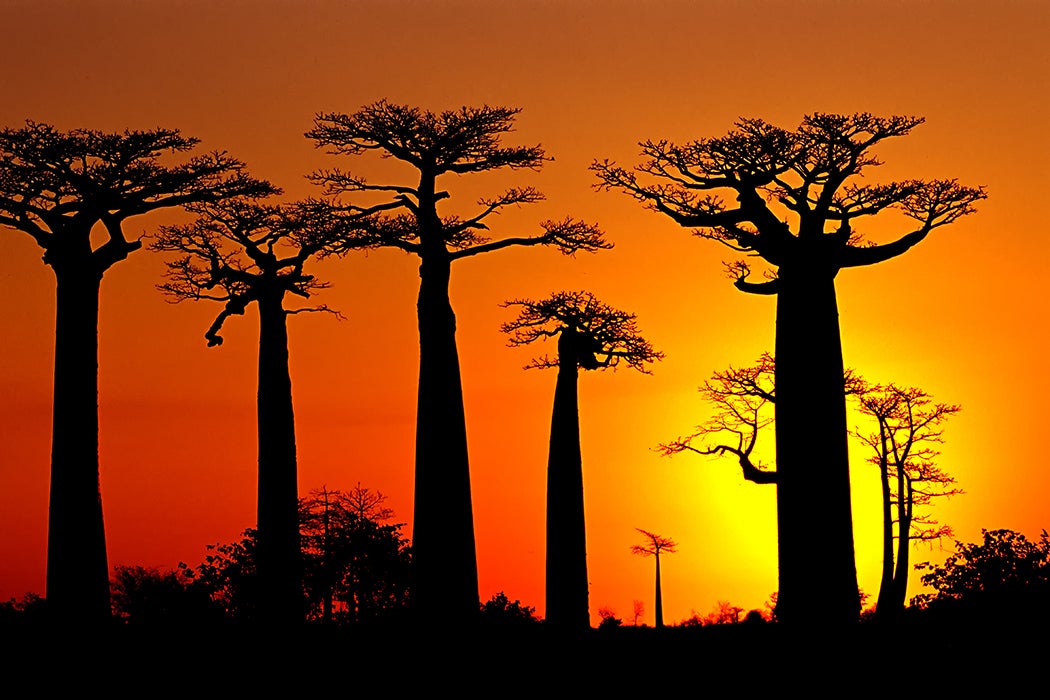
Baobabs are often referred to as “upside-down trees” due to their striking appearance, where their broad, sprawling branches resemble roots reaching toward the sky. Among the eight species of baobab found globally, six are native to Madagascar, one is found in northern Australia, and the most widespread species, Adansonia digitata, thrives across the savannahs of continental Africa.
These trees are not just visually captivating; they play a vital role in African ecosystems and human livelihoods. They provide fruit, fiber, medicine, and shelter for both people and wildlife. However, what truly sets them apart is their night-blooming flowers and their intricate relationship with nocturnal pollinators like bats and moths.
The flowers of baobabs are large and white, designed to attract these nighttime visitors. Bats and moths feed on the nectar, and in the process, they become covered in pollen. As they move from flower to flower, they transfer this pollen from the male part (anther) to the female part (stigma) of other blossoms, enabling the tree to produce fruit and seeds.
Without this pollination, baobabs would be unable to reproduce, which would have severe consequences for the communities that rely on their nutritious fruit and the ecosystems that depend on them.
Studying Pollinators Across Africa
As a baobab ecologist who has studied these trees for 18 years, I recently led a study examining 284 baobabs across West Africa (Ghana), East Africa (Kenya), and Southern Africa (South Africa, Namibia, Botswana). We observed bats and moths for over 205 hours, filmed their behavior, and collected pollen from their bodies. We also analyzed the shape, scent, and nectar of the flowers in each region.
Our findings revealed that baobabs have evolved different pollinators in different regions, adapting their floral traits accordingly. Despite being the same species genetically, their flowers have developed unique characteristics to suit the specific pollinators present in each area.
This adaptation takes thousands of years and highlights the deep dependency of baobabs on their relationships with either bats or moths. If these pollinators decline due to climate change, the trees may struggle to reproduce, endangering not only the species but also the broader ecosystem it supports.
Regional Differences in Pollinators and Flower Adaptations
In West Africa, the straw-coloured fruit bat (Eidolon helvum) is the primary pollinator. These large bats hang upside down while feeding, and the baobab flowers here are big, with long stalks and deep pools of nectar. The bats rotate the flowers with their thumbs, brushing against the pollen on their heads and chests before carrying it to the next blossom.
In East Africa, the Egyptian fruit bat (Rousettus aegyptiacus) dominates. These smaller bats crash-land directly onto the flowers, using the stalk as a springboard. As a result, the flowers here are smaller and sturdier, with less nectar but enough to encourage repeated visits throughout the night.
In Southern Africa, no bats are present, and instead, a variety of moths act as pollinators. Some hover delicately, while others land directly on the flowers. The flowers in this region are smaller, with drooping petals and wider stigmas, which help ensure effective pollen transfer when moths come into contact with the reproductive parts.
The Science Behind Flower Form, Nectar, and Scent
Our research also uncovered several key differences in the flowers:
- Shape: In regions where bats are the main pollinators, petals fold back to allow for easier access. In moth-dominated areas, petals droop, encouraging close contact and more efficient pollen transfer.
- Peduncle Length: West African baobab flowers have long stalks to accommodate large bats hanging from branches. In East Africa, shorter stalks reduce wobbling when smaller bats land directly on the flowers.
- Nectar: West African flowers are rich in nectar to support large bats, while East African flowers have less nectar for smaller bats. Southern African flowers provide only small amounts of nectar, sufficient for moths.
- Stigma Position: Southern African flowers have short and wide stigmas, increasing the likelihood of moths brushing against the pollen-bearing parts. This positioning is different from the fully protruding stigmas seen in West and East African baobabs, which are adapted for bat pollination.
- Scent: Baobabs release sulfur-like compounds that attract bats, but Southern African flowers emit a sweeter scent to appeal to moths.
The Future of Baobabs and Their Pollinators
Birds, bees, and beetles do not pollinate baobab flowers, making the survival of these trees heavily dependent on bats and moths. While baobabs can withstand a range of environmental conditions, their pollinators may be more vulnerable to the effects of climate change.
Our research highlights that even the largest trees depend on delicate partnerships with small, nocturnal creatures. Protecting these pollinators is essential for preserving baobabs and the communities and ecosystems that rely on them.


