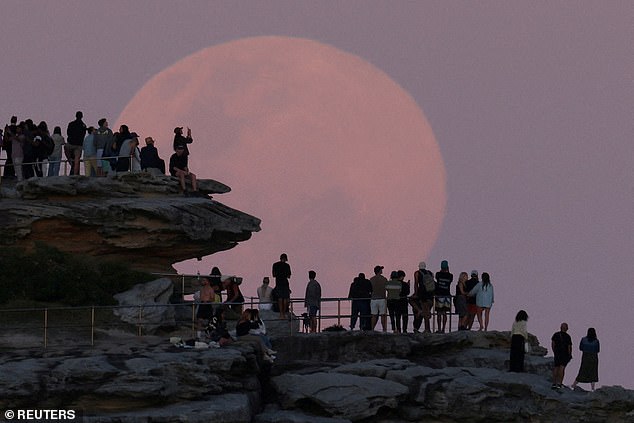
The Biggest Supermoon of the Year is Here
The biggest supermoon of the year will light up the skies around the world this evening, and it’s an event you don’t want to miss. At its peak, the moon will appear eight percent larger and 16 percent brighter than usual. This phenomenon occurs because the moon’s orbit around Earth is not perfectly circular, meaning it sometimes comes closer or moves further away.
When the moon is at its closest point to Earth, it’s called a lunar perigee. If this happens close to a full moon, it can create a spectacular sight. According to the Royal Museums Greenwich (RMG), “As long as there aren’t too many clouds, the full moon will be an unmistakable white orb in the sky.” This is a great opportunity to use a small telescope or binoculars to see the moon’s detailed surface or even take some interesting moon photos. However, you can also enjoy the view with just your eyes.
Looking for the moon just after sunset or just before sunrise will provide an impressive sight, as it will appear enormous compared to the surrounding landscape. While the forecast suggests some cloud cover, there should still be chances to catch a glimpse of our remarkable celestial neighbor.
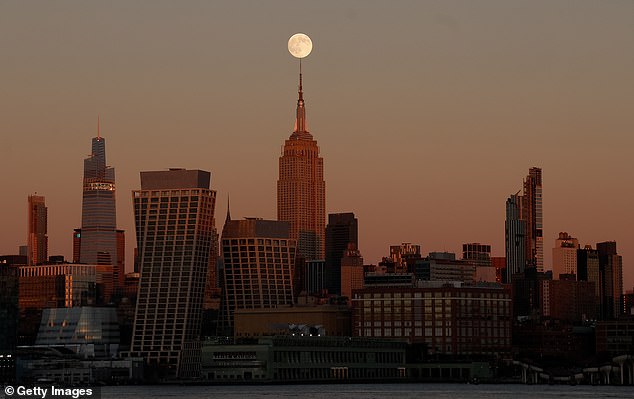

Tonight, the moon will be just under 357,000 kilometers (221,818 miles) from Earth, which is much closer than its average distance of 384,400 kilometers (238,855 miles). This makes it the nearest full moon of the year, and therefore the largest supermoon—coinciding with Bonfire Night. The first full moon of November is informally called a Beaver Moon, as part of a tradition dating back centuries. It is thought that the term may have been used by various cultures, including Native American tribes and early European settlers, to describe the time of year when beavers become particularly active as they build dams and stock up on food.
According to the Met Office, most of the UK will be covered in clouds at 5pm today, just after sunset. However, there will be some occasional clear intervals, allowing for a glimpse of the impressive sight.


Supermoons also have an effect on Earth’s tides. “The tides are caused by the gravitational forces of the sun and the moon on the Earth’s oceans,” the RMG said. “When the Moon is closer to the Earth during a supermoon, the gravitational pull is slightly stronger, and so the tides are bigger. However, this effect is almost negligible, with only a couple of inches difference between a normal full moon and supermoon tide.”
While this isn’t the final supermoon of the year—there will be one again on December 4—it’s thought the moon won’t appear this large and bright again until November 24, 2026. Taking a decent photo of the moon using your phone should be easy enough, but it’s best to place it on a steady surface to prevent blurring. Those with a single lens reflex (SLR) camera can take good images if they use a 250mm telephoto lens. To get the best detail, you need a telephoto lens of at least 500 to 600mm and ideally a long focal length telescope. Experts recommend using shutter speeds of 1/30th of a second, with a low ISO setting to reduce noise.
Understanding Full Moons, Supermoons, and Strawberry Moons
A full moon is the phase of the moon in which its entire disc is illuminated. During the 29.5-day lunar cycle, we observe a new moon (with 0% illumination), a waxing moon (when the amount of illumination on the moon is increasing), a full moon (100% illumination), and then a waning moon (when its visible surface area is getting smaller).
Because our modern calendar isn’t quite in line with the moon’s phases, sometimes we get more than one full moon in a month. This is commonly known as a blue moon.
A supermoon is when the full moon nearly coincides with perigee—the point in the moon’s orbit where it is nearest to Earth. This means a supermoon can appear as much as 14% larger and 30% brighter than when it’s furthest away from Earth. There are about three or four supermoons per year, most astronomy websites claim, and they happen at different times each year. In a nutshell, a supermoon is a full moon, but it’s bigger and brighter than a normal full moon.
Lastly, a strawberry moon simply refers to the time of the year the full moon is appearing. In June, it’s known as the Strawberry Moon because it historically appeared when the strawberry harvest first took place. Other months of the year correspond to different nicknames—so January is Wolf Moon, February is Snow Moon, March is Worm Moon, April is Pink Moon, May is Flower Moon, and so on.
Full moon names were historically used to track the seasons and are closely related to nature. The full list of full moon nicknames includes:
- January: Wolf Moon, because wolves were heard more often at this time.
- February: Snow Moon, to coincide with heavy snow.
- March: Worm Moon, as the Sun increasingly warmed the soil and earthworms became active.
- April: Pink Moon, as it heralded the appearance of Phlox subulata or moss pink—spring’s first flowers.
- May: Flower Moon, because of the abundance of blossoms.
- June: Strawberry Moon, because it appeared when the strawberry harvest first took place.
- July: Buck Moon, as it arrived when male deer’s antlers were in full growth mode.
- August: Sturgeon Moon, after the large fish that was easily caught at this time.
- September: Corn Moon, because this was the time to harvest corn.
- October: Hunter’s Moon, after the time to hunt in preparation for winter.
- November: Beaver Moon, because it was the time to set up beaver traps.
- December: Cold Moon, because nights at this time of year were the longest.
This year’s largest supermoon promises to illuminate the sky brighter and bigger than ever. Will this rare Beaver supermoon be the most breathtaking lunar spectacle until 2034? How will next week’s colossal Harvest Supermoon brighten up the night sky? Whether you’re a seasoned astronomer or a casual observer, this is an event worth watching.


