A City of Contradictions and a Man of Resilience
Ibadan, a city known for its brown rooftops, red earth, and rolling hills, is a place steeped in history and tradition. It is the land of ancestors, where the echoes of greatness still resonate through its streets. Once the heart of the Oyo Empire, Ibadan has always been a city of paradoxes — modern yet traditional, chaotic yet ordered, humble yet proud. To be an Ibadan indigene is to inherit a legacy of resilience, ambition, and pride. The city played a crucial role in protecting Yorubaland from Fulani expansion before the arrival of British colonialists. Into this vibrant city, filled with markets that never sleep and drums that never tire, Rashidi Adewolu Ladoja was born.
In his early years, there were no royal beads around his neck, no courtiers to attend to his steps. Instead, he grew up surrounded by the simple yet profound rhythms of Ibadan life: the call of the muezzin at dawn, the chants of schoolchildren on dusty paths, the chatter of traders in Dugbe market, and the thunder of bata drums during festivals. Like many children of his time, Rashidi learned the values of hard work, humility, and perseverance. Nothing in those formative years suggested that this quiet, thoughtful boy would one day ascend to the most revered throne in Ibadanland — the Olubadan, the king of kings among the Ibadan people.
What set him apart was his insatiable hunger for knowledge. Education became his way out of obscurity, his passport to relevance. He pursued it with diligence, eventually earning a degree in chemical engineering from the University of Liège in Belgium. His academic success led him into Nigeria’s business world, where he gained respect in Lagos boardrooms and recognition in Abuja’s corridors of power.
Yet, Ibadan is a city where tradition and modernity intertwine. Even as Ladoja excelled in the modern world, he found himself drawn back to the enduring traditions of his people. Unlike other Yoruba towns where kingship is tied to bloodlines, Ibadan’s monarchy is unique — a meritocracy built on patience. The Olubadan system follows two lines of succession: the Otun (civil) line and the Balogun (military) line. One must start at the lowest rung — Jagun — and rise steadily through the hierarchy over decades until destiny and longevity bring the crown. This democratic system allowed any son of Ibadan, regardless of birth, to aspire to the throne — provided he had the endurance and character for the journey.
For Ladoja, this system became both his greatest trial and ultimate triumph. Before his name would echo through the palaces of Ibadan, politics tested him deeply. He contested for a senatorial seat in 1993 during the short-lived Third Republic under General Sani Abacha. In 2003, he was elected Governor of Oyo State, thrusting him into the turbulent world of Nigerian politics. His tenure was marked by bold reforms and a determination to restore dignity to public service. However, no reformer escapes resistance. In 2006, the Oyo State House of Assembly impeached him, seemingly ending his political career. He endured months of humiliation, isolation, and betrayal. Political enemies mocked him, friends abandoned him, and many believed his light had dimmed forever.
But Ladoja, an Ibadan man through and through, was like the city itself — resilient, able to survive wars, betrayals, and ashes to rise again. He fought back, not with swords, but with the weapon of law. Through Nigeria’s courts, he challenged his impeachment. Against all odds, the Court of Appeal reinstated him in late 2006, restoring him as governor. It was not merely a political victory but a personal vindication. His resilience became legend, his refusal to bow under pressure an echo of Ibadan’s own stubborn spirit.
Yet, politics was only part of his destiny. Beyond the glare of statecraft, Ladoja never abandoned his patient climb up the Ibadan chieftaincy ladder. Starting as Jagun, he embraced each promotion with humility and commitment, understanding that the Olubadan system is a long relay race, not a sprint. From lesser ranks to senior titles, he served faithfully, attending functions, honouring traditions, and demonstrating leadership. Unlike some who sought shortcuts or resisted the slow process, he accepted the long wait. In Ibadan, the wait is the true test of character.
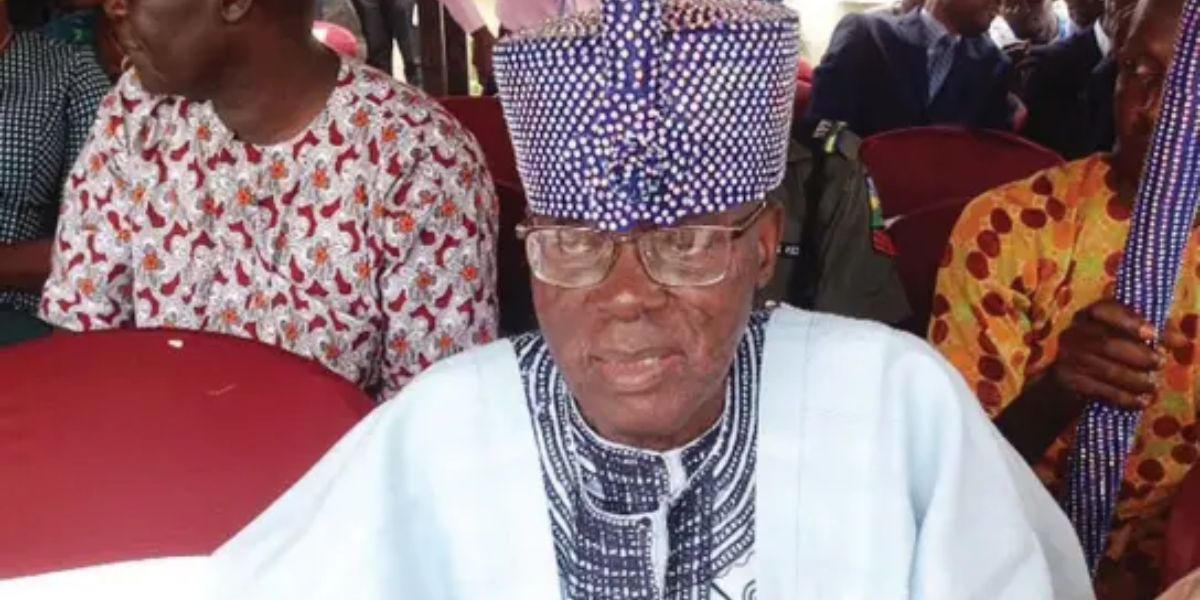
Finally, after decades of service, trials, and triumphs, destiny smiled on him. On Friday, September 26, 2025, Rashidi Adewolu Ladoja was crowned the 44th Olubadan of Ibadanland. His ascension is not merely another coronation; it is the crowning of a lifelong journey. After all, he had stated many times that his lifetime ambition was to be an Olubadan. The boy who once roamed the dusty streets of Ibadan, anonymous among thousands, is now Kabiyesi, custodian of tradition, symbol of unity, and living proof of Ibadan’s unique and enduring democratic kingship.
The coronation is a day of thunderous celebration. From Oja’ba to Mapo Hall, from Bere to Bodija, the drums of Ibadan will speak. Markets will pause, traders will dance, and schoolchildren will wave flags. Chiefs will adorn in resplendent agbada, lining the palace courtyard. Yoruba drummers will beat rhythms that carry across the hills, announcing to the world that Ibadan has a new king.
And amid it all will sit Ladoja, beads heavy on his neck, crown shimmering in the sun, embodying both the ancient and the modern.
His rise has been more than a personal triumph. It’s a reaffirmation of Ibadan’s values: perseverance over privilege, resilience over defeat, merit over inheritance. His story reminds every son and daughter of Ibadan that greatness is not only inherited — it can be earned. That power is not merely given — it is taken through patience, endurance, and an unwavering belief in destiny.
For Ibadan, the Olubadan is more than a monarch. He is history’s custodian, culture’s protector, and unity’s symbol. For Rashidi Ladoja, the journey to that seat has been long, marked by trials and triumphs, betrayals and vindications, falls and risings. But at last, he has become what destiny had long whispered he would be: the Olubadan of Ibadanland.
And so, the story of Ladoja will live on, told in homes and marketplaces, sung by griots and drummers, and remembered by future generations as the tale of the boy who rose from obscurity to the throne. And that destiny can be delayed but can never be denied.


