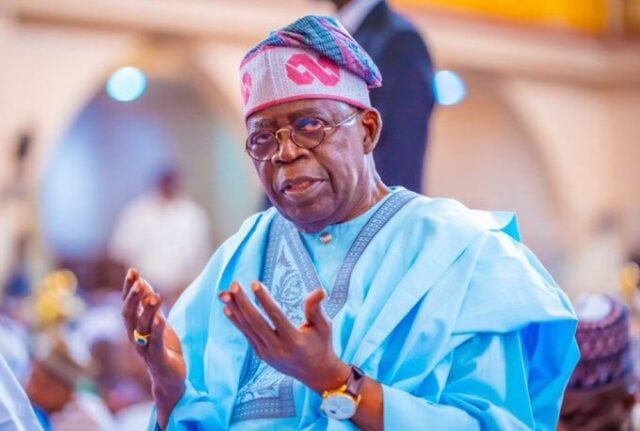
President Tinubu Weighs Ambassadors’ Appointment Amid Diplomatic Challenges
President Bola Tinubu has received a fresh list of ambassador-designates and is currently considering when to transmit it to the Senate, according to multiple sources within the Presidency. Top officials familiar with the process have confirmed that all security and background checks on the nominees have been completed, awaiting only the President’s approval before being sent to the Senate for further screening.
The sources spoke on condition of anonymity as they were not authorized to comment publicly. One senior official stated, “The list is ready. It’s ready. It is now with the President, and it’s up to him.” Another source added, “All those security checks, they are done with. But he has not mentioned when he wants to send it to the Senate.”
Staggered Appointments and Financial Constraints
Another source explained that when the President finally moves forward, the appointments will be staggered, with envoys to “major partner countries” announced first, while others will follow later. “He cannot announce all the ambassadors at once,” the official said, adding, “It is only those we intend to send to our key partner countries that will be announced, because the main reason why this thing has delayed is money. A humongous amount is involved in getting these ambassadors settled. So, we will send out those few ambassadors first and then others later.”
Although the specific countries involved have not been confirmed, checks by our correspondent revealed that Nigeria’s key partners include the United States of America, the United Kingdom, the European Union states (notably France and Germany), China, India, and core ECOWAS neighbours. These relationships are built on deep trade, security, and political ties.
Strategic Importance of Key Partnerships
Relations between the U.S. and the UK are anchored in oil and security cooperation. Nigeria is a major crude supplier, a key counter-terrorism ally, and a Commonwealth partner with a huge diaspora footprint. The EU as a bloc is Nigeria’s largest trading partner and investor, backing big-ticket projects and governance reforms, while France and Germany add security support in the North-East and Sahel.
China and India are critical for energy and infrastructure. China’s loans and Belt and Road projects have financed Nigeria’s rail lines, airports, and power plants, while India is a top buyer of Nigerian crude and a major pharma and ICT partner. Within Africa, ECOWAS capitals such as Accra, Niamey, and Cotonou have historically been priority postings, given Nigeria’s role as the region’s largest economy and chief crisis mediator.
Delayed Appointments and Diplomatic Review
The latest development comes more than two years after President Tinubu’s decision in September 2023 to recall all ambassadors from the country’s 109 foreign missions—comprising 76 embassies, 22 high commissions, and 11 consulates—as part of what the government described as a “comprehensive diplomatic review.” Since then, most missions have been headed by chargés d’affaires or senior consular officers with limited authority to represent the country in formal negotiations.
“It is not that they are not important but they are bureaucrats. They cannot make binding commitments on behalf of the country. At a time like this, we have many diplomatic demands; it is crucial that ambassadors be appointed,” a senior Foreign Service source had told our correspondent earlier.
Political and Financial Hurdles
Another official who spoke to our correspondent on Tuesday stressed that President Tinubu did not want the move to appear as a direct response to recent comments by United States President Donald Trump, who has threatened to halt aid and consider military action over alleged killings of Christians in Nigeria. “The President didn’t give a day he would appoint ambassadors,” the source said, noting, “It will be ready soon. He also doesn’t want it to look like it is because of the Trump issue that he is rushing it.”
The push to conclude the ambassadorial appointments comes amid recent diplomatic tensions following comments by U.S. President Donald Trump, who threatened military intervention in Nigeria over alleged killing of Christians.
Recent Developments and Cleanup of the List
On November 3, Presidency officials told our correspondent that the President has since ordered a complete “cleanup” of the original list to remove nominees who have died, retired, or taken up other appointments, as well as to replace career officers who now have less than one year left in service.

Related posts:

Fiction park: He was the best in class. He still wasn’t good enough

Gagan Thapa takes oath as Congress president, vows to regain public trust

Inside knowledge that has locals gripped by fear after gran’s body found decomposing in cattle dip

New property purchase disclosure rule in Japan sparks fears it may curb foreign investment

Dino-mite treasures: inside Singapore’s Fort Knox storing playthings of ultra-rich