Chinese state media decries tourist attraction as ‘symbol of militarism’ as Beijing’s diplomatic row with Tokyo continues
Mainland Chinese state media has called for the demolition of a wartime monument in Japan, rekindling a long-standing source of bilateral tension as Beijing and Tokyo remain locked in a diplomatic row over Taiwan.
Yuyuan Tantian, a social media account run by Chinese state broadcaster CCTV, said on Saturday that Japan seized more than 370 stones from the countries it invaded during the second world war – mostly from China – and used them to build Hakko Ichiu Tower, which the account described as “a tower of sin” promoting militarist ideology.
The Yuyuan Tantian post featured a two-minute video about a stone widely believed to be a cultural relic that, according to the clip, the Japanese took from the city of Nanjing after the Nanking massacre of 1937 and is now embedded in the tower.
Do you have questions about the biggest topics and trends from around the world? Get the answers with SCMP Knowledge, our new platform of curated content with explainers, FAQs, analyses and infographics brought to you by our award-winning team.
“After its defeat, Japan not only failed to demolish this symbol of militarism or return the stones it had taken but instead cloaked the tower in the guise of ‘peace’,” the post said, referring to the Japanese monument’s official name, the Tower of Peace.
What is Hakko Ichiu Tower?
Hakko Ichiu Tower, situated in Heiwadai Park in the southwestern city of Miyazaki, was completed in 1940, when Japan celebrated the 2,600th anniversary of its imperial origins.
At the time, Japan was at the height of its expansionist ambitions in Asia. It engaged in a protracted war known in China as the War of Resistance Against Japanese Aggression, which began in 1931 and escalated into full-scale conflict in 1937. The tower was used to rally the Japanese people’s fighting spirit during World War II.
The stone tower is nearly 37 metres (121 feet) tall and, according to Chinese state media and some Japanese researchers, incorporates more than 370 stones pillaged from regions that Japan invaded or occupied during the second world war, including the Korean peninsula, mainland China and Taiwan.
Mainland state media reported that 238 of the stones were believed to have been taken from China. Figures vary across historical studies and Japanese civic research, and in many cases are estimates because of limited or ambiguous identifying information.
Removed from culturally significant buildings or historical sites, many of the stones were brought to Japan as symbolic “contributions” to the imperial project by Japanese military units and Japanese settler associations.
The front of the tower bears the four-character Japanese phrase “Hakko Ichiu”, which translates to “eight corners of the world under one roof”. The phrase became a wartime political slogan in Japan, justifying its imperial aggression and expansion in Asia.
Why is the tower controversial?
After Japan’s surrender in 1945, the phrase “Hakko Ichiu” became taboo and the inscription on the tower was temporarily removed. The tower was also renamed the Tower of Peace, and became a tourist attraction in Miyazaki prefecture.
But the four characters in “Hakko Ichiu” were reinscribed in 1965, driven by growing public interest in the imperial family and a local push to revive the site’s prominence after the Tokyo Olympics of 1964, as Japan re-emerged on the international stage. It happened despite opposition from critics who argued the inscription sent the wrong message.
Many in China, alongside some Japanese people and civic groups, have questioned how a testament to Japan’s imperial invasion of Asia became a symbol of peace. Some argue that the tower’s name glorifies imperial Japan’s occupation of Asian countries, while others criticise the phrase’s militarist connotations.
According to Yuyuan Tantian, the tower is viewed as “a symbol of the crimes of Japanese militarism” and “a credo of Japanese militarist ideology”.
Some in China have called for the return of stones taken from the mainland, but their efforts have so far been unsuccessful.
Wu Xianbin, director of the Nanjing Folk Anti-Japanese War Museum, led a delegation to Japan in 2015. He delivered an open letter to Miyazaki authorities at a formal talk with the prefectural government, demanding the return of the Nanjing stones used in the tower, according to state media reports. When he failed to receive a positive response, Wu called for the removal of the tower’s inscription, “Hakko Ichiu”.
Neither demand has been heeded. Last year, during his most recent visit to Miyazaki, Wu was only able to bring back replicas of the stones.
“Through the act of demanding the return of the stones, we have helped more people understand the crimes symbolised by the tower,” Wu told state media Global Times in August. “Its supposed representation of ‘peace’ today is nothing but a fraud.”
In response to a public proposal submitted earlier this year urging the Miyazaki prefectural government to ensure that the harm caused by Japan’s war of aggression would not be forgotten but passed on to future generations, the authorities said: “While we recognise that there are a variety of opinions regarding the background of the Tower of Peace and the content of its inscription, the tower and the park are widely cherished by visitors from both inside and outside the prefecture. For this reason, we intend to preserve them in their current form with care.”
What makes the tower echo the Yasukuni Shrine controversy?
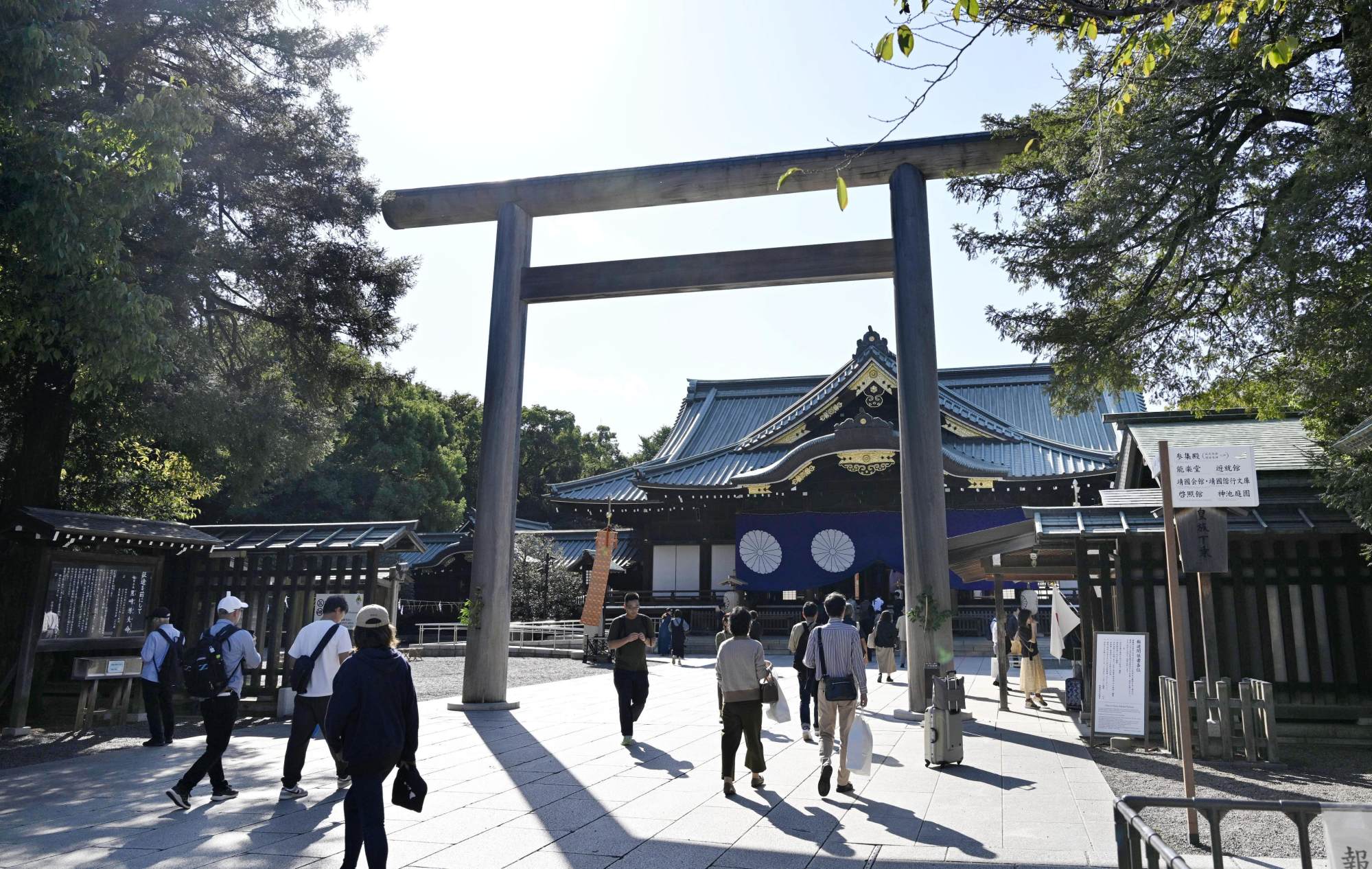
Many in China see Hakko Ichiu Tower as closely linked to the Yasukuni Shrine issue, which is far better known internationally and on the mainland.
Both are viewed as symbols of Japan’s wartime past and reminders of the country’s role as an aggressor during World War II, and both have been criticised for being stripped of their offensive historical context.
Yasukuni Shrine was built as a memorial site for Japan’s war dead and is highly controversial for commemorating some of the country’s most notorious war criminals.
To many in China, the way Japanese authorities have handled both the tower and the shrine appears to soften or rewrite Japan’s wartime history.
As these issues touch on painful memories and wartime atrocities, they have become markers of whether Japan has truly confronted its past and often re-emerge as points of contention when bilateral ties come under strain.
The current diplomatic row between Beijing and Tokyo erupted after Japanese Prime Minister Sanae Takaichi’s remarks last month suggesting a Taiwan contingency could constitute a “survival-threatening situation” for Japan, justifying the deployment of its military.
Beijing sees Taiwan as part of China to be reunited by force if necessary. Most countries, including the United States and Japan, do not recognise Taiwan as an independent state, but Washington is opposed to any attempt to take the self-ruled island by force and is committed to supplying it with weapons.
More Articles from SCMP
Hong Kong customs seizes HK$256 million of suspected cocaine stashed in ship hull
Hong Kong’s Stablecoin Future: Faster, Safer, Cheaper Payments for Everyone
SCMP Best Bets: Sky Song can be the perfect tune at Happy Valley
Philippines weighs using UN anti-corruption treaty for Zaldy Co’s extradition
This article originally appeared on the South China Morning Post (www.scmp.com), the leading news media reporting on China and Asia.
Copyright (c) 2025. South China Morning Post Publishers Ltd. All rights reserved.