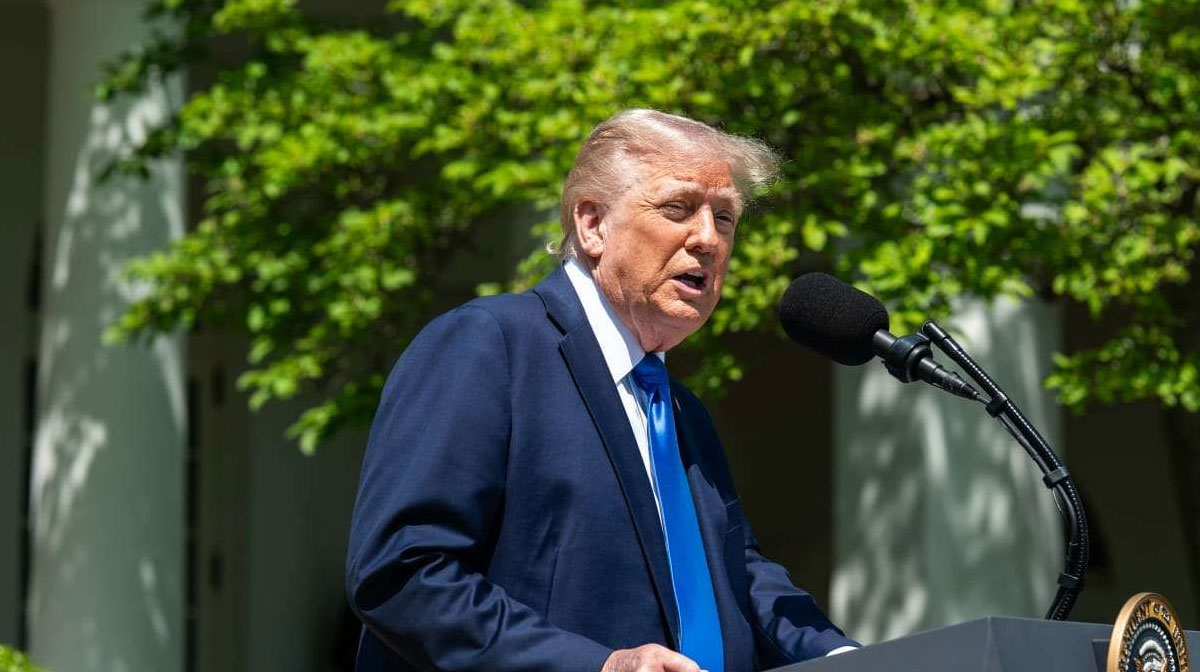
Trump’s Focus on Central Asia and Rare Earth Minerals
President Donald Trump recently hosted leaders from five Central Asian countries at the White House, signaling a growing interest in securing rare earth metals essential for high-tech devices such as smartphones, electric vehicles, and fighter jets. The meeting included leaders from Kazakhstan, Kyrgyzstan, Tajikistan, Turkmenistan, and Uzbekistan, with discussions taking place in the Oval Office before a working dinner.
Trump emphasized the historical significance of the region, noting that it was once part of the ancient Silk Road connecting East and West. He expressed disappointment that previous American presidents had overlooked the area, stating, “I understand the importance of this region,” but adding, “a lot of people don’t know that.”
The White House visit followed a recent diplomatic effort between Trump and Chinese leader Xi Jinping, where they discussed differences over the export of rare earth elements—a key point of contention in their trade negotiations. Earlier this month, China had expanded export restrictions on vital rare earth elements, but after talks in South Korea, it announced a one-year delay on these new restrictions.
Central Asia’s Strategic Value
Central Asia is rich in rare earth minerals and produces about half of the world’s uranium, which is crucial for nuclear power production. However, the region lacks the investment needed to fully develop its resources. Historically, the region’s critical mineral exports have been heavily directed toward China and Russia. For example, in 2023, Kazakhstan sent $3.07 billion in critical minerals to China and $1.8 billion to Russia, compared to only $544 million to the U.S., according to data from the Observatory of Economic Complexity.
Trump highlighted efforts by his administration to strengthen American economic security through agreements with allies to broaden critical minerals supply chains. Each visiting president praised his administration’s efforts to promote trade and peace in the region.
Geopolitical Challenges and Opportunities
Tajikistan President Emomali Rahmon noted the country’s abundant critical mineral resources but also acknowledged the challenges posed by its geopolitical position between Russia and China. He stressed the importance of partnering with the U.S. for security cooperation.
The White House meetings coincided with bipartisan legislative efforts to repeal Soviet-era trade restrictions that some lawmakers believe are hindering American investment in Central Asian nations. Republican Senator Jim Risch, chairman of the Senate Foreign Relations Committee, emphasized the need to deepen cooperation with the region, especially as Russia and China expand their influence globally.
Strengthening Economic Ties
The C5+1 grouping, which includes the five Central Asian countries plus the U.S., has traditionally focused on regional security. This includes addressing issues related to the U.S. military presence in Afghanistan, China’s treatment of ethnic Uyghur Muslims, and Russia’s attempts to reassert control in the region.
Secretary of State Marco Rubio welcomed Central Asian leaders at the State Department to mark the 10-year anniversary of the C5+1 and to explore expanding economic ties with the U.S. He highlighted the potential for new opportunities aligned with the national interests of all involved parties.
Deputy Secretary of State Christopher Landau and U.S. Ambassador to India Sergio Gor, who also serves as Trump’s special envoy to South and Central Asia, recently visited Kazakhstan and Uzbekistan to prepare for the summit. Administration officials stressed the importance of deepening U.S. relationships with the Central Asian countries.
Expanding the Abraham Accords
During the summit, Kazakhstan’s president, Kassym-Jomart Tokayev, announced that his Muslim-majority country would join the Trump-led Abraham Accords. This symbolic move aims to revive an initiative that was a hallmark of Trump’s first term, which established diplomatic and commercial ties between Israel and the UAE, Bahrain, and Morocco.
Kazakhstan has maintained diplomatic relations with Israel since 1992. Trump expressed hope that more countries would join the expanded Abraham Accords, particularly as Iran’s influence in the region wanes. He also dismissed concerns about the Gaza ceasefire, calling it “very strong peace.”

Related posts:

Fiction park: He was the best in class. He still wasn’t good enough

Gagan Thapa takes oath as Congress president, vows to regain public trust

Inside knowledge that has locals gripped by fear after gran’s body found decomposing in cattle dip

New property purchase disclosure rule in Japan sparks fears it may curb foreign investment

Dino-mite treasures: inside Singapore’s Fort Knox storing playthings of ultra-rich