FIFA’s Stance on 2026 World Cup Hosting Decisions
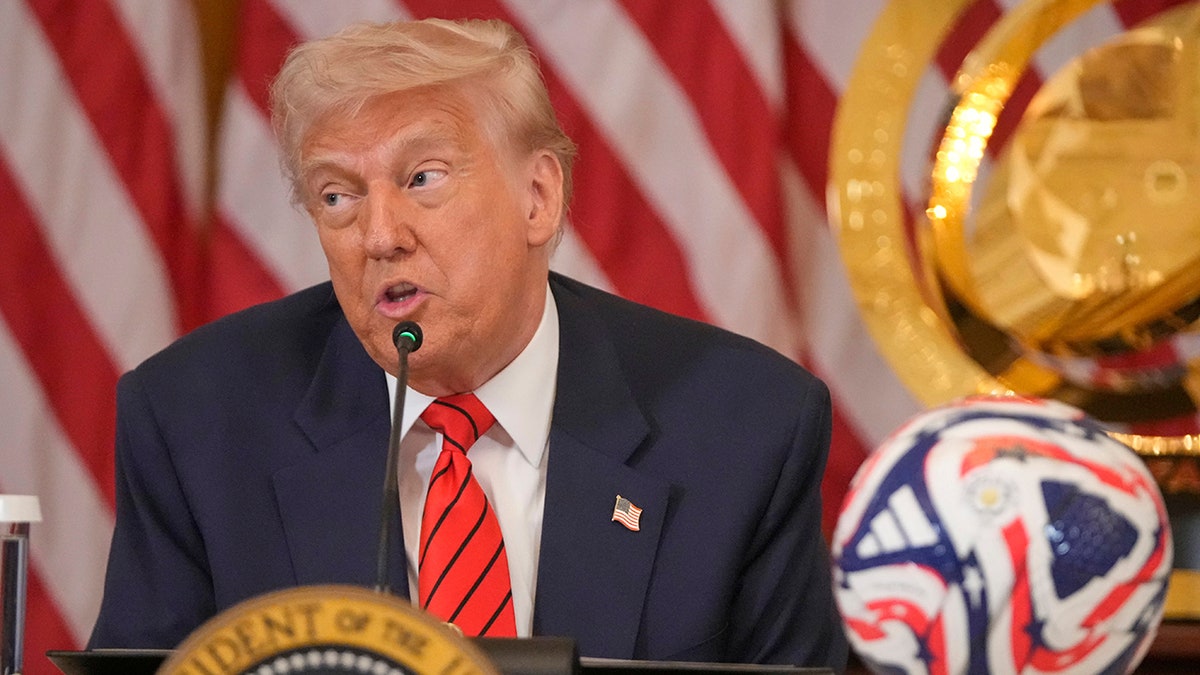
Victor Montagliani, the vice-president of FIFA, has emphasized that decisions regarding which cities will host matches for the 2026 World Cup are solely within FIFA’s jurisdiction. This statement came in response to remarks made by former U.S. President Donald Trump, who expressed concerns about certain cities being “dangerous” and suggested moving games if necessary.
Trump’s comments highlighted his belief that the U.S. government should ensure the safety of World Cup host cities. He specifically criticized Seattle and San Francisco, referring to their local governments as being “run by radical left lunatics.” His remarks sparked a debate about the intersection of politics and sports, with Montagliani firmly asserting that such decisions rest with FIFA.
“It’s FIFA’s tournament, FIFA’s jurisdiction, FIFA makes those decisions,” Montagliani stated during an event at the Allianz Stadium in London. He reiterated that while FIFA President Gianni Infantino maintains a close relationship with Trump, the organization remains independent in its decision-making process.
Montagliani also addressed the broader implications of political rhetoric in the U.S., stating that football is “bigger” than any individual or political movement. He added, “With all due respect to current world leaders, football is bigger than them, and football will survive their regime and their government and their slogans.”
The conversation around the 2026 World Cup has also included discussions about scheduling and climate considerations. Montagliani mentioned that FIFA will take into account the intense summer heat when planning match times. He noted that venues like Atlanta, Dallas, and Los Angeles have air-conditioned facilities that could allow for afternoon kick-offs. However, he acknowledged that balancing the needs of European broadcasters and ensuring optimal conditions for players and spectators is a complex task.
“We’re in conversations daily with the European broadcasters, in terms of what stadiums you can play in at 3 pm the likes of Atlanta, for instance,” Montagliani said. “Obviously what we’re trying to do, once the schedule does come out after the draw in December, is our best to ensure that all that’s taken into consideration.”
Political Rhetoric and Health Concerns
Montagliani’s comments were also influenced by recent health-related statements from the Trump administration. The reference to Tylenol followed a controversial announcement linking paracetamol use during pregnancy to autism in children. While the World Health Organization has stated there is “no conclusive evidence” of this link, it urged pregnant women to follow medical advice.
This context underscored the challenges faced by FIFA in navigating both political and health-related issues as it prepares for the 2026 World Cup.
Expansion Plans and Future Considerations
In addition to hosting decisions, Montagliani discussed potential changes to the format of future tournaments. He expressed opposition to expanding the World Cup to 64 teams for the 2030 centenary edition, a proposal put forward by the South American confederation. However, he showed more openness to increasing the number of teams in the Club World Cup, which is set to expand from 32 to 48 teams in 2029.
“I don’t see the argument for 64 teams. It’s not just us, but UEFA and Asia who are opposed to that,” Montagliani said. “But the Club World Cup was a massive success. We need to work out what’s feasible, what changes we need to make about the number of teams and the caps on each country we had for this year.”
Challenges Ahead
As FIFA moves forward with preparations for the 2026 World Cup, the organization faces a range of challenges, from political tensions to logistical and scheduling complexities. Montagliani’s emphasis on FIFA’s autonomy and the sport’s ability to transcend political divides highlights the organization’s commitment to maintaining the integrity of the game.


