Trump’s Foreign Successes and Domestic Challenges
US President Donald Trump has been celebrated as a key figure in the Middle East, particularly for his role in ending two years of intense conflict between Israel and Hamas in Gaza. His 20-point peace plan, unveiled on 29 September, was endorsed by Israeli Prime Minister Benjamin Netanyahu. By 8 October, the deal had been signed by both the Israeli Knesset and Hamas, marking the first stage of an agreement that ended hostilities and facilitated a hostage-prisoner exchange.
The ceasefire, which came to an end last Friday, is overshadowed by the enthusiastic reception Trump received in Israel on Monday. As Hamas released all 20 living hostages, Trump was hailed as the “peacemaker-in-chief” in the Israeli parliament. He was praised as the country’s “greatest friend” and dubbed the “president of peace.” Knesset speaker Amir Ohana even suggested that Israel would rally governments worldwide to nominate Trump for next year’s Nobel Peace Prize, a recognition he has long sought but never received.
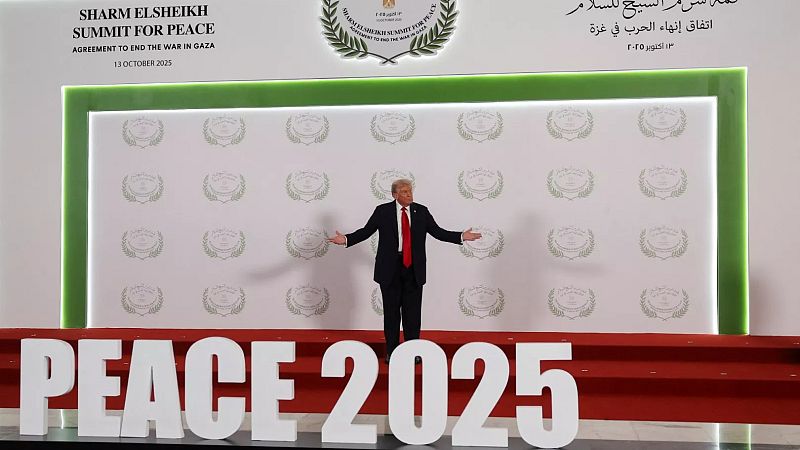
Trump’s visit to Jerusalem was marked by standing ovations and glowing praise, something he rarely receives at home these days. After the Gaza “peace summit” in Egypt, Trump will return to a divided United States facing numerous domestic challenges.
Government Shutdown: A Major Concern
One of the most pressing issues is the ongoing government shutdown, which began on 1 October after Senate Democrats refused to extend funding until November unless it was tied to continued tax credits for Affordable Care Act health plans and restoring funding for public media outlets. Two weeks later, the impasse continues, with the last vote failing four days ago.
Democratic and Republican leaders remain locked in a standoff about the way forward, and it is unclear what comes next. No tangible signs of negotiations have emerged between Congressional leaders since Trump met with them two weeks ago. The Trump administration has warned that there will be no guaranteed back pay for federal workers during the shutdown, reversing a long-standing policy for some 750,000 furloughed staff.
In a memo circulating at the White House, the Office of Management and Budget (OMB) stated that back pay must be provided by Congress if it chooses to do so, as part of any bill to fund the government. This move is seen as a strong-arm tactic to pressure lawmakers to reopen the government.
The Epstein Files and Legal Controversies
Another issue Trump continues to grapple with is the ongoing saga of the Epstein files and the extent of his relationship with Jeffrey Epstein, the disgraced financier and convicted paedophile. Victims of Epstein and some Democrats and MAGA supporters have urged the Trump administration to make public all FBI material related to Epstein and his celebrity client list, especially anything involving the president.
New documents released by Congressional Democrats in September named billionaire Elon Musk and UK Prince Andrew among those associated with Epstein. In a series of more than 8,500 new files made public by Democrat lawmakers, multiple prominent figures were revealed to have been linked to the convicted sex offender. These files included phone message logs, flight logs, transaction records, financial ledgers, and daily schedules.
Musk has repeatedly denied any significant connection to Epstein. Epstein, who died by suicide in prison in 2019, did not keep a list of his clients, according to the US Justice Department. This contradicted earlier claims by US Attorney General Pam Bondi, who said she had such a document. The White House Press Secretary and Justice Department Spokesperson attempted to walk back Bondi’s statement, clarifying that she was referring to the overall Epstein case files.
Trump has consistently downplayed his relationship with Epstein, claiming he fell out with him after allegedly being “stolen” from his Florida estate, Mar-a-Lago.
National Guard Deployments and Legal Battles
Trump is also involved in legal battles over his decisions to deploy the National Guard to assist police forces in cities he deems crime-ridden. In August, around 800 National Guard troops were deployed to Washington to support local law enforcement, citing concerns about violent gangs and homeless people. The number eventually rose to 2,000.
By early October, Trump authorized the deployment of another 300 National Guard troops to protect federal officers and property in Chicago. However, a federal judge in Oregon temporarily blocked the deployment in Portland, stating that the relatively small protests did not justify the use of federalized forces. The administration is also being sued in Chicago and Washington to roll back the troop deployments.
Trade War Threats with China
Another major concern is the potential for a new trade war with China. China signaled it would not back down in the face of Trump’s 100% tariff threat, urging the US to resolve differences through negotiations rather than threats. The Commerce Ministry stated, “We do not want a tariff war but we are not afraid of one.”
This response came after Trump threatened to increase taxes on Chinese imports by 1 November in response to new Chinese restrictions on rare earth exports. Trump accused China of becoming “very hostile” and holding the world captive by restricting access to rare earth metals and magnets.
A Mixed Legacy
It’s not even a year into Trump’s second term, and with three more years left, the future remains uncertain. Despite foreign successes, Trump faces a mix of domestic failures. In typical fashion, he remains confident about the US’ future, stating, “We’re the hottest country anywhere in the world,” at the UN General Assembly last month.


Related posts:

Fiction park: He was the best in class. He still wasn’t good enough

Gagan Thapa takes oath as Congress president, vows to regain public trust

Inside knowledge that has locals gripped by fear after gran’s body found decomposing in cattle dip

New property purchase disclosure rule in Japan sparks fears it may curb foreign investment

Dino-mite treasures: inside Singapore’s Fort Knox storing playthings of ultra-rich