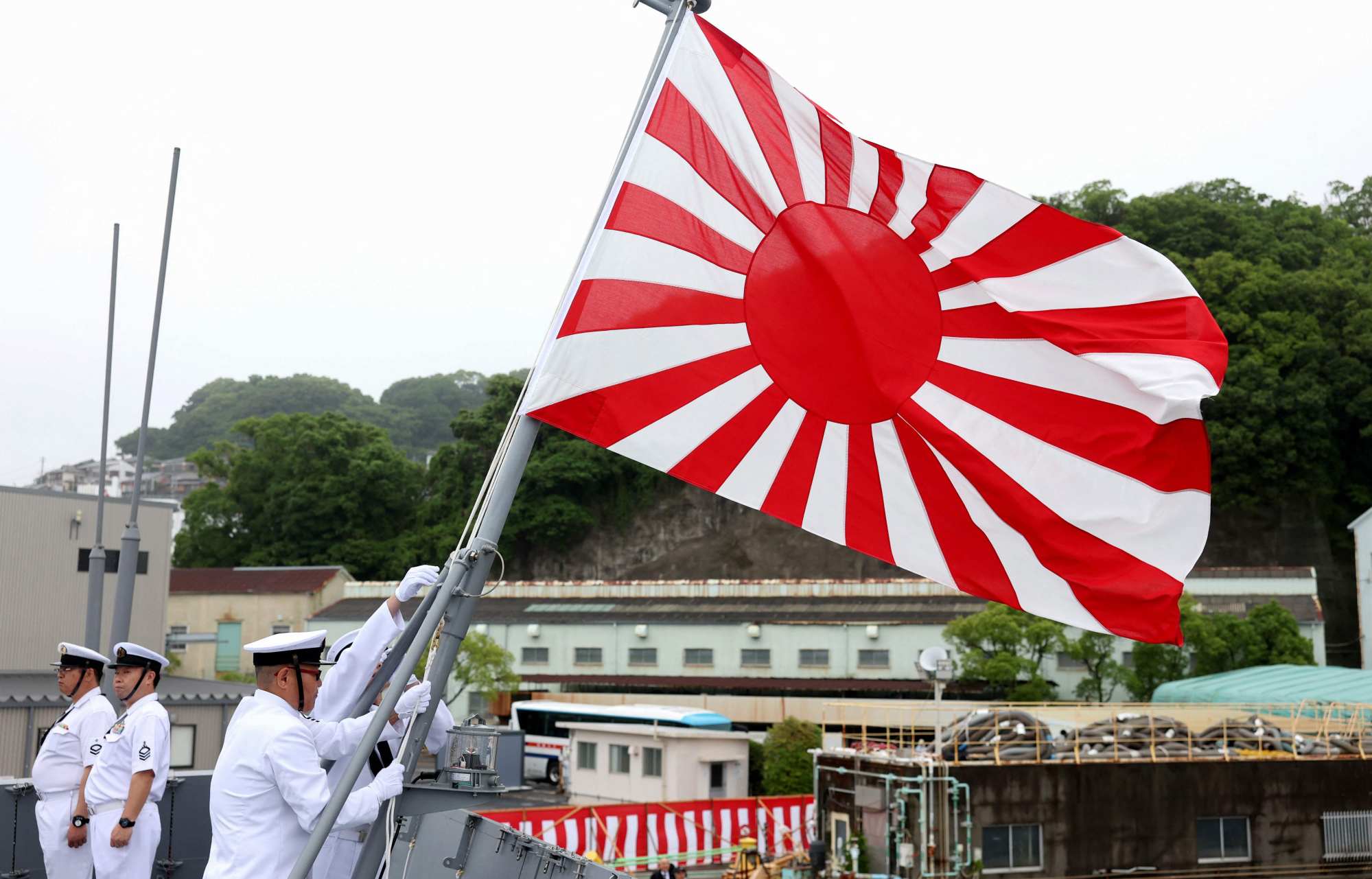
Should Washington commission Mogami-class frigates, it will become Japan’s largest deal since relaxing the rules on weapon exports in April
Japan‘s Mogami-class warship is turning out to be a hot item among global navies. Australia is buying 11, New Zealand is considering putting in an order – and now, even the United States is showing interest.
According to a US Naval Institute report published on Tuesday, government and naval planners are looking at three possibilities: Japan’s Mogami-class frigates, South Korea’s Chungnam guided-missile frigate and Turkey’s Istanbul-class warship.
This is the first time since World War II that a major foreign design will be built for the US Navy. Until recently, US law prohibited foreign-built warships from entering service with the navy, but the White House last month instructed the Pentagon to consider obtaining foreign designs by invoking a national security interest waiver.
Do you have questions about the biggest topics and trends from around the world? Get the answers with SCMP Knowledge, our new platform of curated content with explainers, FAQs, analyses and infographics brought to you by our award-winning team.
Washington was contemplating having two of the vessels constructed in foreign shipyards before construction would be transferred back to yards in the US “as part of the Trump administration’s push to rapidly expand the fleet”, the report said.
If Washington decides on the Mogami-class fleet, this will be a significant development in Japanese sale of advanced military systems to the US, according to Masayuki Masuda, a senior official at the Ministry of Defence’s National Institute of Defence Studies.
“It is a well-known fact that the US is having serious problems with its domestic shipbuilding sector and is not able to keep up with demand, so this would make a lot of sense,” he said.
“Mogami ships are very advanced and have a smaller crew complement than other comparable vessels, which will be attractive to the US Navy. This would also deepen interoperability between the Maritime Self-Defence Force and the US Navy, as well as with Australia and, potentially, New Zealand.”
The Royal Australian Navy has signed a US$7 billion deal with Japan to provide 11 enhanced Mogami-class warships. The first three will be built in Japan and delivered by 2030 and the rest constructed in Australian shipyards.
At 142 metres (465 feet) in length and weighing 6,200 tonnes fully loaded, the enhanced Mogami class has a stealthy hull form and is powered by a combined diesel and gas propulsion system, giving it maximum speeds over 30 knots. It is armed with 32 vertical launch cells for missiles, including the Tomahawk.
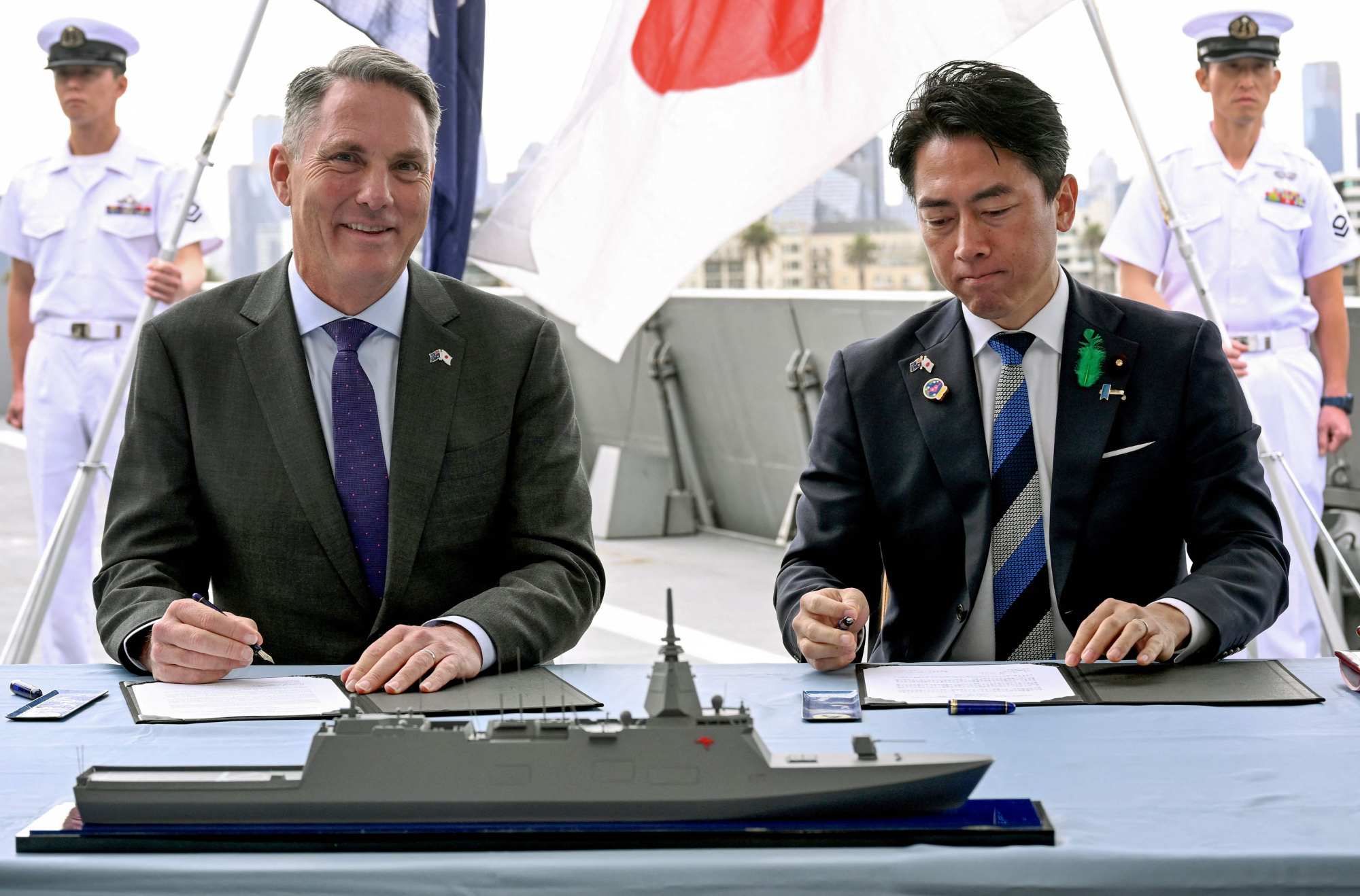
The vessel is also capable of operating at extended ranges – a critical consideration for Pacific operations – as well as a highly integrated combat information centre, extensive automation and the ability to deploy helicopters and unmanned systems.
New Zealand is also reportedly interested in replacing its two Anzac-class frigates with the Japanese design, although no deal has been signed.
“The US is already familiar with Japanese technology and standards in its warships and knows that Japanese shipyards will be able to meet their requirements,” Masuda said, adding that Washington might ultimately decide to share the project among all three nations.
Natural partners
William Yang, a Taiwan-based security analyst for the International Crisis Group, said Washington’s shift to commissioning foreign-built warships reflected the Trump government’s attitude towards its allies.
“This administration has clearly set out a vision for the next phase of its alliance with partners that places a lot more emphasis on those allies to shoulder more responsibility for defence,” he said.
Equally, the US is placing greater emphasis on shipbuilding for defence development, although that is constrained by blockages in domestic output – and that makes Asian nations with a long history in the shipbuilding sector natural partners, according to Yang.
And the pressure to launch more hulls is becoming more acute. “The US has fallen behind China in the number of warships it has available and if the US wants to play catch-up, then it needs to commission more ships from its allies,” he said.
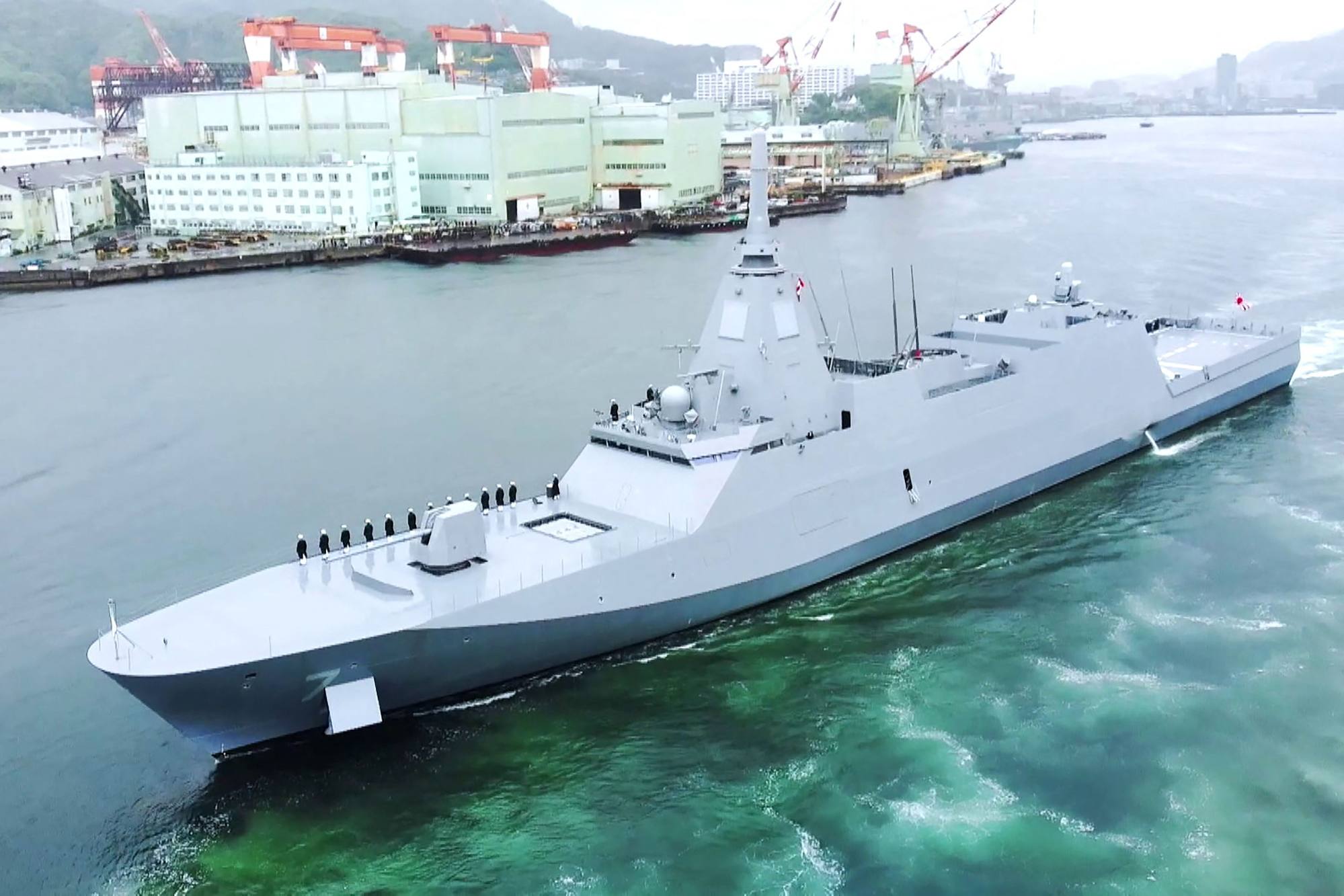
Should Washington commission Mogami-class frigates, it will become Japan’s largest deal since relaxing the rules on exporting lethal weapons in April and could add new impetus to its defence sector.
“In the last year or so, we have seen Japan strengthening its defence equipment sector and deepening its defence cooperation with allies across the Indo-Pacific region,” Yang said, pointing to agreements with Vietnam, the Philippines and Indonesia to supply weapons systems.
“And while the data does not point to Japan providing domestically developed fighter jets to other countries, for example, I do see this as Japan identifying naval vessels as a strength and putting strategic priority on this area.”
Japan’s traditional areas of strength – such as cars and electronics – had already moved to other countries or were in the process of being poached by rivals, so Tokyo was looking to build up another domestic industry, Yang said.
Tokyo has announced plans to invest heavily to develop new shipyards and upgrade facilities that have fallen into disrepair – with an eye on the anticipated demand for servicing of US warships in the region, according to Nikkei.
The paper reported in January last year that an estimated 1 trillion yen (US$6.9 billion) in public and private investment would be required – in part for the construction of a new “national dockyard”.
More Articles from SCMP
5 of the best things to do in Hong Kong this weekend, September 4-6
Leave it to the experts, district councillor told after chaotic deer rescue
US urged to consider military strikes to stop China achieving AGI first
Chinese military’s AI attack chain lags foreign models: researchers
This article originally appeared on the South China Morning Post (www.scmp.com), the leading news media reporting on China and Asia.
Copyright (c) 2026. South China Morning Post Publishers Ltd. All rights reserved.

Related posts:

Fiction park: He was the best in class. He still wasn’t good enough

Gagan Thapa takes oath as Congress president, vows to regain public trust

Inside knowledge that has locals gripped by fear after gran’s body found decomposing in cattle dip

New property purchase disclosure rule in Japan sparks fears it may curb foreign investment

Dino-mite treasures: inside Singapore’s Fort Knox storing playthings of ultra-rich