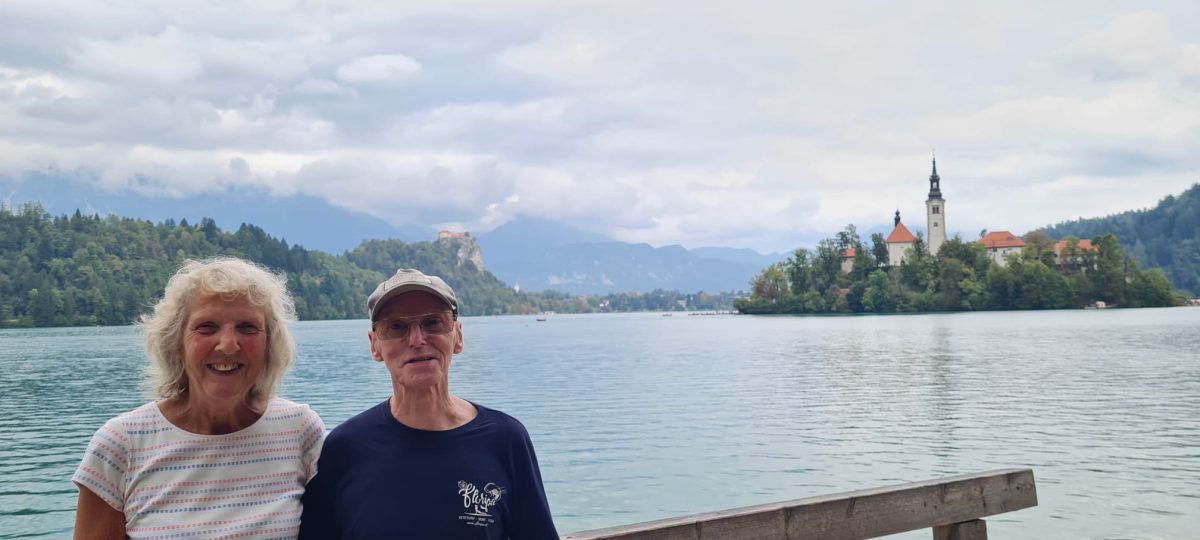
It was partly thanks to financial broadcaster Martin Lewis that my husband Andrew and I – aged 75 and 70 respectively – embarked on our first Interrailing adventure.
We were aware of the increase in “silver railers” in our age group and had been considering travelling to Germany by train when, last December, Andrew spotted an offer on the Money Saving Expert newsletter – a third off Interrail passes. That meant a Global Pass for seniors (aged 60 plus) would cost £183 each for five travel days within one month.
We snapped up two passes and started sketching out a route that would take us to four countries over the course of three weeks, with the help of The Man in Seat 61 train planning website. We wanted to tackle this trip while we were still spritely enough to lug our luggage and dash for trains.
After months of detailed planning, we set off in September with both passes loaded onto the Interrail app on my phone. Andrew took a backpack and I brought a second-hand wheelie bag, which I came to regret. Within a few days, the wheels had started to come off (we hoped this wasn’t a sign of things to come) and I ended up binning the bag in Budapest after buying a backpack from Lidl.
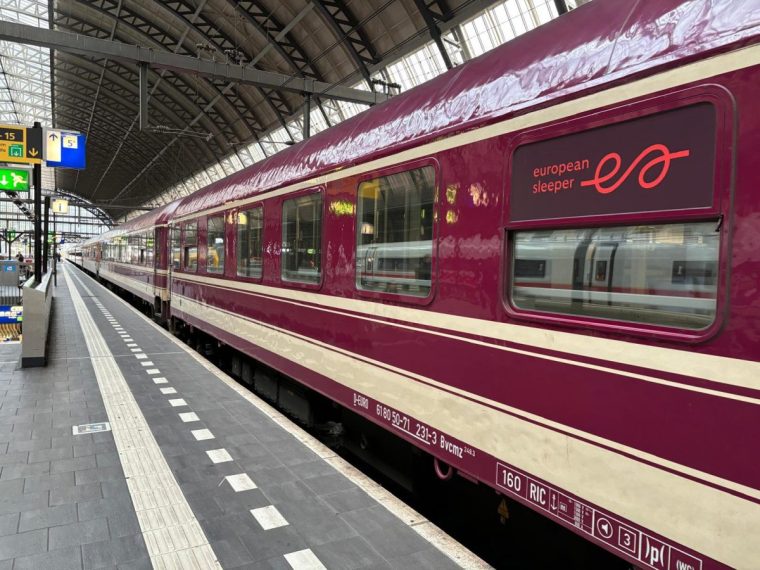
Our first travel day was a 29-hour trek starting in our hometown, Preston. A Global Pass includes both your outbound journey from country of residence and your return journey, so our train to London Euston was free. After that, we took the Eurostar to Brussels to catch the European Sleeper to Prague. Seat reservations are compulsory on some trains (the Interrail app tells you which) and they cost extra. We usually paid around £2 to £4, although the Eurostar set us back £30 each.
Because we were getting on the sleeper at 7pm and didn’t want to retire to our berths (£67 each) until later, we thought we’d better book seats too (£20 each). We could have saved our cash, though, since the berths weren’t made into beds when we boarded.
Having explored Prague’s medieval old town on a previous visit, we spent the afternoon strolling around the lesser-known Žižkov neighbourhood.
After grabbing a beer and a bite at a Georgian brewery, we were on the move again, taking another sleeper to Budapest. This modern train had recently been refurbished and in the morning, the lovely member of staff looking after the sleeper compartments brought a complimentary breakfast tray. We spent a couple of days sightseeing in Budapest and discovered, when we tried to buy tickets on the metro, that it’s free for over-62s – one of the benefits of being older.
We explored the area around Buda Castle and its adjoining baroque palace, on a hill that overlooks the city. Since the 50s, this part of the city has been the focus of an everlasting renovation project following wartime damage and it now looks spectacular.
Just before setting off for Ljubljana, we had our first major travel disruption. An email informed us that we couldn’t complete our journey as planned – we would have to take a replacement bus service part of the way.
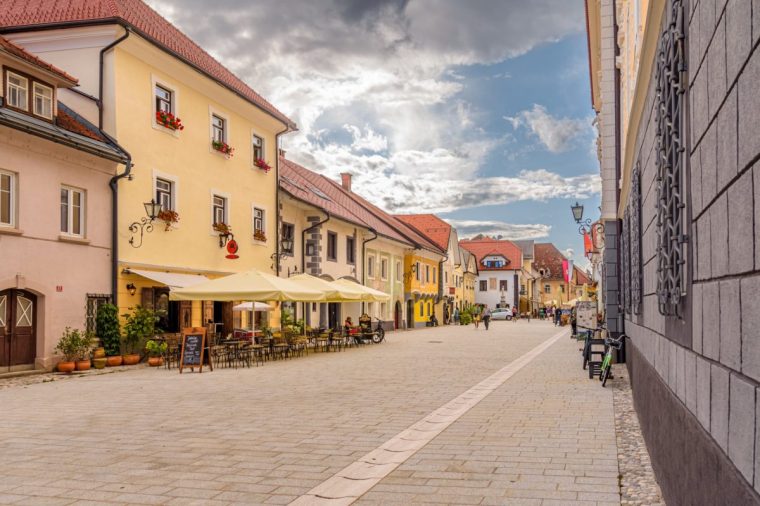
It was easy enough to find the bus, though, and it meant we had a night in Ljubljana – which was a little too touristy for our liking, but we had a hearty meal and a nice walk along the river. We then bought train tickets (so as not to use up another Interrail day) for the one-hour journey to Radovljica, where we stayed for a week.
Radovljica is a charming town near Lake Bled, one of Slovenia’s most popular natural attractions. After a week of hopping on and off trains, I was relieved to relax amid the lush green hills. Here – and in Germany – we’d booked self-catering accommodation with bikes included, because we knew we wanted to spend time cycling and hiking in the countryside.
We biked down to Bled and were relieved not to be staying in the town amid the hordes of visitors all trying to get the perfect shot of the island at the centre of the lake. It was certainly picturesque, but serene Lake Bohinj, which we cycled to another day, was just as beautiful.
Departing from Lesce, near Lake Bled, it took four trains, one replacement bus service and one journey on the Munich S-Bahn to get to Zapfendorf, Germany, where we spent our second seven-day stint. We’d chosen to stay in Bavaria’s Franconia region because we love German beer – the area has the highest density of breweries in the world per capita. We spent a wonderful week cycling around the leafy area, occasionally pushing our bikes up steep hills and sampling the produce of local breweries.
Taking one last detour before beginning our journey home, we booked a non-Interrail train from Zapfendorf to Nuremberg, to visit one of the incredible Landbierparadies pubs. Andrew was thrilled to find it served Zoigl, a beer “as mythical as unicorns”.
Our final travel day was, unfortunately, the most stressful of all. There was a collision on the line to Frankfurt, which meant we missed our connection, had to stand for three hours on a crowded train from Cologne to Brussels and subsequently missed our scheduled Eurostar as well.
Luckily, we were put straight on the next one, and after legging it from St Pancras to Euston, we made our final train to Preston with just one minute to spare. Costing £1,325 for each of us, it was pretty good value for a three-week holiday, but if we went Interrailing again, we definitely wouldn’t pack so many travel days into the first week. Age may be just a number, but you need plenty of energy for train-hopping across Europe.
As told to Katie Wright
How to do it
A second-class, five-day Interrail Global Pass (five days of travel within one month) starts at £240 for seniors and £267 for adults under 60 myinterrail.co.uk