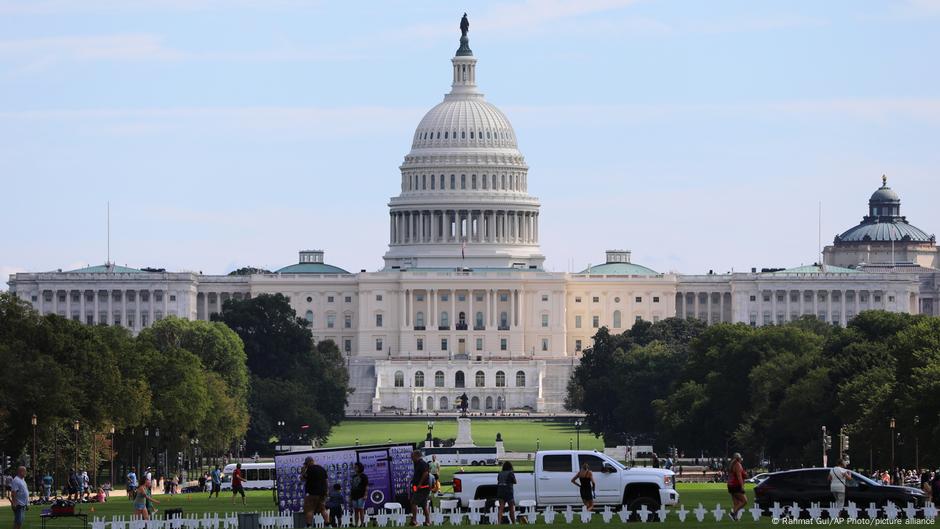
Understanding the US Government Shutdown
The United States government has officially shut down after lawmakers failed to reach an agreement on a funding deal. This situation raises questions about who is affected when the government can’t pay its bills and whether past administrations have used such circumstances as an excuse for more layoffs.
President Donald Trump, who returned to office in January, has seen significant changes over the past eight months. However, one aspect that remains unchanged is the potential for government shutdowns. This time, Democratic and Republican lawmakers did not approve a stopgap federal funding bill to keep the government running, leading to a shutdown as of 12:01 am Washington time on Tuesday night.
This marks the first government shutdown during Trump’s current presidency, following two during his first term, including the longest in U.S. history from December 22, 2018, to January 25, 2019.
What Causes a Government Shutdown?
A government shutdown occurs when the government has not agreed on its annual budget, either in whole or in part. It affects discretionary spending, which must be appropriated each year. During a shutdown, the federal government stops paying federal employees and contractors who work for the government. The impact varies across different parts of the government.
In the past, there have been partial shutdowns where some parts of the budget were approved, allowing certain agencies to function normally. There have also been full shutdowns when none of the budget was signed into law. In such cases, all nonessential U.S. government agencies and programs close because they depend on annual government funding.
Essential services and mandatory spending programs continue during a shutdown. These include the Secret Service, active-duty military personnel, most border protection agents, federal law enforcement agents, and air traffic controllers. Mandatory spending, such as Social Security, Medicare, and Medicaid payments, continues as do military veterans’ health benefits. Mail delivery and the Federal Reserve are unaffected since they are funded differently.
Who Is Affected by a Government Shutdown?
Federal employees are the first to feel the impact of a government shutdown. During the 2013 and 2018 shutdowns, approximately 850,000 out of 2.1 million non-postal federal employees were temporarily furloughed. Furloughed employees are not allowed to work and do not receive their paychecks during this time but are guaranteed retroactive back pay when the government resumes operations.
Employees working in essential services must continue working but are also unpaid during a shutdown. Federal officials confirmed by the Senate cannot be furloughed, and the president and members of Congress continue to work and be paid.
Departments like the Environmental Protection Agency, Food and Drug Administration, Federal Trade Commission, and the Securities and Exchange Commission are among those most likely to close during a government shutdown. Some agencies, such as the Department of Defense, State Department, or IRS, may ask furloughed workers to continue working to keep things running smoothly without pay until a spending bill is passed.
Impact on National Parks and Museums
Depending on how long the shutdown lasts, huge backlogs of work can accumulate, and millions of dollars in revenue, such as ticket sales, can be lost. Routine health and safety inspections may be delayed. Important government reports on employment and inflation, like the next Consumer Price Index or the Bureau of Labor Statistics’ monthly jobs numbers, will not be published on time.
Other agencies or programs, such as NASA or the Library of Congress, are considered nonessential and may stop operations partially or fully during a government shutdown. National parks, national monuments, and museums like the Smithsonian could also close, although the Trump administration might force them to stay open with a skeleton staff. However, the longer the shutdown lasts, the more likely it is that these places will close as well.
Financial Implications and Concerns
For federal employees living paycheck to paycheck, a government shutdown can mean a temporary financial pinch and resentment. The administration has hinted it could use this shutdown as an excuse for more mass firings. The White House Office of Management and Budget sent a letter to federal agencies suggesting they could “use this opportunity to consider reduction in force.”
Duration of Government Shutdowns
Government shutdowns are not uncommon. Presidents Clinton, Obama, and Trump have all experienced them. The longest shutdown occurred during Trump’s first term, lasting 35 days in 2018-2019. According to the Committee for a Responsible Federal Budget, there have been four shutdowns that led to government operations being affected for more than one business day.
Experts suggest that a shutdown of a few days is a hassle but unlikely to have a significant impact on the economy. However, prolonged shutdowns can cause bigger problems, albeit temporary. The Congressional Budget Office agrees that most economic impacts of government shutdowns are temporary. However, it calculated that the 2018-2019 shutdown led to a $3 billion reduction in GDP that would never be made up.


