The Global Maritime Transition and Its Implications for Ghana
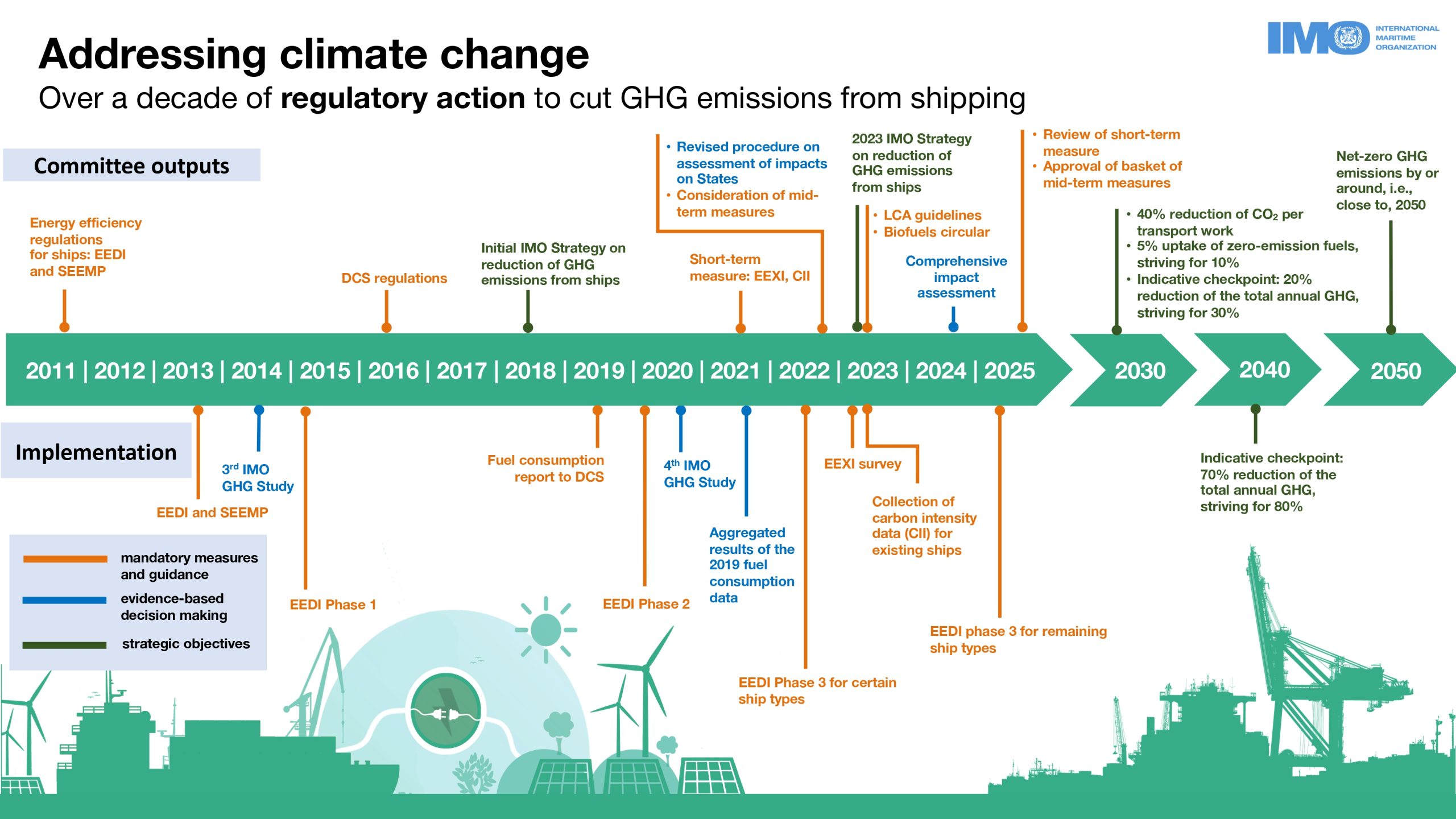
The International Maritime Organization (IMO) has set a clear path for the global shipping industry to achieve net-zero emissions by around 2050. This ambitious goal is supported by binding targets, including a 20–30% reduction in greenhouse gas (GHG) emissions by 2030 and a 70–80% reduction by 2040, relative to 2008 levels. To meet these targets, the IMO is finalizing two key measures:
- A Fuel GHG-Intensity Standard – This will require ships to gradually shift from conventional heavy fuel oil to cleaner, low-carbon, and eventually zero-emission fuels such as green methanol, ammonia, or hydrogen derivatives.
- A Global Economic Measure (Levy or Pricing System) – Expected to introduce a carbon cost on shipping emissions, this measure could generate billions in annual revenues. These funds are intended to support decarbonization efforts and assist vulnerable economies.
Both measures are expected to be adopted in late 2025 and come into force by 2027.
Why This Matters for Ghana?
Ghana’s energy system is already under pressure due to rising demand, reliance on thermal power, and high electricity costs. The IMO’s push toward net-zero emissions means that Ghana’s ports—Tema and Takoradi—must prepare for shore power infrastructure and new bunker fuel supply chains.
Without integrating renewables into the grid, supplying shore power could inadvertently increase emissions rather than reduce them. At the same time, investments in alternative fuels such as ammonia, hydrogen, or methanol could reposition Ghana as a leading fuel hub in West Africa. However, failure to act risks marginalizing its ports in favor of regional competitors.
As an oil and gas producer, Ghana also faces a natural gas dilemma: how to leverage its hydrocarbon sector for growth while avoiding stranded assets in an era of rapidly accelerating green fuel adoption.
The Intersection with Diplomacy and Foreign Policy
The energy transition intersects with Ghana’s broader diplomatic posture and foreign policy. Ghana’s foreign policy is rooted in Pan-African solidarity, multilateralism, and economic diplomacy. The IMO’s proposed global carbon levy will likely raise shipping costs for African exporters, intensifying Ghana’s role in advocating for equitable mechanisms that protect vulnerable economies.
Ghana must also prioritize capacity-building and technology transfer, strengthening its maritime services and inspection regimes to meet new compliance standards. By assuming a leadership role within the Association of African Maritime Administrations (AAMA), Ghana can shape Africa’s collective stance in IMO negotiations. Proactive engagement on this front will enhance Ghana’s diplomatic profile, attract climate finance, and position the country as a bridge between Africa and the global maritime governance system.
Economic Stakes and Competitiveness
Economically, the stakes are equally high. Ghana’s economy is heavily reliant on maritime trade, with cocoa, gold, oil, bauxite, aluminum, and manufactured goods all moving through Tema and Takoradi. The IMO’s measures will directly affect the cost structure of this trade.
A global carbon levy could raise freight rates, undermining the competitiveness of cocoa and other agricultural exports that are already exposed to volatile global markets. On the import side, higher shipping costs could increase the landed price of petroleum products, machinery, and consumer goods, placing additional strain on households and industries.
Yet, the transition also offers opportunities. By aligning with IMO rules and investing in low-carbon port infrastructure, Ghana can attract global shipping lines seeking compliant hubs, develop green fuel supply chains, and stimulate new industries around renewables, ship repair, and retrofit services.
Aligning National Energy Policy with Maritime Decarbonization
Ghana’s response to the IMO’s decarbonization agenda cannot be separated from its own national energy strategy. As shipping moves towards net-zero emissions, Ghana’s ports at Tema and Takoradi will need to provide clean electricity through shore power and green bunker fuels. This creates both opportunities and risks for Ghana’s energy mix, investment priorities, and port competitiveness.
In 2022, Ghana launched its National Energy Transition Framework (2022–2070), a long-term roadmap designed to cut emissions while ensuring economic growth, job creation, and energy security. The framework emphasizes expanding renewable energy such as solar, wind, hydro, and battery storage; promoting natural gas as a bridge fuel to phase down heavy liquid fuels; enhancing energy efficiency across power, industry, and transport; electrifying transport systems, beginning with road vehicles but extending to port operations; and creating green jobs through local content and industrial development.
Despite these commitments, several systemic issues complicate the alignment between national energy transition goals and IMO shipping requirements. Over half of Ghana’s dependable power comes from gas-fired thermal plants. While natural gas stabilizes electricity supply, it raises carbon intensity—meaning that shore power supplied from today’s grid could still lock in high emissions, undermining IMO objectives.
To turn shipping’s green transition into an opportunity rather than a cost, Ghana must strategically align port development with its broader energy policy. This means deploying solar and wind farms directly within or near port estates to ensure competitively priced, clean electricity, integrating battery storage for round-the-clock reliability, and leveraging private-sector investment under the Renewable Energy Act to scale projects quickly.
Strategic Leadership and Regional Influence
Ghana’s diplomatic posture and foreign policy are firmly anchored in Pan-African solidarity, multilateral cooperation, and economic diplomacy. Within this framework, the IMO’s proposed carbon levy presents both risks and opportunities that place Ghana in a pivotal position.
By design, the levy will raise the cost of global shipping, disproportionately impacting African exporters whose economies are highly dependent on maritime trade but have limited capacity to absorb additional costs. For Ghana, where cocoa, oil, and gold form the backbone of export earnings, such measures could erode competitiveness unless corrective international mechanisms are put in place.
This reality elevates Ghana’s role as an advocate for equitable revenue recycling, ensuring that funds raised through a global shipping levy are not absorbed solely by developed economies but are reinvested in developing regions. For African ports such as Tema and Takoradi, this could mean targeted financing for renewable energy integration, green bunkering infrastructure, and digital systems that enable compliance with IMO rules.
Equally, Ghana’s diplomatic agenda must focus on capacity-building and technology transfer. Compliance with future IMO standards will require new skills in emissions monitoring, digital inspection regimes, and fuel-handling for alternative energy carriers. As part of its economic diplomacy, Ghana can push for international partnerships that deliver training, technical expertise, and financing—ensuring its maritime workforce and institutions are not left behind in the shipping industry’s green transition.
Finally, Ghana has an opportunity to step into a role of regional leadership. By leveraging its standing within the Association of African Maritime Administrations (AAMA), Ghana can help forge a unified African position on IMO negotiations, strengthening the continent’s bargaining power.
Economic Policy and Long-Term Opportunities
Ghana’s economic policy is anchored in sustaining macroeconomic stability, structural transformation, and export-led growth, while ensuring that investments drive job creation and industrialization. Ghana’s economy is deeply tied to maritime trade, with its ports at Tema and Takoradi serving as gateways for exports such as cocoa, gold, oil, bauxite, aluminum, and an increasing volume of manufactured goods.
The IMO’s greenhouse gas reduction measures—including a global carbon levy and stricter emissions standards—will reshape shipping economics worldwide, with direct consequences for Ghana’s trade flows and competitiveness. On the export side, a carbon levy risks increasing freight costs on goods like cocoa and other agricultural commodities, which are price-sensitive in global markets.
Imports also face potential cost pressures. Ghana relies heavily on maritime transport for petroleum products, industrial machinery, vehicles, and consumer goods. Higher shipping costs would likely raise the landed prices of these essential imports, creating inflationary effects across the economy. For households, this could mean higher prices for fuel and basic goods, while industries may face increased operating costs that affect productivity and job creation.
Yet, the transition also presents new industrial opportunities. By aligning early with IMO standards, Ghana could position itself as a regional hub for green shipping. Investment in port electrification, renewable-powered shore connections, and green bunker fuel supply (ammonia, hydrogen, methanol) could attract major shipping lines seeking compliant, low-emission ports in West Africa. This would not only secure Ghana’s maritime relevance but also generate new revenue streams through fuel supply, vessel servicing, and logistics.
Additionally, Ghana’s ship repair and retrofit sector could benefit from rising global demand for emissions-reducing upgrades. With proper policy incentives, Tema Shipyard and related facilities could expand their capabilities to service vessels adopting new technologies. In this way, the IMO’s measures, while creating cost challenges, could catalyze new industries around clean energy, port services, and maritime technology—enhancing Ghana’s long-term competitiveness if supported by coordinated energy, trade, and investment policies.
The IMO’s decarbonization agenda is more than a regulatory shift—it is a structural transformation of global trade that will test Ghana’s resilience across energy, diplomacy, and economic policy. For Ghana, the path forward requires early action: integrating renewables into the energy mix, positioning Tema and Takoradi as competitive green ports, and using foreign policy to secure fair treatment for African economies within the IMO system.


