Decision for Hong Kong to host this week’s meeting is part of a broader strategy to bolster the city’s standing as an offshore renminbi hub, experts say
As Hong Kong hosts the Apec Finance Ministers’ Meeting on Tuesday, this two-part series examines the summit’s significance and its implications for Beijing on the global stage. In part one, Simpson Cheung and Alfred Lam explore how the event could elevate the city’s status as an international financial centre at a pivotal moment.
Beijing’s decision to have Hong Kong host the Apec Finance Ministers’ Meeting this week is a deliberate move to galvanise the city’s standing as an offshore renminbi hub and showcase it as a safe harbour amid continuing geopolitical tensions, analysts have said.
About 500 guests, including finance chiefs and senior officials from the 21 member economies, are expected to attend the annual meeting on October 20 and 21, which Hong Kong will host for the first time. It will take place at the Hong Kong Convention and Exhibition Centre in Wan Chai.
Do you have questions about the biggest topics and trends from around the world? Get the answers with SCMP Knowledge, our new platform of curated content with explainers, FAQs, analyses and infographics brought to you by our award-winning team.
Lau Siu-kai, a consultant for the semi-official Chinese Association of Hong Kong and Macau Studies think tank, said Beijing’s choice of venue showed it deliberately intended to promote Hong Kong’s international status, especially as a financial centre. The event would bolster its standing as an offshore renminbi hub and a wealth management capital, support the city’s economic development and underscore its importance to China’s development, he said.
“The Apec meeting … will allow Hong Kong to present itself to the world in grand style and refute false, negative portrayals by hostile external forces,” he added.
Data from Swift – the Belgium-based cooperative formally known as the Society for Worldwide Interbank Financial Telecommunication – showed the city handled about 76 per cent of the world’s renminbi payments as of August. Offshore yuan lending reached a record 935 billion yuan (US$140 billion) last year.
Lau said hosting more international events such as Apec would strengthen the city’s global profile and status, particularly as a gateway to China’s vast economy.
He added that the city’s international image and reputation had suffered considerably since the 2019 anti-government protests, the enactment of the national security law and the negative narratives about Hong Kong purveyed by the West.
Lau said the meeting would bring many key officials, media representatives and businesspeople to China, giving them a chance to see Hong Kong’s robust, growing economy and investment opportunities, particularly in financial services and wealth management.
The theme for Apec this year is “Building an Asia-Pacific Community to Prosper Together”, with openness, innovation and cooperation identified as the three priorities.
China is hosting the Apec leaders’ meeting for the third time. The summit to be held in Shenzhen in November comes after earlier meetings hosted in Beijing in 2014 and Shanghai in 2001.
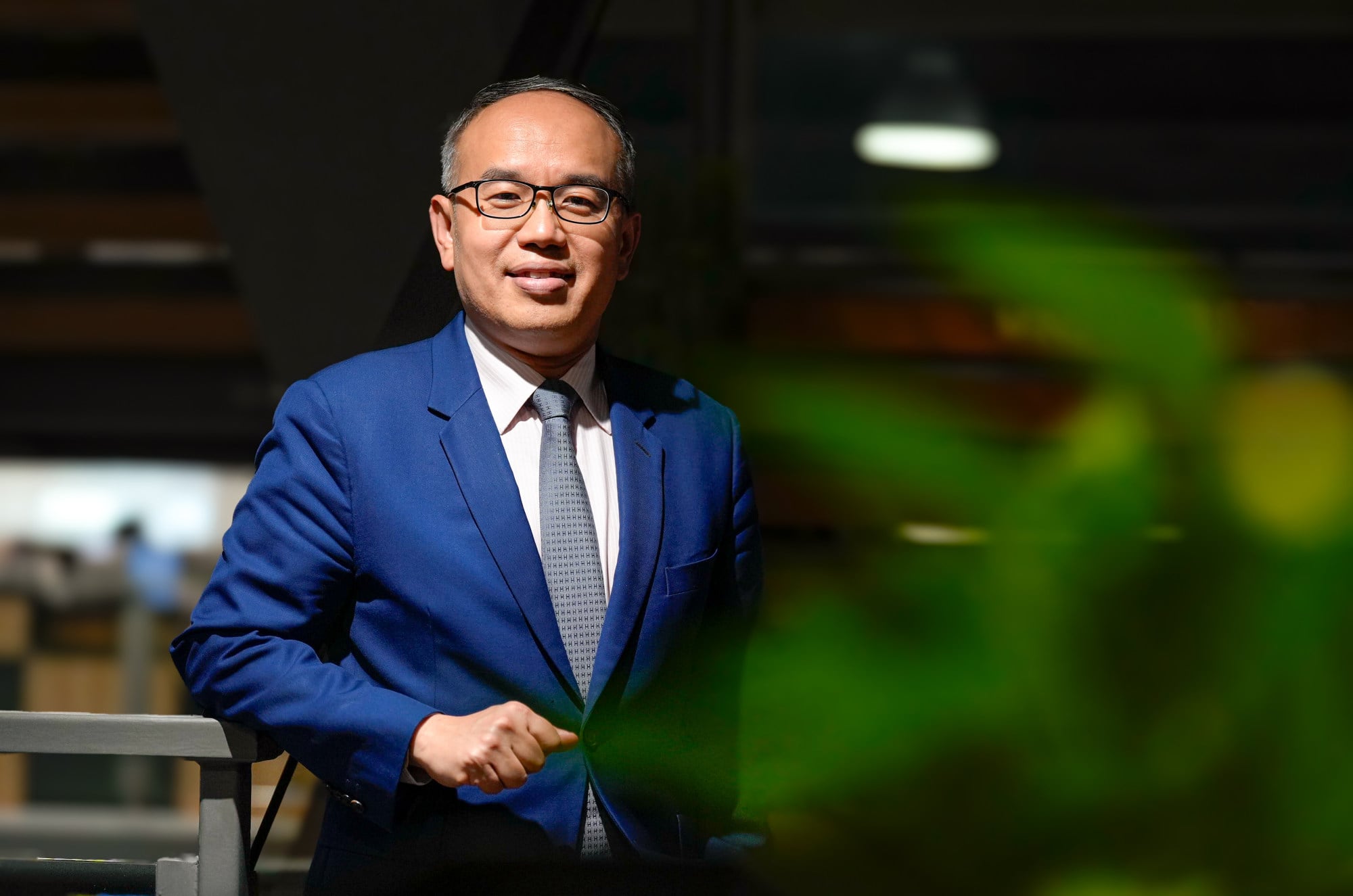
Secretary for Financial Services and the Treasury Christopher Hui Ching-yu told the South China Morning Post in an exclusive interview on Thursday that the finance ministers’ gathering was timely as regional cooperation was increasingly vital given the state of geopolitical tensions around the world.
He said Hong Kong was in the right position to organise the event, a rare occasion that would allow major representatives and finance ministers of the 21 member economies to see first-hand the city’s latest developments such as financial services, information technology and fintech, as well as to enjoy its natural landscape and heritage.
Hui said the 2026 Apec year underlined China’s contribution to regional stability.
China’s Ministry of Finance said on Wednesday that Beijing was willing to work with all Apec economies to stay committed to multilateralism, deepen macroeconomic policy communication and coordination, maintain stable and smooth regional industrial and supply chains, jointly promote the long-term sustainable growth of the Asia-Pacific economy and contribute to building a regional community.
Lee Shu-kam, director of Hong Kong Shue Yan University’s business, economic and public policy research centre, said the city’s role as host would solidify its position as an irreplaceable offshore financing hub for Chinese companies and a buffer against geopolitical tensions as a separate customs territory.
Lee noted that the expiration of the US trade truce with China on January 10 next year and the future direction of tariffs would have a significant impact, creating a period of uncertainty and sensitivity amid the ongoing geopolitical and technological rivalry between the two superpowers.
“If Hong Kong can use this Apec meeting to gather finance ministers from the Asia-Pacific region to reach practical consensus on digital finance, it will prove to the world that even with many changes or potential crises in US-China relations, Hong Kong still has independent political mediation capabilities and can reach consensus with various countries,” he said.
Institutions, including the International Monetary Fund, will give presentations during the meeting. Lee said the continuous and deep engagement of international multilateral institutions, which are extremely strict on compliance and legal risks, could effectively dispel doubts in the West about the rule of law in Hong Kong.
“If major multinational institutions participate in the meeting, give speeches and conduct high-level substantive dialogues in Hong Kong, to a certain extent, it already reflects that Hong Kong’s rule of law and compliance environment are validated,” he said.
“[They] send a very strong signal that Hong Kong’s common law system, contract enforcement capability and commercial arbitration mechanisms still possess complete legal validity and international credibility in multilateral financial cooperation.”
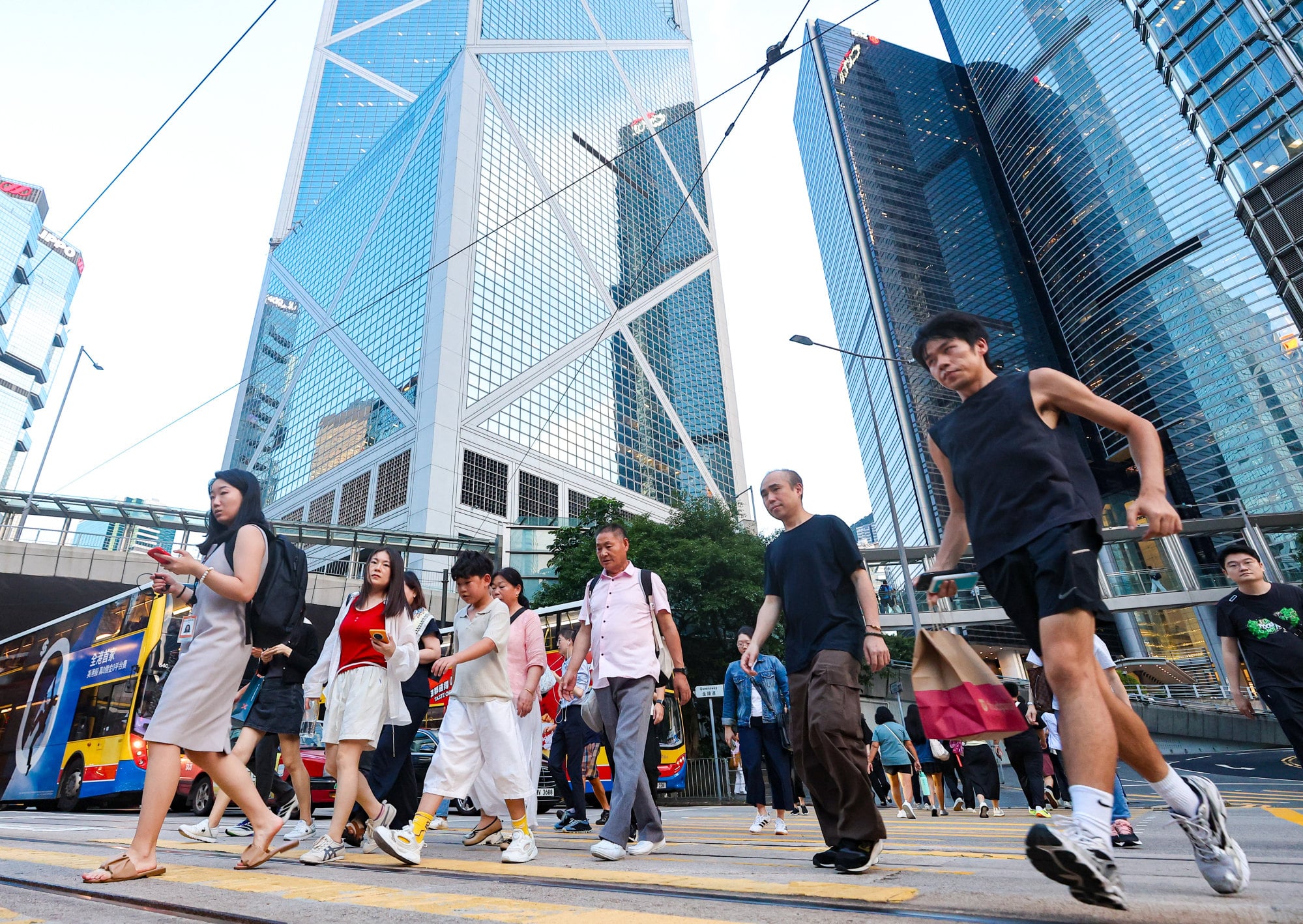
The Apec leaders’ summit will be held in Shenzhen next month. Lee said Hong Kong and Shenzhen would play complementary roles, with Shenzhen positioned as a competitive innovation and technology hub amid the ongoing technological rivalry with the United States, while Hong Kong would handle global capital markets to support mainland China’s continued opening up.
Financial Secretary Paul Chan Mo-po told a programme on Saturday that the Hong Kong meeting would serve as an opportunity for regional decision-makers and enterprise representatives to understand the city on the ground and build mutual trust, rather than just being an international conference.
Chan added that closer cooperation among regional economies was extremely important under the shadow of geopolitics and trade protectionism.
He said the city encouraged enterprises looking to develop their mainland businesses to list and raise capital in Hong Kong.
“Hong Kong’s professional services have a great advantage in this regard, and we can also act as their consultants to open up the mainland market hand in hand with them,” Chan said.
Jeffrey Lam Kin-fung, a member of the key decision-making Executive Council, said he believed the Hong Kong meeting would help attract more foreign investment to the city.
He said he had hosted many foreign businesspeople over the past two years from the West and emerging markets such as the Middle East, and they had shown interest in investing in Hong Kong, as the city’s low taxes, common law system and recent development as an international arbitration centre were attractive to them.
“After visiting Hong Kong, every one of them said they found the city different from what they heard in their hometown,” he said. “They find Hong Kong a stable city, politically, economically and socially. They discovered so many opportunities for future development.”
Lam said he had passed on information to them about the Greater Bay Area, Northern Metropolis and Hung Shui Kiu Industrial Park Company. Lam is the chairman of the company’s board of directors.
Latest government figures showed a record 11,070 companies from the mainland and overseas were operating in Hong Kong last year, an 11 per cent rise year on year.
A drafting session for the finance ministers’ joint statement will take place on Monday, followed by two days of meetings.
Chinese Finance Minister Lan Foan will deliver an opening speech on Tuesday afternoon. Ambassador Chen Xu, who chairs the Apec Senior Officials’ Meeting, will speak about Apec’s priorities for the year.
There will be eight sessions during the two days of meeting. On the first day, there will be three sessions covering the global and regional macroeconomic and financial outlook, fiscal policies supporting households and digital infrastructure financing.
On the second day, another three sessions will cover financial access and opportunities for all, a young financial talents dialogue and the Apec finance ministers’ 2027 process priorities. These will be followed by the signing of the joint statement drafted on Monday. The meeting will end with closing remarks by Lan, followed by a press conference.
China’s Ministry of Finance said on Wednesday that various visits would be arranged for the delegates after the meeting.
“Hong Kong … will fully demonstrate its recent development achievements and urban charm, inviting everyone to jointly experience the diverse vibrancy and growth opportunities of Asia’s World City,” it said.
Additional reporting by Denise Tsang
More Articles from SCMP
Police urge Apple to fix security after 110 reports of fraud over iPhone Duo
AI used for first time to analyse lawmakers’ 5-year plan, policy address debate
China’s proposed AI tech export bans may create short-term costs, long-term gains: analysts
Hong Kong orders lift contractors to review doors installed over past 10 years
This article originally appeared on the South China Morning Post (www.scmp.com), the leading news media reporting on China and Asia.
Copyright (c) 2026. South China Morning Post Publishers Ltd. All rights reserved.

Related posts:

Fiction park: He was the best in class. He still wasn’t good enough

Gagan Thapa takes oath as Congress president, vows to regain public trust

Inside knowledge that has locals gripped by fear after gran’s body found decomposing in cattle dip

New property purchase disclosure rule in Japan sparks fears it may curb foreign investment

Dino-mite treasures: inside Singapore’s Fort Knox storing playthings of ultra-rich