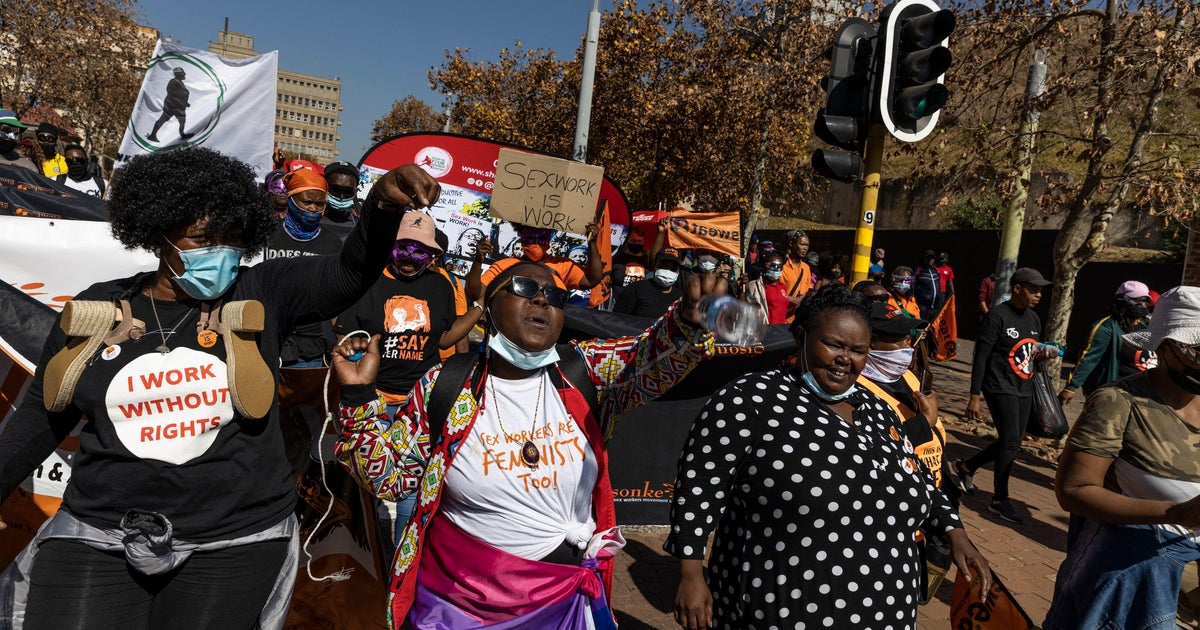
The Fight for Decriminalization in South Africa
South Africa is on the brink of a significant legal and social transformation. The country could become the first African nation to decriminalize sex work, a move that advocates argue will protect vulnerable communities from violence and health risks. However, this proposal faces strong opposition from various groups.
Connie Mathe’s journey into sex work began unexpectedly. At 19, she was a single mother struggling to make ends meet when she started dating a married man who provided her with an apartment in an affluent Cape Town suburb. A friend, who was also a sex worker, pointed out that her relationship was not a romantic one but rather a transactional arrangement. This revelation led Mathe to consider sex work as a means of financial stability.
Mathe had tried various jobs in retail, hospitality, and call centers, but none provided enough income to support her family. She believed that working as a sex worker would give her more independence and security. However, the reality of the profession was far more dangerous than she anticipated. She faced constant police harassment and weekly raids. Eventually, she was arrested for operating a brothel. During the arrest, she claims that officers forced her to strip and sexually assaulted her. Upon her release, she discovered that her savings had been stolen, though she has no evidence to prove it.
This experience brought Mathe to the Sex Workers Education and Advocacy Taskforce (SWEAT), a leading organization advocating for sex workers’ rights in South Africa. Today, she serves as a national coordinator at the Asijiki Coalition, which promotes the decriminalization of sex work.
Why Decriminalize Sex Work?
In South Africa, paying or receiving money for sexual services is illegal. However, SWEAT estimates that there are approximately 150,000 sex workers in the country. Megan Lessing, a representative from SWEAT, notes that this figure comes from a 2013 study, which estimated that 90% of sex workers were women. She believes the current percentage is closer to 80%.
According to the Global Network of Sex Work Projects, sex work refers to the consensual provision of sexual services between adults for money, goods, or favors. Proponents of decriminalization argue that sex work is not inherently dangerous, but the criminalization and stigmatization of the industry make it so. They also claim that decriminalization can reduce human trafficking.
A 2021 study found that about 70% of sex workers in South Africa experienced physical violence, with nearly 60% having been raped. One in seven had been raped by police officers. These crimes are rarely reported due to fear of arrest or harassment. Stigmatizing sex workers has also led to them being disproportionately affected by HIV. Despite South Africa’s progress in combating the virus, the country still has the world’s largest national HIV epidemic, according to UNAIDS.
SWEAT highlights that instances where police arrest sex workers for possessing condoms as “evidence of sex work” undermine South African policies. Activists and health professionals say that sex workers seeking medical help often face mockery and contempt.
The Case Against Decriminalization
In early September 2025, a Western Cape High Court judge ruled that 16 NGOs could argue in a case regarding whether to decriminalize sex work. Fourteen of these organizations support decriminalization, while two, including the Cause for Justice (CFJ), oppose it. The CFJ argues that sex work is a form of prostitution that commodifies the human body and reduces people to commercial sex objects. They believe that criminalizing sex work is essential to uphold “fundamental human dignity.”
The CFJ contends that sex work is degrading towards women, promotes sex trafficking, leads to child prostitution, increases the risk of transmitting sexually transmitted infections (STIs), and causes public nuisance. This view is echoed in feminist debates, where sex work is seen as an extreme form of gender-based violence and exploitation of women’s bodies.
Advocates for decriminalization argue that this perspective undermines bodily autonomy.
Dual Legal Strategy
In 2022, the Department of Justice published the Decriminalization Bill, which aimed to repeal laws criminalizing sex work. However, the bill remains stalled in the parliamentary process due to proposed content expansions, opposition from critics, and shifts in government leadership. SWEAT representative Lessing tells DW that urgency and political will have faltered.
While SWEAT continues to push for the Decriminalization Bill, they are now pursuing what Lessing calls a “dual strategy,” where the organization also protests the constitutionality of the laws targeting sex workers. SWEAT’s legal team asserts that the criminalization of sex work is unconstitutional as it pertains to the right to freedom and security, access to justice, fair labor practices, and healthcare.
In a major triumph in August 2025, SWEAT secured a national moratorium on the prosecution of sex workers until the trial in front of the Western Cape High Court begins.
A Global Issue
South Africa is not alone in grappling with the appropriate legislation for sex work. Globally, there are many models, each contested. In countries like Sweden, Norway, Canada, and Israel, the Nordic Model is employed, where penalties are removed for the sale of sex, but purchasing remains illegal. In other countries, including Germany, the Netherlands, Peru, and Senegal, sex work is legalized, meaning governments impose specific laws and regulations. Decriminalization, however, is only fully in place in New Zealand and Belgium, where all laws and regulations penalizing sex work between consenting adults are removed.
Decriminalization is the legal model most favored by global sex worker-led initiatives. International organizations such as the World Health Organization, Amnesty International, Human Rights Watch, and the Joint United Nations Programme on HIV/AIDS have also advocated for the decriminalization of sex work.
Challenges for Exiting the Industry
Connie Mathe emphasizes that exiting the sex industry is difficult, even for those with qualifications. “Even though I have a diploma in legal studies, I’m afraid to ask for another job outside of SWEAT. If you have a criminal record in South Africa, no one will employ you,” she says. A sex worker’s criminal record can only be expunged ten years after the latest arrest, effectively making many “criminals for life.”
Recently, Mathe has been concerned about the effects of USAID cuts in 2025 on sex workers’ health. When picking up the results of routine medical tests, she found the Ivan Toms Centre for Health in Cape Town, a USAID-funded clinic known for being discreet and LGBTQ+ friendly, had closed. After its closure, Mathe and several other patients were sent to a local hospital, where she says they spent hours waiting for treatment and were told to consolidate their medical concerns as a group.
“We were not welcome in the public hospital,” Mathe said. “They looked at us like we were demanding a special service.”
Crucial Trial on the Horizon
Mathe remains hopeful that the Western Cape High Court will rule in favor of decriminalization when the case goes to trial in May 2026. This would pave the way for sex workers to access the same fundamental rights and services as everyone else.
SWEAT representative Megan Lessing acknowledges, “We know that decriminalization won’t fix everything. But it’s the first step toward addressing the broad spectrum of issues surrounding sex work.”


