
With Christmas just around the corner now, many households will be looking forward to family game nights – of course, which wouldn’t be complete without Monopoly.
While Monopoly has been around almost a century, it turns out you’ve probably been playing it wrong.
Adam Davis Fernsby, board game expert and founder of the gaming website Playiro, has revealed the five common ‘rules’ that aren’t really in the rule-book.
Made-up rules many players follow religiously include what happens when you end up stuck in Jail, and when you can’t afford a property.
It’s also bad news for players who make their comeback after pocketing the money in the middle of the board for Free Parking.
Mr Fernsby says: ‘What many may not realise is that by playing by the actual rules of the game, gameplay can become much shorter.
‘The only reason that Monopoly notoriously goes on for hours and causes so many arguments is because we’re playing with everyone’s interpretations of the game, rather than the rules actually created, and in some cases, we’re playing by rules that don’t even exist at all!’
So, have you been playing Monopoly wrong this whole time?
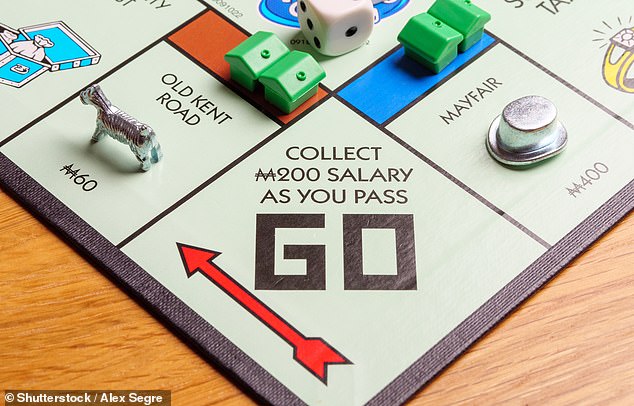
1. You receive M400 for landing on GO
In a standard game of Monopoly, players roll the dice to make laps around the board, collecting M200 each time they pass the tile marked GO.
Many also add the rule that anyone who manages to land directly on the GO tile gets double the money.
However, according to the official Monopoly rule–book, this handy payout is against the rules.
‘While this may have helped you out of sticky situations in previous games, it is not actually a rule,’ says Mr Fernsby.
‘So, if you land on GO, you should only receive M200 from the bank, in the same way as if you were passing GO.’
The same goes for anyone who has ever tried to cash out their payment for passing GO in advance.
Mr Fernsby says: ‘If you land on a property just before GO, you are not allowed to prematurely collect this M200 from the bank, even if you are short on cash.’
2. You receive money if you land on Free Parking
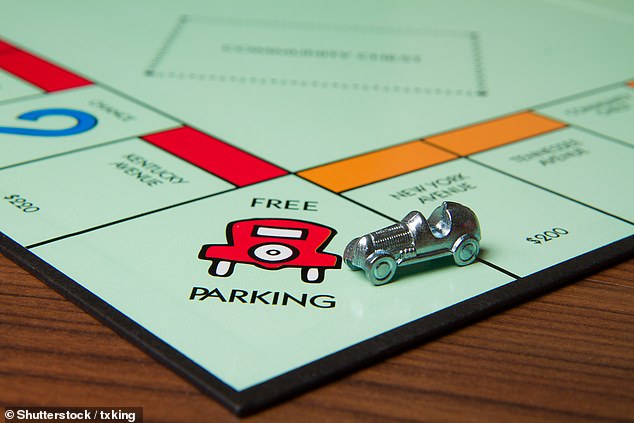
Another common house rule is to keep all the money collected by players paying fines in the middle of the board.
The first lucky player to land on Free Parking is then able to collect all the cash that has accumulated.
However, just like the extra payments for landing on GO, this house rule only serves to make the game run longer.
‘While this addition may add an exciting element of luck to the game, this is actually not an official rule at all,’ says Mr Fernsby.
‘Instead, any in–game fines should be paid directly to the bank.
‘Free Parking square should serve only as a “resting place” if a player lands on it, according to the rule book, not to cash out on a quick win.’
3. You don’t have to buy or auction a property if you land on it
One of the basic rules of Monopoly is that you roll the dice to move your piece and land on the properties scattered around the board.
So, it might come as a surprise that many players are making mistakes even at this most basic stage.
‘If you land on an unowned property, many players believe that you have an option to buy it, and if you don’t want to then you can just move on,’ says Mr Fernsby.
‘However, this isn’t true at all.’
According to the official rules, any property that has been landed on at least once should be sold to a player.
When a player lands on an unowned property, they have the choice to buy it first, but if they choose not to, then the property is put up for auction.
Mr Fernsby explains: ‘If they choose not to buy it, the property is immediately put up for auction by the banker, so the player must decide if it’s worth purchasing or if it’s worth allowing a rival player to purchase it.
‘Every player can then bid on it, including the player who originally passed on buying it.
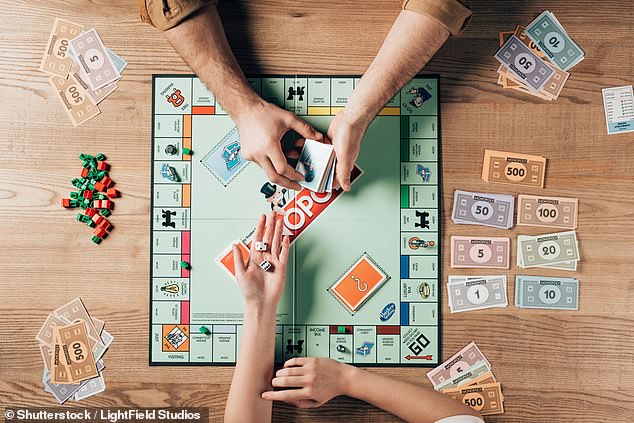
‘Any player can set the starting bid and the property is then purchased by the subsequent highest bidder.’
4. You can’t collect rent while in jail
Another scenario that will definitely come up in any game is what to do when a player gets sent to jail.
Typically, when a player is in jail, most people assume that they cannot collect rent whenever someone lands on one of their properties.
Although this makes getting stuck in jail a far more potent threat, it isn’t actually how jail works in the Monopoly rules.
‘You can collect rent, or buy and sell properties or houses, as you normally would while in jail,’ says Mr Fernsby.
However, that doesn’t mean the Monopoly rules make it too much easier to cash in on your properties.
The expert added: ‘It doesn’t matter whether you are in jail or not, if you fail to notice a player has landed on your property, you cannot then ask them for rent once the next player has already rolled the dice.’
5. You get out of jail for free after three rolls
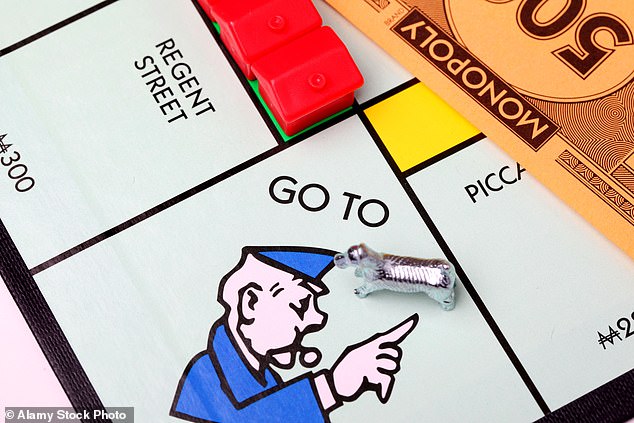
Of course, once you’ve found yourself in jail, the next question is how to get out.
Many players believe you can get out of jail if you either use a ‘Get Out of Jail Free’ card, roll a double, or spend three turns rolling.
‘Many players think that after three rolls you can automatically move your player piece out of jail for free, but this isn’t true,’ says Mr Fernsby.
However, according to the official rule–book, you do get out of jail on your third time rolling, but not for free.
Mr Fernsby concluded: ‘What the rulebook actually states is that on your third roll, you must still pay a M50 fine to the bank, before moving your piece out of jail according to the number shown on the die.’
Read more
- Are you breaking the Monopoly rules without knowing it? Find out why most players have been playing it all wrong!
- What real estate secrets does Martin Lewis reveal to dominate at Monopoly?
- Did your family overlook these dazzling truths about Monopoly’s jail and property auctions?
- Could Monopoly’s timeless strategy be the ultimate playbook for real-world property magnates?
- Who truly pioneered the board game industry’s beloved icon, Monopoly or a forgotten social rebel?


