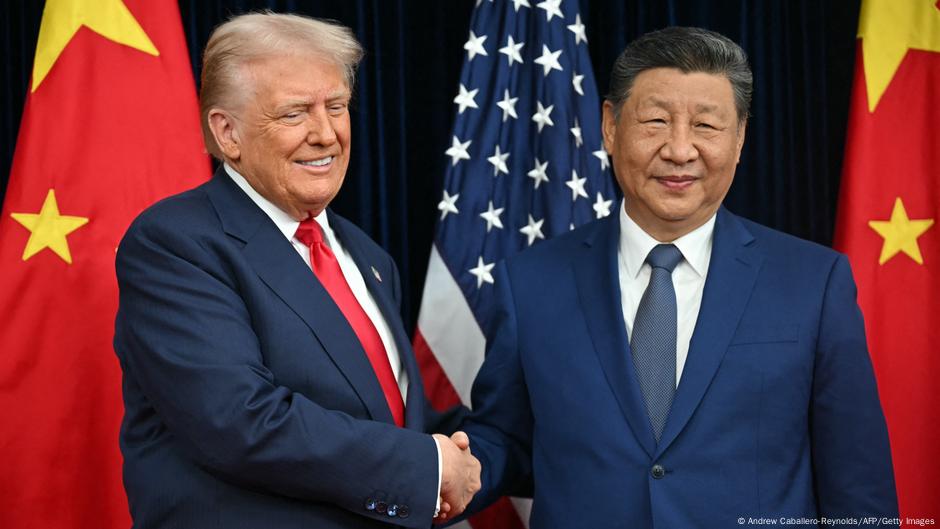
Trump and Xi Reach Trade Agreement Amid APEC Summit
During the APEC summit in Busan, South Korea, US President Donald Trump met with Chinese President Xi Jinping for a significant discussion that lasted approximately one hour and forty minutes. This meeting marked the first in-person encounter between the two leaders since 2019. The discussions focused on several key trade issues, including tariffs, rare earth supply, and fentanyl trafficking.
Trump announced that the US would reduce tariffs on China from 57% to 47%, a move expected to ease some of the tensions that have characterized the US-China trade relationship. In return, Beijing is expected to ensure the continued flow of rare earth exports, purchase significant amounts of US soybeans, and take stronger measures against fentanyl trafficking. These agreements are set to last for at least one year, with potential for annual renegotiation.
Key Points from the Meeting
- Tariff Reduction: The US will lower its tariffs on China from 57% to 47%.
- Rare Earth Exports: China will maintain the flow of rare earth materials.
- Soybean Purchases: China is expected to buy substantial quantities of US soybeans.
- Fentanyl Crackdown: Efforts will be intensified to combat fentanyl trafficking.
Future Visits and Diplomatic Relations
Following the meeting, Trump expressed his intention to visit China in April 2026, while also anticipating that Xi would visit the United States later in the year. The exact locations of these visits, whether in Florida, Palm Beach, or Washington, DC, were not specified. This exchange of visits highlights the importance both leaders place on maintaining diplomatic ties.
Chinese Foreign Ministry officials confirmed Trump’s planned visit, emphasizing the significance of this engagement. The talks were described as a “great success” by Trump, who praised Xi as a “tremendous leader of a very powerful country.”
Impact on Markets and Agriculture
The announcement of the trade deal sent positive signals to the markets, with Chinese stock indices surging in anticipation of eased trade tensions. However, the US agricultural sector, particularly soybean farmers, has faced challenges due to the ongoing trade war. The drop in trade with China has had a significant financial impact, with a $3 billion decline in soybean sales in the first half of 2025 compared to the same period in 2024.
Treasury Secretary Scott Bessent addressed these concerns, stating that the deal would benefit soybean farmers in the coming seasons. He emphasized that the agreement would provide stability and support for the agricultural community.
Additional Developments
In addition to the trade discussions, Trump made headlines by announcing plans to resume nuclear testing for the first time in over 30 years. This decision was prompted by reports of other countries’ nuclear testing programs. Trump’s statement followed Russia’s recent successful test of a Poseidon nuclear-powered super torpedo, which raised concerns about global security.
Despite these developments, there was no indication that the US would conduct actual nuclear detonations. The last US nuclear test occurred in 1992, with a total of 1,030 tests conducted since 1945.
Diplomatic Statements
Xi Jinping highlighted the importance of maintaining a partnership between the US and China, despite existing frictions. He emphasized that the two nations should work together to address global challenges and fulfill their responsibilities as major powers. Xi acknowledged that differences in national conditions can lead to disagreements but stressed the need for collaboration.
Trump echoed this sentiment, describing the relationship with China as “very good.” He also mentioned the possibility of reducing tariffs related to fentanyl production, acknowledging China’s role as a primary source of fentanyl precursors.
Conclusion
The meeting between Trump and Xi represents a critical step in stabilizing US-China relations. While the details of the agreement remain to be fully realized, the initial outcomes suggest a willingness from both sides to engage in constructive dialogue. As the world watches closely, the success of this deal could have far-reaching implications for global trade and international diplomacy.


