A Unique Exploration of Isolation and Trauma
Twenty-three-year-old Mimi (Park Eun-kyung) shares a five-pyeong studio apartment with her twenty-five-year-old boyfriend, Gi-seung (Ryu Se-il). Together, they enjoy watching failed horror movies. Mimi writes horror web novels that no one reads, while Gi-seung dreams of becoming a photographer but remains stuck in his current situation. Mimi is deeply affected by the domestic violence she experienced from her father, Moon Geon-sik (Koo Do-gyun), which has kept her confined to her home. When Gi-seung suddenly disappears after announcing a “ghosting breakup,” Mimi finds the courage to step outside. She starts working as a door-to-door cosmetics salesperson, just like her mother (Kim Jeong-ah), in the Mapo-gu Changjeon-dong studio apartment complex—her goal being to find Gi-seung. However, behind every door she knocks on, Mimi encounters isolated young adults and the lingering presence of her abusive father, Moon Geon-sik. Will Mimi be able to reclaim Gi-seung and confront the specter of her past?
Based on the title ‘Mimi’s Minimal Romance’, one might expect a quirky youth romance. Yet, beneath the surface lies the harsh reality of over 540,000 reclusive and isolated young adults. The play blends the struggles and oppressions of youth with a lighthearted humor that leaves audiences laughing before being moved to tears.
A Youth Ecology Report on ‘Resting’ Youth
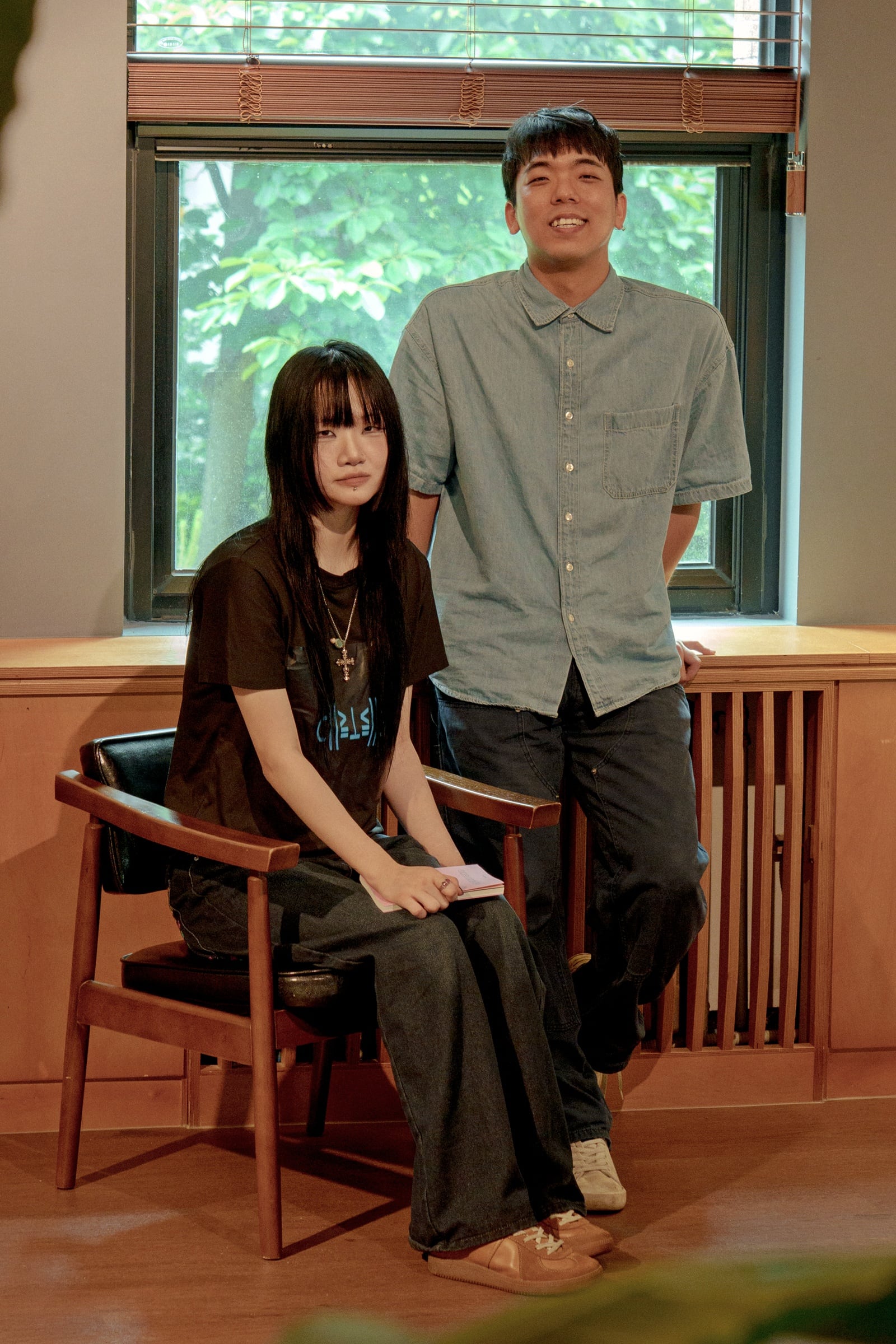
The villa complex in Mapo-gu Changjeon-dong, where Mimi searches for her vanished ex-boyfriend Gi-seung, is more than just a setting. Behind each door lives a different “resting youth”—young adults capable of working but choosing not to for unspecified reasons. Each studio apartment feels like a self-imposed prison.
Playwright Jo Min-song remarked, “I felt that my peers weren’t just resting at home but ‘hiding.’ When passing through university-area studio apartment complexes, they seem like ghost towns—quiet, empty. Each person creates their own world and hides within it. It’s scary, yet each studio feels like a random, self-contained universe.”
Mimi’s door-to-door cosmetics sales become a way to peek into these closed-off worlds. Behind each door are stories: an orphaned loner, someone contemplating death due to a lease scam, a repeat exam taker… Mimi describes one youth’s room:
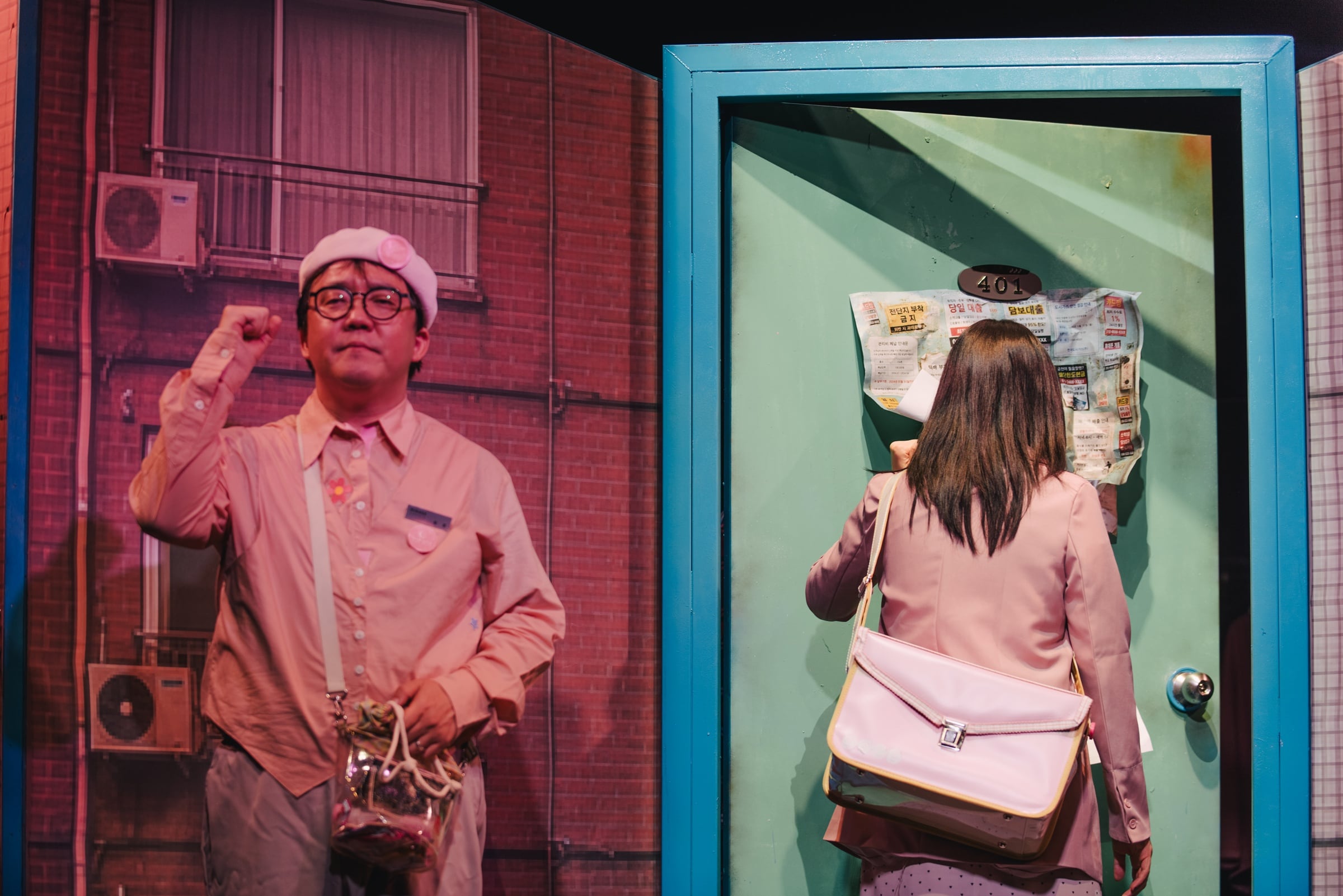
“A foul smell of food waste, north-facing, lighting that breeds no goodwill—this alone creates a world. And they keep hiding. Everyone’s trapped in these 5.5-pyeong cans, waiting for comfort…”
The play observes “resting youth” in studio apartment complexes with a poignant, friendly gaze—a story only a young writer could tell.
Thanks to this, Gongnori Club has completed a trilogy of “unexpected door-to-door sales” plays: Kang Hoon-goo’s ‘Phone Seller’, Seo Dong-min’s ‘Dried Chili and Peach-Scented Lipstick’, and now ‘Mimi’s Minimal Romance’, all featuring mothers as door-to-door cosmetics salespeople.
Disarming the Giant Trauma ‘Moon Geon-sik’
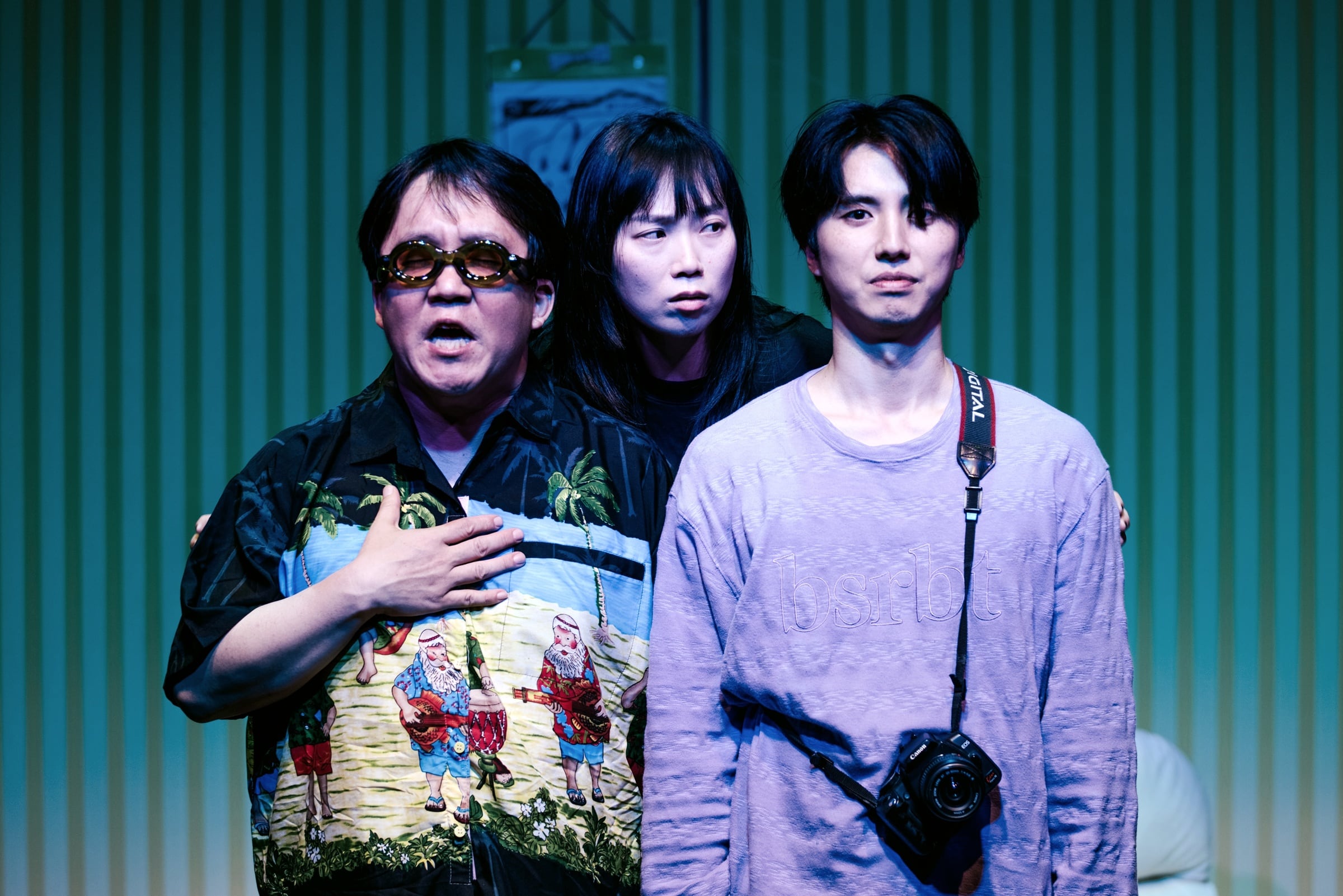
The play’s approach to violence and trauma is intriguing. Theater is “play”—stepping back to view intense emotions objectively makes them manageable. Mimi cannot leave her house because of the haunting specter of her father, Moon Geon-sik, who abused her and abandoned the family.
Jo explained, “Everyone has their own ‘Moon Geon-sik’—a trauma they avoid or pretend doesn’t exist.” Moon Geon-sik symbolizes not just a bad father but the oppressive trauma paralyzing the younger generation.
In the play, Mimi screams, writhes, and curls up when Moon Geon-sik appears, yet the audience laughs. Actor Koo Do-gyun’s comically exaggerated portrayal plays a big role. The audience thinks, “This is funny,” or “It’s not so scary after all.” This theatrical distance offers unexpected encouragement and healing.
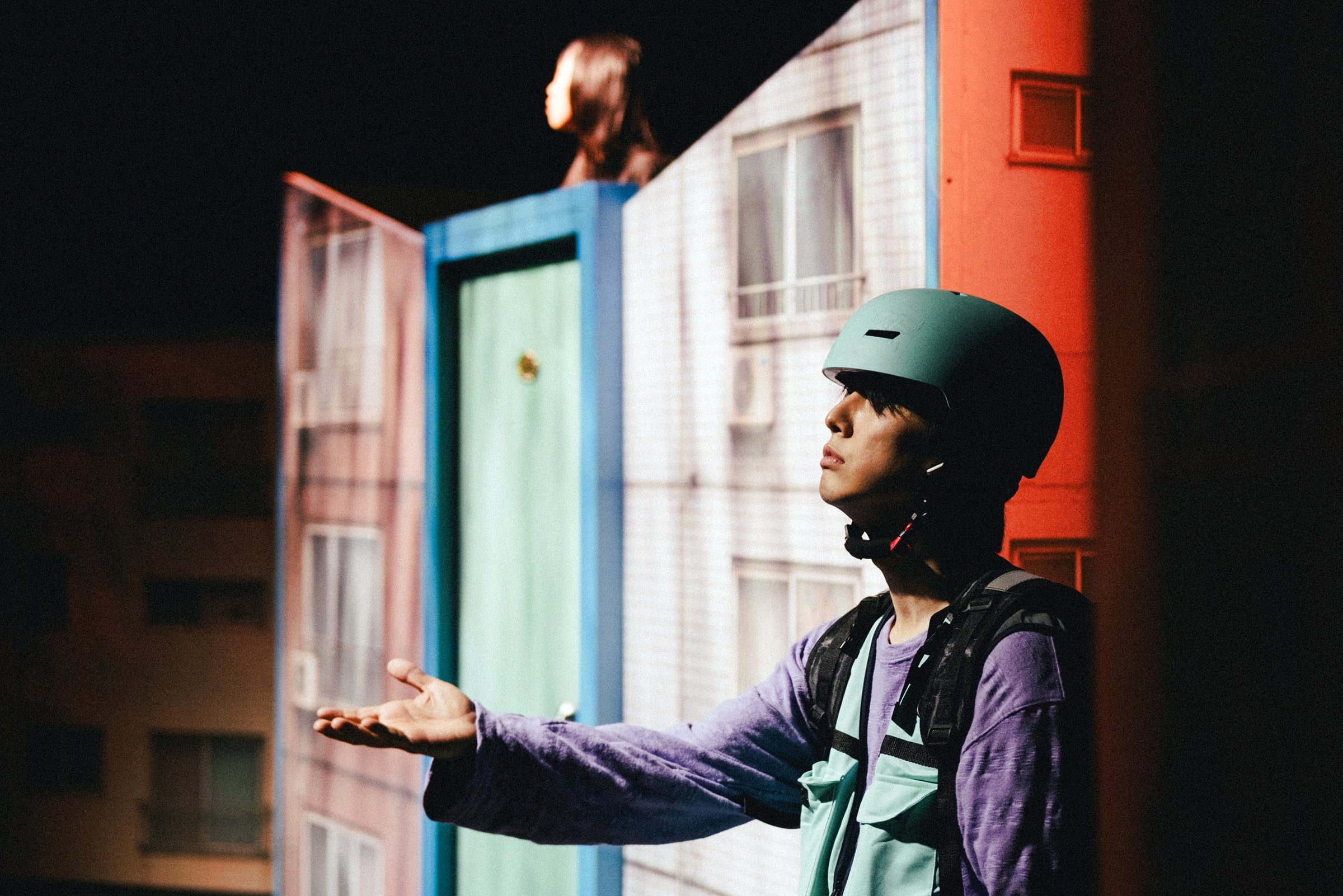
Director Kang’s bold choice to transform a potentially horrific figure into a humorous B-grade comedy character is key. Kang noted, “I can’t stand heaviness. I always try to neutralize it.” “Though it’s a serious story about chasing the root of trauma, maybe everything happens in Mimi’s mind. I focused on making that ambiguity clear.” Kang added, “Young writers often hesitate to expose their trauma, but Jo cleverly wove it into the script.”
The Liberating Power of Unexpected Laughter
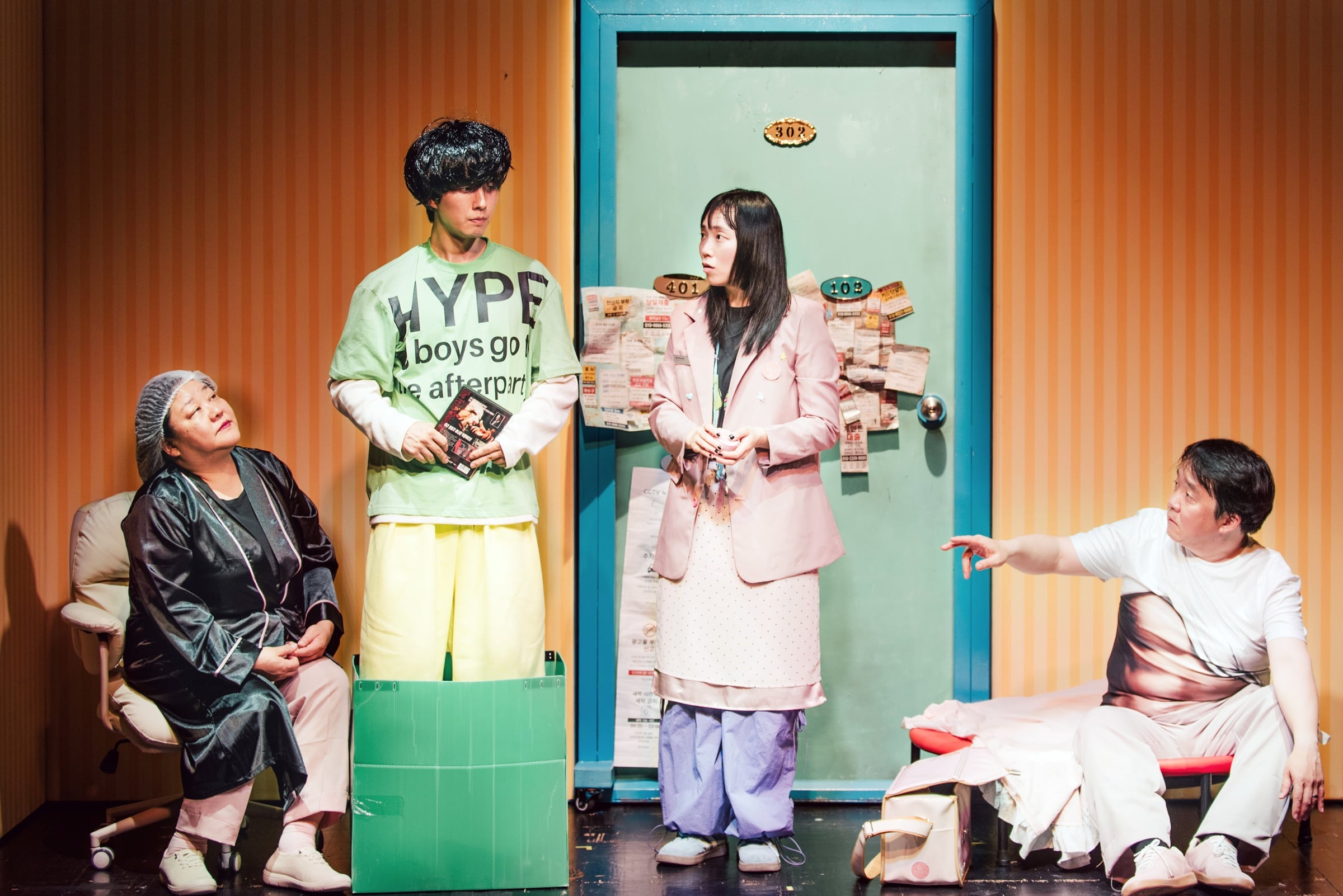
For debut playwright Jo, the unexpected chemical reactions between her script and the audience were surprising. “I wrote serious, tense dialogues, but people laughed! It was eye-opening,” she said.
“The conversations between Mimi and her mother were meant to be sensitive arguments, but onstage, their hypersensitivity felt funny. When Mimi asks, ‘Should we get married?’ and Gi-seung, who’d been contemplating his reality, replies, ‘I’ve always wanted that!’—the audience laughed. Also, when her mother says, ‘I have good luck with men. Your dad was really cool 20 years ago,’ the theater erupted. It was delightful.”
Jo’s favorite laugh-inducing moment is when the cosmetics company ‘Mirage Pacific’ sales manager gives Mimi ‘sales tips’: “Don’t be afraid, start fresh, ignore nerves…” When Mimi asks for more, he says, “That’s all I know.” The line always makes her laugh. The manager mirrors society’s “know-it-all” elders who spout empty rules.
Jo confessed, “I wrote ‘Mimi’ imagining Park Eun-kyung, whom I admired from ‘Rocket Candy’. Then, one day, she became Mimi. It was moving.”
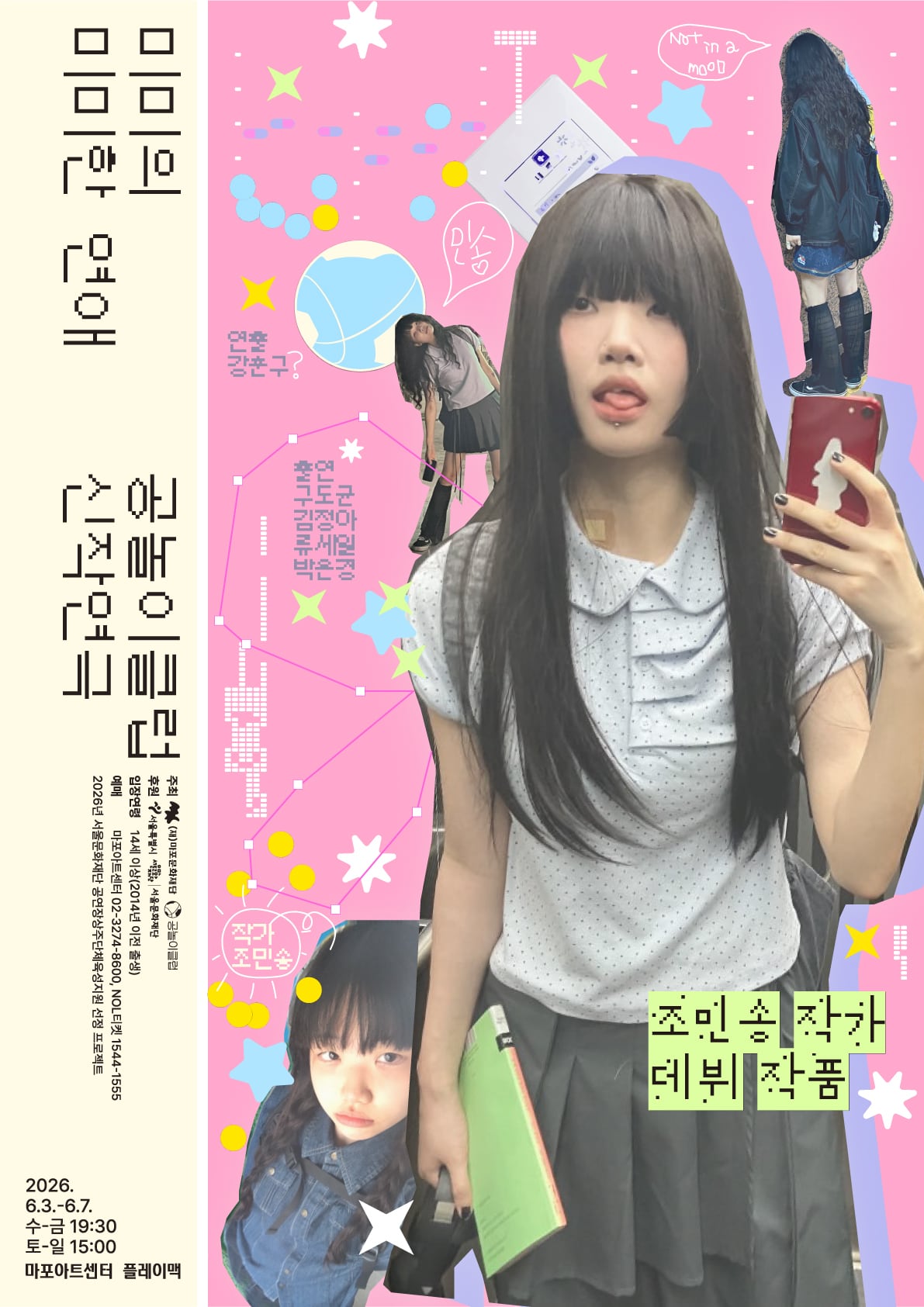
Director Kang laughed, “This play is like a ‘solo reflection camp’ for 20-somethings.” “Like the TV show ‘Divorce Reflection Camp’, it’s cringey yet funny, making you reflect on your own life. It’s comforting and great for post-show discussions.”
In ‘Mimi’s Minimal Romance’, wounds are treated as lightly and brightly as childhood scrapes. Dialogues pop like gag comics, scenes shift like video games. Audiences enjoy themselves before confronting their own inner depths—laughter and tears collide. All they need is the courage to open their doors to Mimi’s knock.
월 5900원 멤버십, 신문 독자에게는 2900원, 조선멤버십
55000원 상당의 신문-잡지 8종 마음껏 보기, 조선멤버십
현금처럼 쓸 7000포인트 받아 알뜰한 쇼핑, 조선멤버십