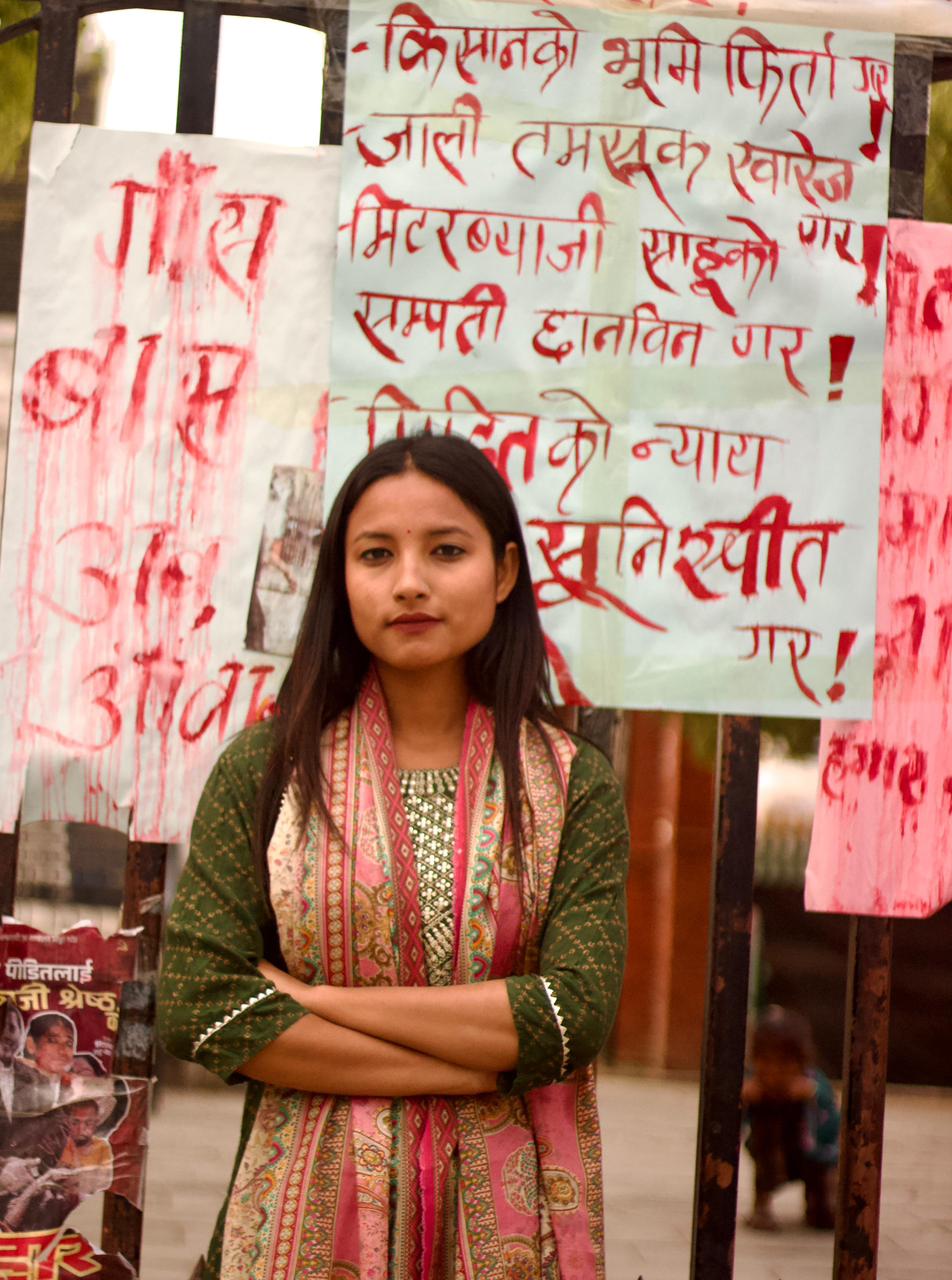
A Journey of Awakening and Activism
Kailali, a region in Nepal, shaped Rakshya Bam’s early life. The area was predominantly inhabited by the Tharu community, but it also saw migration from the hills. This mix of cultures exposed her to various accents and traditions, teaching her that despite differences, people share the same land. She realized that her province, Sudurpaschim, was often labeled as poor and underdeveloped. Outsiders viewed it with pity, while aid organizations described it as a place of struggle. However, Bam did not accept this narrative. She believed that her home had culture, nature, and potential, but what it lacked was justice and attention from those in power.
After completing her education, Bam moved to Kathmandu for higher studies. This shift opened her eyes to the stark inequalities in society. Life in the capital seemed full of opportunities, while her hometown felt ignored. This contrast disturbed her, leading her to question why basic services were missing in her province. People had to travel to India for better healthcare, and students had to leave their homes to study. To her, this was not an accident but a system designed to leave people behind.
Bam recalls how political party banners reached Kailali faster than school textbooks. Elections came frequently, yet there was little improvement. Many youths left for India or the Gulf to survive, weakening their connection to the nation with each departure.
The Tharuhat movement of 2015 marked a turning point. Witnessing her community come together with urgency and strength, she began to understand the political structure around her. Some voices were loud and central, while others, like hers, fought to be heard. Through this experience, she learned terms like marginalization, representation, and discrimination. The political landscape of the nation suddenly felt very personal.
Bam’s academic journey was driven by this awakening. After completing her +2, she pursued a bachelor’s degree in social work. While volunteering, she realized that social service without advocacy brings limited change. Her coursework helped her understand how governance, policies, and power shape lives. She says, “I did not become a party supporter. Rather, I became politically aware.”
Bam’s activism started with small initiatives like blood donation campaigns and youth-led awareness events. These efforts introduced her to the struggles of people often overlooked by the system. She later participated in campaigns focused on drug abuse prevention, gender-based violence, and child rights, each showing the gap between policy and lived reality.
Her work took a new direction after completing her bachelor’s degree. Women’s rights became a focal point, especially cases involving delayed justice or pressure on survivors to stay silent. One case that stood out was the rape and murder of Sumad Rani Tharu on May 12, 2023. Bam joined activists who demanded justice, leading to the arrest of the accused within four days. This experience reinforced her belief that organized pressure can speed up stalled justice.
Bam’s activism extended to urban economy issues. When Kathmandu Metropolitan City began seizing goods from street vendors, she and other youth activists questioned the approach. They stood in front of the metropolitan office for 199 hours, demanding a clearer system for vendors. After the protest, forced crackdowns were reduced.
During the Gen Z movement, when youth demanded good governance, transparency, and political accountability, Bam’s role became more visible. She emphasizes that these demands remain unchanged despite shifting circumstances. The protests faced force, with tear gas, water cannons, and bullets used against demonstrators. Families mourned lives lost during confrontations. Bam believes the movement was not about seeking power but about demanding government accountability under KP Sharma Oli.
When the new interim government was formed, she observed cautious optimism among the youth. Progress was made, but it was incomplete. Justice for victims remained a core concern. She believes real success depends on a fair legal process, not quick arrests or political statements. “The new administration must address old corruption cases and ensure that the upcoming election is handled responsibly,” she says.
Bam expresses concern about declining interest in elections and argues that a movement demanding change must also engage in the democratic process. Critics may dismiss the movement as emotional noise if Gen Z stays away during elections. She wants Gen Z to help strengthen the environment for a free and fair vote.
Internal differences among youth activists are expected, given diverse backgrounds. However, shared goals should unite them. Even if groups work separately, their focus should remain on long-term results. Bam has little patience for political leaders who call the protests a show. “No apology has been issued. They still speak confidently in public. I question their morality and whether public memory is expected to fade that quickly,” she says.
Bam believes the heart of Nepal’s political struggle is linked to basic needs. The majority of rural people worry about food and shelter daily. Unless political change improves daily life in villages, it will remain superficial. She believes citizens shape leadership. If society normalizes corruption, leaders emerging from that society will reflect it. She also stresses the need for representation from outside Kathmandu Valley.
Bam’s activism sometimes invites harassment. Anonymous accounts and those in power have called her a US agent and tried to discredit her. She attributes this to low digital literacy and fast-moving misinformation. She focuses instead on work that brings real outcomes.
When she participated in the USYC fellowship in 2022, she worked on promoting the Right to Information. She hopes similar opportunities come from the Nepali government in the future so that youth do not always rely on foreign programs.
For Bam, the Gen Z movement opened a path that demands representation and integrity. Voting is a crucial part of that path. She says leadership does not appear from nowhere. Citizens create it through choices. A democracy functions only when people participate fully.
Her experience in ground-level struggles shapes her political judgment. She values leaders who understand communities that rarely appear in headlines. Systemic issues remain, especially bureaucratic corruption. Yet she believes awareness is rising, and authorities now understand that the public is watching closely.
Bam says change will take time. Organizing youth is not easy. Yet she continues, convinced that Nepal can build a system where every citizen feels seen and heard. Her motivation comes from the people she has met along the way. “The fight continues,” says Bam.


