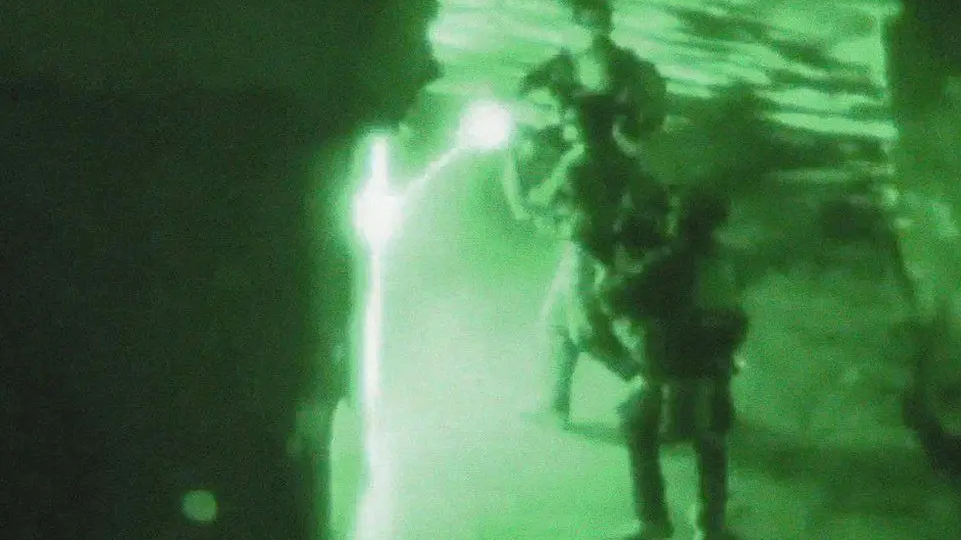
A former chief of staff of UK Special Forces has provided testimony to a public inquiry, revealing that he believed war crimes allegations against the SAS were not reported to military police due to concerns that an investigation could disrupt operations and negatively impact morale. The officer, who was the second-highest-ranking individual in special forces at the time, also noted that part of the evidence came from a rival special forces regiment.
This decision led to military police remaining unaware for years about concerns within special forces regarding the SAS’s involvement in extra-judicial killings and falsified reports. The testimony was given during closed-door sessions of the Independent Inquiry relating to Afghanistan.
The inquiry is examining allegations that the SAS committed war crimes between 2010 and 2013, including the killing of children and civilians. Although the latest batch of testimony was heard in 2024, it was only recently released in a summarized form by the inquiry.
Despite the gravity of the allegations, the then-director of UK Special Forces chose in 2011 not to refer the case to the Royal Military Police. Instead, an internal review was commissioned into the tactics used by the SAS. This decision sparked controversy, as all commanding officers in the British military are legally obligated to alert military police if they suspect someone under their command may have committed a war crime.
The internal review was conducted by a UKSF officer closely associated with the SAS unit involved in the raids under scrutiny. It was signed off by the unit’s commanding officer and concluded in just one week, finding no evidence of criminal wrongdoing.
The former chief of staff, known at the inquiry as N2252, stated that the director believed a military police investigation would take too long and that an internal review could be completed quickly. He suggested that this approach would send a message to those responsible for the problematic operations.
Summaries of closed evidence released over the past year have highlighted serious concerns among several senior officers at headquarters in 2011 regarding potential legal transgressions by members of the SAS. These concerns stemmed from whistleblower testimony and troubling reports from Afghanistan, which indicated a high number of operations where individuals already detained and handcuffed were later shot dead by the SAS. Additionally, there were instances where more people were killed than weapons were found at the scene.
The disproportionate ratio of deaths to recovered weapons can indicate that individuals were killed who did not pose an immediate threat to soldiers or others, which is necessary for the use of lethal force in self-defense. UKSF headquarters was also informed of a complaint from a high-profile international organization monitoring the conflict on the ground, regarding alleged extrajudicial killings by the SAS. Furthermore, complaints from Afghan special forces, who were angry about what they believed were civilian murders, led them to refuse to fight alongside the SAS on multiple occasions.
N2252 testified that informing the Royal Military Police of these concerns in 2011 would have interfered with the high tempo of SAS operations, particularly during a period when the regiment was focused on targeting Taliban operatives and bombmakers responsible for IEDs. He explained that removing a sub-unit for an investigation would shift focus away from planning future operations.
He also mentioned that scrutinizing the SAS’s operations could undermine trust within UK Special Forces, stating that questioning the accounts of troops would send a message that “we don’t believe you.”
Another witness, a senior officer at headquarters known as N1788, criticized the way the SAS was conducting operations, claiming it should have been obvious to commanding officers in Afghanistan that things were going wrong. However, N1788 stated that he was never made aware of any complaints or rumors about extrajudicial killings or falsifying records.
A lawyer for the inquiry challenged N1788’s claim, pointing out contradictions in his testimony. Specifically, he referenced previous testimony from N1788’s superior officer, who had discussed the possibility of extrajudicial killings and planted weapons. Additionally, another senior officer in Afghanistan testified that N1788 had asked him during a phone call if “the ‘m-word’ was relevant,” referring to murder.
A third witness, a UKSF officer based in Afghanistan and identified as N889, admitted he may have been too quick to accept the SAS’s operational reports. “I totally accept, you know, all these years later looking back that perhaps one should have taken a slight harder view,” he said. “I maybe naively read this stuff, believed it and carried on.”
If you have information about this story that you want to share, you can contact us using the Signal messaging app, an end-to-end encrypted service designed to protect your data. You can reach us via WhatsApp/Signal at 0044 7815 653 458. Alternatively, you can use SecureDrop, a highly anonymous and secure method for whistleblowing, which uses the TOR network. Visit the following link to access SecureDrop: http://kt2bqe753wj6dgarak2ryj4d6a5tccrivbvod5ab3uxhug5fi624vsqd.onion/. Please note that this link will only work in a Tor browser. For guidance on using SecureDrop securely, you can find helpful resources online.