A Fraud Scandal at a Medical Conference in Denmark Exposes Underground Networks
A fraud scandal at a medical conference in Denmark has revealed the existence of underground WhatsApp groups and paper mills that enable lecturers to buy promotions through academic misconduct. The case has sparked widespread concern about the integrity of Indonesia’s academic system, particularly its reliance on publication-driven promotion.
The Ministry of Higher Education, Science and Technology has formed a team to review papers published by those involved in the alleged fraud. If falsified data is found, appropriate actions will be taken. This comes after an incident in May where an Indonesian woman allegedly changed her name tag and altered her appearance to impersonate another person while presenting studies suspected of containing fabricated data and AI-generated content at a conference organized by the International Society for Pneumonia and Pneumoccal Diseases (ISPPD) in Denmark.
Two Indonesian academics, including one who attended the conference, noticed what they believed was a web of deception and shared their concerns on social media. Their posts went viral and eventually caught the attention of officials. They reported the issue to ISPPD, which then canceled travel grants for the alleged perpetrators.
An investigation by the ministry last month revealed that the “researchers” were not affiliated with any universities or research institutions and had engaged in the deception solely to collect travel grants.
“What is very unfortunate is that with this case, the credibility of research in Indonesia will also be questioned,” said Brian Yuliarto, the minister of higher education, science and technology, on June 2, adding that the perpetrators would face consequences.
However, it remains unclear what specific actions the ministry can take.
A Broken System
While the Copenhagen case is still under investigation, Indonesian researchers argue that it highlights a broader issue within the country’s higher education system, where the volume of publications often determines scholarly value.
“The problem is incentive design, and it has been building for at least a decade,” said Hari Sembiring, a doctoral candidate at the University of Western Australia’s School of Law.
“Indonesian lecturers get promoted through a points system called ‘credit score,’ which converts publications into numerical credits. Those credits determine whether you become a full professor, and how quickly.”
There is also overwhelming pressure among Indonesian researchers to publish in journals indexed by Scopus, which has become a shorthand marker of prestige for both individual careers and institutional rankings, Sembiring said.
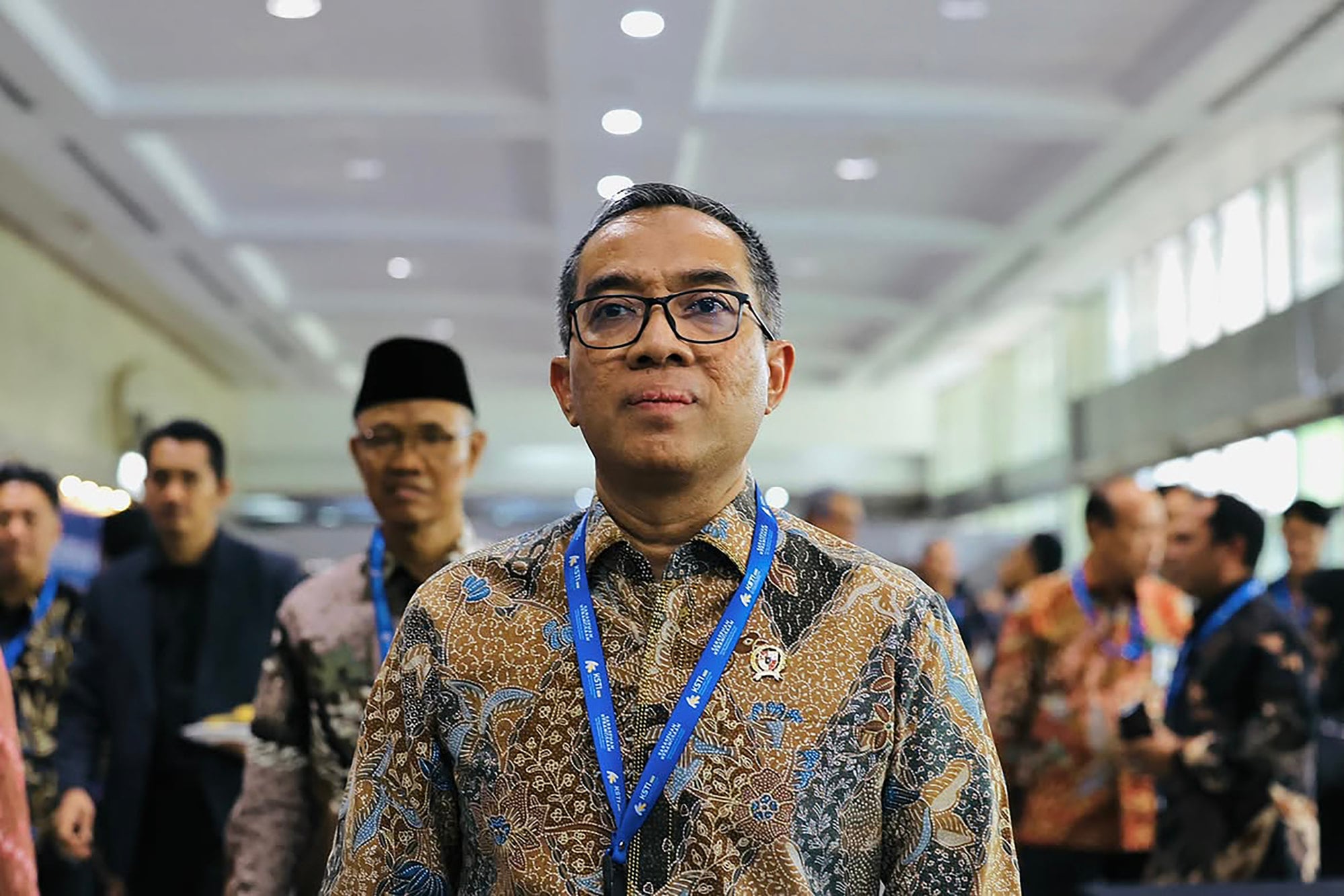
Ida Bagus Mandhara Brasika, a doctoral candidate at the University of Exeter and one of the two academics who exposed the fraud, described Indonesian research as being “always viewed as quantitative figures,” creating what he called a “paper mills industry.”
“People who want to be professors but do not want to do any real research, would just ask their juniors to write and put their names [on the final papers],” he said. “This happens a lot in Indonesia, but we have never discussed it, so there is never any real change.”
The Rise of AI in Academic Dishonesty
Observers say the system has created an environment that encourages academics to publish low-quality papers to advance their careers. A peer-reviewed study in Springer’s Quality and Quantity International Journal of Methodology last year found that the main causes of 148 formally retracted publications by Indonesian-affiliated scholars were “plagiarism, duplication, authorship disputes and predatory outlets.”
Kumba Digdowiseiso lost his post as dean of economics and business at the National University in Jakarta after being credited with at least 160 papers between 2023 and 2024, according to Retraction Watch, a public retraction database.
Lambung Mangkurat University in South Kalimantan had its accreditation downgraded to a “C,” indicating serious institutional deficiencies, by the higher education ministry after officials revoked the professorships of 28 lecturers in 2024 and 2025 over academic integrity violations.
“This is not fringe activity. It is a service sector responding to demand created by a broken promotion system,” said Sembiring.
He added that the rise of AI in academia has “altered the cost structure of dishonesty.” “Many people stayed honest simply because dishonesty was expensive. AI has collapsed that price,” Sembiring said.
Lack of Oversight
After detecting the fraud, Mandhara Brasika said he “did not know” where to report it, as the perpetrators were not affiliated with any institution.
“We feel like there’s not a clear enough [oversight] system for academic ethics in Indonesia. What are the reporting channels? What’s the mechanism? To date, I’ve never found any clear regulations in this context,” he said.
Sembiring suggested redesigning the credit score system to raise the quality of Indonesian research. “Widen the definition of contribution itself. Supervision, open data, policy engagement and public science communication are all real academic work, and none of them can be bought from a paper mill,” he said.
Both doctoral candidates said the scandal had yet to affect their studies abroad, but they expressed fear that trust in Indonesian researchers could decline without systemic reform.
“The credibility of the Indonesian researchers who came before me, who published honestly and built reputations over decades, is part of why doors opened for my generation,” Sembiring said.
“Watching a handful of people spend down that collective credibility for conference travel grants is genuinely painful.”
An erosion of trust in Indonesian research could also undermine the country’s ambition to become a developed nation, Mandhara Brasika said.
“When global researchers don’t trust us, our research, innovation and development as a nation will definitely stagnate,” he said.