Escalation of Tensions Between the US and Iran
US President Donald Trump has declared that the ceasefire with Iran is “over” following a series of strikes launched by Washington against the country. In response, Iran targeted US bases in the Gulf, escalating the already volatile situation between the two nations.
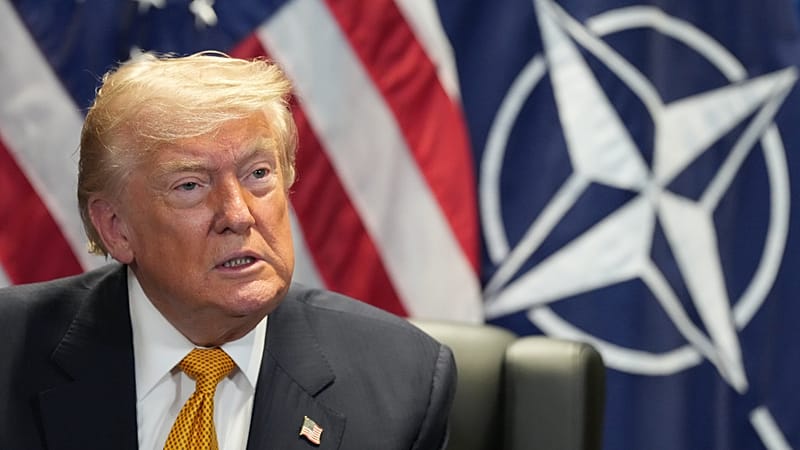
At a NATO summit in Ankara on Wednesday morning, Trump addressed questions about the status of the truce with Iran. “As far as I am concerned, it’s over,” he stated. He further criticized Iran, calling its leadership “scum” and accusing them of being “sick people” led by “vicious, violent people.” Trump emphasized that if Iran had a nuclear weapon, they would use it. He also expressed his intention to speak with Steve Witkoff and Jared Kushner, who have been involved in negotiations with Iran, but made it clear that any future talks would depend on Tehran’s willingness to return to the table.
Trump accused the Islamic Republic of misrepresenting the terms of the agreement signed on 17 June, which was meant to prevent Iran from developing nuclear weapons. “Everyone’s agreed, no nuclear weapon. We make a deal. They go outside, joke to the press, they say we never even talked about it. There’s something wrong with them, they’re cuckoo,” he said.
Iranian Response and Military Posturing
Iranian military officials responded to the attacks with strong rhetoric. Rear Admiral Habibollah Sayyari, Chief of Staff and Deputy Coordinator of the Iranian Army, stated that “Iran’s armed forces, standing alongside the people, are so strong and steadfast that the enemy knows any attempt to land troops on Iran’s coastlines would mean entering a living hell from which there would be no escape.” He added, “Our response is clear: ‘If you dare, come.’”
The Khatam al-Anbiya Central Headquarters, Iran’s joint military command, warned neighboring countries providing support to US forces that they would be considered legitimate targets for Iran’s armed forces, according to state-run television.
The Islamic Revolutionary Guard Corps (IRGC) claimed to have targeted “85 locations at key US military facilities in the region.” Iranian parliament’s National Security Commission spokesperson Ebrahim Rezaei stated that the Islamic Republic was “not intimidated by the bluster and threats of figures like Trump.” He added, “We are prepared to confront any evil.”
US Strikes and NATO’s Reaction
The US launched overnight strikes on Iran, hitting more than 80 targets, according to US Central Command (CENTCOM). The attacks were in response to Tehran’s attacks on three ships in the Strait of Hormuz. CENTCOM stated that US forces struck Iranian defense systems, command and control networks, coastal radar sites, anti-ship missile capabilities, and over 60 Islamic Revolutionary Guard Corps small boats in and near the strait.
NATO chief Mark Rutte called the strikes “absolutely necessary,” stating that it was crucial for the US to react forcefully after Iran violated the ceasefire. “When you have a ceasefire and Iran is basically violating the ceasefire – we see what happened yesterday with ships being attacked – I think it is totally crucial that the US forcefully react,” Rutte said.
Iran immediately warned Washington it would “take whatever measures it deems necessary,” raising concerns that the framework deal halting the fighting could break down, potentially leading to wider conflict in the Middle East.
Regional Impact and Ongoing Conflicts
Bahrain, home to the US Navy’s 5th Fleet, sounded its missile alert sirens on Wednesday morning following the American attack on Iran. Meanwhile, the Kuwaiti army reported engaging hostile missile and drone attacks, without specifying the origin.
CENTCOM stated that the US strikes were aimed at “imposing heavy costs for targeting and attacking commercial shipping crewed by innocent civilians in an international waterway.” It also mentioned that the US military remains “postured and prepared to hold Iran accountable when the agreement is not adhered to or obeyed.”
Iran accused the US of repeatedly violating the memorandum of understanding between the two sides and threatened retaliation. Iranian parliament speaker Mohammad Bagher Ghalibaf wrote on X, “The era of bullying and extortion is over. It leads nowhere. We don’t fold.”
Iranian state media reported explosions in Bandar Abbas, Qeshm, and Sirik, as the central military command warned of a decisive response to the aggression. “Under no circumstances will (the Iranian armed forces) allow interference in the affairs of the Strait of Hormuz, nor will they permit others to manage it,” it said.
A similar pattern of Iranian attacks on shipping and US strikes occurred late last month, which led to Iranian attacks on Bahrain and Kuwait. The US revoked a license authorizing the sale of Iranian oil as part of the interim deal following the attacks on shipping.
One tanker was hit and caught fire off the coast of Oman, while two other ships sustained damage but no injuries were reported, and both continued their journey in the Strait of Hormuz.