Super Typhoon Bavi: Preparations Underway as China Braces for Catastrophic Weather
As Super Typhoon Bavi approaches, the Chinese government and local authorities are taking extensive measures to prepare for what is expected to be the strongest and most widespread typhoon of this year’s flood season. Emergency shelters are stockpiling supplies, weather forecasters are preparing rolling alerts, and rescue teams are on 24-hour standby. The typhoon is predicted to make landfall on China’s eastern coast between Saturday night and Sunday morning.
In a statement released on Tuesday evening, the Hangzhou government in Zhejiang province urged all departments to remain “highly alert” and prepared for the worst. The government emphasized the importance of reviewing past cases, such as Typhoon Lekima, which caused significant damage and loss of life in 2019. It called for more precise forecasts, detailed evacuation plans, and the preparation of emergency supplies.
A reservoir in the region has already begun discharging floodwaters in anticipation of heavy rainfall expected over the next few days. Since reaching super typhoon status on Saturday, Bavi has been moving westward and has already brought catastrophic winds to western Pacific islands this week. The storm is now approaching Taiwan, where its most severe effects are expected on Friday and Saturday.
According to meteorological forecasts, after grazing the northern part of Taiwan, Bavi is likely to make landfall along the coastal area near the Zhejiang-Fujian border on Saturday. This will affect the eastern provinces and Shanghai before gradually moving inland and northward.
Nearshore waves measuring 2 to 8.5 meters are expected along the coasts of Jiangsu, Zhejiang, and Fujian, according to Cai Jingze, an engineer from the National Marine Environmental Forecasting Centre. The centre warned that Bavi is the strongest and most wide-ranging typhoon of this year’s flood season. All coastal tourist attractions should be closed, boats should be docked, and other infrastructure should be maintained and checked.
Provincial Preparedness Measures
Preparations are underway across multiple provinces. In Zhejiang, firefighters have conducted search and rescue drills this week. As of Wednesday morning, the province had halted 52 passenger ferry routes, evacuated more than 3,000 people from coastal islands, and deployed 72 patrol boats, eight tugboats, and one rescue jet on standby for emergencies.
Jiangsu province also issued directives to halt junior high schools, primary schools, kindergartens, and extracurricular activities for the next two days. Authorities called for checks on construction sites, billboards, trees, and underground parking spaces to prevent flooding and structural failure. Four provincial teams were sent to coastal cities in Jiangsu to assist with preparations, while 656 lots of mobile pump and drainage equipment were deployed at high-risk sites. A total of 4,842 people were patrolling and monitoring the area, and local authorities sent text messages to residents cautioning them to stay indoors.
Shanghai’s weather forecaster reported that the region could experience several days of extreme heat, with temperatures reaching up to 35 degrees Celsius (95 degrees Fahrenheit). Heavy rain from the typhoon is expected on Friday.
Forecaster Xiang Chunyi told state broadcaster CCTV that conditions favored Bavi’s progression to a super typhoon, with unusually high sea surface temperatures along its path and steady moisture feeding into the storm’s center. She noted that the typhoon’s path remains uncertain, with a possibility of landing in eastern China and tracking northward.
Broader Impact of Extreme Weather
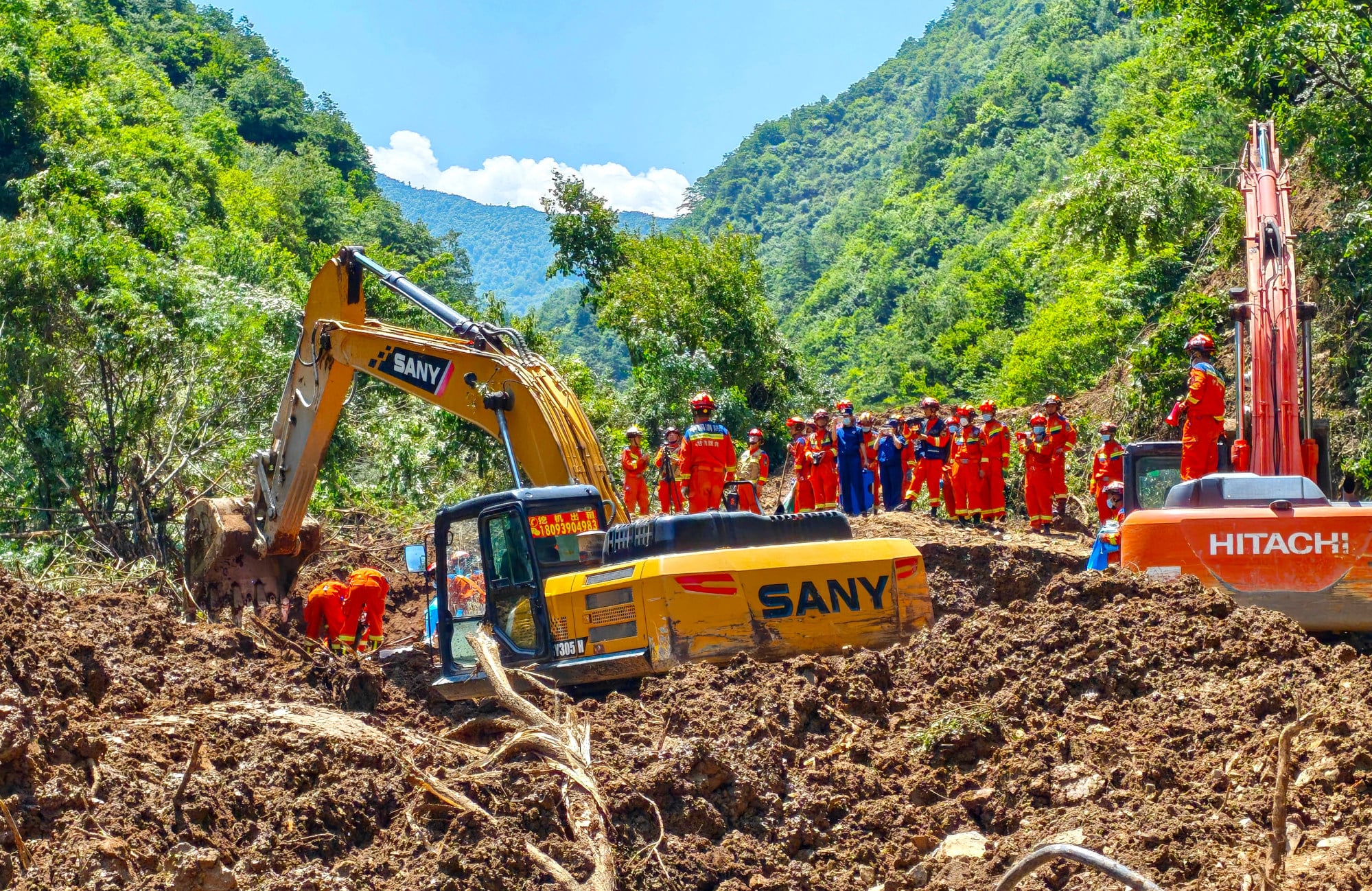
China is facing challenges from extreme weather and geological disasters across various regions. In the northwest, forestry workers were engulfed by a landslide, while in the south, rescue parties are searching for those trapped in unprecedented floods. The government of Longnan, Gansu province, announced that all 33 individuals involved in the landslide incident were rescued. In total, 21 people had died and seven were injured throughout Gansu.
The area has experienced several days of rain, with local weather forecasters issuing an orange alert, the second highest in a four-tiered system, warning of 6 cm (2 inches) of rain. In central and southern China, residents are still dealing with the remnants of Typhoon Maysak.
A tornado struck Huanggang in Hubei province, damaging rooftops, roads, and trees. The rare twister even broke a window and sucked a man out of his 12th-floor flat, according to the Xiaoxiang Morning Post. The man landed in a bush and was being treated at a local hospital.
In Hengzhou, Guangxi Zhuang autonomous region, some villagers were bitten by cobras after a snake farm collapsed in the floods. Volunteers tracked them down on social media and provided serum, while others went to local hospitals. Local media reported that a woman who was bitten by a reptile had died, and the city immediately expanded serum storage in local hospitals and asked for medical staff training on how to deal with snakebites.
Warnings were also sent to villagers to stay indoors at night and avoid field weeds and ditches.
Earlier this week, a reservoir suffered a breach, leading to flooding in multiple villages where people were trapped on rooftops and farms collapsed. A local entrepreneur told China Newsweek that 16,000 pigs from another farm were also washed away. He said he had prepared for flooding when he heard of Typhoon Maysak but never expected the dam to break.
When the flood engulfed factory houses, the entrepreneur told staff to move to higher ground. The water destroyed almost all the factories, with an estimated loss of 50 million yuan (US$7.36 million), but all the workers were safe, he said.
Hengzhou, known as the world capital of jasmine flowers, handles more than 80% of China’s jasmine tea production. The damage from the flood to its local industry was described as “incalculable” by staff at a local tourism board.
Guangxi is still facing persistent rainfall and a high risk of landslides and dams breaking, the government said on Tuesday night. In multiple cities, roads, electricity, and communications have not yet recovered, and some residents face water shortages.
By noon on Wednesday, the flooding had affected Zhaoqing in Guangdong province, downstream from Guangxi. Water is expected to rise to 20.5 meters by Thursday morning at Fengkai county, where 348 people have already been evacuated, according to CCTV.