The Struggle for the Soul of Football
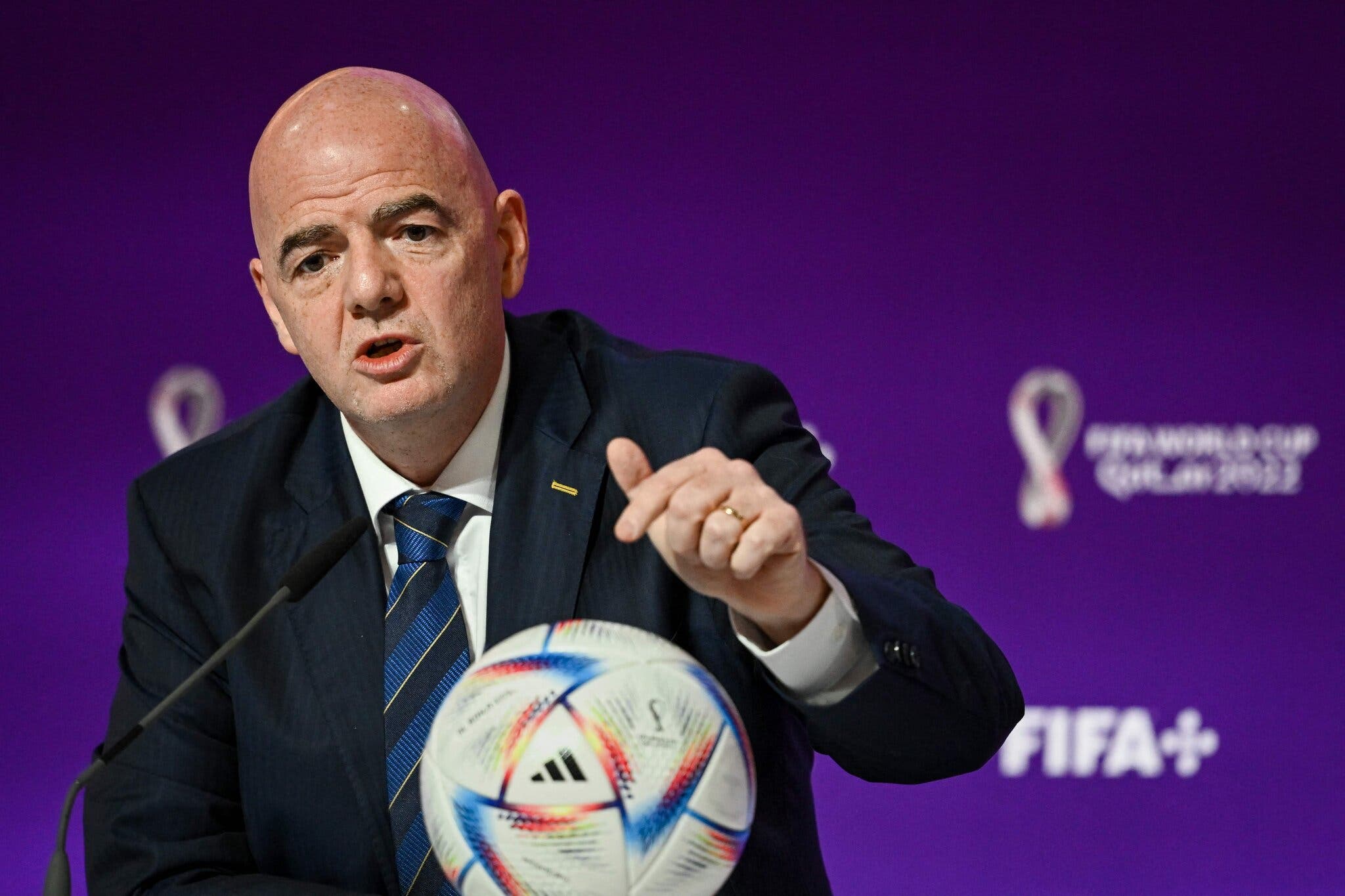
A bitter and deeply troubling civil war has erupted within FIFA, the global governing body of football. This conflict is not being fought on the pitch but in boardrooms, corridors of power, and behind closed doors. It is an internal struggle over money, governance, political influence, and ultimately, who controls the future of the world’s most popular sport.
The crisis began in late July when FIFA President Gianni Infantino introduced the controversial FIFA Forward Enterprise, a commercial initiative that would consolidate FIFA’s lucrative commercial rights and tournament operations. Under this proposal, FIFA would retain control while selling a 20 to 21 percent minority stake to private investors. The World Cup, along with other properties, would serve as collateral for the enterprise.
The proposed investment target was around $20 billion. However, UEFA has raised concerns about whether this valuation accurately reflects the true worth of FIFA’s commercial assets.
On the surface, the proposal appears attractive. FIFA claims it would unlock previously untapped commercial value and significantly increase development funding for its 210 member associations. According to the plan, ordinary FIFA Forward funding would rise from $8 million per association in the 2023–26 cycle to $20 million for 2027–2030. An optional Fast Forward programme could potentially boost this to $40 million per association.
This is a substantial incentive. However, the proposal seems to ask football associations to endorse a fundamental restructuring of FIFA’s commercial model in exchange for more money. In a federation where many poorer national associations rely heavily on FIFA development funds, this creates an uncomfortable imbalance of power.
A former administrator from Papua New Guinea has argued that the funding system can make smaller associations hesitant to challenge FIFA, as these funds are critical to their survival. The suspicion was further fueled by the identity of the proposed investment partner: Thrive Capital, an investment firm founded by Joshua Kushner, brother of Jared Kushner, a close associate of former U.S. President Donald Trump. This connection became particularly sensitive due to Infantino’s increasingly visible relationship with Trump.
The pushback was swift and fierce. UEFA led the revolt, with CONCACAF and the Asian Football Confederation also expressing serious concerns. UEFA threatened to boycott FIFA competitions unless its concerns were addressed. Even after Infantino withdrew the proposal, UEFA has refused to declare the matter closed, demanding guarantees that a similar attempt will not be revived.
The rebellion has exposed how badly trust has deteriorated. The dispute has been framed as a fight over the commercialization and governance of football. Critics fear that FIFA is moving away from its traditional role as the custodian of the game toward becoming an aggressive commercial enterprise where television rights, sponsorship, hospitality, ticketing, and investment returns increasingly dictate policy.
That fear is not entirely unfounded. During the 2026 World Cup, ticket prices and hospitality costs reached extraordinary levels, with some premium packages and resale tickets running into tens of thousands of dollars. Some fans even bought $20,000 tickets! This means that the World Cup is becoming increasingly inaccessible to ordinary supporters.
A game once built around terraces, cheap tickets, and working-class passion risks becoming an entertainment product designed primarily for those with deep pockets. That is a dangerous transformation.
Infantino has made several controversial decisions since his election in 2016, succeeding Sepp Blatter. His tenure has been marked by an appetite for expansion. He has advocated for more teams, more matches, and more commercial opportunities, inevitably leading to more money.
The 2026 World Cup is the clearest example. FIFA expanded the tournament from 32 to 48 teams, resulting in 104 matches compared to 64 in Qatar. While there is a defensible argument for expansion—more countries get the opportunity to participate, and historically under-represented regions gain greater access—the point at which inclusion becomes dilution is a concern.
Infantino has already opened the door to a 64-team World Cup, potentially as early as 2030. FIFA is examining the idea after a proposal emerged from South America. Earlier, it proposed a biennial World Cup! That should worry purists.
The World Cup’s magic lies partly in scarcity. Qualification is difficult; participation is precious; every match matters. If 64 of FIFA’s 211 members eventually make the finals, almost a third of the world’s football associations would be there. The tournament could become bloated, while qualification itself loses some of its drama.
More teams also mean more matches, more broadcasting inventory, and more commercial opportunities. That raises the uncomfortable question of whether expansion is primarily about developing football or monetizing it.
The same concern has been amplified by the handling of the Folarin Balogun red-card controversy at the 2026 World Cup. After the American striker was sent off against Bosnia and Herzegovina, FIFA suspended the automatic one-match ban, making him eligible to play against Belgium. Trump had acknowledged that he personally contacted Infantino to request a review of the decision. Infantino insisted that FIFA’s judicial bodies remained independent, but Belgium’s football authorities condemned the decision as contrary to established regulations.
The issue was not whether Balogun deserved the red card. The deeper problem was perception. When a national president calls the president of FIFA about a disciplinary decision involving his country’s star player, and that player subsequently becomes eligible to play, the institution creates an appearance of political influence that football cannot afford.
Governance depends not only on decisions being independent but on their independence being visibly beyond reasonable suspicion.
There is also the Saudi Arabian question. FIFA awarded the 2034 World Cup to Saudi Arabia in December 2024. The decision was controversial, as was the awarding of the 2022 tournament to Qatar, because both decisions intensified debate about FIFA’s relationship with authoritarian states, human rights, and the use of mega-sporting events as instruments of national image-making.
Then there is Infantino’s extraordinary closeness to Trump. In December 2025, Infantino presented Trump with FIFA’s inaugural Peace Prize. FIFA described the award as recognition of Trump’s efforts to promote peace and unity. But the award immediately generated accusations that FIFA was compromising its own political neutrality.
The relationship has since become impossible to ignore. Trump and Infantino were together on the pitch after the 2026 World Cup final, jointly presenting the trophy to Spain captain Rodri after Spain defeated Argentina. The spectacle was extraordinary enough, but coming amid the wider controversy over FIFA’s relationship with the American administration, it inevitably raised questions about the boundaries between football administration and political power.
Trump has now publicly warned that FIFA would make a “terrible mistake” by replacing Infantino. That is hardly a helpful intervention for an organization already accused of excessive political entanglement.
Infantino, a Swiss-Italian lawyer and former FIFA general secretary, clearly believes he has enough support to survive the revolt and secure another term. His supporters are formidable. The United States is behind him, while CAF and other football associations remain supportive. His strategy has been politically astute: give more members more money, expand their World Cup opportunities, and build a coalition beyond the traditional European power structure.
Africa now has nine guaranteed places plus a play-off opportunity under the 2026 format, a major increase from the previous five places. For many African associations, Infantino’s expansion of the World Cup has been a historic gain. But Africa must distinguish between supporting greater African representation and blindly supporting an individual.
It is legitimate for African football to welcome more World Cup places, demand greater development funding, and support commercial innovations that can finance football infrastructure across the continent. What is not legitimate is treating development money as a substitute for institutional accountability.
CAF President Patrice Motsepe has backed Infantino, and several African associations remain firmly in his camp. Morocco, which will host the 2030 World Cup alongside Spain and Portugal, is also regarded as an important Infantino ally. But Africa should not become the voting bloc that helps convert FIFA into a corporation whose commercial decisions are made first and justified later.
The irony is that Infantino’s greatest achievement may also become his greatest vulnerability. He has made FIFA richer, expanded the World Cup, increased opportunities for smaller nations, and strengthened football’s global commercial footprint. Those are substantial achievements. But the more powerful FIFA becomes financially, the more dangerous weak governance becomes.
The real question is therefore not whether Infantino has made FIFA successful. It is whether he has made FIFA too powerful for its own institutional safeguards.
The Forward Enterprise controversy has exposed a fundamental fault line. FIFA says the proposal is about unlocking billions for football development. Its opponents see an attempt to commercialize the game’s core assets without adequate consultation, transparency, or safeguards.
UEFA is even considering an independent valuation of FIFA’s commercial rights because of concerns that the proposed amount may have undervalued them. That is not a minor disagreement over accounting. It goes to the heart of who owns football’s future.
Infantino should therefore come down from his high horse. He should stop treating dissent as an obstacle to his agenda and recognize that UEFA, CONCACAF, AFC, and the other dissenting voices are not enemies of football. They are stakeholders.
The answer to this crisis is not another grand commercial scheme, another promise of development money, or another political alliance, but a clear separation between football governance and political influence. And above all, it is respect for the principle that FIFA is not Infantino’s personal empire.
Football belongs to its players, supporters, clubs, associations, and billions of fans who give the game its extraordinary value. The president is merely its custodian. If Infantino forgets that distinction, his current crisis will be remembered as a costly gamble that went wrong.