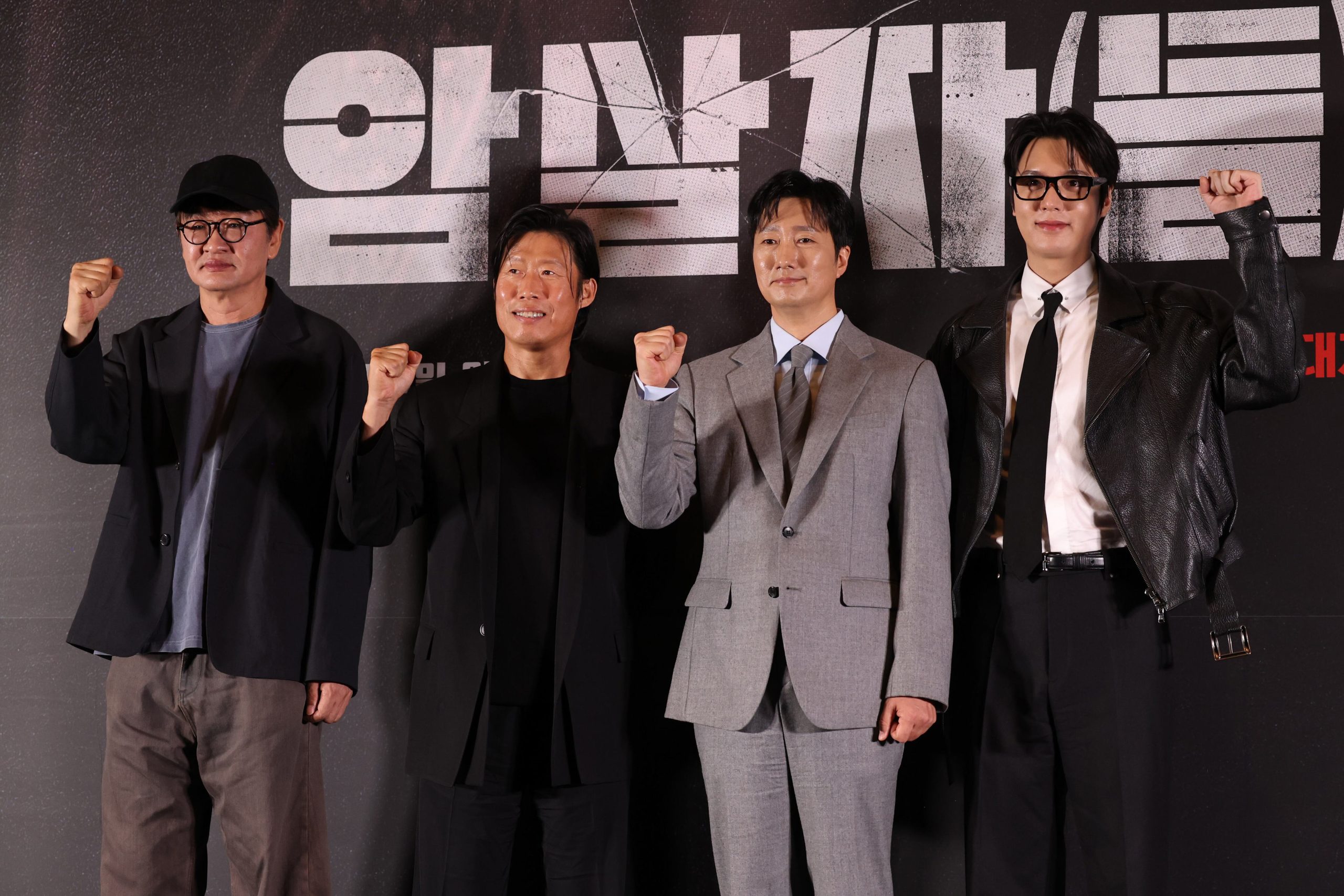
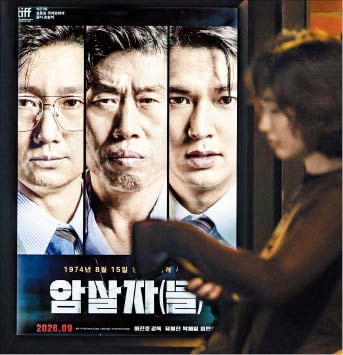
Controversy over historical distortion surrounding the film *The Assassin(s)*, which depicts the shooting of First Lady Yuk Young-soo, is intensifying. Concerns are growing that the movie, which goes beyond filling gaps in historical facts, is instilling a distorted view of history through unverified hypotheses and arbitrary interpretations.
The film implies the possibility that former President Park Chung-hee or the Central Intelligence Agency were involved in the shooting of First Lady Yuk, which was confirmed to be a lone act by Mun Se-gwang, a pro-North Korea Korean-Japanese resident allegedly acting under the Pro-North Korea Federation of Korean Residents in Japan. Audiences have expressed extreme resentment, with reviews flooding in: “It made conspiracy theories seem like facts,” “Historical distortion… a waste of money.” After opening on the 23rd, the film maintained the top spot at the box office during the Chuseok holiday but dropped to second place behind *Tazza: The Song of Beelzebub* on the 28th as viewership declined.
Criticism poured in from the opposition, including the People Power Party, calling it “an unpardonable act that cannot be justified by freedom of expression.” By the 29th, police complaints had been filed against the production team. While the team requested, “Please view it as a creative work,” critics argue that the line between creative freedom and historical distortion has been crossed. Distorted historical perceptions within parts of society are being amplified through such films.
◇Driving the bereaved victim to appear as the perpetrator… ‘cinematic imagination’ rhetoric
The core of the controversy is the film’s hypothesis that there was a hidden mastermind behind the shooting of First Lady Yuk, contrary to actual historical facts. Viewers say, “The film consistently suggests, directly or indirectly, the possibility of former President Park Chung-hee or the Central Intelligence Agency’s involvement.” This weaves together suspicions raised by some current affairs and entertainment TV programs, such as *Now We Can Speak* and *Tails of Tales*, to dramatize them. Historical facts are distorted by combining suspicions circulating in the media with cinematic imagination.
Experts state, “While perspectives on history and interpretations of facts may differ, confirmed facts and unverified hypotheses must be distinguished.” This work is criticized for actively incorporating unverified facts or absurd suspicions while excluding others, such as a 2002 foreign media report that Kim Jong-il apologized to Park Geun-hye, then head of the Korean Future Union, during her visit to North Korea, or testimonies from other witnesses at the scene. It selectively splices events and statements needed for the film.

◇Twisting history under the guise of imagination and freedom of expression
Criticism also arises over the lack of consideration in handling an event where the victim’s family and grieving citizens are still alive. The Park Chung-hee Presidential Memorial Foundation stated, “We deeply regret the distortion of a historical tragedy that inflicted irreparable pain on former President Park Chung-hee and his family,” demanding an apology and cessation of the film’s screening.
Online backlash remains unabated. As of the 29th, critical comments flooded the social media of cast members, actors who wrote recommendations for the film, and YouTube channels that introduced it. Audiences express fatigue toward films reinterpreted through biased perspectives of modern history. Reviews on Naver include, “Another pathetic leftist propaganda film repeated during holidays,” “The public is no longer fooled by such political propaganda films.” One viewer wrote, “After watching the film, I researched the actual history and realized how absurd this conspiracy theory is.”
◇ “The film industry’s chronic ‘historical distortion commercialism’… must have a sense of responsibility”
Controversies over historical distortion in films are not new. As modern history-related films like *12.12: The Day*, which surpassed 10 million viewers, continue to succeed, criticisms arise that historically unproven controversial topics are sensationalized to attract audiences. Professor Hwang Geun of Sunmoon University’s Media and Communication Department said, “Modern history films tend to exaggerate and polarize small facts, similar to the mechanism of fake news created for profit. This film seems to have chosen a path to commercial success through ‘noise marketing,’ even if it invites criticism.”
Historians emphasize that when modern history is turned into content, its societal impact must be considered. Younger generations, who did not experience the events firsthand, might accept fictional settings as “facts” after encountering them in films or dramas. Distinguished Professor Shin Bok-ryong of Konkuk University’s Political Science and Diplomacy Department stated, “Historical dramas cannot justify depictions that deviate significantly from facts by saying, ‘Please view it as fiction.’ Recent historical content crosses dangerous lines to attract audiences. Those creating historical works must have a sense of mission as ‘half-historians.’”
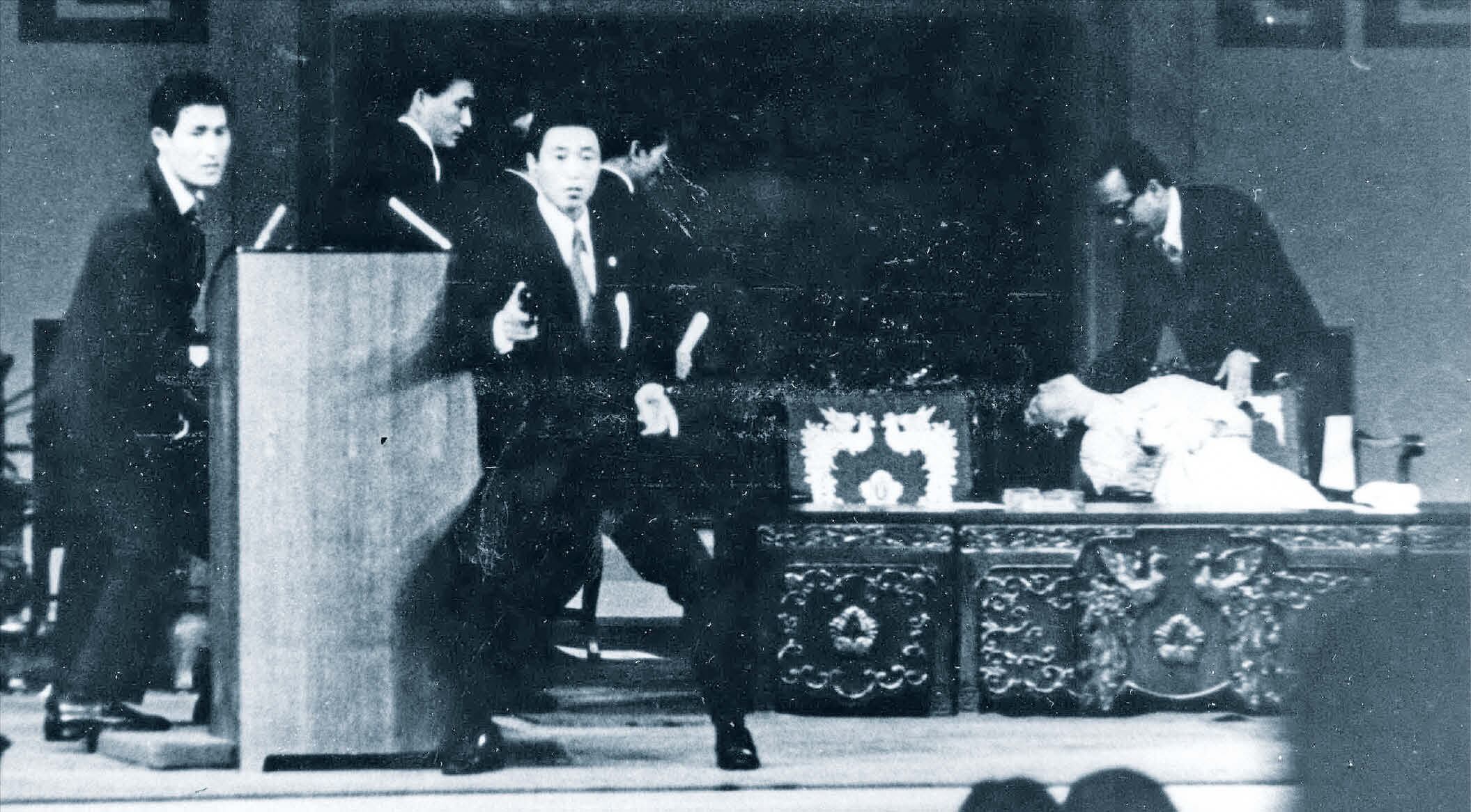
While events like the May 18 Democratic Uprising, the Jeju April 3 Incident, and the shooting of First Lady Yuk are all significant parts of modern history, the progressive camp’s “double standard”—allowing no alternative historical interpretations for May 18 or April 3 while advocating freedom of expression for films about the Park Chung-hee era—is also criticized. One viewer wrote, “What would happen if a film claimed North Korea intervened in the Gwangju Democratic Uprising in 1980? The cultural scene is too left-leaning, which is worrying.” Online, parody content like *The Suicides(s)*, *The First Lady(s)*, *The Truth of the Owl Rock*, and *Asura: Withdrawal of Prosecution* are being created as “mirroring” responses.
People Power Party Representative Joo Jin-woo said, “Just as Paichai High School students visited the May 18 cemetery, the director and actors of *The Assassin(s)* should visit former President Park Chung-hee’s grave and apologize.” Independent Representative Han Dong-hoon stated, “If a film claimed the May 18 Uprising was a North Korean act, or the Sewol Ferry disaster was the Democratic Party’s fault, it would have faced severe criticism.”
◇The ruling party blocks parliamentary audit for ‘The Assassin(s)’ director while summoning ‘The Founding War’ director
The opposition demanded, “(*The Assassin(s)*) is an attack on the liberal democratic system and our history,” calling for the film’s screening halt and the director’s attendance at a parliamentary audit. People Power Party leader Jang Dong-hyeok wrote on Facebook, “Attacks on Presidents Syngman Rhee and Park Chung-hee aim to erase the history of the nation’s founding and tarnish the journey of industrialization. This is not an attack on individual presidents but on the liberal democratic system and our history.” The ruling party, however, argued, “Freedom of expression must not be suppressed,” calling the opposition’s criticism “an infringement on the rights of artists.”
During the National Assembly’s Culture, Sports, and Tourism Committee meeting, the opposition proposed summoning *The Assassin(s)* director Hur Jin-ho as a reference witness for the audit, but the Democratic Party opposed it. Democratic Party Representative Lee Jeong-mun argued, “Summoning Director Hur would seriously suppress freedom of expression.” People Power Party Representative Jo Eun-hee countered, “Last year, when *The Founding War* director Kim Deok-young attended the audit, Democratic Party members strongly opposed it, calling it a work denying historical facts like the Jeju April 3 Incident. Have the standards changed in a year?”
- 월 5900원 멤버십, 신문 독자에게는 2900원, 조선멤버십
- 55000원 상당의 신문-잡지 8종 마음껏 보기, 조선멤버십
- 현금처럼 쓸 7000포인트 받아 알뜰한 쇼핑, 조선멤버십

Related posts:
Ambassador Roh Jae-hun optimistic on full-scale Korea-China cultural revival
Majorca vs Menorca vs Ibiza: Which of Spain’s Balearic Islands should you visit?
Hungary’s reckoning with Orban’s corrupt system picks up speed with high-profile arrests
SEREC calls for coordinated national response on productivity, industrialisation, competitiveness