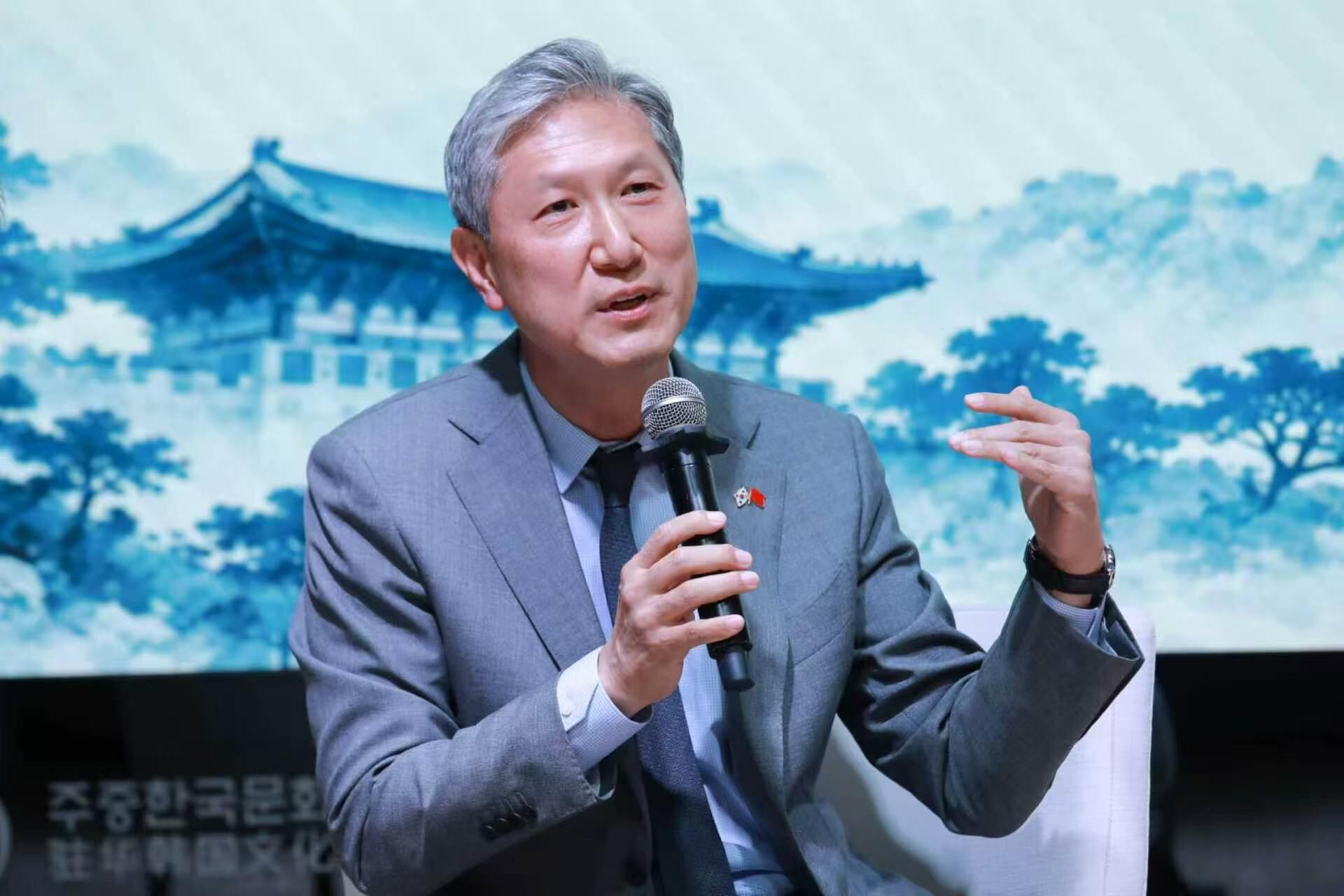
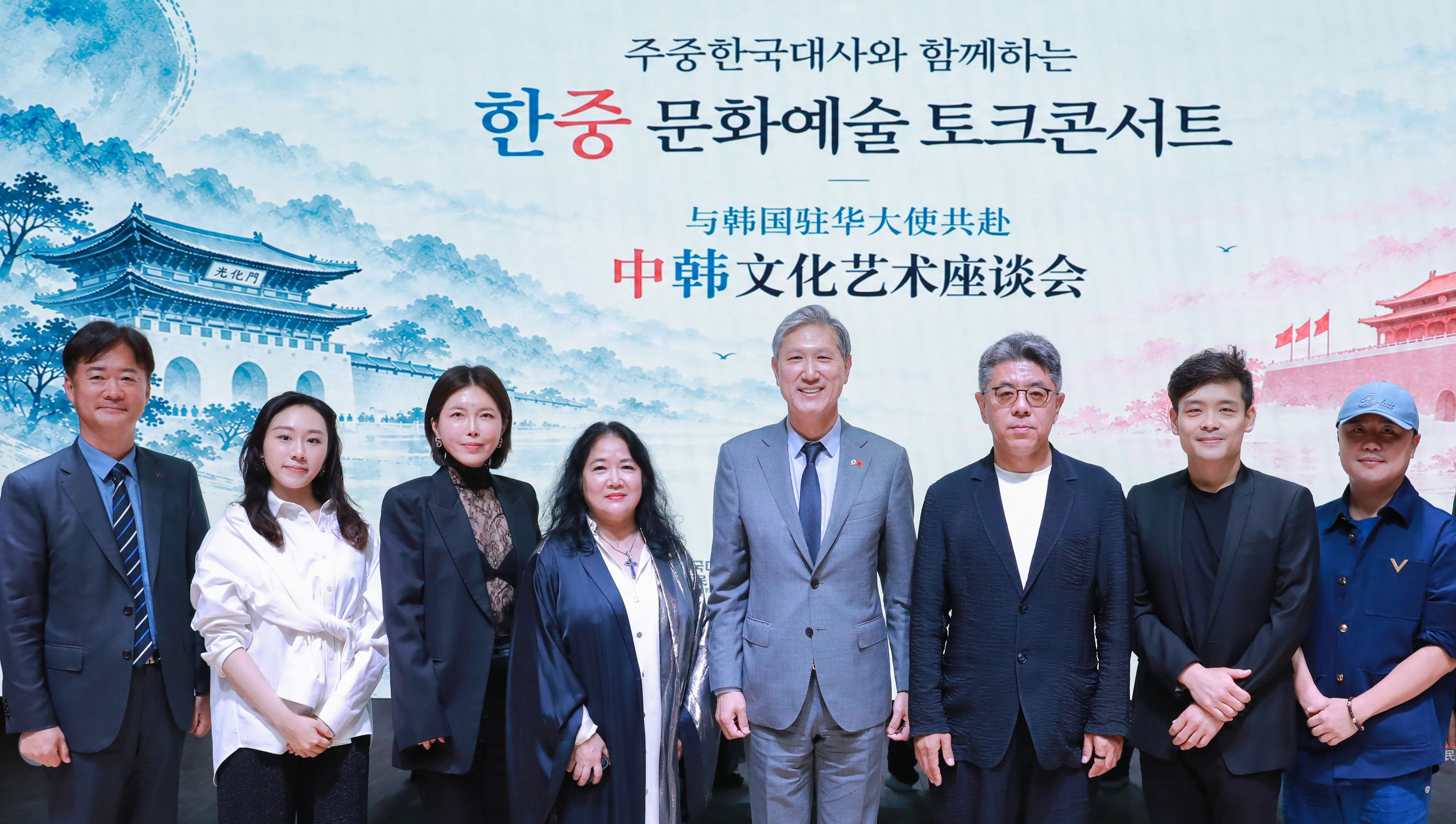
Roh Jae-heon, South Korea’s ambassador to China, said Sept. 29 that cultural exchanges between South Korea and China are poised for a full-scale revival next year, when the two countries mark the 35th anniversary of diplomatic relations.
“I am confident that the 35th anniversary will usher in a comprehensive restoration of Korea-China cultural exchanges,” Roh said at a forum on ways to promote cultural and artistic cooperation between the two countries, held at the Korean Cultural Center in China in Beijing.
Roh said the groundwork had already been laid through summit diplomacy. “At the summits held last year and this year, the leaders of both countries agreed to strengthen cooperation in cultural exchanges, and efforts to thaw the ‘three feet of ice’ have begun across a range of fields,” he said.
The phrase echoed remarks made by Chinese President Xi Jinping during his summit with President Lee Jae Myung in Beijing in January. Referring to cultural exchanges between the two countries, Xi said that “three feet of ice cannot melt overnight” and that “fruit falls naturally when it is ripe,” suggesting that the restoration of exchanges would be gradual rather than immediate.
Held ahead of next year’s 35th anniversary, the forum brought together prominent figures from China’s architecture, contemporary art, fashion and cultural industries to discuss new forms of cooperation between the two countries.
Ma Yansong, founder of MAD Architects and one of China’s most internationally recognized architects, argued that meaningful cultural exchange begins not with simply showcasing what each side already has, but with creating something entirely new together.
“Cultural exchange truly happens when people set out to create something that does not yet exist,” Ma said. “If Korea and China share the goal of creating something new together, cooperation and exchange will follow naturally.”
As an example, Ma pointed to the Lucas Museum of Narrative Art in Los Angeles, a project he spent 12 years designing that opened Sept. 22. The museum was founded by George Lucas, creator of the “Star Wars” franchise, and Mellody Hobson.
“The fact that a Chinese architect designed a museum founded by the creator of ‘Star Wars’ drew attention,” Ma said. “But what matters more is that we created something together that had never existed in either China or the United States.”
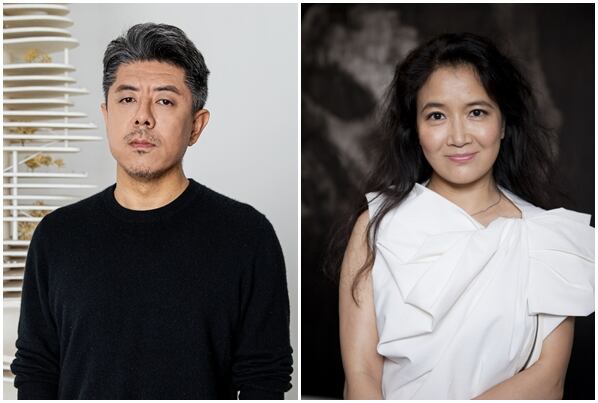
Weng Ling, a prominent Chinese curator and cultural producer, highlighted Korea’s long experience in bringing technology and art together. She said her engagement with Korean contemporary art began in earnest with the 2002 Gwangju Biennale and cited pioneering video artist Nam June Paik as a major example.
“Nam June Paik showed not only how technology can transform art, but also how art can lead technological change,” Weng said.
She said future cooperation between Korea and China should move beyond individual disciplines such as art and architecture.
“At a time when AI and the life sciences are reshaping humanity’s future, we need exchanges of ideas that cross national and disciplinary boundaries, as well as opportunities to create together in person,” she said. Weng proposed creating a global “IDEAS Lab” in Korea where artists, architects, scientists and other creators could explore topics ranging from the future of cities and rural communities to art and design in the age of AI and biotechnology.
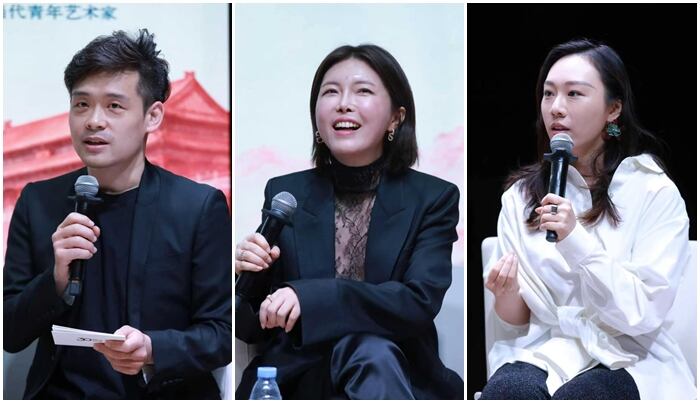
Shi Ning, chief executive of Valentino Greater China and a luxury-industry veteran with more than two decades of experience at brands including Gucci, Louis Vuitton, Chloé and Balmain, said Korean culture had “long been part of my life and a source of inspiration.” She studied Korean by herself and continues to visit Seoul three or four times a year.
Shi said Korea’s cultural strength lies not simply in the success of individual brands but in an ecosystem in which fashion, beauty, food and retail reinforce one another.
“If you ask me to bring just one Korean brand to China, one is not enough,” she said, naming The Hyundai Seoul in Yeouido as what she would most like to bring to China.
“The Hyundai Seoul places global brands alongside emerging Korean labels and gives smaller brands that began in places like Hannam-dong and Seongsu-dong a chance to meet a much wider group of consumers,” Shi said. “It also brings fashion, K-beauty, food and beverage together into a single consumer experience. That is something China can learn from.”
Liu Chang, chairman of Trends Media Group, one of China’s leading fashion and cultural media companies, said, “We need to combine Korea’s creative strengths with China’s market scale and its ability to reach consumers quickly.”
He called for a long-term platform that would bring designers, artists and brands from the two countries together on a regular basis, rather than limiting cooperation to one-off events.
“This should be a two-way partnership,” Liu said. “It can help Korean creativity and brands gain a foothold in the Chinese market, while also giving Chinese brands with their own distinctive creative identity a pathway into Korea.”
He said such cooperation could extend from art and architecture to intangible cultural heritage and brand collaborations, ultimately leading to the joint development of intellectual property and products for global markets.
“The purpose of two-way cultural exchange is to inspire creativity and create new market opportunities for brands,” Liu said. “By doing so, we can strengthen Eastern aesthetics and lifestyles and ultimately give them a greater presence on the global stage.”
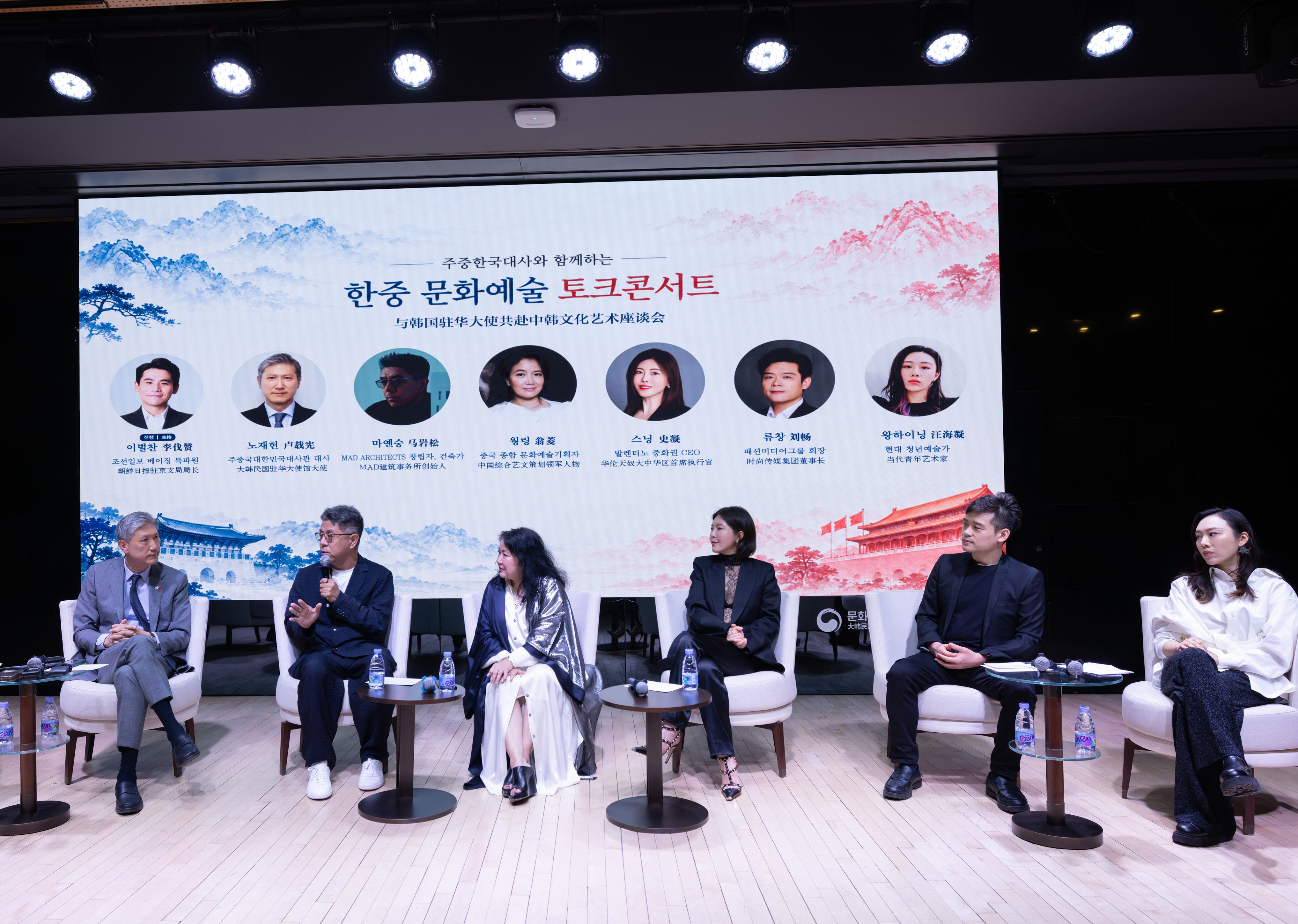
Wang Haining, a young contemporary artist attracting attention in China, recalled visiting a major Damien Hirst exhibition in Seoul in June.
“I waited 90 minutes just to buy a ticket on a weekend, and there were lines in front of individual works inside the exhibition as well,” she said. “Seeing young people dressed stylishly, carrying coffee and spending their weekends at an art museum with friends made me realize that contemporary art has already become part of everyday life in Korea.”
Wang, a Yale graduate who worked at Morgan Stanley and Temasek before becoming an artist, said she has also been influenced by Korean artist Haegue Yang and by the global rise of K-beauty. Her own work incorporates cosmetics and everyday consumer products to explore consumption, desire and identity.
“K-beauty has become a global phenomenon that influences how younger generations understand and pursue beauty,” Wang said. “I would like to see young Korean and Chinese artists create a major exhibition together examining the questions that AI, life sciences, robotics and other technological changes are posing for humanity.”
Roh closed the discussion by quoting the ancient Chinese text Guoyu, or Discourses of the States: “Harmony gives rise to new things; sameness cannot sustain them.”
“We can create something good only when we respect our differences and combine them well,” Roh said. “Unlike when diplomatic relations were first established, both Korea and China now have the capacity to shape global culture.”
He said the next stage of bilateral cultural cooperation should combine the global appeal of K-culture with China’s deep cultural resources.
“We need to create content together that can reach the world,” Roh said. “The ideal model of Korea-China cultural cooperation is not for one side simply to sell its works to the other. It is for the two countries to create something together, hand in hand, and take it to a wider world.”
- 월 5900원 멤버십, 신문 독자에게는 2900원, 조선멤버십
- 55000원 상당의 신문-잡지 8종 마음껏 보기, 조선멤버십
- 현금처럼 쓸 7000포인트 받아 알뜰한 쇼핑, 조선멤버십

Related posts:
Film depicting first lady’s shooting sparks historical distortion controversy

Majorca vs Menorca vs Ibiza: Which of Spain’s Balearic Islands should you visit?
Hungary’s reckoning with Orban’s corrupt system picks up speed with high-profile arrests
SEREC calls for coordinated national response on productivity, industrialisation, competitiveness