“What we call ‘fate’ is not actually the play of the gods but stems largely from human decisions. The accumulation of individual choices forms history, and that history ultimately appears to our eyes as fate.”
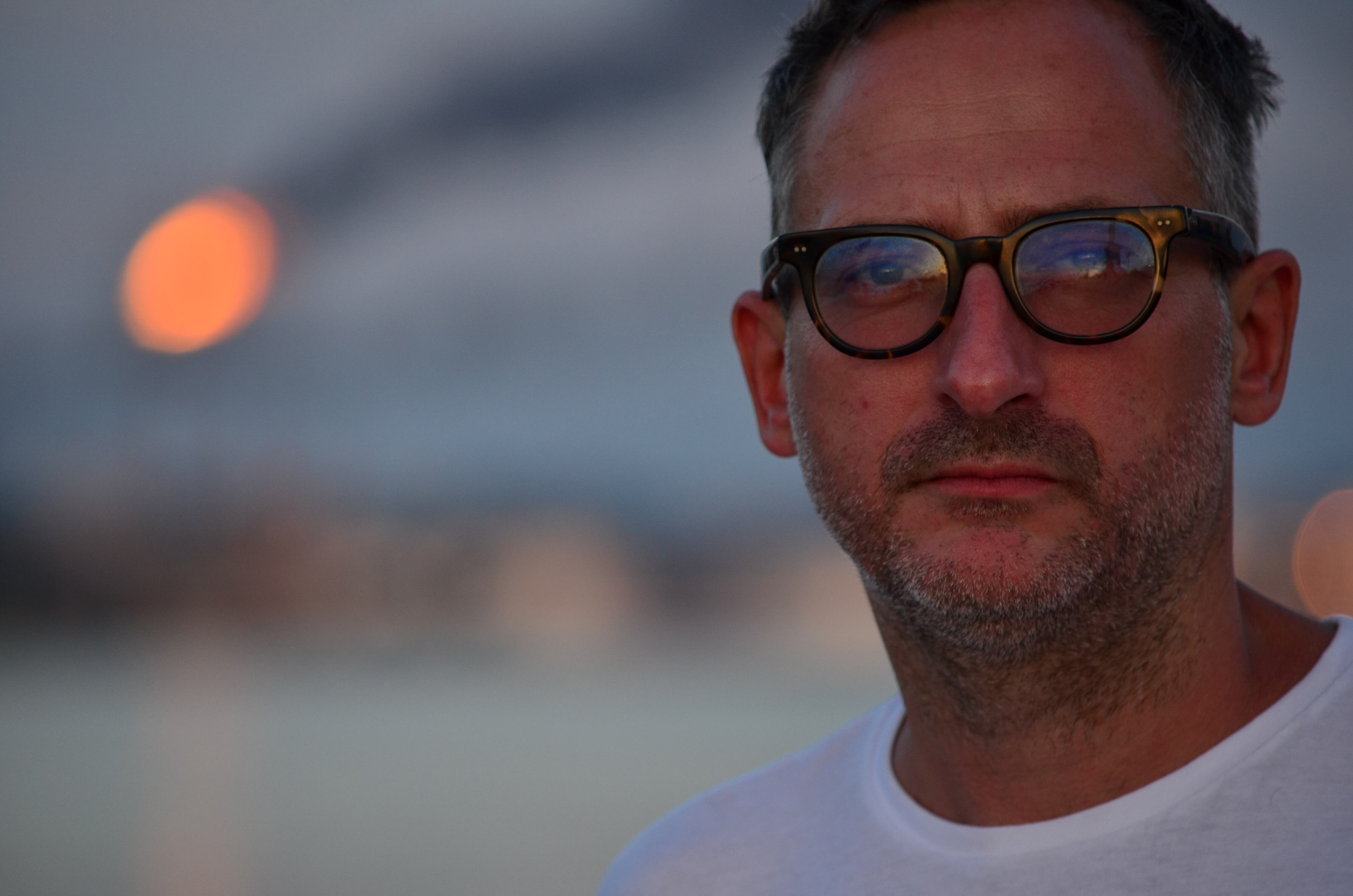
For millennia, people have called the painful and tragic events that destroy the characters in Greek tragedies “fate.” However, German playwright Roland Schimmelpfennig (59 years old) disagrees. In a recent written interview with this newspaper, he said, “Tragedy arises when people believe they have no choices left, even though they still do.” In his five-part play *Anthropolis*, the gods step back, and their place is taken by “humans who make all kinds of mistakes.”
◇National Theater Company of Korea Stages Thebes’ Tragedy
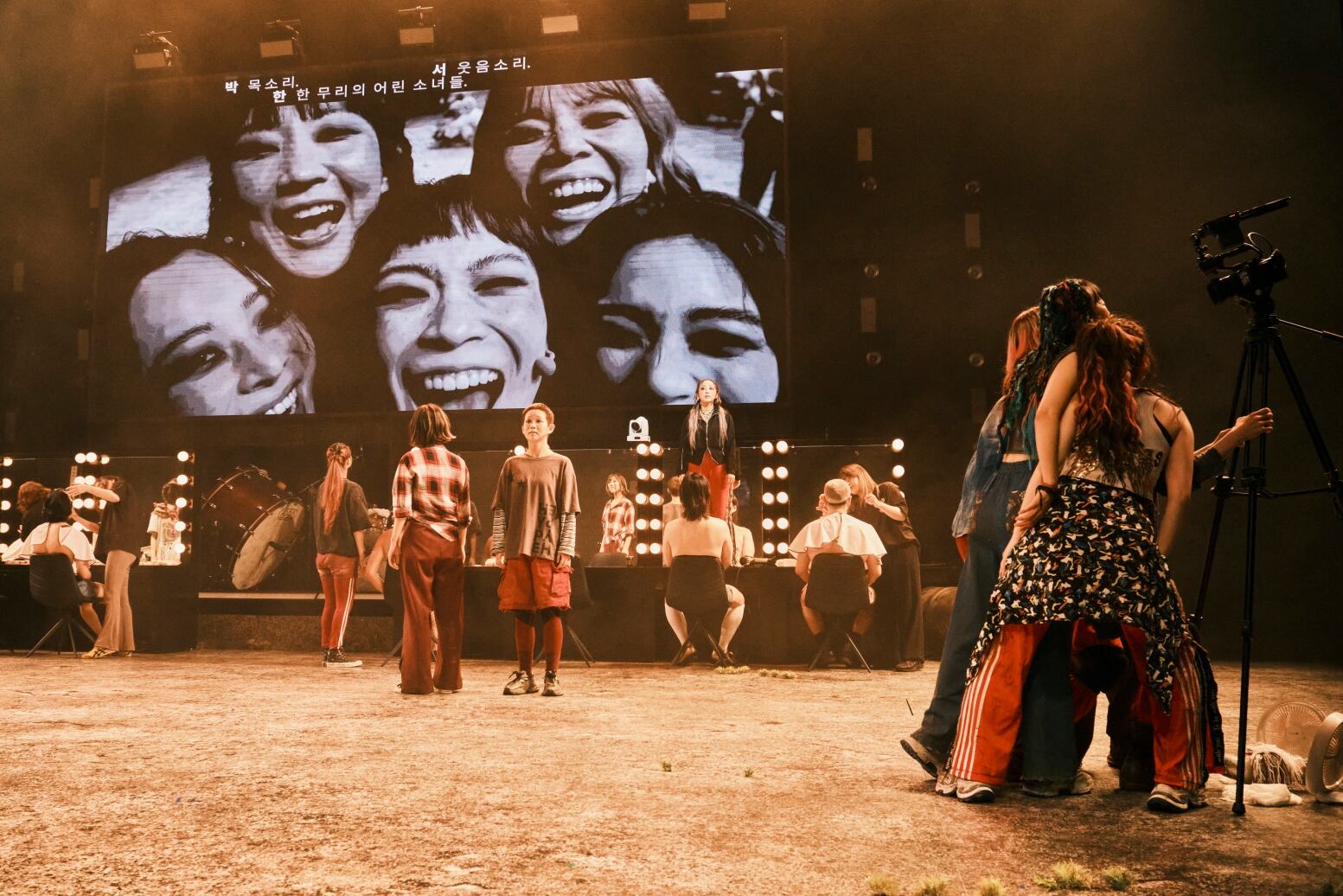
*Anthropolis*, which weaves the birth and fall of Thebes from Greek mythology into a single epic chronicle, has been performed by the National Theater Company of Korea for the second year. Following last year’s Part 1 *Prologue/Dionysus* (directed by Yoon Hansol) and Part 2 *Laius* (directed by Kim Soo-jung), this year’s *Oedipus* (directed by Kang Yang-won, running until October 18), *Jocasta* (directed by Seo Ji-hye, October 28–November 21), and *Antigone/Epilogue* (directed by Jung Young-du, December 2–26) will complete the five-part performance at Seoul’s Myeongdong Theater.
Schimmelpfennig, who won Germany’s prestigious Mühlheim Playwrights’ Award in 2010 for *Golden Dragon*—a black comedy dissecting the underbelly of globalized cities—is renowned for his “shortcut” playwriting style, which collages scenes and freely jumps through time, place, and narrative perspectives. He is described by the Goethe Institute as “the most widely performed contemporary German playwright in the world.”
◇A Contemporary German Playwright Meets the World
For Schimmelpfennig, *Anthropolis* is a large-scale expansion of his previous works, which adapted Greek myths like *The Odyssey*, *Phaedra*, and *Dionysus* to explore collisions between cities and power, individuals and society, and myth and reality. Starting with Cadmus and Dionysus during Thebes’ founding, it reconstructs the bloody family history and the city’s trajectory through Laius, his son Oedipus, Oedipus’ wife Jocasta, and their daughter Antigone.
Part 1 is based on Euripides’ *The Bacchae*, Part 3 on Sophocles’ *Oedipus the King*, Part 4 on Aeschylus’ *Seven Against Thebes* and Euripides’ *Phoenician Women*, and Part 5 on Sophocles’ *Antigone*. As no extant ancient play exists about Oedipus’ father Laius, Schimmelpfennig wrote a new script to fill the gap for Part 2.
In the blood-soaked history of unified Thebes, rulers who dreamed of rational and reasonable governance repeatedly fall back into cycles of bloodshed. Complex and contradictory characters question the meaning of power and the state, and ask whose truth it is.
◇“Myths Are the Clearest Mirrors of the Present”
Why does Schimmelpfennig use 2,500-year-old myths to speak about today? He said, “Myths create a greater emotional distance from everyday disputes and events.” “If I wrote today’s news headlines directly into a play, it would quickly become outdated. It would also be hard for audiences in other countries to understand. Myths detach us from immediate politics while revealing the fears, ambitions, vengeance, hope, love, and lust for power that underlie them. Myths are not an escape from reality but one of the clearest mirrors we possess.”
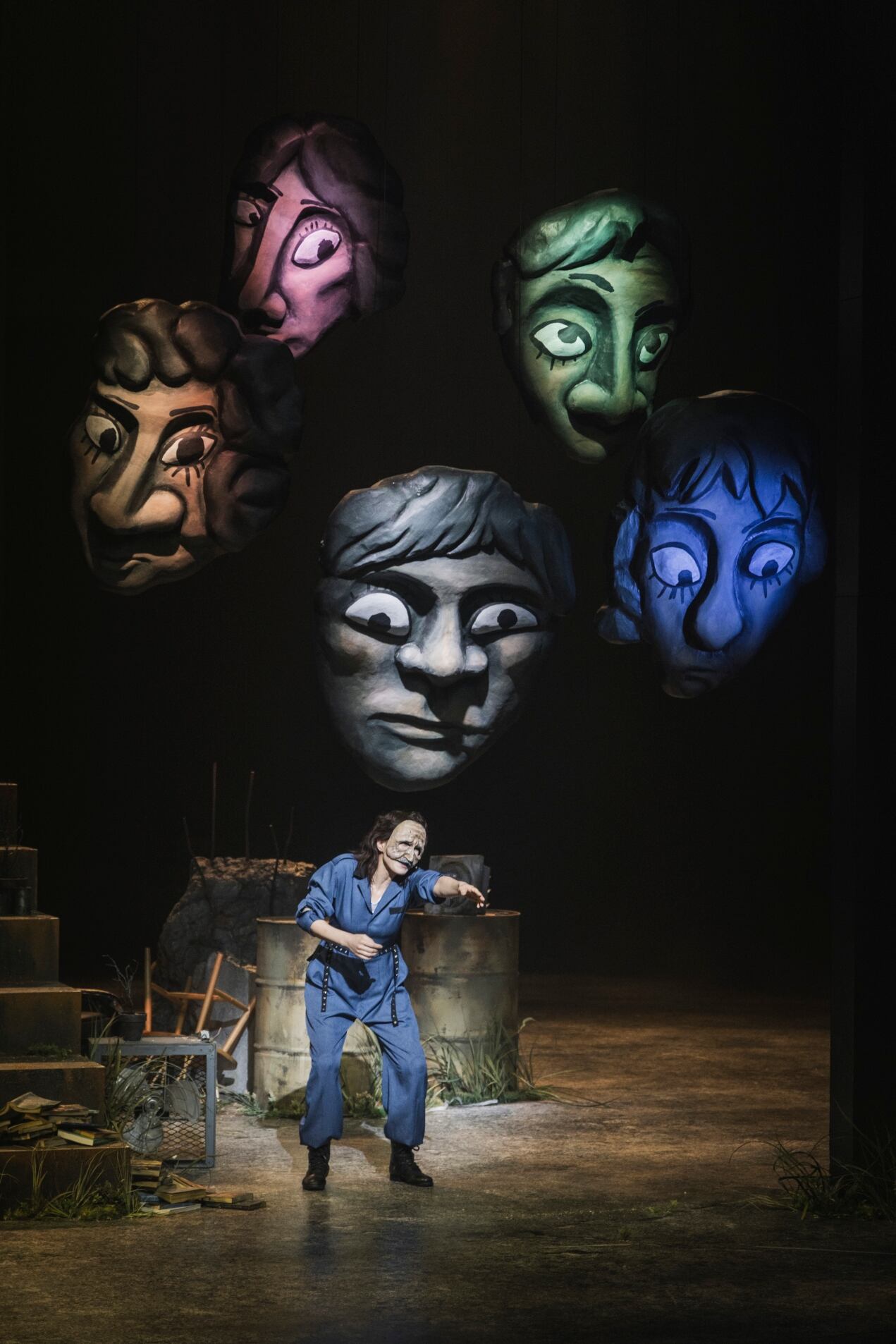
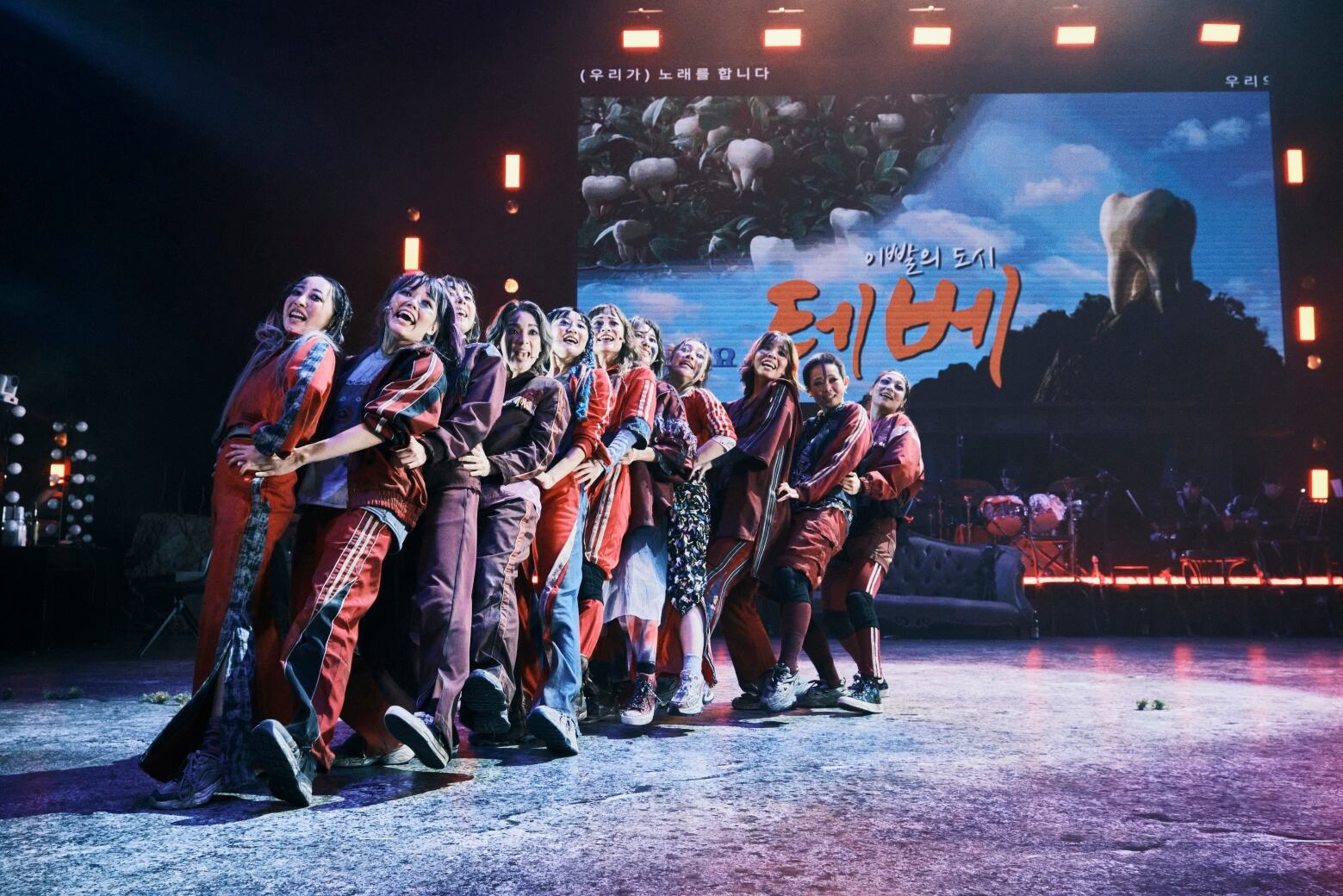
The mirror most persistently reflects the inheritance of violence. Thebes bleeds from its inception: When its founder Cadmus kills a dragon and scatters its teeth, armed warriors spring from the ground and slaughter one another. The city is built by the five survivors. Thereafter, a father’s sin passes to his son, a king’s violence to the next ruler, and vengeance breeds more vengeance.
Schimmelpfennig said, “We must not simply call this ‘a cursed fate.’ ‘None of us begin life with a clean slate. Every generation inherits stories, conflicts, privileges, wounds, and responsibilities from previous ones. We cannot simply erase history. However, inheriting it does not mean we must be imprisoned by it like a jail.’”
In *Anthropolis*, some characters respond to violence with more violence, while others flee prophecies only to walk straight into them. Yet there are also humans who choose dialogue, compassion, and self-sacrifice. Schimmelpfennig said, “There are no easy solutions. I only show that history changes when someone refuses to inherit the hatred, destruction, and vengeance passed down to them.”
◇Voices of Those Hidden Behind Kings and Heroes
Schimmelpfennig also said, “Re-reading the classics, I discovered how many silences were hidden in the myths.” Thus, in the five parts of *Anthropolis*, voices are given to women, children, slaves, soldiers, messengers, and ordinary citizens who were overshadowed by kings and heroes. The Greek tragedy’s traditional “chorus” is assigned the role of “a stream of consciousness for the city and society.”
In particular, Jocasta, the protagonist of Part 4, is reimagined. He said, “I wanted to portray her not merely as a woman enduring catastrophe but as a clever political figure desperately trying to prevent it.” Stripping Jocasta of the shocking tragic label of “Oedipus’ mother and wife,” he re-erects her as a political human who tries to pull her two warring sons to the negotiation table.
The National Theater Company of Korea explains that the title *Anthropolis* combines the German term *Anthropocene* (meaning the human era) and the Greek *Polis* (meaning city). Schimmelpfennig said, “This work is not limited to Thebes but is a story about civilization itself. Humans constantly try to establish order, but every system contains contradictions and exclusions. Reason is essential, but it cannot solve everything. Without empathy, imagination, and a willingness to listen, even a rational system can become a tool of violence.”
He added, “Tragedy is not the ‘failure of reason.’ It lies not in reason itself but in our tendency to mistake control for wisdom.” “The leaders of Thebes all cling to power instead of stepping back. Those who are not only convinced they are right but absolutely right end up committing the most terrible mistakes.”
◇“Long Plays Are an Experience That Gradually Deepens”

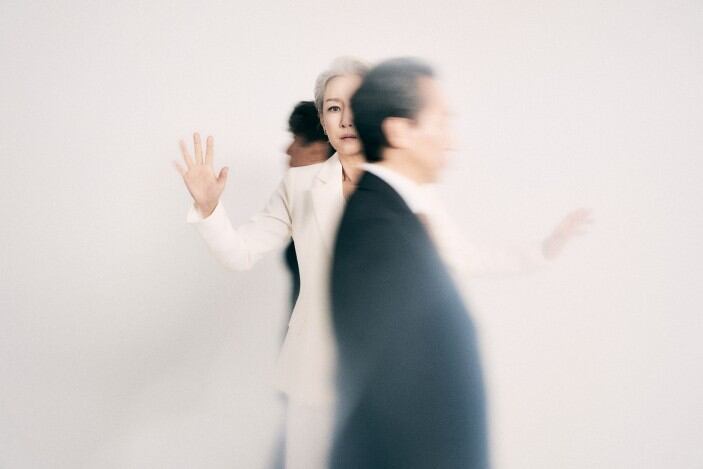
In an era accustomed to videos lasting mere seconds, why stage this epic tragedy as theater? He said, “Theater offers something increasingly rare today: shared time and space, and collective imagination.” “Like reading a thick novel, the experience of passing through a long play changes our sense of time and community. Short videos can show things but struggle to provide the time for a person’s thoughts and feelings to gradually deepen.”
Thebes has collapsed and been rebuilt for 2,500 years. Each king was confident they could create a rational order unlike their predecessors, but blood always called for more blood. If there is hope to be found in this ancient tragedy, it is the paradox that the future we call fate is not predetermined but self-made.
- 월 5900원 멤버십, 신문 독자에게는 2900원, 조선멤버십
- 55000원 상당의 신문-잡지 8종 마음껏 보기, 조선멤버십
- 현금처럼 쓸 7000포인트 받아 알뜰한 쇼핑, 조선멤버십

Related posts:

Film depicting first lady’s shooting sparks historical distortion controversy

Ambassador Roh Jae-hun optimistic on full-scale Korea-China cultural revival

Majorca vs Menorca vs Ibiza: Which of Spain’s Balearic Islands should you visit?

Hungary’s reckoning with Orban’s corrupt system picks up speed with high-profile arrests
SEREC calls for coordinated national response on productivity, industrialisation, competitiveness