China’s Journey from Poverty to Global Power
As the People’s Republic of China marks the 75th anniversary of its founding, it reflects on a journey that has transformed the nation from one of the world’s poorest countries into a global economic and technological leader. This transformation is not only defined by rapid industrialization and modernization but also by an unprecedented effort to eradicate absolute poverty.
In 1949, when the People’s Republic was established, China faced severe challenges. The country had been ravaged by war and foreign occupation, leaving its economy in ruins. Most of the population lived in rural areas under harsh subsistence conditions. Infrastructure was minimal, literacy rates were low, and disease was widespread. Over 80% of the population lived below the international poverty line, with the economy largely dependent on agriculture and informal activities.
Over the following decades, the Chinese government implemented various development campaigns, some of which yielded mixed results. Early efforts like the Great Leap Forward in the late 1950s failed to deliver the promised growth. However, the turning point came in 1978 with the introduction of market-oriented reforms under Deng Xiaoping. This era of “Reform and Opening-Up” marked the beginning of a transformative period that would reshape China’s economic landscape.
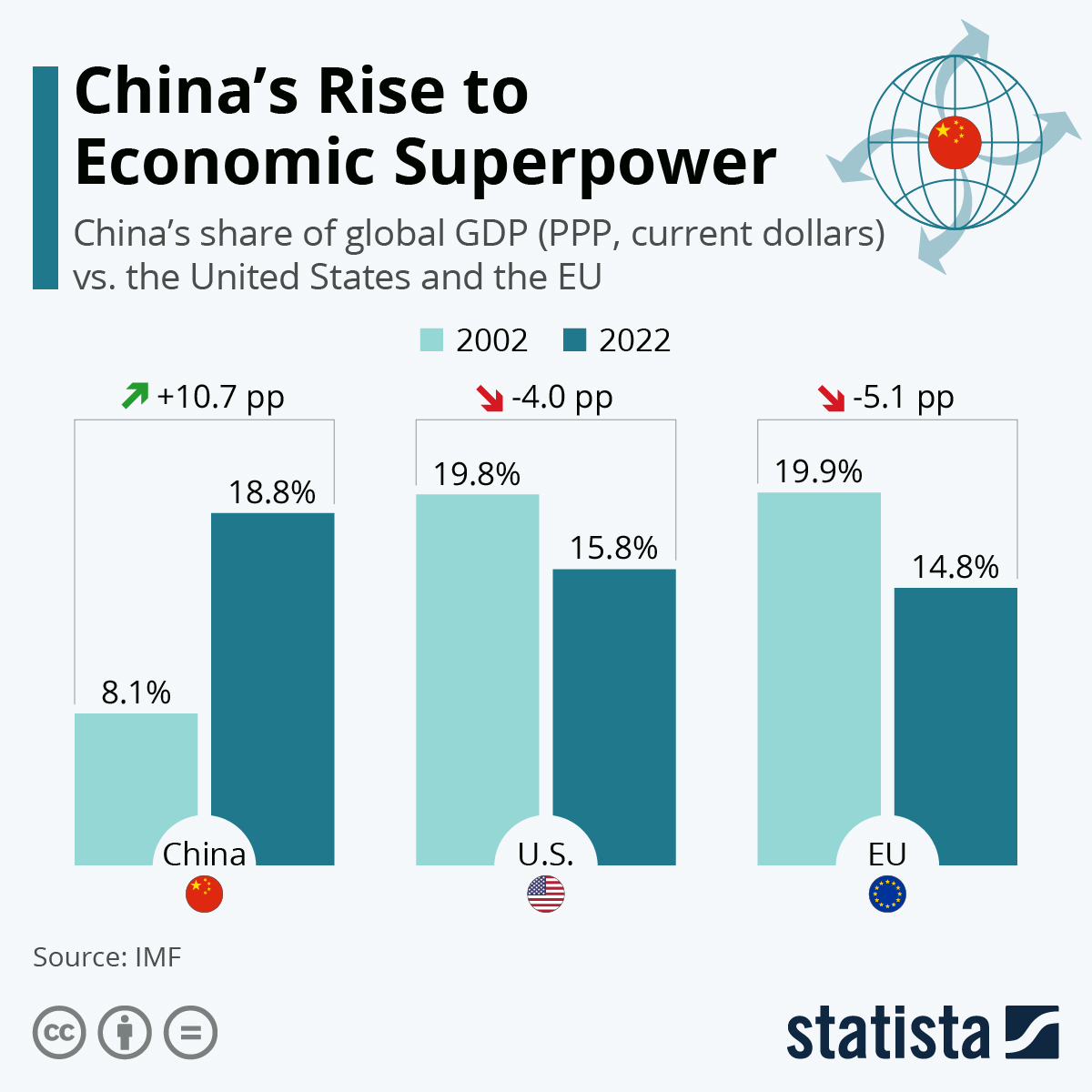
China experienced one of the most rapid industrial and technological expansions in modern history. Annual GDP growth averaged nearly 10% for much of the past four decades. Factories emerged in coastal cities, and rural laborers migrated to urban centers. Foreign capital flowed in, and entire towns transformed into manufacturing hubs. Special economic zones like Shenzhen became symbols of this broader modernization effort. The state invested heavily in infrastructure, education, and industrial policy, ensuring that economic gains were widely distributed, though unevenly at times.
Modernization was not just about economic growth; it was deeply tied to improving human well-being and eradicating poverty. China made poverty alleviation a central part of its national strategy. Through a combination of centralized planning and decentralized implementation, the government connected economic growth with poverty reduction policies. Infrastructure development targeted poor villages, and agricultural reforms gave farmers greater control over production and access to markets, significantly increasing rural incomes.
Despite these efforts, by the early 2000s, poverty remained entrenched in remote, mountainous, or ethnic minority regions. Recognizing this, China launched a new phase of its poverty alleviation campaign in 2013 under President Xi Jinping. The goal was to eliminate extreme poverty by 2020, leading to the “targeted poverty alleviation” strategy. This approach focused on identifying and addressing the unique needs of poor households and villages. Government officials were assigned specific families, and data collection efforts intensified to identify who was poor and why. Support measures were tailored accordingly, ranging from agricultural subsidies to relocation programs.
By the end of 2020, China declared victory in its fight against extreme poverty. All 98.99 million people living below the national poverty line since 2012 had been lifted out of poverty, and 832 counties and 128,000 villages were removed from the poverty registry. These results were verified by third-party evaluations and praised by institutions such as the United Nations Development Programme and the World Bank.
This achievement is even more remarkable in a global context. According to the World Bank, over 70% of global poverty reduction since the 1980s has occurred in China. The country’s contribution to human development has reshaped the global poverty map, lifting more people out of poverty than any other nation in history.
China’s modernization has not stopped at economic development or poverty eradication. Recently, the government has articulated a broader vision called “Chinese-style modernization.” This model emphasizes social equity, cultural confidence, environmental sustainability, and national cohesion. It diverges from the Western template, rooted in China’s unique political system, long civilizational history, and centralized policy planning.
One of the central elements of this model is technological advancement. China leads the world in several areas of innovation, including 5G deployment, artificial intelligence, electric vehicles, and high-speed rail. State-led investment in science and education has created an ecosystem where technological modernization supports economic growth, public services, agriculture, and rural connectivity.
The government has transitioned from a poverty alleviation agenda to what it calls “rural revitalisation.” This shift reflects the recognition that lifting people out of poverty is only the beginning. Long-term development requires sustainable livelihoods, education, healthcare, infrastructure, and community institutions that enable prosperity across generations.
Despite these achievements, challenges remain. Income inequality persists, particularly between urban and rural areas. An aging population threatens public services and pension systems. Youth unemployment is a growing concern.
China’s journey from one of the world’s poorest nations to a global superpower is complex. It stands as one of the most important development stories of the modern age. The combination of economic modernization and poverty reduction has transformed not only the structure of the Chinese economy but also the daily lives of its people.
For Nigeria, China’s transformation offers valuable lessons. A focus on long-term national planning, data-driven interventions, infrastructure investment, agricultural reform, and coordinated governance can guide Nigeria’s development. While Nigeria does not need to replicate China’s model wholesale, the principles of strategic vision, disciplined execution, targeted investment, and inclusive development are universally applicable. If Nigeria can internalize and apply these lessons, it can shape its own transformation story.


