The Complex Dilemma Facing Iran Amid Reactivated UN Sanctions
As the reactivation of United Nations sanctions against Iran looms, the country is caught in a precarious situation. Tehran must navigate a difficult decision between yielding to U.S. President Donald Trump’s demands for “unconditional surrender” regarding its nuclear program and facing potential Israeli attacks. Alternatively, it could consider mediation from Gulf Arab neighbors, despite their long-standing distrust of Iran.
Analysts suggest that Iran is attempting to buy time, hoping to persuade Washington to resume bilateral negotiations that were halted by U.S. and Israeli air strikes against Iranian facilities in June. Barbara Slavin, a distinguished Middle East fellow at the Stimson Centre, notes that Iran has few options left. She highlights the lack of trust among members of the Saudi Arabia-led Gulf Cooperation Council (GCC), which includes the UAE, Qatar, Kuwait, Oman, and Bahrain. These nations fear Israel more than they trust Iran, and they are frustrated with the U.S. failure to curb Israeli actions and end the Gaza war.
Iran has warned that the UN Security Council’s sanctions snapback—initiated by Britain, France, and Germany—would lead it to cease inspections of its nuclear facilities and monitoring of its uranium stockpile by the International Atomic Energy Agency (IAEA) under the 2015 Joint Comprehensive Plan of Action. However, Tehran has also hinted at seeking an alternative agreement with the IAEA, signaling its intent to remain compliant with the Nuclear Non-Proliferation Treaty and avoid any attempt to manufacture nuclear warheads.
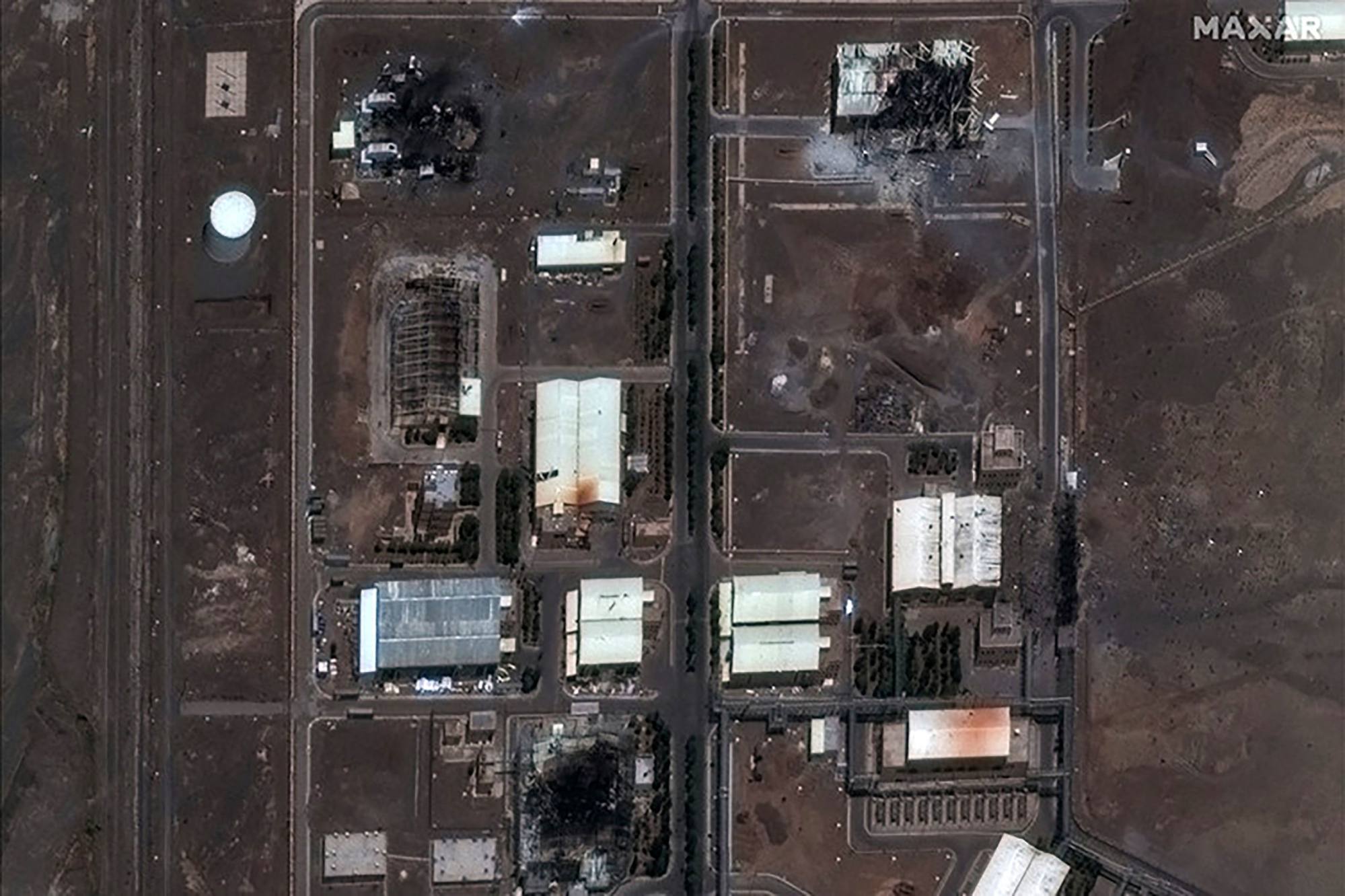
The 2015 nuclear deal required Iran to halt uranium enrichment except for low-grade material used in power plants, in exchange for relief from UN sanctions. After Trump withdrew the U.S. from the deal in 2018, Iran reduced its compliance, building more uranium enrichment facilities and expanding its stockpile of near-weapons-grade material. These activities were disrupted by U.S. bombing of three Iranian nuclear facilities on June 22.
Farzan Sabet, a managing researcher at the Geneva Graduate Institute, states that the Islamic Republic is in a no-win situation despite retaining some cards to play. He suggests that Tehran might use its remaining nuclear capabilities to create ambiguity about the state of its program and weaponization intentions. According to a recent IAEA report, Iran possesses enough highly enriched uranium to build 10 nuclear warheads.
However, the remaining assets that Iran has—its ballistic missiles and battered “axis of resistance” partners like the Lebanese Hezbollah—appear insufficient to coerce or deter its adversaries into backing down or to leverage them into negotiating a settlement.
Slavin believes Iran will likely have to “capitulate” on its uranium enrichment program due to its limited options. The UN General Assembly meeting this week is seen as the last opportunity for Iran to reach out to the Trump administration for a deal.
Iranian media have reported that “some political moderates” are advising President Masoud Pezeshkian to seek a meeting with Trump in New York, suggesting there are “new Iranian nuclear offers.” However, last-minute talks between Iranian Foreign Minister Abbas Araghchi and his counterparts from Britain, France, and Germany did not result in a compromise.
Trump reiterated his position on Iran’s nuclear program at the UN summit, stating that “the world’s No 1 sponsor of terror cannot be allowed to possess the most powerful weapon.” He claimed that bombing three Iranian nuclear facilities “obliterating everything … we did something that for 22 years people wanted to do.”
Iran’s Supreme Leader Ayatollah Ali Khamenei stated that negotiating with the U.S. “under the current circumstances” does not serve national interests and offers no benefits. However, he emphasized Iran’s commitment to not weaponizing its enriched uranium, stemming from a 2003 edict banning Tehran from acquiring weapons of mass destruction.
Analysts note that such diplomatic ambiguity is typical of Iran. Ultimately, the country will have to choose between giving up on uranium enrichment or taking the risky step of weaponizing its highly enriched uranium buried under the rubble of its damaged facilities.
A potential middle route could involve negotiations coupled with limited strikes on regional energy infrastructure to compel other countries to pressure Israel not to violate the ceasefire that ended their 12-day war in June, according to Ali Alfoneh, a senior resident scholar at the Washington-based Arab Gulf States Institute. However, Iran is unlikely to antagonize the GCC, with whom it has increased diplomatic cooperation since the outbreak of the Israel-Gaza war in 2023.
Tehran has refrained from criticizing a mutual security pact between Saudi Arabia and Pakistan, crafted with Iran and Israel in mind. Analysts suggest that the growing detente between Saudi Arabia and Iran, following their resumption of diplomatic ties mediated by China in 2023, was driven by the lack of a U.S. military response to an Iranian missile and drone attack in 2019.
The failure of the U.S. to react to a similar attack on the UAE by Iran’s Houthi allies in 2020 has undermined the GCC’s trust in Washington as its security guarantor. The Israeli attack on Hamas negotiators in Doha served as another “wake-up call,” prompting Saudi Arabia to announce a NATO-like pact with Pakistan.
This shift marks a significant blow to U.S. prestige and symbolizes a renunciation of the decades-old U.S.-led security order in the region. Analysts believe that Iranian leaders hope to support the country’s deteriorating economy by increasing trade cooperation with the GCC. They also aim to leverage Persian Gulf ties to reduce tensions with the U.S. and rely on some of them as mediators with the Trump administration.
Despite these efforts, the GCC remains aware of the limitations in placating Tehran following the Iranian missile strike on Qatar’s Al Udeid airbase in June. Meanwhile, Iran faces a realistic threat of further Israeli air strikes, with analysts suggesting that Israel would seize any plausible pretext to breach the ceasefire and pursue its goals of destabilizing and regime-changing in Tehran. This scenario could bolster the position of Iranian decision-makers favoring options like striking regional energy infrastructure and nuclear weaponization.


