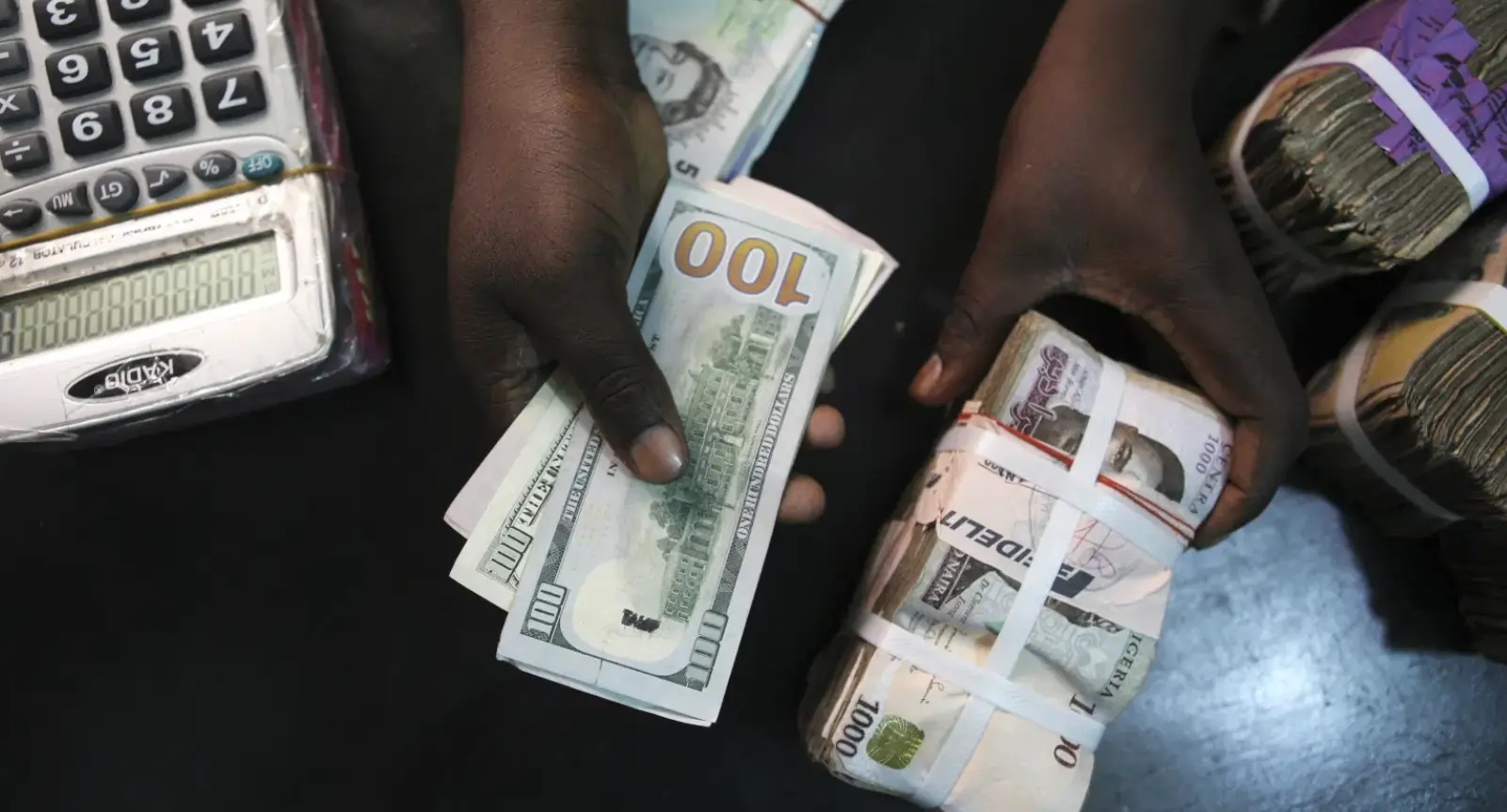
The Naira’s Remarkable Comeback
Nigeria’s naira is experiencing one of its most significant recoveries in recent years, driven by a combination of new reforms, increased foreign reserves, and a sharp decline in speculative activities within the foreign exchange market. Once plagued by volatility, arbitrage opportunities, and a widening gap between official and parallel markets, the naira is now showing strength across both ends of the market.
At the parallel market, the naira has been exchanging at around N1,460 to the dollar, while at the official window, it trades at N1,475 per dollar—its strongest performance this year. This narrowing spread between the two markets indicates a growing alignment that analysts believe highlights the impact of reforms introduced by the Central Bank of Nigeria (CBN).
Reforms Reshaping the FX Landscape
With external reserves climbing to $43.05 billion, market confidence is on the rise. The CBN’s reforms, which include exchange rate unification, the introduction of the FX Code, and the implementation of the Electronic Foreign Exchange Matching System (EFEMS), are reshaping Nigeria’s foreign exchange landscape.
A country’s currency is more than just a medium of exchange; it symbolizes national pride and identity. For Nigeria, years of economic turbulence, oil dependency, and inconsistent policies had pushed the naira to historic lows. However, the currency is now showing signs of recovery, reflecting a shift in the country’s economic outlook.
The naira’s rally has been attributed to stronger demand for the local currency, declining speculative activities, and the significant increase in external reserves. Analysts argue that this current trajectory differs from past cycles of temporary gains, as it is supported by stronger fundamentals.
Leadership and Ambitious Agenda
Since taking over in October 2023, CBN Governor Olayemi Cardoso has pursued an ambitious agenda aimed at restoring credibility, transparency, and resilience in Nigeria’s FX market. His reforms have included clearing FX backlogs estimated at over $7 billion, unifying multiple FX rates into a more transparent system, boosting liquidity through inflows from International Oil Companies and Foreign Portfolio Investors, and strengthening compliance with FX market regulations.
By injecting liquidity into the market and enforcing compliance, the CBN has reduced distortions and curbed speculative practices that previously led to sharp depreciation pressures.
Cardoso has also emphasized effective reserves management. As of September 11, 2025, Nigeria’s external reserves stood at $43.05 billion, up from $40.51 billion at the end of July 2025. With an import cover of over 8.28 months, Nigeria is well above the international benchmark of three months.
Attracting Foreign Investment
The CBN’s reforms have attracted renewed interest from foreign investors, particularly FPIs who had previously exited the Nigerian market due to uncertainty. Improved transparency, a clearer FX framework, and stronger macroeconomic indicators are fueling this renewed interest. Oil exports are also providing steady inflows, while diaspora remittances continue to grow.
During the CBN’s 302nd Monetary Policy Committee meeting, Cardoso highlighted that Nigeria’s current account balance recorded a surplus of $5.28 billion in Q2 2025, compared with $2.85 billion in Q1.
Impact on Speculators
The narrowing exchange rate gap has hit speculators hard. According to Garuba Sarki, a Lagos-based Bureau de Change operator, some traders incurred losses as they sold dollars below purchase prices. “I know some BDC operators who sold dollars below their purchasing rate. This is expected to continue as more dollar inflows strengthen the naira,” Sarki said.
Analysts at Commercio Partners attributed the rally to a mix of stronger naira demand, reduced speculative trading, and improved reserves. Head of Research at the firm, Ifeanyi Ubah, noted, “Nigeria’s rising external reserves are reflecting a healthier external position for the country. With reserves strengthening, speculative activity subsiding, and oil earnings supporting inflows, the naira’s current rally has a stronger foundation compared to previous cycles of volatility.”
However, Ubah and other experts warn that sustaining the rally will depend on Nigeria’s ability to maintain macroeconomic discipline, increase crude oil production, and diversify export earnings.
Key Reforms and Innovations
One of the boldest steps under Cardoso’s leadership has been the introduction of the Nigeria Foreign Exchange Code. According to the President of the Association of Bureaux De Change Operators of Nigeria, Aminu Gwadabe, the FX Code is a game-changer. Key features include establishing clear standards for FX transactions, promoting transparency and accountability, and ensuring compliance by requiring detailed implementation plans from financial institutions.
Cardoso emphasized that the FX Code rests on six principles: ethics, governance, execution, information sharing, risk management and compliance, and confirmation and settlement processes. He stressed, “The FX Code represents a decisive step forward, setting clear and enforceable standards for ethical conduct, transparency, and good governance in our foreign exchange market. The era of opaque practices is over.” Violations, he warned, would attract penalties under the CBN Act 2007 and BOFIA Act 2020.
Technology and Transparency
In addition to the FX Code, the CBN introduced the Electronic Foreign Exchange Matching System (EFEMS). Widely used in advanced economies, EFEMS provides real-time information on currency rates, trading volumes, and market activity. This system helps eliminate distortions, check speculative activities, and instill greater transparency.
The CBN also removed the 2015 restriction on 41 items barred from accessing FX, thereby opening up opportunities for businesses and investors.
Beyond domestic reforms, the CBN is tapping into diaspora remittances—an important source of FX inflows. Two new products were recently launched: Non-Resident Nigerian Ordinary Account – designed to allow Nigerians abroad to remit funds seamlessly and manage them in either naira or foreign currency. Non-Resident Nigerian Investment Account – offering opportunities for diaspora Nigerians to invest in Nigeria’s financial markets, including government securities, equities, and mortgage products. These accounts support flexibility, allowing conversions between currencies at prevailing market rates.
Global Remittances and Economic Growth
Global remittance flows have been massive. According to Western Union’s Regional Vice President for Africa, Mohamed Touhami el Ouazzani, Africa received $90 billion in remittances in 2023—a figure that rivals the GDP of some African countries. He emphasized that remittances are more than financial transactions; they are lifelines that support education, healthcare, family maintenance, and long-term investments.
While progress is evident, sustaining naira stability requires consistent policy discipline. Analysts highlight three key factors: boosting crude oil production to ensure steady inflows; diversifying export earnings beyond oil; and maintaining fiscal and monetary discipline to prevent inflationary pressures.
The CBN remains committed to vigilance and proactive interventions, ensuring that reforms deliver long-term stability. When Cardoso assumed office in 2023, Nigeria’s FX market was riddled with distortions. Multiple exchange rates encouraged arbitrage, while a backlog of over $7 billion unsettled businesses. His first steps were to unify the exchange rate, clear backlogs, and restore transparency. These reforms have since given businesses renewed confidence.
Cardoso explained, “Unification has enabled us to clear outstanding obligations, giving businesses—from manufacturers to airlines—the confidence to plan and invest in the future.”
The story of the naira’s resurgence is still unfolding. With forex speculation at historic lows, foreign reserves strengthening, and investor confidence rising, Nigeria’s currency appears on a firmer footing than in years past. Reforms such as the FX Code, EFEMS, and diaspora-targeted policies are shaping a new era of transparency and inclusiveness in Nigeria’s financial system.
As experts have cautioned, sustaining the rally will depend on Nigeria’s ability to remain disciplined and diversify its economic base. But for now, the naira is reclaiming its pride of place—emerging stronger, more stable, and better positioned for the future.


