The BRI and Nepal: A Nine-Year Journey of Uncertainty
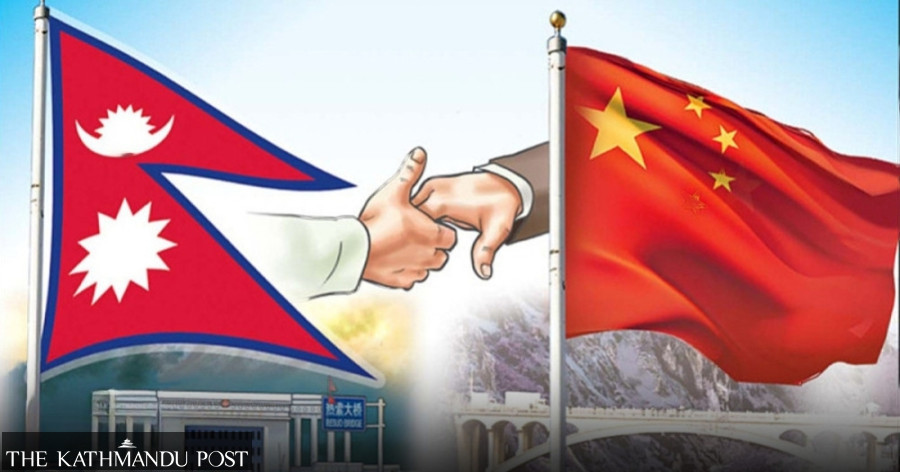
Nine years have passed since Nepal and China signed a memorandum of understanding (MoU) on cooperation under the Belt and Road Initiative (BRI). This landmark agreement marked a significant step in their bilateral relationship, but the journey has been marked by both promise and frustration.
The BRI, launched by Chinese President Xi Jinping, is a global infrastructure and connectivity initiative that aims to enhance economic cooperation across Asia, Europe, and Africa. It evolved from the “Silk Road Economic Belt” into the more comprehensive “One Belt, One Road” and eventually the BRI we know today. The MoU signed in 2017 focused on key areas such as policy coordination, infrastructure development, trade facilitation, financial integration, and fostering people-to-people bonds.
Nepal’s engagement with the BRI began earlier, soon after the initiative was unveiled in 2013. However, despite initial enthusiasm, progress has been slow. Over the past nine years, both countries have engaged in numerous discussions about the ideology of the BRI, potential projects, and funding mechanisms. Yet, tangible outcomes have remained limited.
The most notable project associated with the BRI in Nepal is the Pokhara Regional International Airport. While China unilaterally included it under the BRI framework, this decision faced opposition from Nepal. The project later became entangled in a multi-billion-rupee corruption scandal, further complicating the situation.
With the formation of a new government in Kathmandu led by Balendra Shah, there are renewed concerns about how the administration will approach the BRI. Will it review past agreements, or will it seek to negotiate new terms? These questions remain unanswered, as the two sides have not yet had major discussions on the implementation of the BRI.
A senior foreign ministry official mentioned that while high-level visits could potentially lead to meaningful conversations, no substantive discussions have taken place yet. The Chinese side has also not raised specific issues related to the BRI during meetings with Nepali officials.
During a recent meeting between Foreign Minister Shisir Khanal and Chinese Ambassador Zhang Maoming, the Nepali government reiterated its commitment to maintaining a balanced foreign policy. However, the BRI was not explicitly addressed. The Chinese ambassador, however, raised concerns about issues such as Tibetan refugees, the US State Partnership Program, and the Starlink satellite network, urging Nepal to avoid actions that could undermine China’s strategic interests.
Despite these concerns, the BRI remains a complex and sensitive topic for both nations. The Nepali side initially proposed 35 projects to China during Prime Minister KP Oli’s visit to Beijing in 2017. However, the list was later reduced to nine at China’s request. Only one project, the feasibility study of the Kerung-Kathmandu railway, has seen any progress.
In July 2023, China launched the “Silk Roadster” initiative in Kathmandu, which includes small-scale cooperation projects, training programs, and cultural exchanges under the broader BRI umbrella. A comprehensive agreement was signed between Nepal and China in December 2024, outlining a detailed framework for the BRI. However, the status of the ten projects outlined in the agreement remains unclear.
Recent diplomatic engagements, including talks between Chinese Deputy Director General Cao Jing and Nepali officials, have focused on issues such as the US Millennium Challenge Corporation (MCC) Compact and the Starlink satellite network. However, the BRI itself has not been a central topic of discussion.
Former Nepali Ambassador to China, Krishna Prasad Oli, emphasized the importance of implementing BRI mega projects. He argued that the BRI can only move forward through partnership and collaboration between both sides. Projects such as extending China’s railway to Kathmandu, expanding energy connectivity, and building roads could demonstrate Nepal’s strategic autonomy.
According to a briefing by the Centre for Social Innovation and Foreign Policy, Nepal’s approach to the BRI is influenced by its relationships with India and the United States. India views the BRI as a challenge to its regional influence, while the U.S. sees it as an expansion of China’s global reach. These dynamics complicate Nepal’s ability to navigate the geopolitical landscape.
Pramod Jaiswal, research director at the Nepal Institute for International Cooperation and Engagement (NIICE), noted that the current government may not actively push the BRI due to several factors. These include a lack of national consensus, controversies surrounding similar projects in other countries, and broader regional skepticism about the BRI’s transparency and strategic implications.
However, Jaiswal suggested that Nepal might be more receptive if China offers projects as grants rather than loans. This could help address some of the concerns around debt sustainability and long-term commitments.
Chinese observers, on the other hand, see great potential for cooperation under the BRI framework. Gao Liang, vice director of the Nepal Study Centre at the Institute of South Asian Studies, emphasized the positive momentum brought by political developments in Kathmandu. He called for pragmatic communication and early delivery of agreed-upon projects.
As the new government in Kathmandu continues to shape its foreign policy, the future of the BRI remains uncertain. Whether it will serve as a tool for transformation or remain a symbol of unfinished promises depends on the willingness of both sides to engage in meaningful dialogue and cooperation.