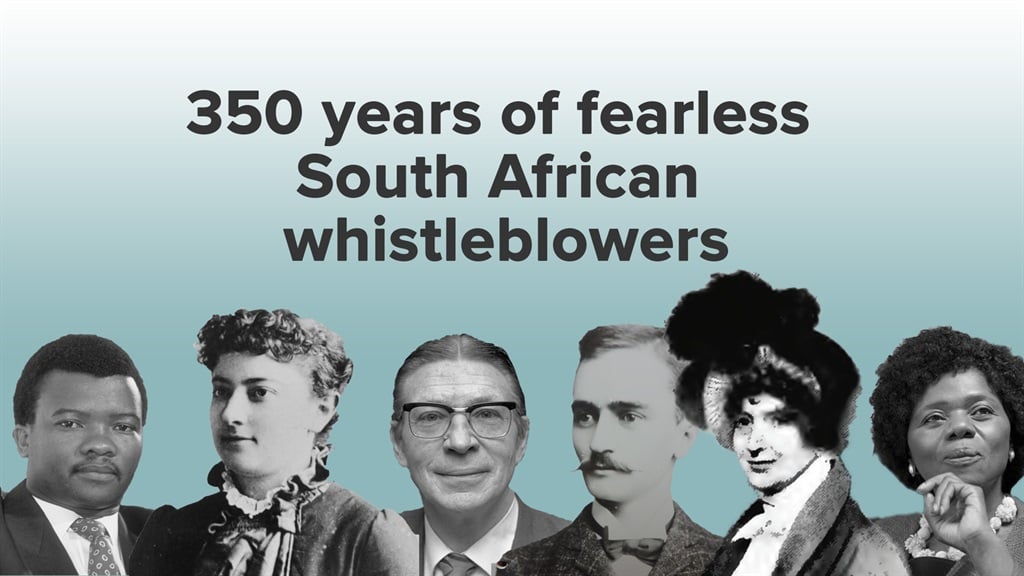
A Legacy of Courage and Consequences
South Africa has a long and complex history of corruption, stretching from the days of Willem Adriaan van der Stel, who oversaw a corrupt trading monopoly, to the present. Van der Stel served as the second Governor of the Cape Dutch Colony from 1699 until his removal in 1707. Throughout this period, whistleblowers have played a critical role in exposing instances of wrongdoing, often at great personal risk.
During the apartheid era (1948-1994), public whistleblowing was rare. However, with the transition to democracy, there was a noticeable increase in the reporting of wrongdoing. This shift can be largely attributed to a new constitution that aimed to serve all citizens and new laws that reinforced their rights. One such law is the Protected Disclosures Act No. 26 of 2000, which was amended by the Protected Disclosures Amendment Act No. 5 of 2017. The purpose of this legislation was to protect individuals who expose perceived wrongdoing to an authority capable of addressing it.
Despite these efforts, the protection offered to whistleblowers has been inadequate. South African whistleblowers have frequently faced reprisals, ranging from murder to social, work-related, and legal retaliation. Our academic research focuses on understanding the experiences of whistleblowers in South Africa and the challenges they face.
In a recently published paper, we explored the stories of several whistleblowers spanning five decades. These cases highlight the risks involved in fulfilling one’s public duty and the personal sacrifices made by those who choose to speak out. Here are some of the most notable cases:
Adam Klein: A Rare Voice Under Apartheid
Adam Klein was one of the few whistleblowers who disclosed wrongdoing during the apartheid era. In 1980, as a prosecutor in the Bantu Commissioner’s Court, he refused to prosecute five black men under the pass regulations, which were central to apartheid legislation. His decision led to immediate retaliation, including arrest under false charges, threats to his safety, and surveillance.
Klein then made a public disclosure to the Sunday Times, revealing severe abuses at the Pretoria Bantu Commissioner’s Court. His report exposed the inhumane nature of the pass laws, including the detention of black people without passes. Following this, he faced further backlash and had to temporarily relocate to Namibia for his safety. Upon returning to South Africa, he continued to be monitored and interrogated. He passed away in 2011, never receiving recognition for his courage.
Andries Jacobs: Exposing Police Brutality
Andries Jacobs, an inspector at the Gauteng Provincial Traffic Department in Benoni, became known for exposing police dogs being set on migrants. In January 1998, he recorded six police officers inciting their dogs to attack Mozambican migrants. Jacobs submitted the video footage to the Police Commissioner, the Minister for Safety and Security, and the South African Broadcasting Corporation.
The six officers were arrested nearly three years later, and the footage was broadcast nationally. They received prison sentences of four to five years. However, Jacobs faced suspension from work two days after the arrests. After returning to his job, he spent a year in witness protection. He was eventually dismissed for unauthorized use of a video camera. By 2005, his life had been significantly strained, with death threats leading to ongoing stress and a divorce.
Tatolo Setlai: A Landmark Case
Tatolo Setlai’s case marked a significant moment following the implementation of the Protected Disclosures Act in 2000. In 2001, the Jali Commission of Inquiry revealed widespread corruption in South Africa’s prisons. Setlai, the head of Grootvlei Prison in Bloemfontein, allowed four prisoners to secretly record illegal acts by prison officials, including selling firearms, drugs, and alcohol, and facilitating the sexual exploitation of a juvenile.
The footage was broadcast on national television, but instead of addressing the issue, the Department of Correctional Services subjected Setlai to victimization and harassment. He faced trumped-up charges and bogus disciplinary hearings. Although he was dismissed, he eventually returned to his position after a lengthy process through the Labour Court.
“Stan” and “John”: Unmasking State Capture
Under President Jacob Zuma (2009-2018), South Africa saw a rise in state capture, where private firms and individuals exploited corrupt public officials to manipulate key state structures. Two anonymous whistleblowers, “Stan” and “John,” provided landmark evidence to support these allegations. They gave Brian Currin, a human rights lawyer, hard drives containing hundreds of thousands of emails detailing the relationship between the Gupta family, the Zuma family, ministers, and heads of state-owned enterprises.
Their disclosures, known as the Gupta Leaks, were used as official evidence at the Zondo Commission of Inquiry into State Capture. Despite their crucial role, “Stan” and “John” remain anonymous and have relocated abroad for their safety.
Paying with Their Lives
Several whistleblowers have lost their lives as a result of their disclosures. Jimmy Mohlala, the Speaker of the Mbombela Municipality, was murdered after exposing tender irregularities related to the construction of the Mbombela Stadium for the 2010 FIFA World Cup. Moss Phakoe, an ANC municipal councillor, was also shot after compiling a dossier that exposed corruption in the Bojanala Platinum District Municipality. Babita Deokaran, Acting Chief Financial Officer of the Gauteng Department of Health, was assassinated after uncovering extensive corruption in the department.
Lessons Learned
The frequency and severity of retaliation against South African whistleblowers is alarming. Our analysis shows that the problem lies in the government’s failure to recognize the dire situation whistleblowers face, compounded by weak whistleblower protection legislation. While there has been a signal of intent to reinforce or rebuild whistleblower protection laws, this must be accompanied by political will to implement them effectively. Broader governmental sanctions against those who commit wrongdoing are also essential.
Ugljesa Radulovic, Senior Postdoctoral Research Fellow, University of Johannesburg
Tina Uys, Professor of Sociology, University of Johannesburg


