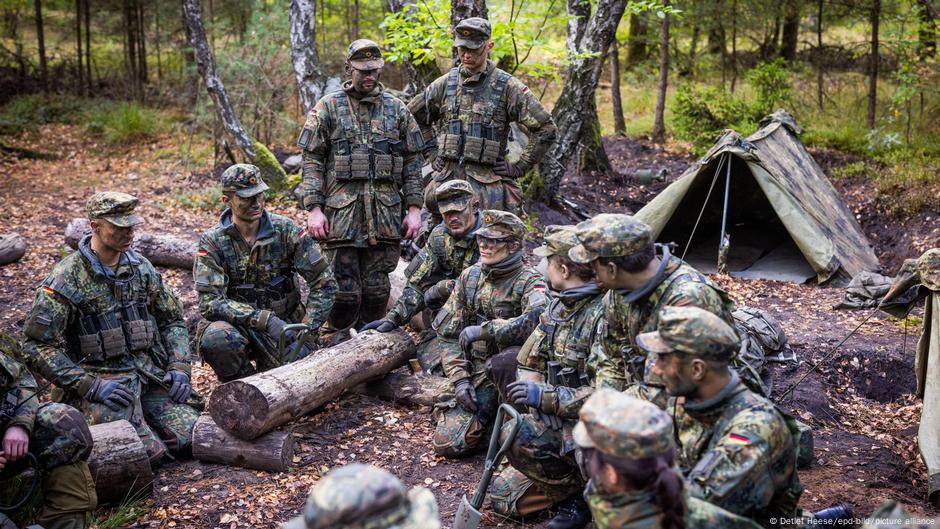
The Debate Over Military Service in Germany
The issue of military service in Germany has once again become a focal point of political debate. While the government had previously reached a consensus on a new model of voluntary military service, recent developments have reignited discussions about the potential return to conscription.
Chancellor Friedrich Merz has expressed skepticism regarding the new voluntary service model, which was agreed upon by the government in August. This model is set to be debated and approved by the Bundestag and will take effect next year. The goal is to address the need for additional personnel within the German Armed Forces, known as the Bundeswehr.
The proposed bill includes incentives for young people who choose to join the Bundeswehr. However, it does not currently include plans for a return to compulsory military service. In Germany, conscription is enshrined in the constitution but was suspended in 2011. It could be reinstated, but only in its previous form, which allowed only men to be drafted, while military service remains voluntary for women.
Concerns from Within the Government
Lawmakers from Merz’ conservative bloc, the Christian Democratic Union and Christian Social Union (CDU/CSU), have raised doubts about the effectiveness of a purely voluntary model. The chancellor’s remarks have sparked further debate about the possibility of returning to compulsory military service, although they have also been seen as a slight to his coalition partner, the center-left Social Democrats (SPD).
The SPD Secretary General, Tim Klüssendorf, criticized the chancellor’s public display of skepticism. He emphasized that the coalition had agreed on a clear path toward voluntary military service and expressed confusion over why members of the CDU and CSU keep questioning this approach. He argued that the constant rehashing of the debate is unsettling for young people.
Addressing the Need for More Troops
In response to growing threats from Russia and new NATO commitments, the German government aims to improve the Bundeswehr’s chronic underrecruitment. The Cabinet approved a plan to increase the number of active soldiers to 260,000 by the early 2030s, up from the current 183,000. Officials also aim to double the number of reservists to 200,000.
Defense Minister Boris Pistorius called the law “a giant step forward,” and Chancellor Merz expressed confidence in the draft, believing the targeted personnel numbers were achievable.
New Requirements and Benefits
Under the new law, all men will be required to fill out a questionnaire when they turn 18. Women will receive the questionnaire as well but are not obligated to complete it. Young people who respond positively will be invited to attend a medical examination to assess their fitness for service. Beginning in July 2027, the examination will become mandatory for men, even if they opt out of serving.
The Ministry of Defense plans to offer free accommodation, healthcare, and travel to recruits. The training period will last between six to 23 months, with the first six months dedicated to basic training. Afterward, recruits can pursue further qualifications in one of the branches of the armed forces — the army, air force, navy, or cyber command.
Potential for Compulsory Service
If the personnel targets are not met or if Germany’s security situation deteriorates significantly, the government could order a return to compulsory military service. However, this would require parliamentary approval.
Party Divisions and Public Opinion
Conservative lawmakers advocate for automatic activation of conscription if the voluntary scheme attracts too few volunteers. Markus Söder, chairman of the Bavarian Christian Social Union (CSU), has repeatedly criticized the new plan, arguing that it will waste time and fail to increase recruitment.
On the other hand, the Social Democrats remain skeptical about the reintroduction of compulsory service. Pistorius has stated that the Bundeswehr would currently be unable to accommodate and train all eligible men if they were conscripted at once.
Youth Perspectives
While the Bundeswehr reports an increase in the number of applicants, a recent YouGov poll shows limited enthusiasm among young people. According to the survey, 55% of 16- to 26-year-olds in Germany reject the introduction of universal compulsory service, while only 38% support it.
Germany’s Federal Student Council believes that the concerns of young people have not been adequately addressed. Quentin Gärtner, secretary general of the student council, told AFP news agency that no decision should be made about young people without consulting them first. He noted that he has not yet received any request from the Ministry of Defense to discuss the matter with them.


