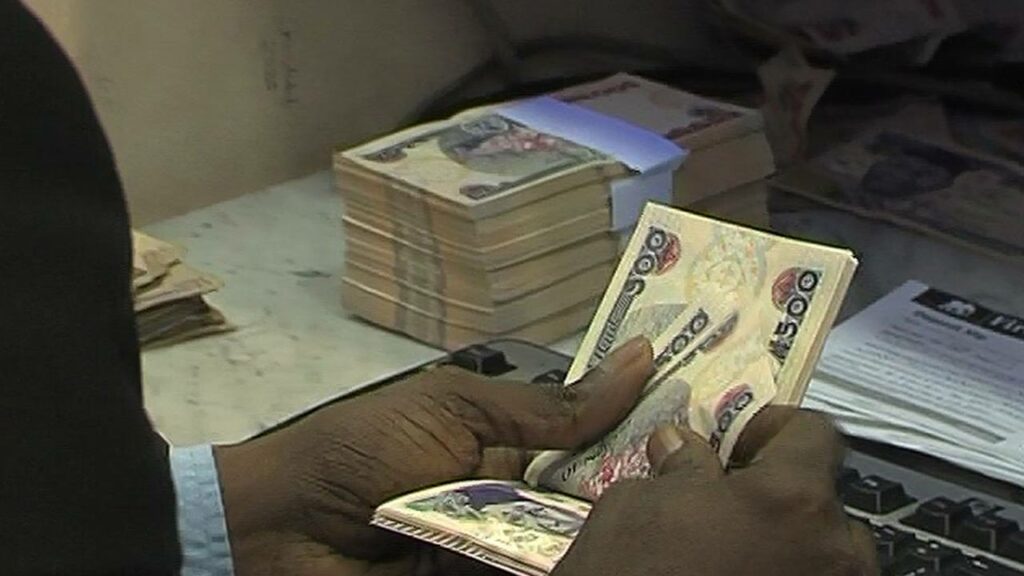
Naira’s Strong Performance Against the Dollar
The local currency, the naira, has continued its positive rally against the dollar, with the exchange rate reaching N1,455 to one dollar. This development comes as forex speculation has declined to an all-time low, and the gap between the official and parallel market rates has significantly narrowed.
According to the Nigeria Foreign Exchange Market (NFEM), the naira is trading at N1,455 per dollar, while the unofficial black market sees it fluctuating between N1,460 and N1,470. Analysts attribute this strong performance to a surge in foreign reserves, which have reached $43.05 billion, and a decline in speculative FX activities. The Central Bank of Nigeria (CBN) reforms are also playing a key role in driving positive sentiments and confidence across markets.
Factors Driving the Naira’s Rally
The naira’s rebound is being driven by a combination of stronger demand for the currency, reduced speculative trading, and rising foreign reserves now at $43.05 billion. The forex reforms instituted by CBN leadership have yielded significant benefits, including a reduction in forex speculation and a narrowing of the gap between official and parallel markets.
The CBN has taken major steps to keep the naira stable in line with its objective of maintaining exchange rate stability. These measures include boosting FX supply to retail end users, reducing distortions in the market, and maintaining effective foreign reserves management and accretions.
The injection of liquidity into the market and increased compliance with FX regulations have helped reduce sharp depreciation of the naira at both official and parallel markets. This has also buoyed foreign investors’ interest in the domestic economy.
Contributions from Foreign Investors and Oil Companies
The naira’s stability is also supported by inflows from Foreign Portfolio Investors (FPIs) and substantial contributions from International Oil Companies (IOCs). Additionally, the CBN’s interventions to authorised dealers have played a crucial role in stabilizing the currency.
There is also renewed interest from FPIs in the FX market, driven by improved market confidence, a more efficient FX framework, and strengthening macroeconomic conditions.
Recent Reserves and Economic Indicators
The CBN chief, Olayemi Cardoso, recently announced that gross external reserves remained robust at $43.05 billion on September 11, 2025, compared with $40.51 billion at the end of July 2025. This represents an import cover of 8.28 months.
During the 302nd monetary policy committee meeting held in Abuja last week, Cardoso stated that the second quarter 2025 current account balance recorded a significant surplus of $5.28 billion, compared with $2.85 billion in the first quarter of 2025.
Impact on Forex Traders
A Bureaux De Change (BDC) trader based in Marina, central Lagos, Garuba Sarki, noted that many dealers lost huge funds as they sold below purchase rates due to the narrowing exchange rate gap.
“I know some BDC operators that sold dollars below the purchasing rate. This is expected to continue in the weeks ahead. Also, the expected dollar inflows to the economy will help strengthen the naira position against the dollar,” he said.
Analysts at Commercio Partners attributed the rally and gradual narrowing of the exchange rate gap to a combination of stronger demand for the naira, reduced speculative trading, and improved foreign reserves.
Optimism and Caution
Head of Research at Commercio Partners, Ifeanyi Ubah, expressed optimism that the positive sentiment would be sustained in the near term, supported by increasing external buffers.
“Nigeria’s rising external reserves are reflecting a healthier external position for the country. With reserves strengthening, speculative activity subsiding, and oil earnings supporting inflows, many market watchers believe the naira’s current rally has a stronger foundation compared to previous cycles of volatility,” he said.
However, other experts caution that sustaining this momentum will depend on the government’s ability to maintain macroeconomic discipline, boost crude oil production, and diversify export earnings.
Regulatory Measures and Market Stability
President of the Association of Bureaux De Change Operators of Nigeria (ABCON), Aminu Gwadabe, highlighted key policies like the Foreign Exchange (FX) Code, rising investors’ confidence, and foreign direct investment supporting policies as effectively putting FX speculators in check.
He said the FX Code implementation is comprehensively addressing various aspects of market conduct and practices. The policy authorises the CBN to establish and enforce directives regarding the standards for financial institutions under which FX deals are to be conducted.
Gwadabe emphasized that the code further entrenches transparency and accountability in the FX market, and continually sustains naira stability and rally.
New Financial Products for Diaspora Remittances
As part of its efforts to boost diaspora remittances and support naira stability, the CBN recently introduced two new financial products designed to serve Nigerians living abroad: the Non-Resident Nigerian Ordinary Account and the Non-Resident Nigerian Investment Account.
These accounts are designed to facilitate remittances by allowing non-resident Nigerians to remit foreign earnings into Nigeria and manage funds in foreign currency or naira. They also provide opportunities for NRNs to invest in Nigeria’s financial markets, including foreign currency-denominated bonds, fixed deposits, and local assets like equities, government securities, and mortgage products.
The Role of Remittances in Africa’s Growth
In a report titled “Diaspora remittances: The power behind Africa’s sustainable growth,” Regional Vice President of Africa at Western Union, Mohamed Touhami el Ouazzani, highlighted the impact of remittances on African economies.
He noted that in 2023 alone, $90 billion flowed into Africa from its global diaspora, an amount that rivals the Gross Domestic Product of the entire region. He emphasized that remittances symbolize deep ties that keep communities connected across borders.
“Every remittance is a seed of change – a deliberate investment in a future where borders blur. The future of remittances in Africa transcends mere financial support. By strategically directing funds into sectors that need them most, Africa’s diaspora is not just sending money home; they are building resilient economies and challenging traditional models of progress,” he said.


