Escalating Trade Tensions Between the United States and China
As trade tensions between the United States and China continue to escalate, both nations are engaging in a fierce battle of words, each accusing the other of disrupting the global economy. Analysts suggest that the ultimate goal for both sides is to apply maximum pressure until a deal is reached.
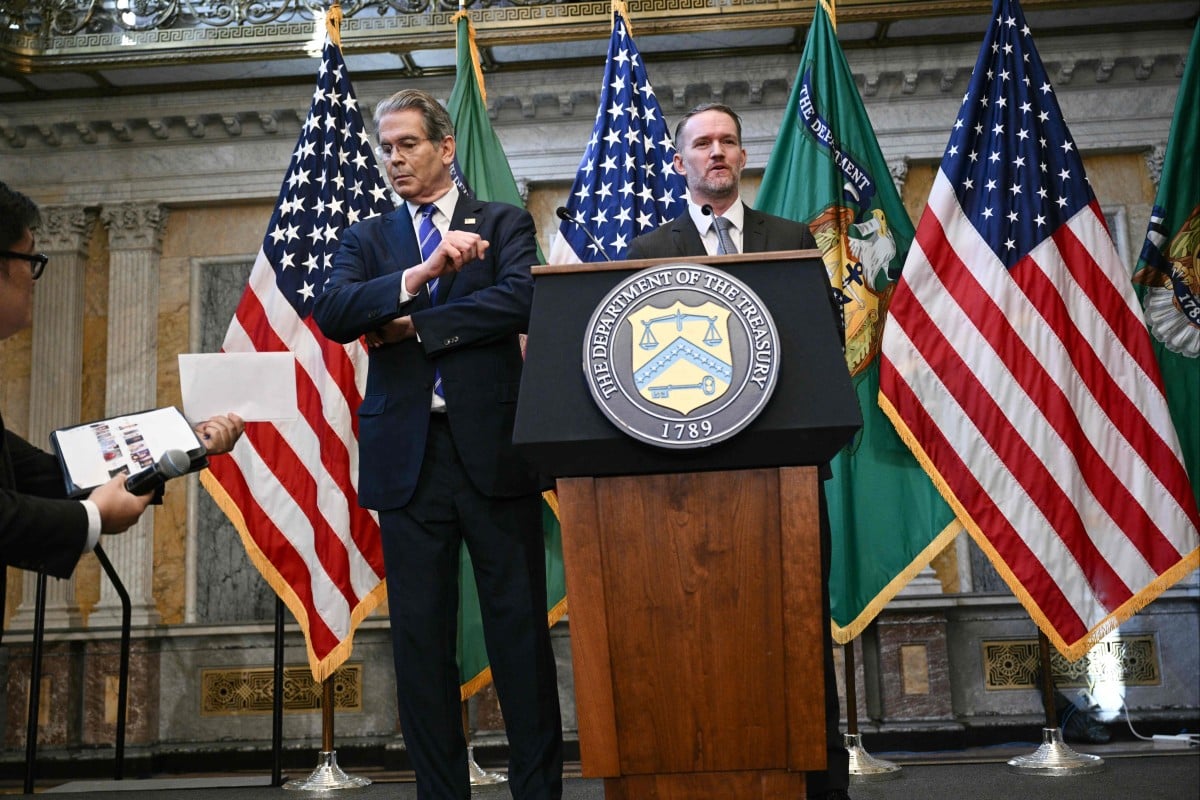
In recent days, the United States has framed the growing conflict as “China versus the world.” This narrative was reinforced by US Treasury Secretary Scott Bessent, who stated that China’s restrictions on the export of rare earth elements make the country an “unreliable partner.”
In response, China has accused the United States of employing a “double standard” on the issue. Officials have highlighted examples such as the expansion of companies covered by Washington’s trade curbs and the US export control list, which includes over 3,000 items compared to China’s roughly 900.
Beijing’s Stance on Rare Earth Controls
The Communist Party mouthpiece, People’s Daily, published a series of posters online, reiterating Beijing’s position. According to the posters, the goal of China’s rare earth regulations is to better safeguard world peace. The Chinese government also claims that a “comprehensive assessment” shows the impact of these measures on supply chains will be minimal.
At a press conference, Commerce Ministry spokeswoman He Yongqian criticized the US claim, stating it “severely distorts and exaggerates China’s measures, deliberately causing unnecessary misunderstanding and panic.”
Competing Narratives
John Gong, a professor of economics at the University of International Business and Economics in Beijing, said the two countries’ back-and-forth was ultimately a battle of competing narratives. While Washington has portrayed the issue as “China versus the world,” Gong noted that from Beijing’s perspective, the framing would be “China against the war.”
He added that China’s position on rare earths has been clear: it is to prevent illegitimate military applications. Beijing’s approach to rare earth controls follows the same model as American controls on semiconductor exports.
Xu Mingqi, a researcher at the Shanghai Academy of Social Sciences’ Institute of World Economy, said that Washington’s strategy involves rallying allies by positioning itself on the moral high ground. However, he emphasized that the success of this narrative depends on other countries’ actual economic experiences with China and the US.
Global Implications
On Wednesday, tackling China’s rare earth controls was one of the topics discussed by financial chiefs from the Group of Seven nations at a meeting in Washington. Nick Marro, principal economist for Asia at the Economist Intelligence Unit, said it was unclear how much the message from the US to its allies would resonate, given the way the Trump administration had previously undermined relations with most trade partners.
Marro noted that the Trump administration seemed to be waking up to the value of these tactics. He also pointed out that recent developments show Beijing has become fed up with the US strategy of engaging on one hand while being very antagonistic on the other.
Negotiation Tactics
He Yongqian, the commerce ministry spokeswoman, said at Thursday’s press conference that China remains open to equal negotiation on the basis of mutual respect.
Beijing and Washington have been flexing their muscles ahead of a possible meeting between Trump and Chinese President Xi Jinping on the sidelines of the Asia-Pacific Economic Cooperation forum, to be held in South Korea at the end of the month.
With the lead-up to such a summit creating a critical window for negotiation, Wang Dan, China director at Eurasia Group, said the two countries were seeking to exert “mutual maximum pressure.”
“This is a negotiation tactic,” she said. “For China, the core objective remains getting to the negotiating table. Judging by the current sentiment, China cannot afford to appear weak; on the contrary, it must demonstrate that it holds strong cards.”
Future Goals and Challenges
Wang Dan added that China’s target would be a significant reduction of remaining US tariffs, while the US aimed to bring about an easing of China’s controls on rare earth exports or an expedited approval of licenses for shipments of those items.
Sustaining the tentative TikTok ownership deal is another goal for the US, as Trump cannot afford to lose young voters ahead of the midterm elections in 2026, Wang said.
Details on the proposed agreement are limited, but White House statements suggest it would place the social media platform’s US operations under American ownership, with Chinese operator and current owner ByteDance retaining a stake of less than 20 per cent.
Song Guoyou, deputy head of the Institute of International Studies at Fudan University in Shanghai, said that America’s “China against the world” framing seemed to neglect the fact that its tariffs also targeted the entire world.
“The ‘narrative war’ is essentially defining who is the unreasonable party, but at its core, Trump’s global tariffs are the starting point of all this chaos,” he said.