The Legacy of Protest in Nigeria: A History of Defiance and Change
Nigeria’s political landscape has long been shaped by the power of public demonstrations, where citizens have repeatedly stood up against injustice, demanding accountability and reform. From colonial resistance to modern-day movements, these protests have served as a vital expression of the people’s voice. As renewed calls for the release of Nnamdi Kanu continue, it is essential to reflect on some of the most significant protests that have defined Nigeria’s history.
1. The Aba Women’s Riot (1929)
The Aba Women’s Riot marked one of the earliest organized resistances against colonial rule in Nigeria. It began in Eastern Nigeria, particularly in Owerri and Calabar provinces, when thousands of Igbo women protested against a new tax imposed by the British colonial administration. The women feared that the tax would threaten their economic independence and traditional authority, which were deeply tied to their trading livelihoods and community sustenance.
By November 1929, the protest had grown into a massive movement, with women gathering at Native Administration centers to demand an end to the proposed taxation. Using traditional forms of resistance such as “sitting on a man,” they sang, danced, and mocked corrupt officials, compelling some to step down. The protests soon escalated, with women attacking European shops, banks, and colonial courts, some of which were set on fire.
In response, colonial police opened fire on demonstrators in Calabar and Owerri, killing over 50 women and injuring many others. Over the course of two months, an estimated 25,000 women participated in the uprising. The British government was forced to cancel the tax and review the Warrant Chiefs system, marking a turning point in the fight against colonial oppression.
2. The ‘Ali Must Go’ Protests (1978)
The ‘Ali Must Go’ protests emerged from student dissatisfaction with a tuition fee hike under General Olusegun Obasanjo’s military government. The increase, from ₦1.50 kobo to ₦2.00, was seen as a significant burden on students, especially those from low- and middle-income families. The National Union of Nigerian Students (NUNS), led by Segun Okeowo, quickly mobilized students nationwide.
Campuses across the country became hotbeds of activism, with meetings, pamphlets, and mass demonstrations. The protests began peacefully but soon escalated, leading to clashes with security forces. The rallying cry “Ali Must Go” symbolized the students’ demand for the resignation of Colonel Ahmadu Ali, the then-minister of education.
Although NUNS was later banned, the government was forced to review the policy. This movement solidified the role of student activism in Nigeria’s political culture, demonstrating the power of youth-led resistance.
3. The June 12 Protests (1993)
The June 12 Protests erupted after the annulment of Nigeria’s first free and fair presidential election, which was won by Chief M.K.O. Abiola. The decision by General Ibrahim Babangida to nullify the results sparked widespread outrage across the country. Civil society groups, labor unions, and pro-democracy movements like the Campaign for Democracy and the National Democratic Coalition organized massive street demonstrations.
The protests were most intense in Lagos and other South-West states, where violent confrontations with security forces resulted in several casualties. The relentless pressure forced Babangida to step down in August 1993, handing power to an interim government. The agitation continued until Nigeria returned to civilian rule in 1999.
Today, June 12 is officially recognized as Democracy Day, symbolizing the people’s defiance against electoral injustice and their enduring demand for democratic governance.
4. Occupy Nigeria (2012)
The 2012 fuel subsidy removal by President Goodluck Jonathan’s administration triggered nationwide outrage. Petrol prices jumped from ₦65 to ₦141 per litre overnight, causing transport fares and food costs to soar. For nearly two weeks, labor unions and civil society groups organized strikes, rallies, and demonstrations across major cities like Lagos, Abuja, Port Harcourt, and Enugu.
Social media played a key role in mobilizing the movement, marking one of Nigeria’s first internet-driven mass protests. The government eventually reversed the policy, reducing petrol prices to ₦97 per litre. This event highlighted the growing influence of digital platforms in shaping public discourse and organizing protests.
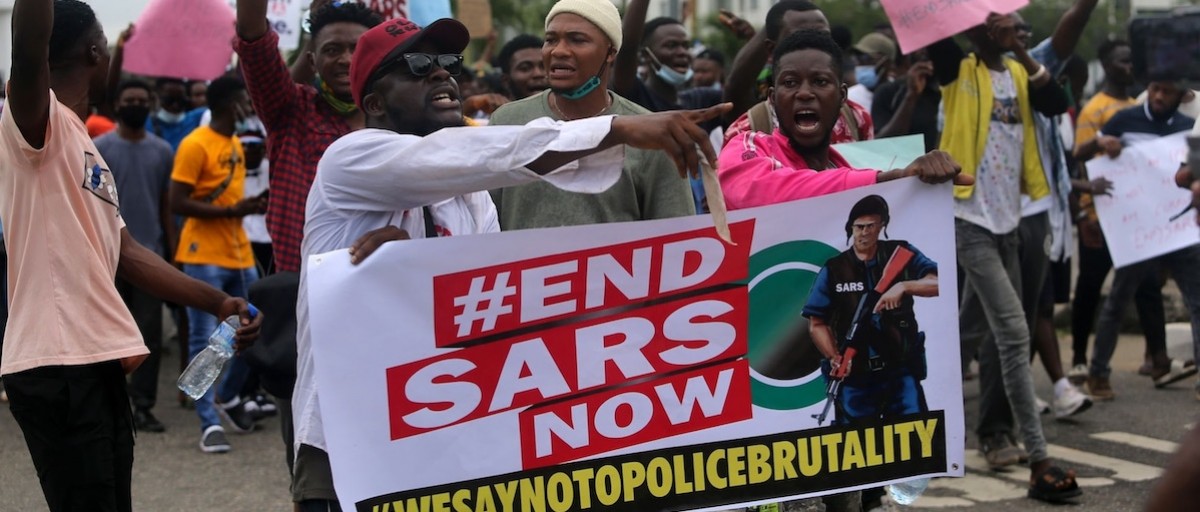
5. End SARS (2020)
The End SARS movement began in October 2020 after years of public anger over police brutality and extrajudicial killings by the Special Anti-Robbery Squad (SARS). A viral video showing a man allegedly shot by SARS operatives in Ughelli, Delta State, sparked nationwide outrage and mass demonstrations.
The protests were decentralized and youth-driven, coordinated largely through social media under the hashtag #EndSARS. Thousands of young Nigerians took to the streets in major cities, while solidarity marches were held in London, Toronto, and Washington D.C. The movement was sustained through crowdfunding and volunteer coordination led by civic groups like the Feminist Coalition.
Though largely peaceful, the protests faced challenges, including clashes with security forces and suspected hired thugs. The movement reached a tragic climax when security forces reportedly opened fire on peaceful demonstrators at the Lekki Toll Gate in Lagos.
In response to the pressure, the Federal Government announced the dissolution of SARS and promised broad police reforms. The End SARS movement not only forced the disbandment of a notorious police unit but also redefined public protest in Nigeria.


