The Confirmation of Professor Joash Ojo Amupitan as INEC Chairman
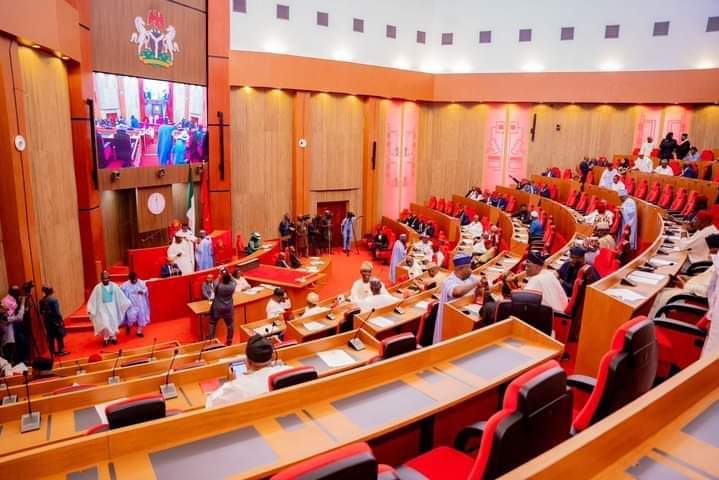
The Senate recently confirmed Professor Joash Ojo Amupitan (SAN) as the new Chairman of the Independent National Electoral Commission (INEC). This decision came after a two-hour screening session in the red chambers of the National Assembly in Abuja. During this time, Amupitan addressed questions from senators on various topics, including elections, administration, policy, and the amendment of the Electoral Act.
Amupitan was accompanied by his family members and other notable figures into the chambers by the Senior Special Assistant to the President on Senate Matters, Senator Basheer Lado. He was welcomed by Senate President Godswill Akpabio, who had suspended the Senate’s standing rules to allow their entry. Akpabio explained that the Senate agreed to screen Amupitan because he had been cleared by the Department of State Services (DSS) and the Office of the Inspector General of Police (IGP), where his fingerprints were captured. He added that the new INEC chairman was cleared for Senate confirmation after security agencies confirmed there was no criminal record against him.
President Bola Ahmed Tinubu had requested the Senate to confirm Amupitan as the new INEC chairman following the expiration of the tenure of Prof Mahmood Yakubu. This request was conveyed in a letter read during plenary by Senate President Godswill Akpabio. Tinubu emphasized that the appointment aligned with the provisions of Section 154, Subsection 1 of the Constitution of the Federal Republic of Nigeria, 1999 (as amended).
Commitment to Electoral Integrity
In response to senators’ questions, Amupitan pledged to work for all Nigerians and introduce measures to restore confidence in the electoral process. He also stated that his leadership would ensure the integrity of elections and deliver credible results, starting with the Ekiti State governorship election slated for July 2026.
On the issue of glitches experienced during the electronic transmission of results in the 2023 presidential elections, Amupitan described a glitch as “improper configuration” of the technology used. He promised to conduct a thorough audit of the existing technological infrastructure and collaborate with the Nigerian Communications Commission (NCC) and other relevant bodies to achieve the desired outcomes.
He acknowledged the Supreme Court’s position that iREV was not an electronic collation system but emphasized the need for proper checks and balances. Amupitan stressed that the audit of the system and election logistics would be essential to address the challenges faced and ensure a more reliable electoral process.
Addressing Voter Apathy and Electoral Offences
Amupitan proposed introducing voter education modules, including downloadable courses in various languages, to combat voter apathy. He also suggested incorporating voter education at the primary school level to instill patriotism and participation from an early age. Additionally, he highlighted the importance of leveraging technology to improve voter registration processes.
Regarding the 2022 Electoral Act, Amupitan acknowledged it as an improvement over previous versions and called for continuous collaboration in amending it. He also recommended establishing an institution specifically focused on dealing with electoral offences in the country.
Concerns About INEC’s Role
When asked about whether INEC should be responsible for conducting local government elections, Amupitan expressed concerns about the additional burden it would place on the commission. However, he noted that the commission would evaluate the logistics and infrastructure required for such an expansion when he assumes office.
Amupitan also emphasized the importance of INEC’s independence, stating that the constitution mandates its independence. He assured that the commission would leverage this constitutional backing to perform its responsibilities independently.
Clarification on Legal Involvement
Amupitan clarified that he had never participated in President Bola Ahmed Tinubu’s defense at either the tribunal or the Supreme Court after the 2023 presidential election. He confirmed that the law reports on those cases are available and that he did not appear in the presidential election at the tribunal or Supreme Court.
Controversies During the Screening
During the question-and-answer session, there was some tension in the Senate chambers. When Senator Victor Umeh attempted to ask a question, Senator Shehu Buba interrupted, claiming that Amupitan had already answered enough questions and should take a bow. This led to a debate over the rules governing the session. Eventually, the motion to conclude the screening was seconded, and the session ended with a voice vote.
Reactions to the Confirmation
Reactions to the confirmation were mixed. While the All Progressives Congress (APC) commended the Senate for acting promptly, some critics argued that the process resembled a coronation rather than a thorough screening. Timothy Osadolor, a PDP NEC member, criticized the lack of due diligence in the selection process, referencing past issues with nominees like Uche Nnaji.
Yiaga Africa urged Amupitan to translate his promises into action, emphasizing the need for tangible reforms to restore confidence in the electoral system. Dr. Sam Ogwuche of Yiaga Africa praised the thoroughness of the screening process and encouraged Amupitan to learn from past experiences to improve INEC’s performance.
Related Developments: Electoral Bill 2025
In a related development, the Senate stepped down the debate on the Electoral Bill 2025 to allow for more consultations. This decision followed concerns raised by senators about procedural issues, particularly regarding the timing of public hearings before the second reading of the bill.


